ElectroluxRepair Miami

30 symptoms · 32 codes

It is doing something, and you do not know what it means.

Start here. Each page says what to do in the next ten minutes, what usually causes it on this make, and what to check before anybody is called.

  • 30 symptoms written up
  • 32 codes this maker publishes
  • 5 appliance types it documents none for
  • from $95 diagnostic, credited to the repair

Every symptom we cover

All 30 of them

Grouped by the appliance. Each one names only codes this maker actually publishes.

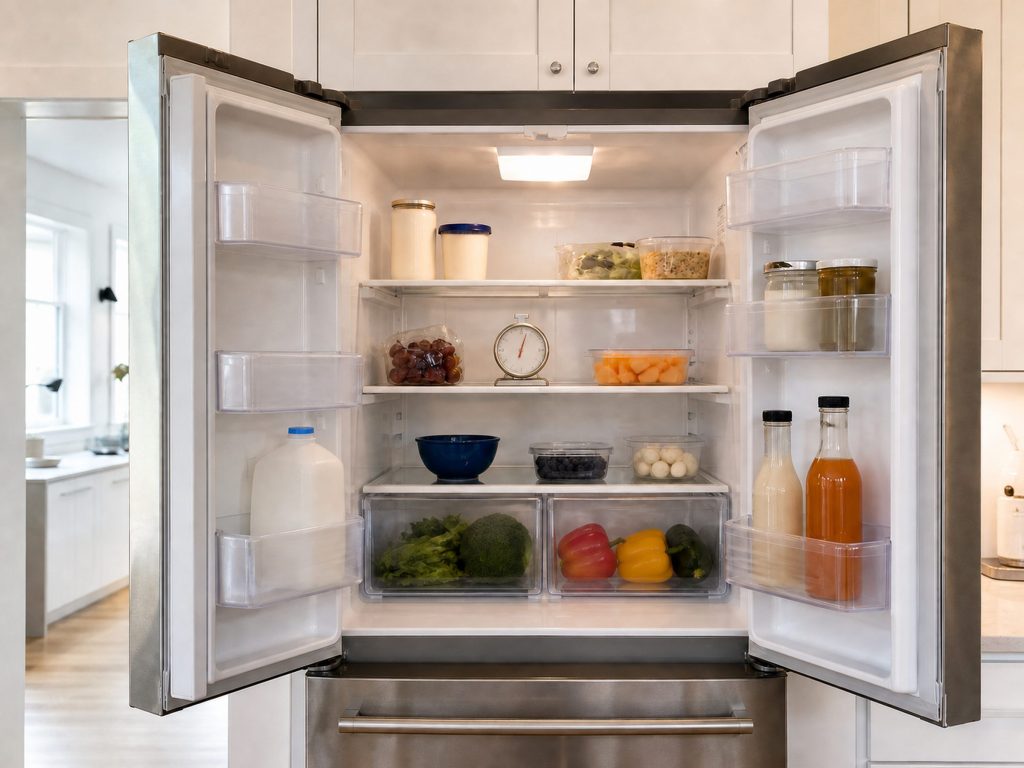
  • The inside of a French-door refrigerator with the door open and the interior light on
    It is running, the light works, and the food is warm

    Refrigerator not cooling

    Something is clearly happening inside and the cabinet is still not cold. Two pieces of evidence settle most of what follows, and neither requires tools. The first is yours: a thermometer in each compartment, read twice sixty minutes apart. The second belongs to the appliance — the peak temperature it recorded behind its high-temperature alert, which appears once and is destroyed by a second press of clear. Together they separate an airflow problem from a defrost problem from the sealed system itself. Three unrelated appointments.

    • Freezer cold, fresh-food side warm: that is airflow rather than refrigerant
    • Press clear once and photograph the peak figure it shows you
    • A counter-depth cabinet breathes through one route, and that route is often it
    What it usually means
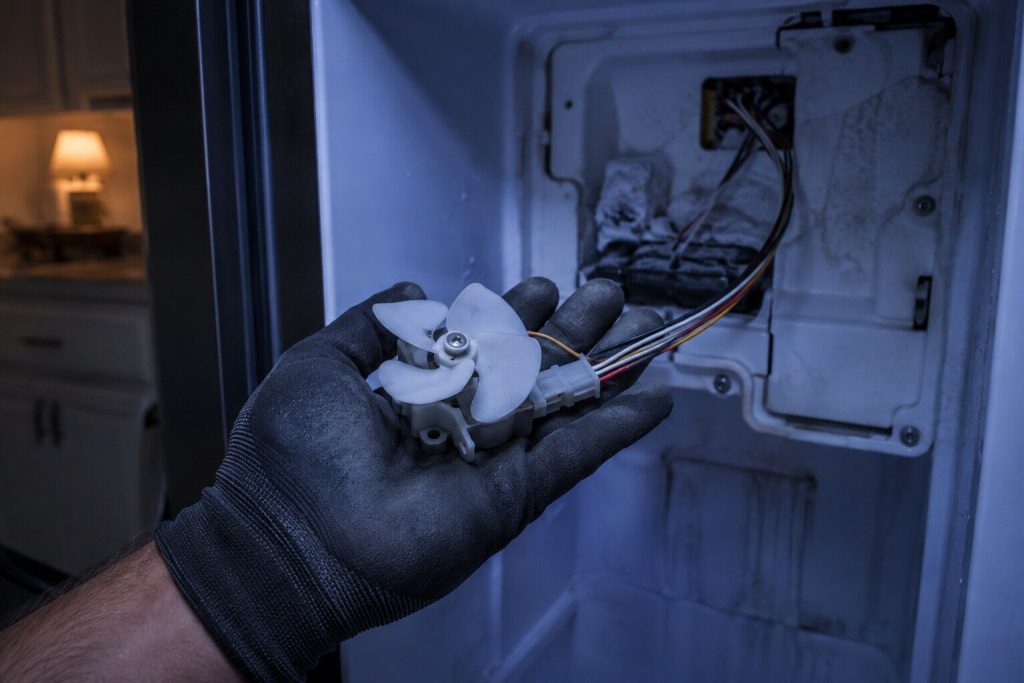
  • A small evaporator fan motor with its blade still fitted lifted out on a gloved palm
    One half is perfect and the other is not

    Warm fridge, cold freezer

    The most diagnostic complaint in refrigeration, and good news more often than not. One sealed system serves both compartments here and air is moved between them, so when only one side is wrong the refrigerant circuit is almost certainly fine and the problem is on the air path. That is the inexpensive half of everything that can go wrong with a refrigerator, and it is worth saying plainly before anybody starts worrying about compressors.

    • One warm side almost always means air, not refrigerant
    • The fan, a damper, or a duct packed with frost
    • The cheap half of refrigeration failure, and it is worth confirming
    What it usually means
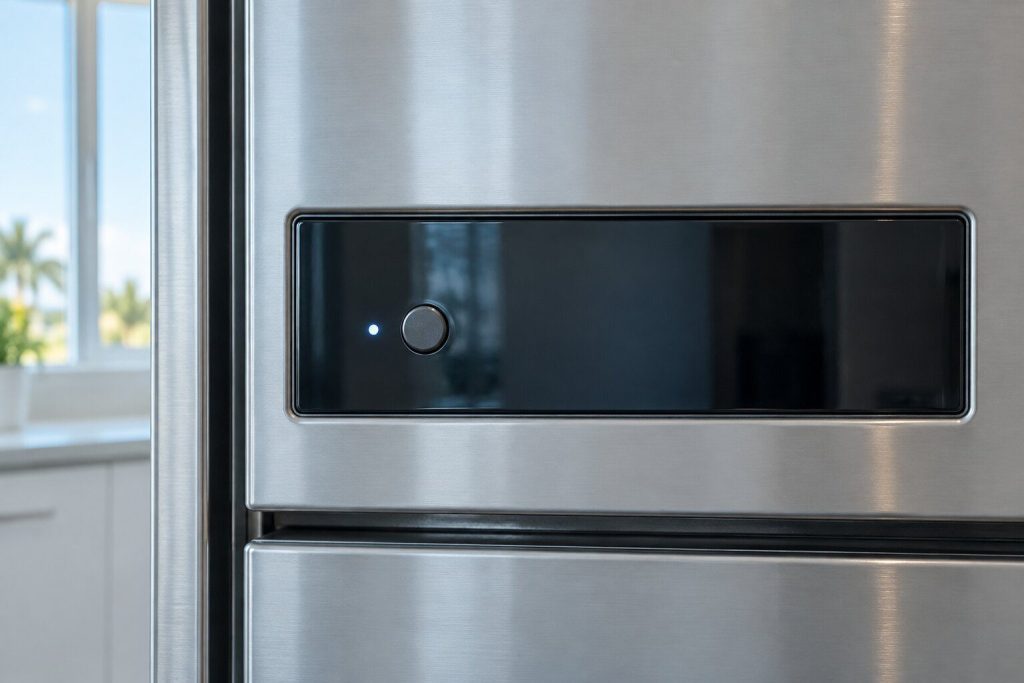
  • A refrigerator control panel photographed close and square on with one small indicator lit beside an unmarked button, the rest of the panel dark.
    A tone every minute and HI on the display

    High-temperature alarm

    This maker's cabinets announce a warm cabinet rather than leaving you to discover it, and they sound once a minute until acknowledged. The detail almost nobody knows is the useful one: when you clear the alert, the display shows the highest temperature the cabinet actually reached. That single number answers the only question that matters after a power cut — whether the food is safe — and it is gone the second time you press clear.

    • Clear it once and write down the peak it shows you
    • The maker's own causes start at a door left open and end at a gasket
    • In this climate the gasket is the one we find most
    What it usually means
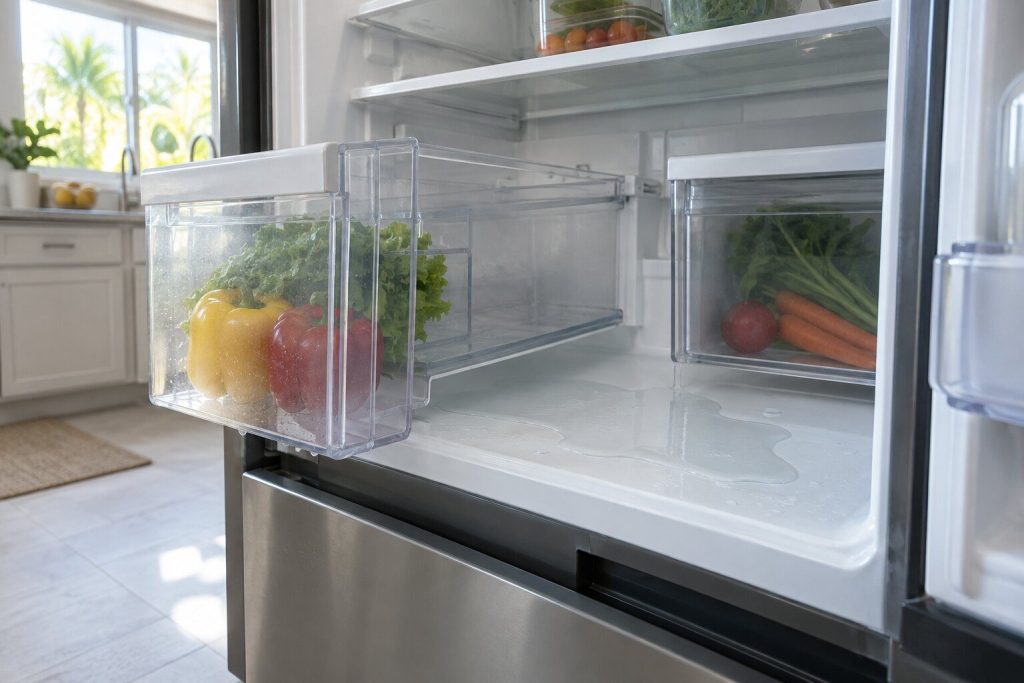
  • Water standing under the crisper drawers of an open refrigerator, one drawer drawn out to show the wet floor of the compartment.
    A puddle, a wet floor, or water under the drawers

    Water under the refrigerator

    Three ordinary sources, and where the water shows tells you which. Under the crisper drawers is the defrost drain. Behind or beneath the cabinet is the supply line to the dispenser and ice maker. Down the front of a door is condensation from a seal. In a fitted kitchen the order of urgency is different from a rental, because the water reaches joinery and flooring long before anybody sees a puddle on tile.

    • Where the water appears identifies the source before anybody arrives
    • In a fitted kitchen it finds the cabinetry before it finds the floor
    • A slow leak behind a built-in cabinet is the expensive version
    What it usually means
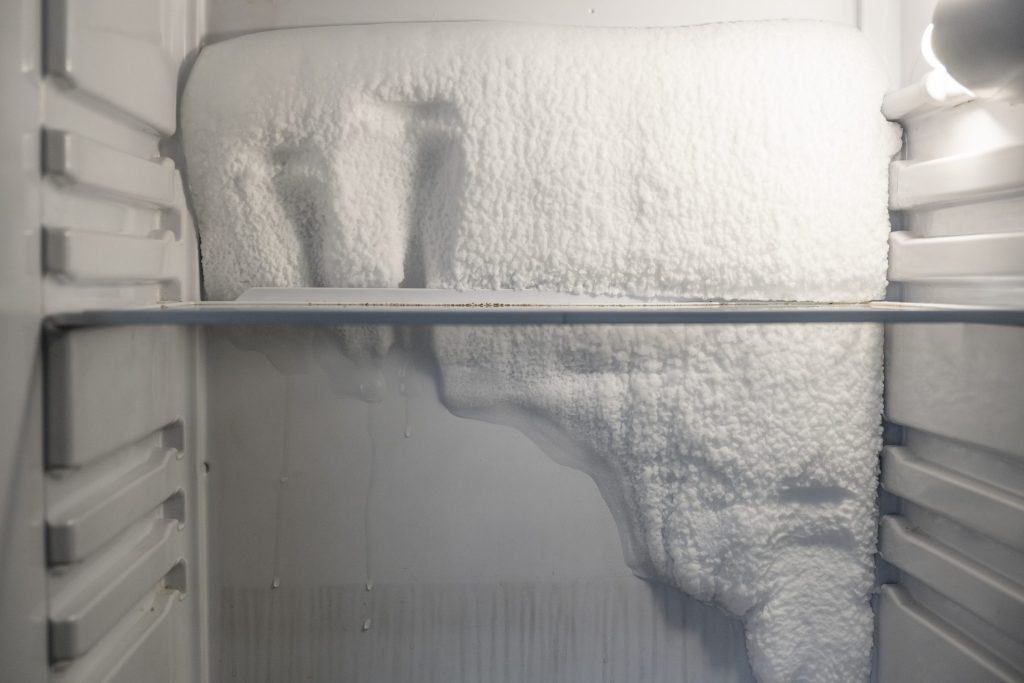
  • A thick slab of frost across the back wall and shelf of a freezer compartment
    Ice on the walls, the shelves or around the vents

    Frost building up inside

    A no-frost cabinet that is building frost is telling you one of two things: moist air is getting in, or the defrost cycle is not completing. On a 33-inch column the geometry makes this worse than on a small box — the evaporator is tall, ice builds from the bottom upward, and by the time anything is visible on the top shelf there is a great deal of it out of sight behind the rear panel.

    • Two causes only: air getting in, or defrost not completing
    • On a tall column the ice builds from below and shows late
    • A heavy door out of square is the commonest way air gets in
    What it usually means
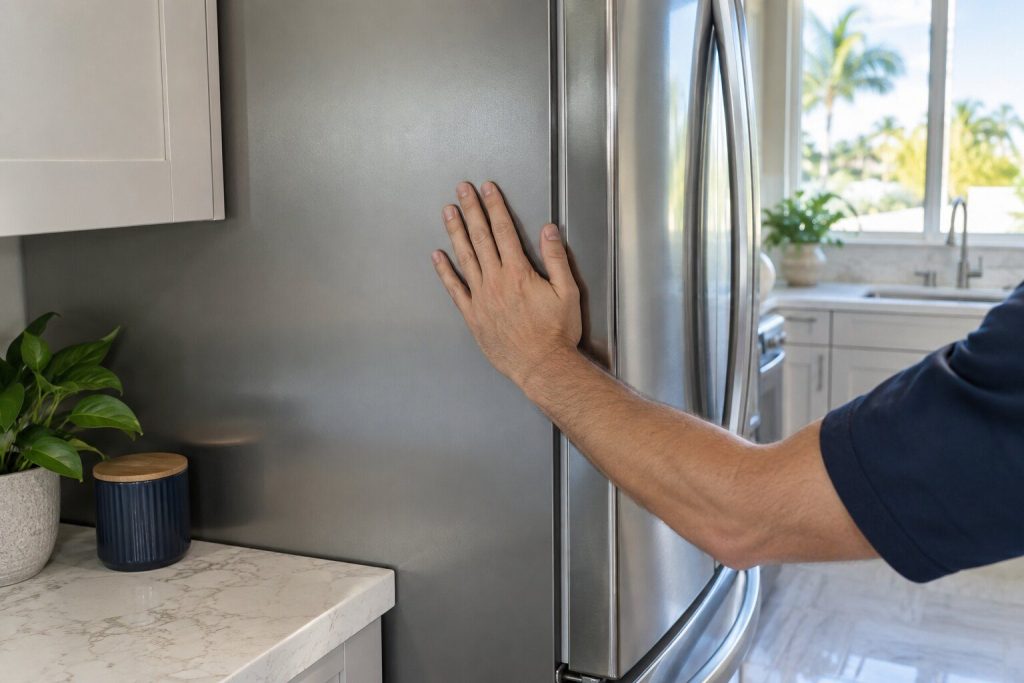
  • A hand held flat against the side panel of a stainless refrigerator standing in a run of cabinets, the person out of frame.
    A hum, a rattle, a click or a grinding

    Refrigerator making noise

    Most refrigerator noises are normal and a few are not, and the difference is usually when they happen rather than how loud they are. A counter-depth cabinet in a run of joinery also amplifies what it makes — the cabinetry acts as a sounding board — so a noise that would be unremarkable in a freestanding unit becomes the reason somebody calls. Telling us when the noise occurs narrows this faster than any description of the sound.

    • When it happens matters more than what it sounds like
    • Built-in joinery amplifies noise that a freestanding cabinet would absorb
    • Ice against a fan blade is the single most common real cause
    What it usually means
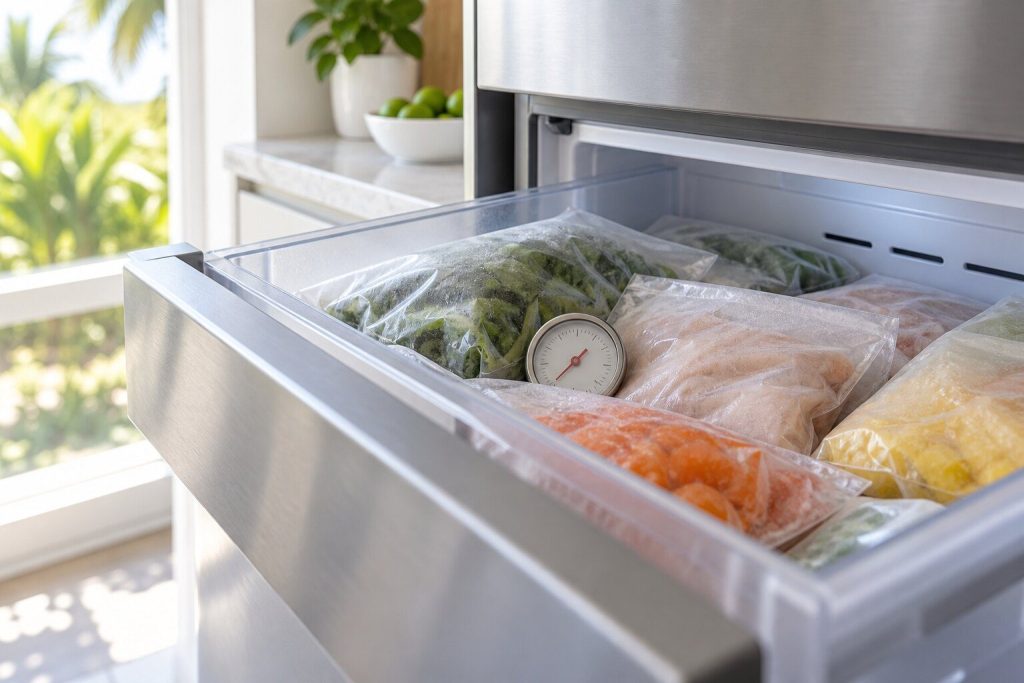
  • A small dial thermometer lying among packets inside a refrigerator drawer drawn half out.
    The drawer will not reach what you set it to

    Convertible drawer not holding

    The drawer this maker calls TempAdapt runs from −6 °F to 45 °F, which is a wider span than any other compartment in the cabinet attempts, and it manages it with its own air path, its own damper and its own sensor. That independence is the whole diagnosis: this drawer can fail completely while the rest of the refrigerator is perfect, and that is an ordinary outcome rather than a contradiction somebody needs explaining away.

    • It has its own damper and sensor, so it fails on its own
    • Reaching some settings and not others points at the damper
    • A drawer that will not close fully will never hold its lower settings
    What it usually means
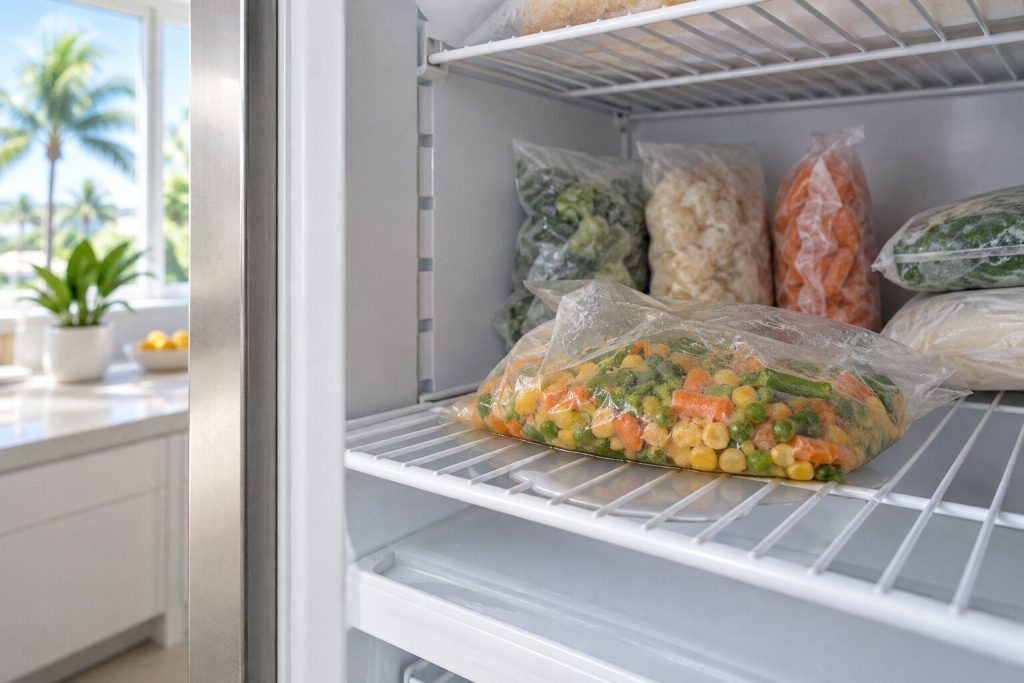
  • A clear bag of frozen vegetables gone soft and slumped flat on the wire shelf of a tall freezer column, a ring of meltwater on the shelf under it and the packets behind it still firm.
    The column is running and the contents are soft

    Freezer column not freezing

    The only freezer this badge builds is a 19 cubic foot, 33-inch column designed to stand beside its refrigerator twin behind matching trim. That matters here because everything written about freezer repair online is about a chest in a garage, and none of it applies. The failures are a tall evaporator icing from the bottom, a heavy trim-paneled door losing its seal, and an air path through the joinery that silted up years ago.

    • A 19 cu. ft. column, not a chest and not a garage upright
    • Ice builds from the bottom of a tall evaporator and shows late
    • A door carrying a trim panel goes out of square before its gasket wears
    What it usually means
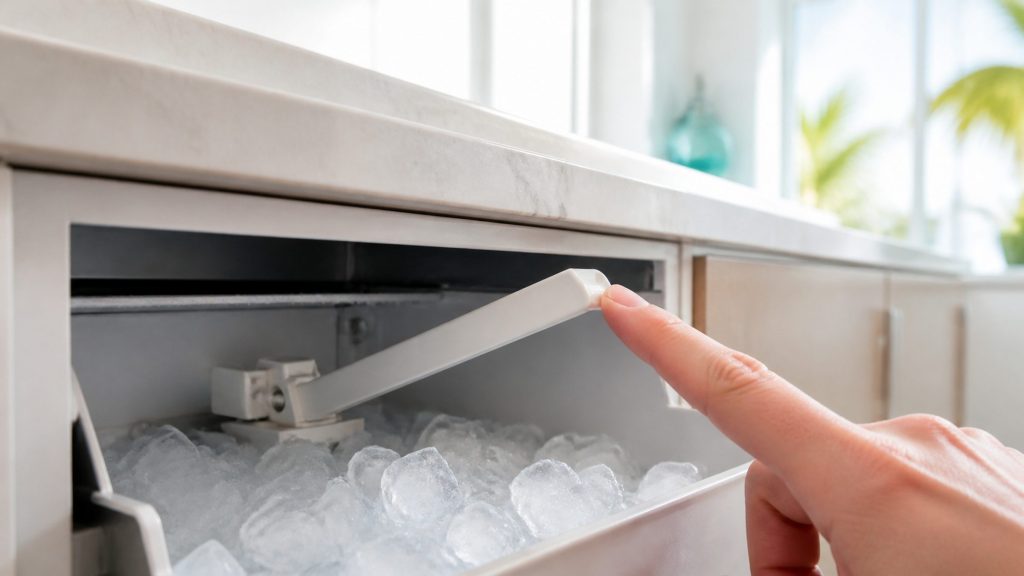
  • The white plastic bin-level sensor arm of an ice maker standing raised above a part-filled bin
    The bin is empty and stays empty

    Ice maker not making ice

    This maker sells no standalone ice maker today, so what has stopped is either the module inside a French-door cabinet or the 15-inch under-counter unit from the built-in range that came before. Either way the first question is whether any water is arriving at all, because roughly half of these are a supply problem rather than a mechanism problem — and the supply half is the cheaper half.

    • Half of these are water arriving, not the mechanism failing
    • The module inside a cabinet and the older 15-inch unit are different jobs
    • A freezer above 10 °F will not let the module harvest at all
    What it usually means
  • A handful of small hollow ice cubes on a pale stone counter beside a glass, one cube broken open to show the empty middle.
    Ice arrives, but it is not right

    Ice cubes small or hollow

    This is a water problem almost every time, and it is worth knowing because it is the cheap one. The mold is filled by a valve that opens for a fixed time and then harvests on schedule whatever arrived. Restrict the supply anywhere along the chain — filter, shutoff, a line squeezed behind a built-in cabinet — and you get a short fill, a thin shell and cubes that look hollow because they are.

    • A timed fill plus a restricted supply gives exactly this
    • Check the dispenser: slow water confirms it in seconds
    • The filter is the first thing and often the only thing
    What it usually means
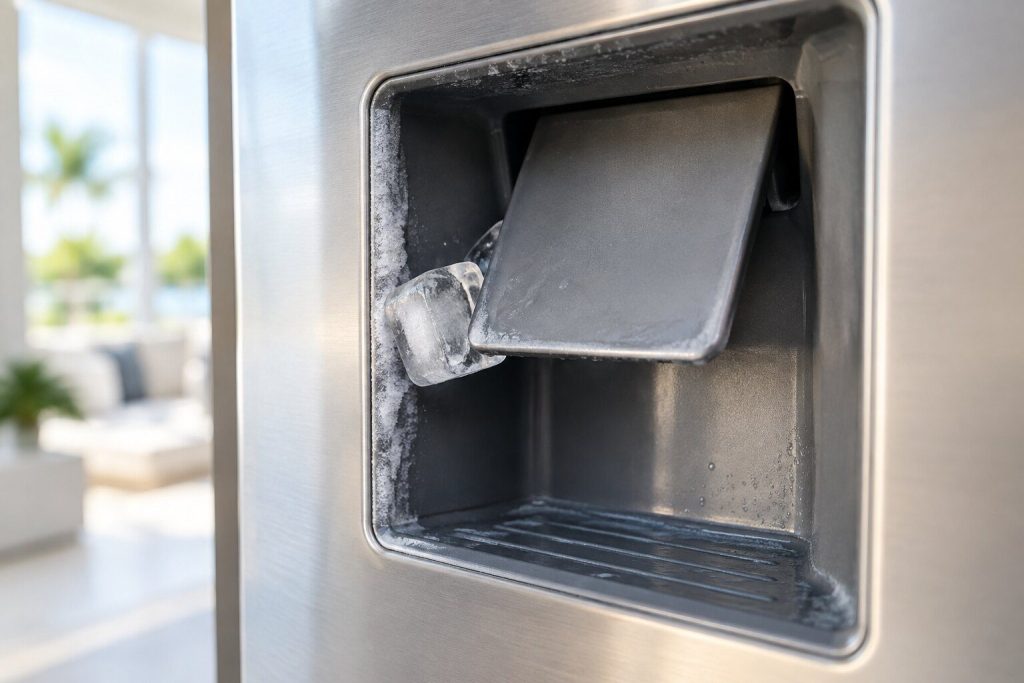
  • A single ice cube wedged in the chute of an in-door dispenser seen close up, the flap held partly open by it and frost around the opening.
    The display reads DI SP and nothing comes out

    Ice jammed in the dispenser

    This maker has its own code for it — DI SP, sometimes shown as DISP — and publishes three causes, all of which are about a bin that stood still: light use, temperature swings, a power cut. Cubes part-thaw and refreeze into a single mass around the auger, and the auger then either cannot turn or shears a piece off into the chute. In a region with summer outages this is seasonal rather than occasional.

    • DI SP is the maker's own code, and it means a jam rather than a failure
    • Light use, temperature swings and power cuts are its published causes
    • Forcing the paddle against a jam is how augers get bent
    What it usually means
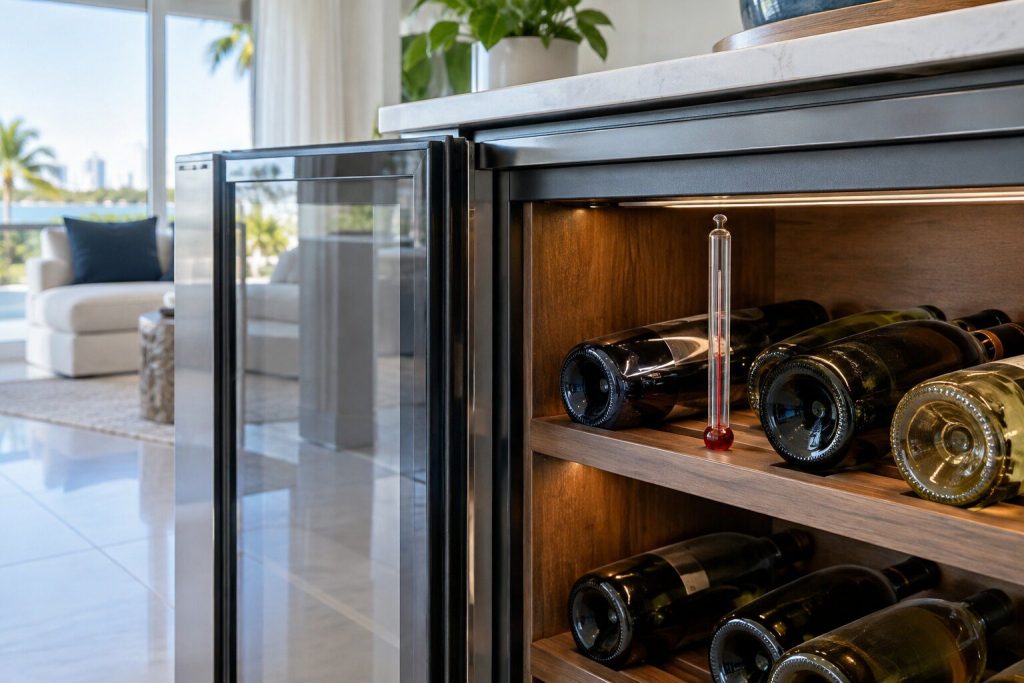
  • A thermometer standing among bottles on the walnut shelf of an under-counter wine cabinet with its glass door open, afternoon light in the room.
    It drifts in the afternoon and catches up at night

    Wine cooler not cold enough

    Both cabinets on this badge are 24-inch under-counter units with glass doors, and a glass door in a warm room is the entire thermal problem in one part. A cabinet that loses ground through the afternoon and recovers overnight is usually being beaten by the room and the installation rather than failing — flush into a bar run with no rear clearance and no front grille, it is re-breathing its own exhaust.

    • Afternoon drift with overnight recovery usually means the installation
    • No full-height wine column exists on this badge — these are under-counter cabinets
    • Clearance, grille and condenser are one air path in a bar run
    What it usually means
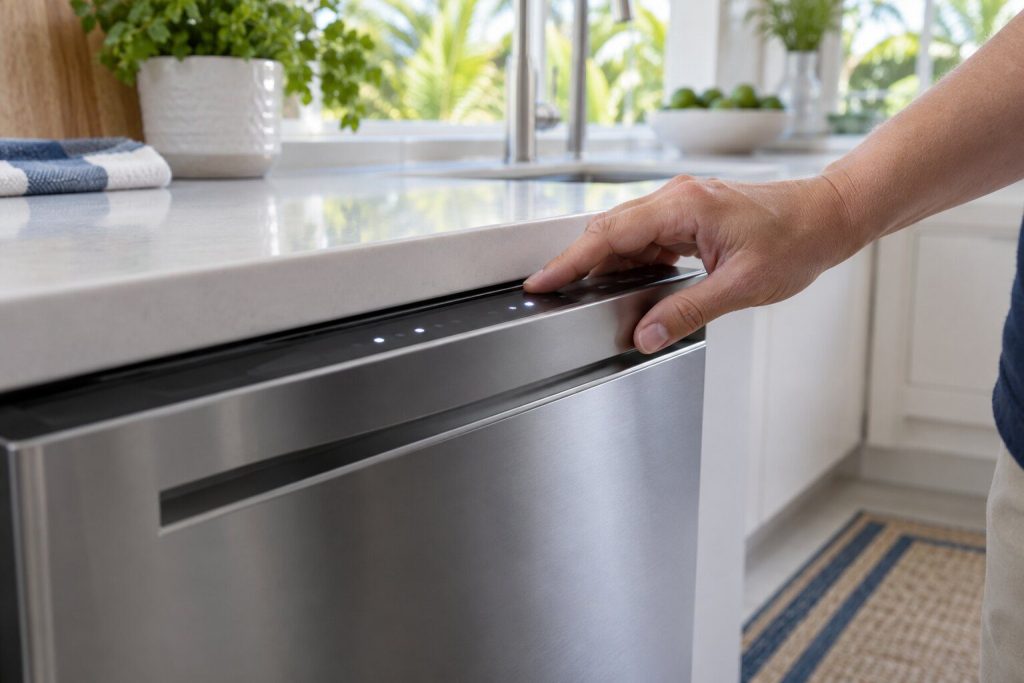
  • A finger resting on the control strip along the top edge of a closed dishwasher door, the panel lit but showing nothing readable.
    The panel lights up and nothing happens

    Dishwasher will not start

    Two of this maker's three dishwasher codes are not problems at all, and both of them present exactly like a machine that will not start. A number between 1 and 24 counting down is the delay option. Hd or HO is the heat delay, waiting for the water to reach temperature. Between them they account for a real share of the no-start calls we take, and both are free to resolve from this page.

    • A number from 1 to 24 is the delay start, not an error
    • Hd is the machine heating water before it will wash
    • The latch has to close a switch before anything runs
    What it usually means
  • Two inches of gray water standing in the floor of a dishwasher tub with the round filter well submerged and the lower rack drawn out.
    Standing water in the bottom at the end of a cycle

    Dishwasher not draining

    The maker publishes one code for this — i40, a clogged filter or sump — and names the glass trap specifically. A genuine share of these calls end at parts that lift out by hand with no tools. What makes it a repair rather than maintenance is water still standing with the filter removed, and that is a single test anybody can run.

    • i40 is the maker's code and it points at the filter first
    • Filter and glass trap lift out by hand, no tools
    • Water still standing with the filter out is what makes it a repair
    What it usually means
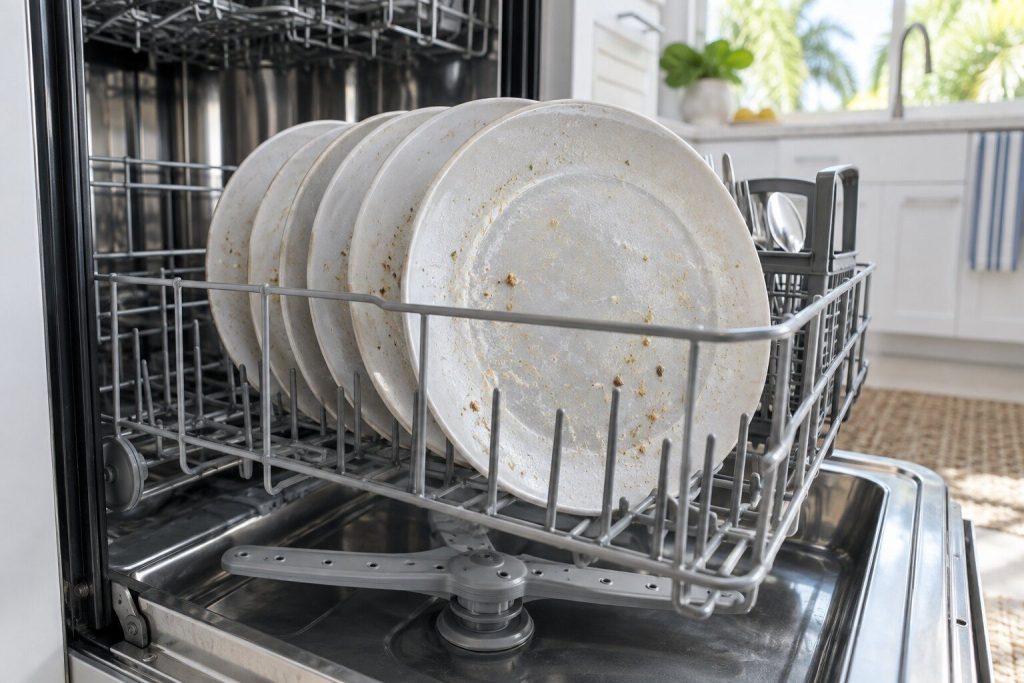
  • A stack of plates on an open dishwasher rack with visible grit and film on them, the spray arm below them in frame.
    Grit, film, or food still on the plates

    Dishes coming out dirty

    Three free checks come before any part: something tall in the bottom rack fouling the arm above it, a filter that has filled up, and water turning up cold. Beyond those, the feature doing most of the work on these machines is SmartBoost — it premixes detergent with water before the first spray — and when it fails what people notice is not an error but poor results on short cycles, blamed on the detergent for months.

    • A tall item blocking the upper arm is the commonest cause and it is free
    • SmartBoost failing shows as poor short cycles, not as an error
    • Hard water leaves film, and that is descaling rather than repair
    What it usually means
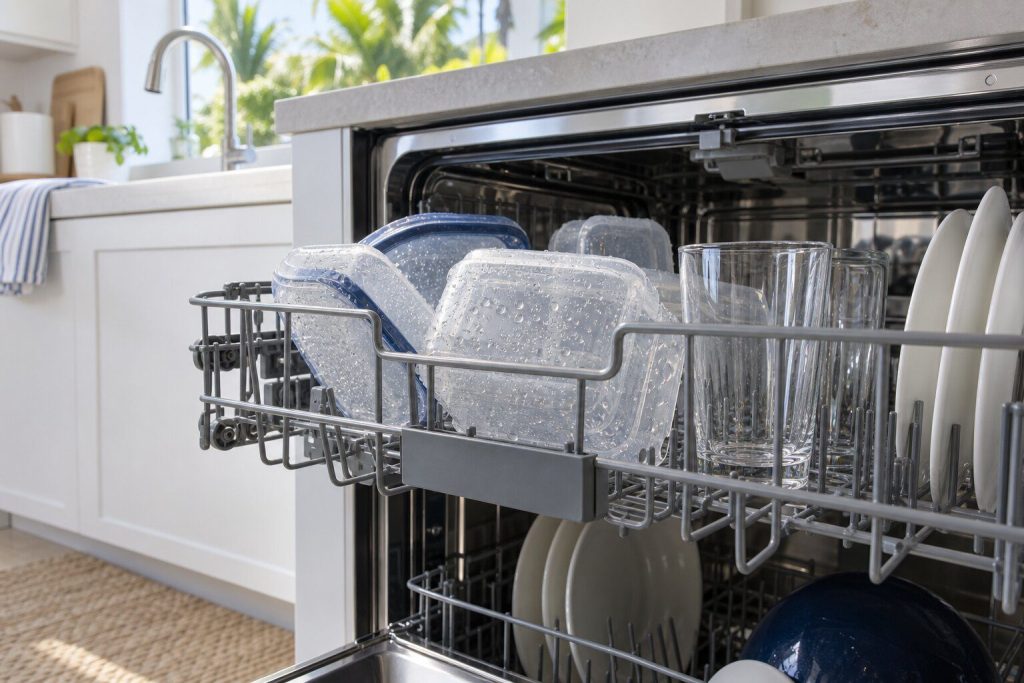
  • An open dishwasher at the end of a cycle with plastic containers on the upper rack still beaded with water while the glass beside them is dry.
    Especially the plastics

    Dishes coming out wet

    Plastics coming out wet is how these machines work and it is worth saying plainly rather than treating as a failure. They dry with residual heat rather than a blast of hot air, so glass and china give up their water and plastic does not. What is not normal is everything wet, or a machine that sits on Hd for half an hour and then washes cold.

    • Wet plastics are the design, not a failure
    • Everything wet, or a permanent Hd, is the heater or its control
    • Rinse aid is doing more work here than people realize
    What it usually means
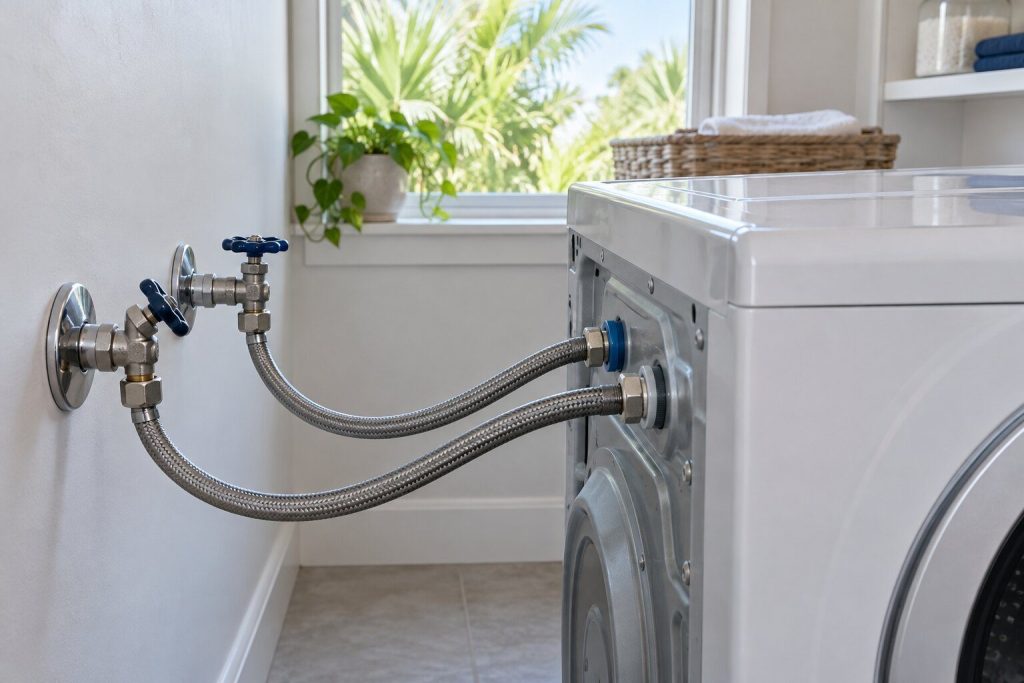
  • Two braided supply hoses and their taps at the wall behind a front-load washing machine pulled forward, one tap only part open.
    It starts, it waits, and no water arrives

    Washer will not fill

    This maker publishes three codes across this ground and two of them are installation problems rather than failures. E11 is a long fill; HO SE is the machine detecting for itself that the hot and cold hoses are crossed; E35 is the pressure sensor reporting overfill. If the machine was fitted or moved in the last month, the fix is very likely free and it is not ours to charge for.

    • Two of the three codes here are installation problems
    • E11 locks the machine for six minutes and unplugging restarts that clock
    • Crossed hoses fill a washer badly for years without ever failing
    What it usually means
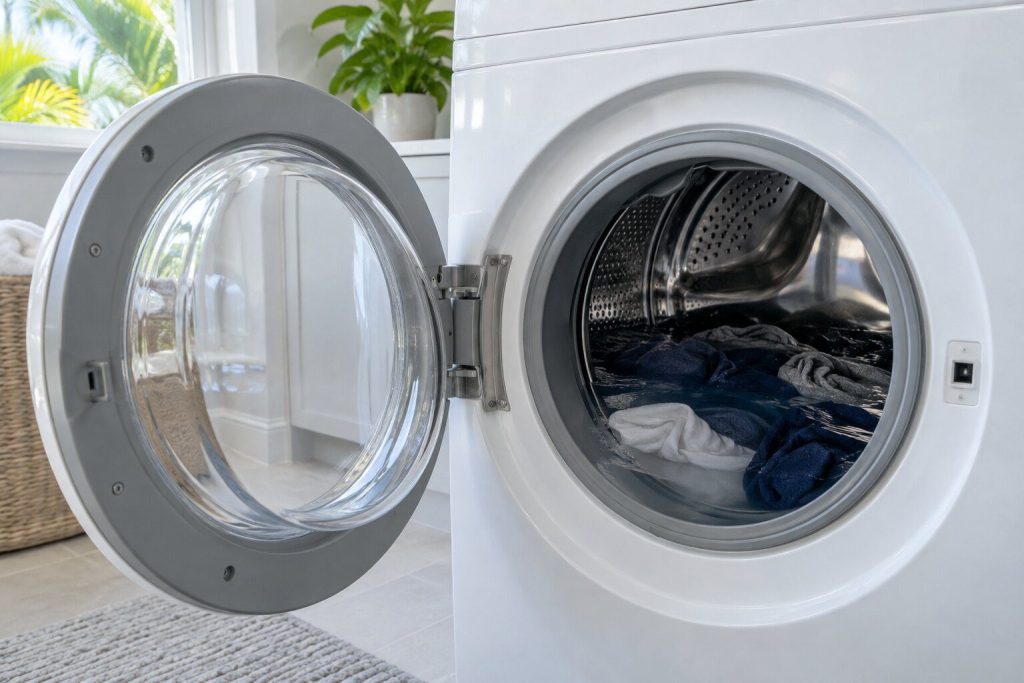
  • Water standing in the drum of a front-load washer seen through its open door, laundry sitting in it.
    The cycle ends with water still in the drum

    Washer will not drain

    E21 is the maker's code for a pump-out taking too long, and its own first answer is not a part: a kinked drain hose. In a laundry closet where the machine has been pushed back so the louvered door will shut, the machine has folded its own hose behind itself — and the symptom arrives weeks after an installation that was perfectly good on the day.

    • E21, and the maker's first answer is a folded drain hose
    • The pump filter collects sand here, not just lint
    • A silent pump and a straining one are different parts
    What it usually means
  • A drum of wet laundry pushed to one side inside an open front-load washer, the machine standing still.
    Clothes come out soaked

    Washer will not spin

    A front loader will refuse to spin a load it cannot balance rather than damage itself, so a machine that spins small loads perfectly and large ones not at all is behaving correctly and telling you about its suspension. The other frequent cause is not the spin at all: no confirmed door lock means no spin, and that presents identically from outside.

    • Refusing to spin an unbalanced load is correct behavior
    • Spins small loads but not large is the suspension
    • No confirmed door lock means no spin, and that is a different repair
    What it usually means
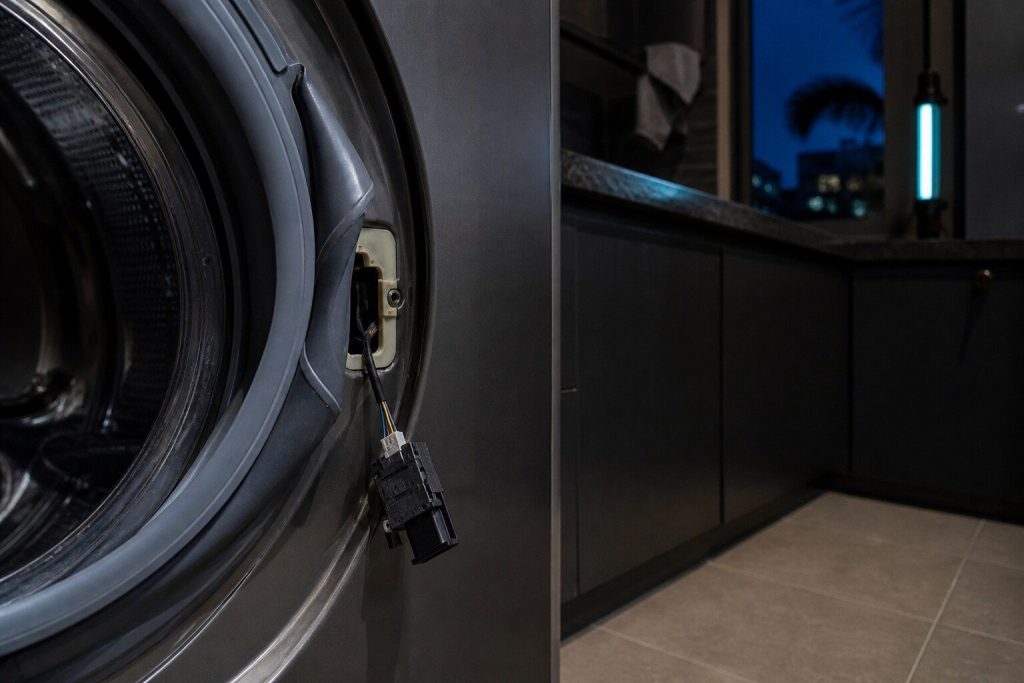
  • A door lock unit drawn out of the front panel of a washing machine and hanging on its wiring loom
    It will not start, and the display says so

    Washer door will not lock

    Two codes, two parts, one symptom. E41 means the control is not being told the door is closed; E42 means the lock will not confirm it engaged. From outside the machine they are indistinguishable and inside they are different components. The most common cause of both costs nothing: a corner of fabric caught in the seal doing an excellent impression of a closed door.

    • E41 is the switch, E42 is the lock — same symptom, different parts
    • A towel corner in the gasket is the most common cause of both
    • This is not a lock to defeat, and we will not defeat it
    What it usually means
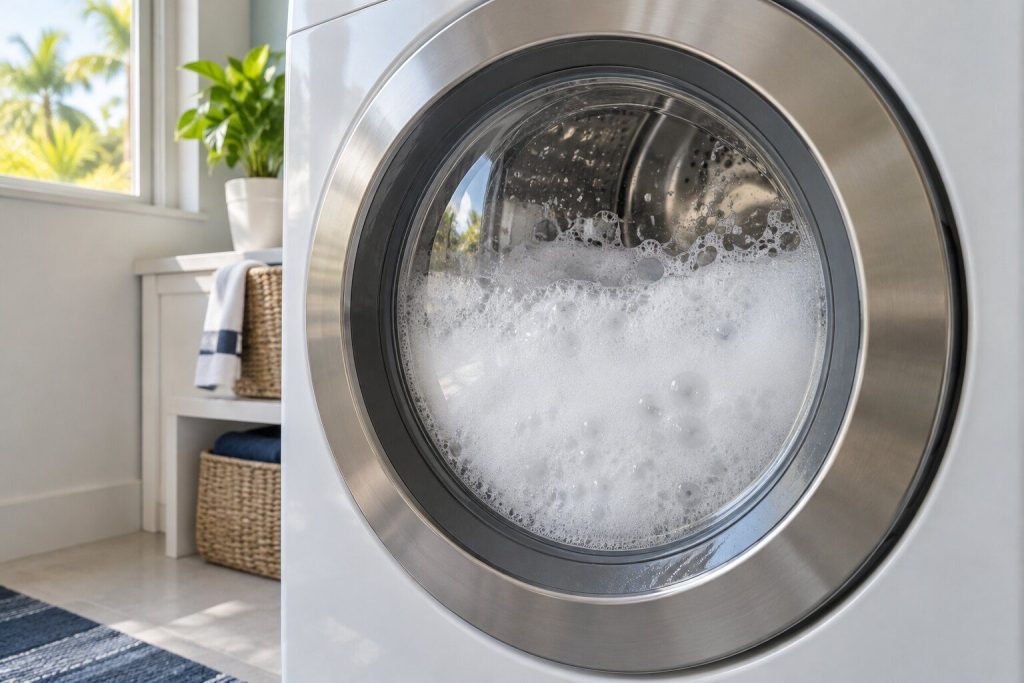
  • Thick white foam filling the lower half of a front-load washer drum seen through the closed glass door.
    It keeps rinsing, five minutes at a time

    Washer cycle never ends

    SU dS is the maker's code and the machine is handling the problem correctly — it rinses again, and again, until the foam has gone, adding about five minutes each time. This is the most common washer call we take that is not a repair at all. A front loader uses a fraction of the water a top loader does, so an ordinary dose of the wrong detergent oversuds every single time.

    • SU dS, and the machine is doing exactly the right thing
    • A non-HE detergent cannot work in this machine at any dose
    • Most households use roughly twice what these drums need
    What it usually means
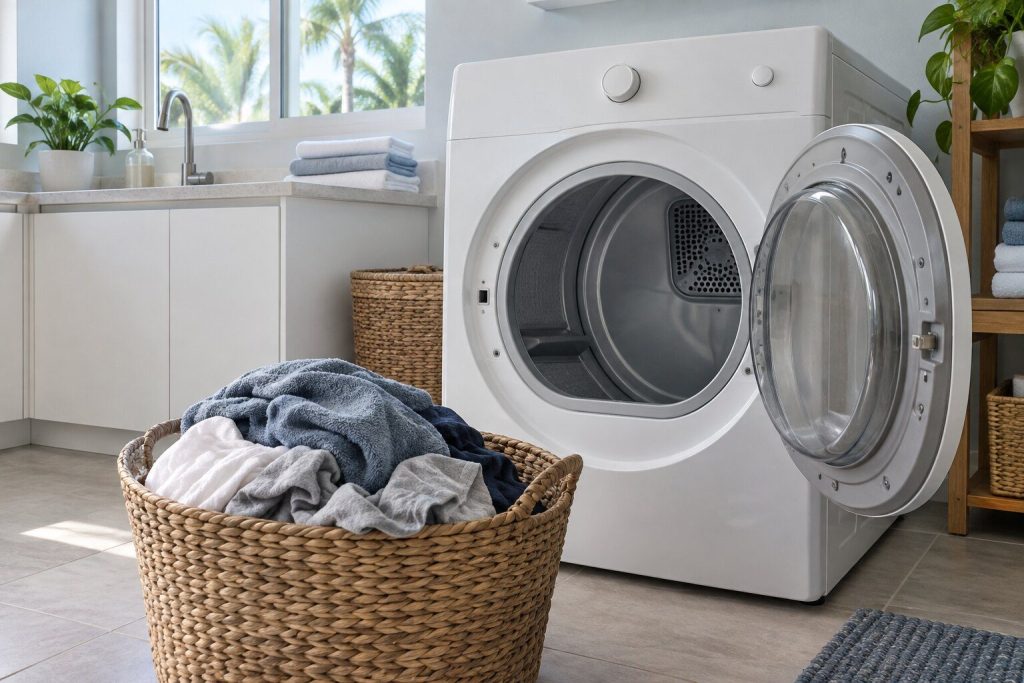
  • A basket of damp laundry on the floor in front of a dryer whose door stands open, the drum empty and the room in daylight.
    It tumbles, the cycle runs, nothing dries

    Dryer not heating

    On an electric dryer this pattern says something specific before anybody opens the machine. The motor runs on 120 volts and the heating element needs both legs of 240, so a dryer that tumbles happily without heating is very often a supply problem rather than an appliance one. This maker publishes two codes that say exactly that — H2/B2 for the supply, H4/B4 for wiring — and both send you outside the appliance.

    • Tumbling without heat points at the supply as often as at the element
    • H2/B2 and H4/B4 both point outside the machine
    • Check whether the range went strange at the same time
    What it usually means
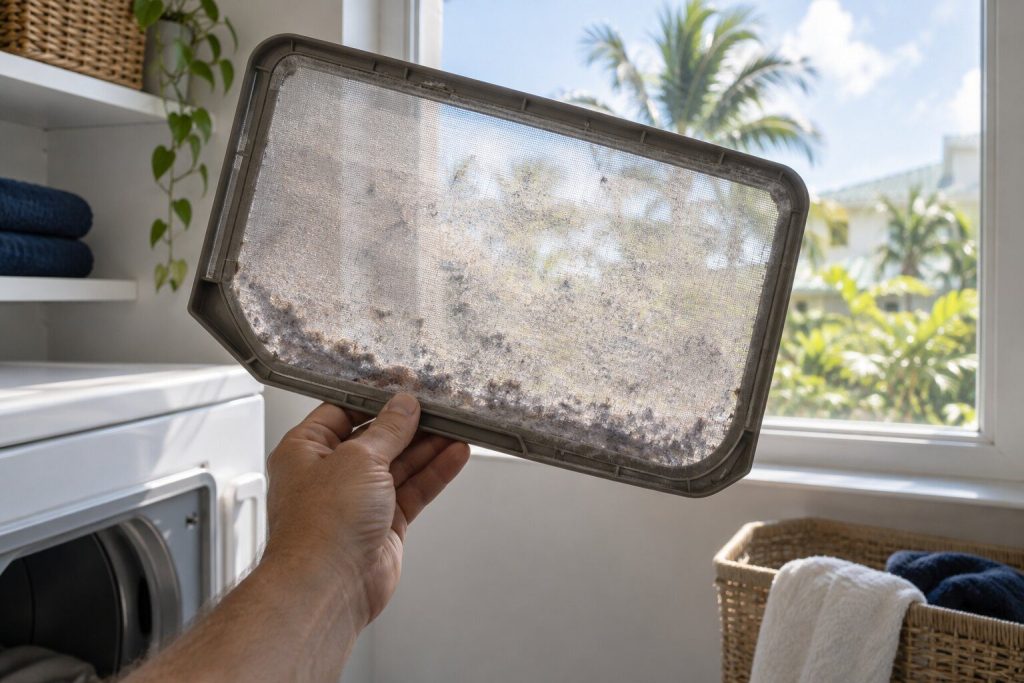
  • A lint screen drawn out of a dryer and held up against a window, a film across its mesh visible in the backlight.
    A single load now needs two or three runs

    Dryer takes too long

    Airflow, nearly always, and it is worth acting on rather than living with. This maker publishes EF1 for a ventilation blockage and sends it to the installer rather than to service, which in a South Florida building is more reasonable than it sounds: the run goes up through a wall to a roof or a soffit, it is long, it has elbows, and the part that blocks is the end nobody can see. This is a fire risk before it is a repair.

    • EF1 is the maker's own code and the whole answer is the duct
    • In a condominium the run is vertical, long and invisible from inside
    • A dryer working three times as hard is running three times as hot
    What it usually means
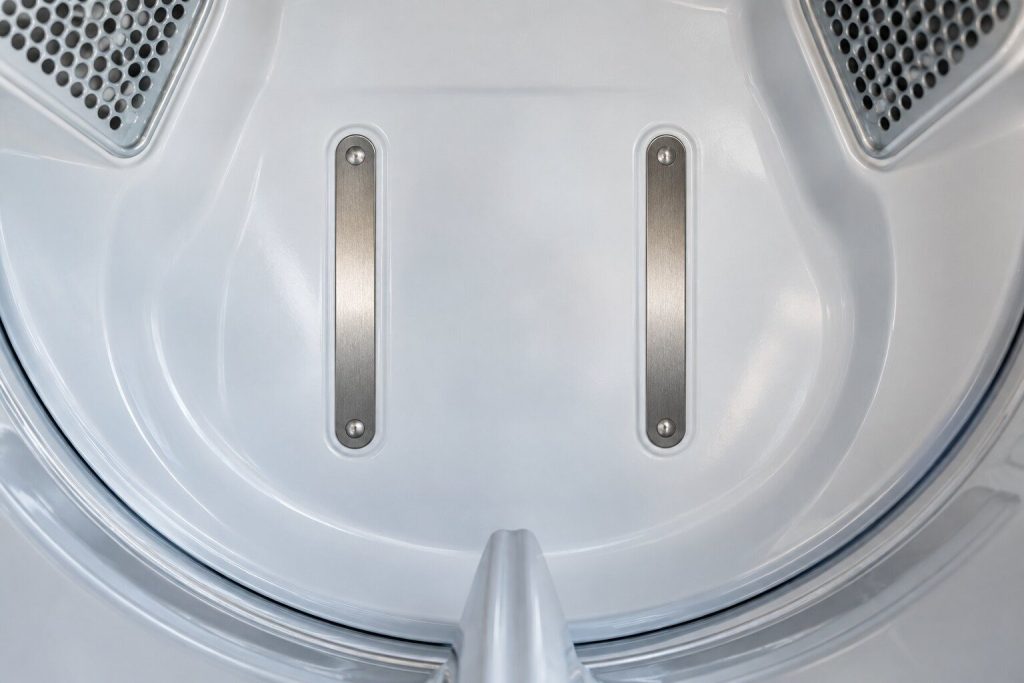
  • Two metal sensor strips set into the inside front of a dryer drum, seen close and square on, the drum otherwise empty.
    Automatic cycles end early; timed cycles work

    Dryer stops before the load is dry

    That combination is the moisture sensor, and this maker publishes it as E 4 with unusually generous wording: the dryer keeps working and what you lose is the automatic programs. The sensor is a pair of metal strips inside the drum opening reading the resistance across damp fabric, and the commonest reason they stop reading is a film of fabric softener rather than a failed part.

    • Automatic cycles wrong while timed cycles are right — that is the sensor
    • E 4, and the maker's own note says the machine keeps working
    • Softener film across the strips is the usual cause and it is free
    What it usually means
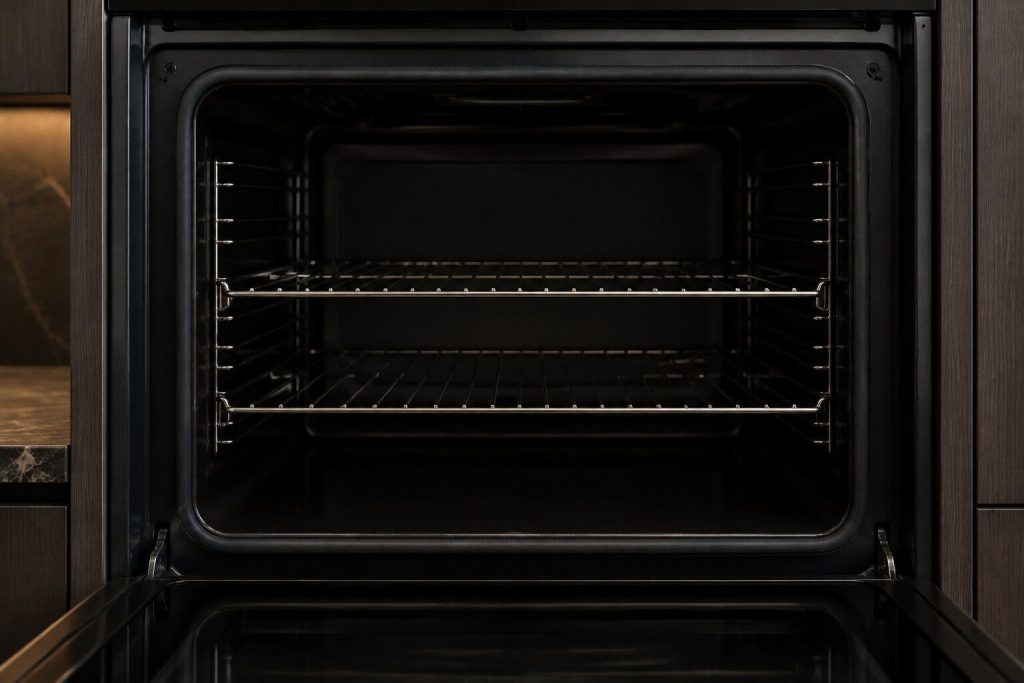
  • The open cavity of a built-in wall oven, empty, with two wire racks in place, seen straight on
    It lights up, it counts down, and it stays cold

    Oven not heating

    Two free answers come before any of the expensive ones on this badge. Demo mode accepts every setting and counts down a preheat without heating at all, and it reaches kitchens on floor models and by an accidental button combination during setup. And F10 on the stone-baked pizza ovens is frequently the Pizza Shield in the wrong rack rather than anything wrong. Both are published by the maker and both cost somebody a call-out every year.

    • Demo mode is free to rule out and it is a genuine cause
    • F10 on a pizza oven is often an accessory in the wrong rack
    • On a new kitchen, a cold new oven is very often neither
    What it usually means
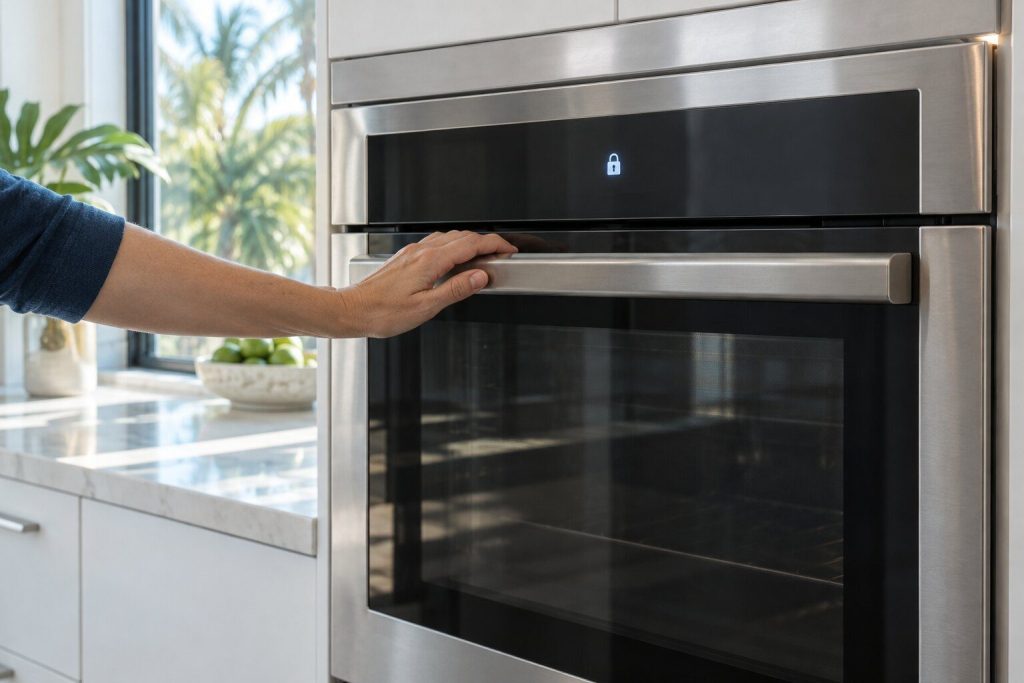
  • The closed door of a wall oven with a small lock indicator lit on the panel above it, a hand resting on the handle.
    After a clean cycle, and it will not open

    Oven door locked shut

    Five codes — F90 through F94 — describe one mechanism: the small motor and cam that bolt the oven shut for a clean cycle. Nearly every one of them arrives the morning after a self-clean, because that is the only occasion the latch is asked for everything it has. The maker's own route out is the UNLOCK key, and on these ovens the screen hands you a code to type back.

    • F90 to F94 are five numbers for one latch
    • They nearly all appear the morning after a self-clean
    • Levering the door turns one part into a door, a hinge and a liner
    What it usually means
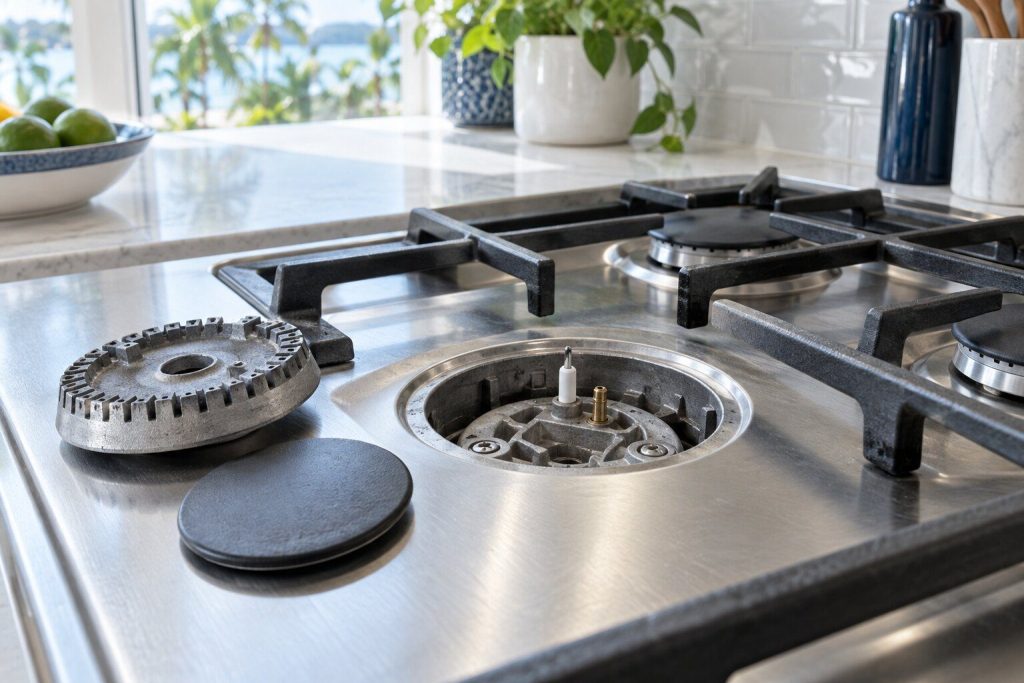
  • A gas burner head and its cap lifted off and set on the cooktop beside the empty burner well, the igniter electrode visible in it.
    It clicks and clicks and nothing happens

    Gas burner will not light

    The igniter is working, so the problem is the gas or the port rather than the spark. On a sealed burner the usual pair is a clogged port or a cap that went back very slightly out of true after somebody cleaned the hob — and both are free to correct. If one burner lights and another does not, you have already done most of the diagnosis yourself.

    • Clicking means the igniter is fine — look at the gas and the ports
    • A burner cap seated slightly off after cleaning is very common
    • All burners clicking when one is turned is normal on these
    What it usually means
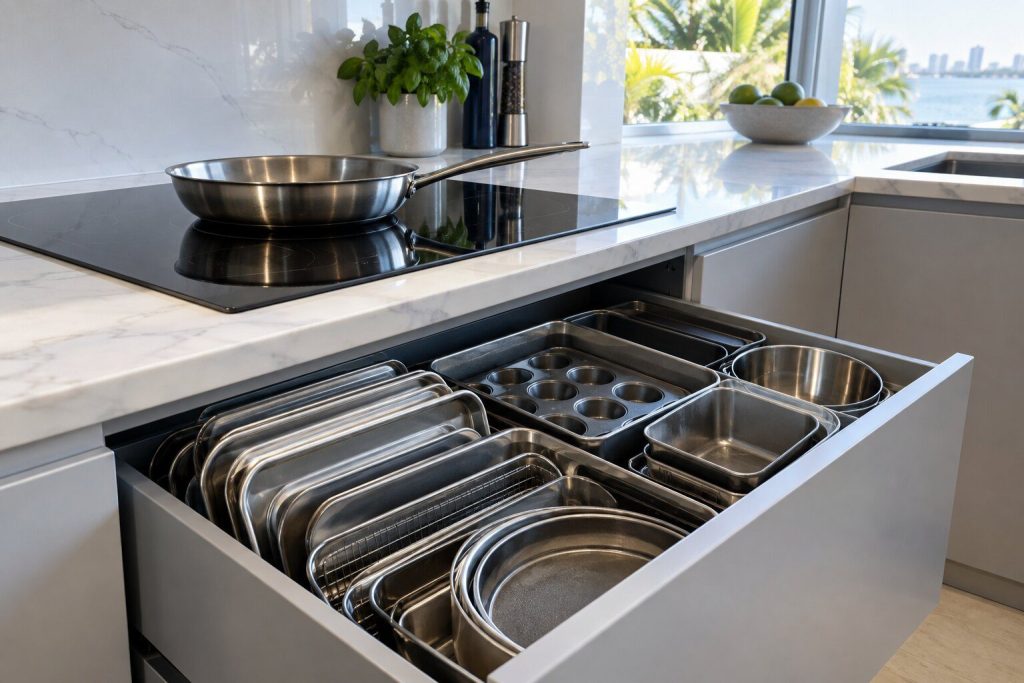
  • A pan standing on a black glass induction surface with the drawer below the cooktop pulled open and packed to the top with trays.
    It heats for a moment and then stops

    Induction zone shuts off

    Usually the cooktop protecting itself rather than failing, and two of the ordinary causes are free. Induction zones shut down on their own temperature, and the commonest reason they get hot is a blocked cooling path underneath — a drawer packed tight against the unit is enough. The other is a pan too warped to couple properly. Every glass cooking surface on this badge is induction; none of the general advice about radiant tops applies.

    • No radiant cooktop exists on this badge — this is induction
    • A drawer packed against the underside is a genuine cause of shutdowns
    • One dead zone means one power stage, not the whole board
    What it usually means
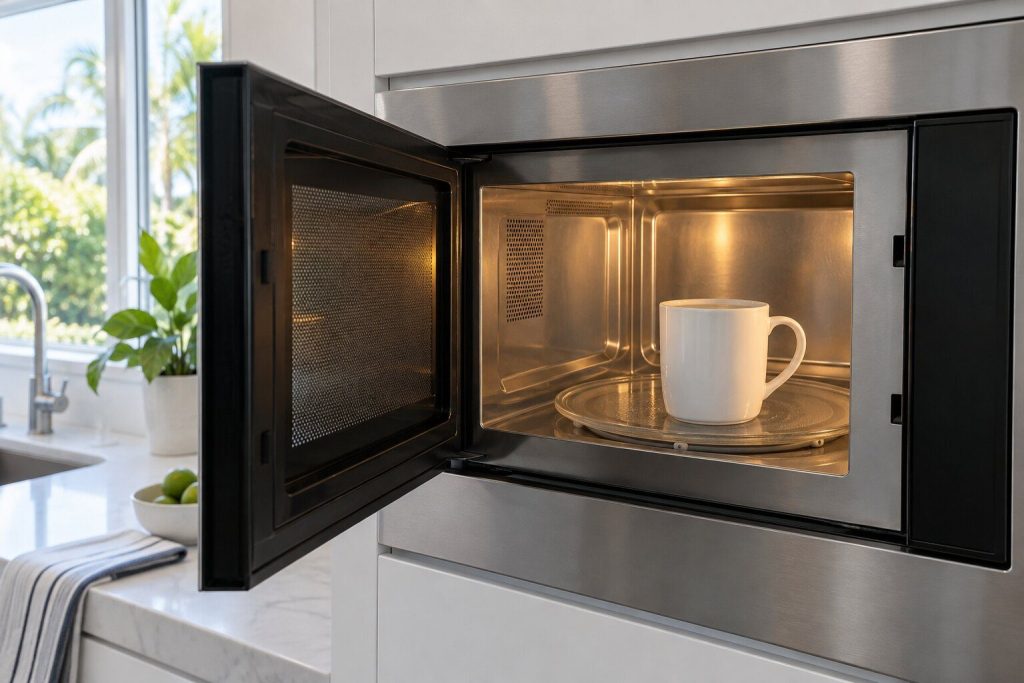
  • A mug of water standing on the turntable of an open built-in microwave, the cavity light on.
    The turntable turns and nothing gets hot

    Microwave not heating

    This is the clearest diagnostic split on any appliance in the kitchen: the low-voltage side is alive and the high-voltage side is not. Lights, turntable, fan and display all run on a control circuit that has nothing to do with cooking. It is also the one appliance on this site we ask people not to open at all — the high-voltage capacitor holds a charge that can kill long after the unit has been unplugged.

    • Turntable turning with no heat splits the machine cleanly in two
    • Never open one — the capacitor holds a lethal charge after unplugging
    • On a built-in, repair is usually right because replacement means the opening
    What it usually means
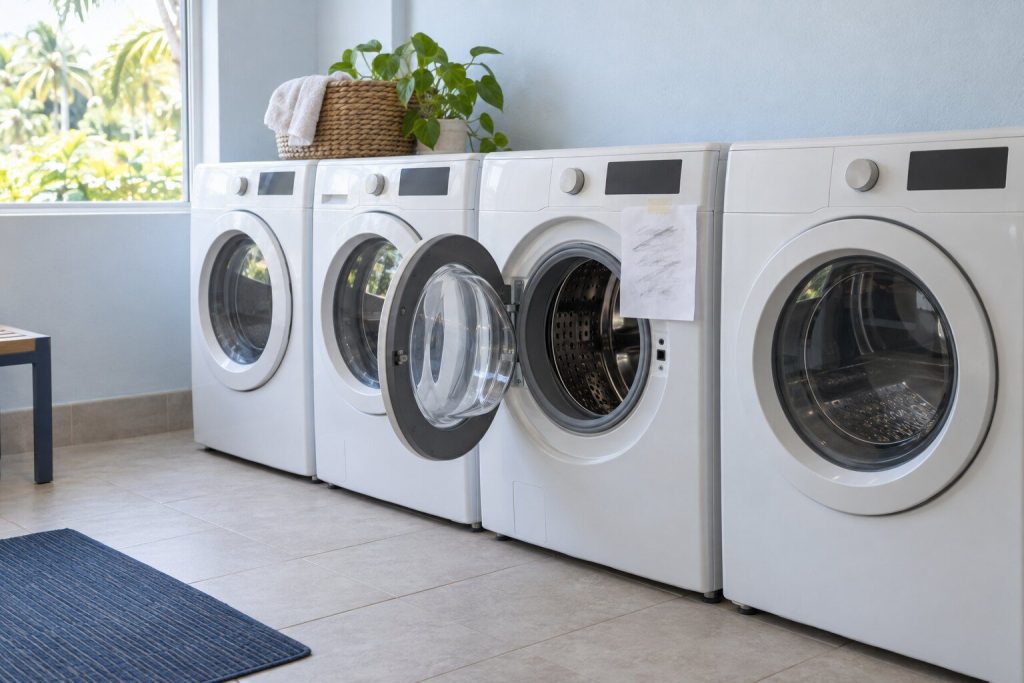
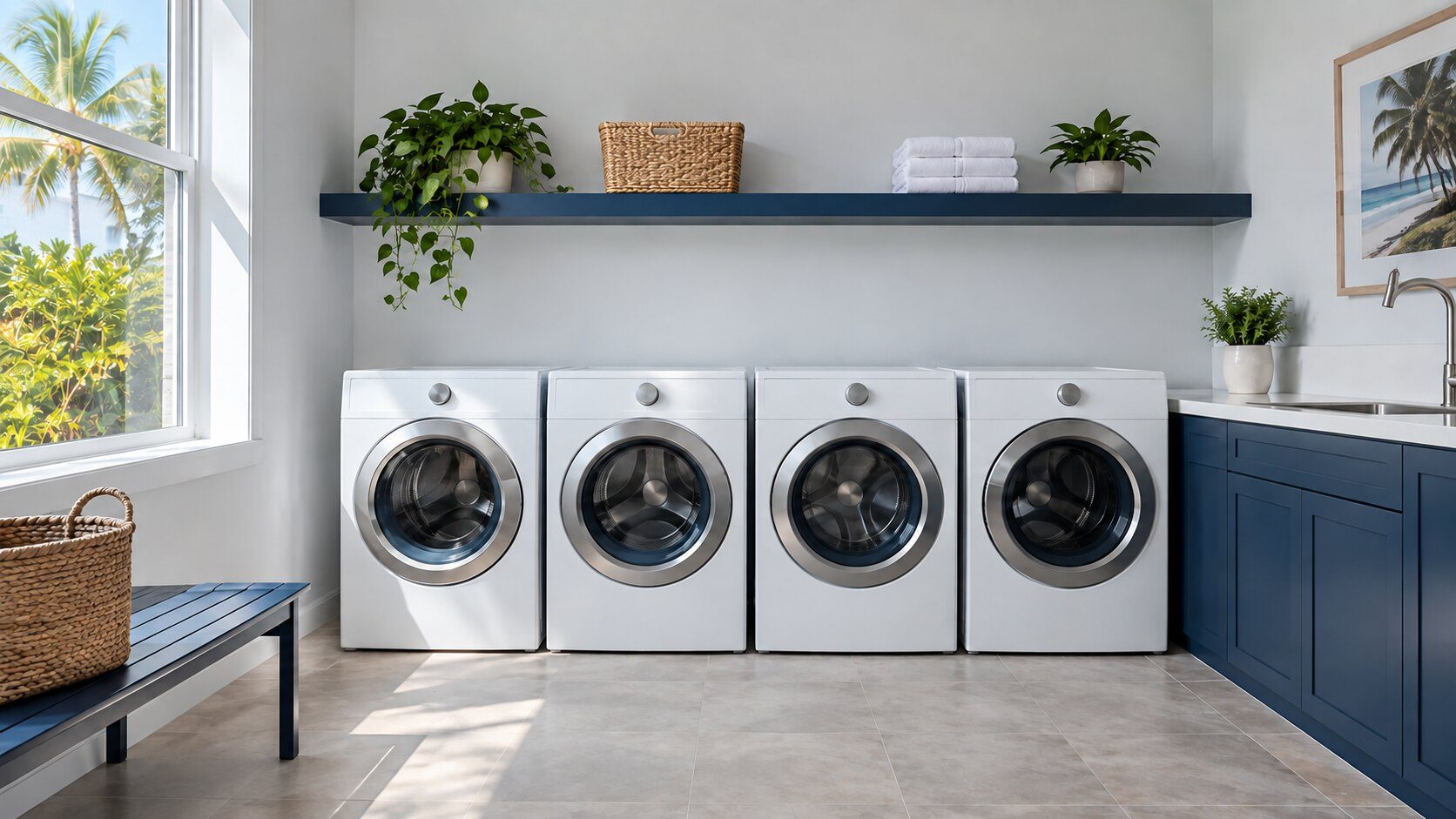
  • One front-load machine in a row of four in a shared laundry room with its door open and a handwritten paper notice taped to it, the notice not readable.
    The same repair every few months in the same room

    Building laundry machine keeps failing

    Not a defect, and saying so is the useful part. A front-load washer rated for six or eight cycles a week doing forty wears its pump, its door lock and its bearings at a proportional rate, so a machine that needs attention every few months in a building laundry is doing exactly what the arithmetic predicts. What changes the outcome is not a better machine — it is knowing which part goes first in that particular room and keeping one on a shelf.

    • Duty cycle rather than age decides what wears in these rooms
    • Pumps go first, then door locks, then bearings
    • A part on a shelf turns a three-day outage into an afternoon
    What it usually means

Before anything expensive

Several of these are not failures

A dash across a cooktop is the lock. LOC on a washer is the control lock. A number between one and twenty-four on a dishwasher is the delay start. Hd is the machine heating water. AD on a dryer is an automatic cycle. SB SB on a refrigerator is Sabbath mode.

All six look like a broken appliance from across the room and none of them is. They are on this site because a service call to be told so is a service call nobody should pay for.

The code archive
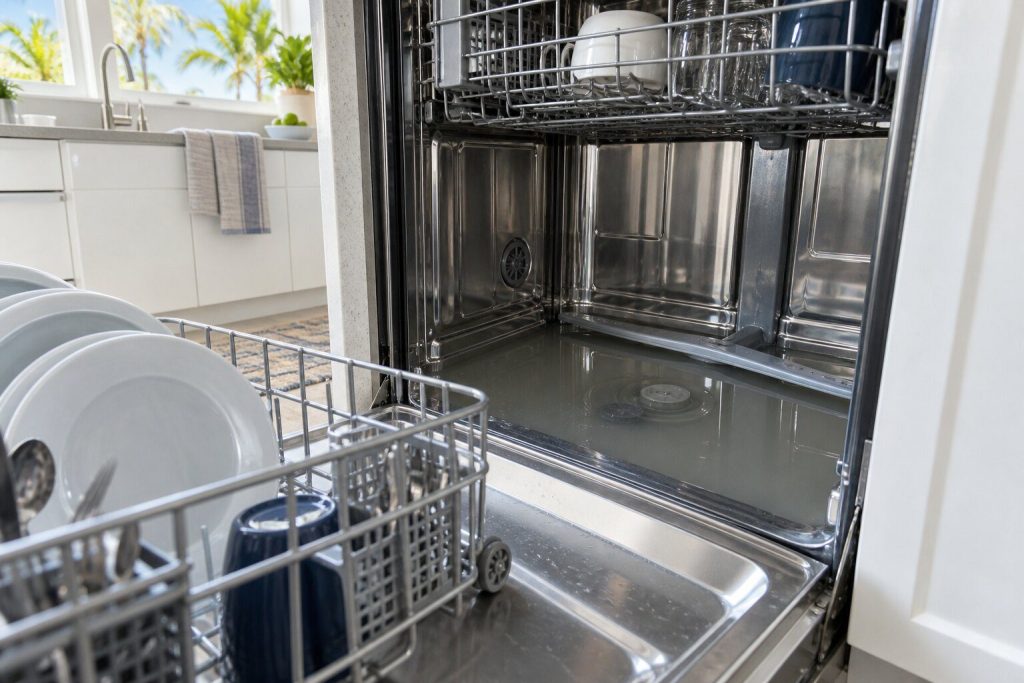
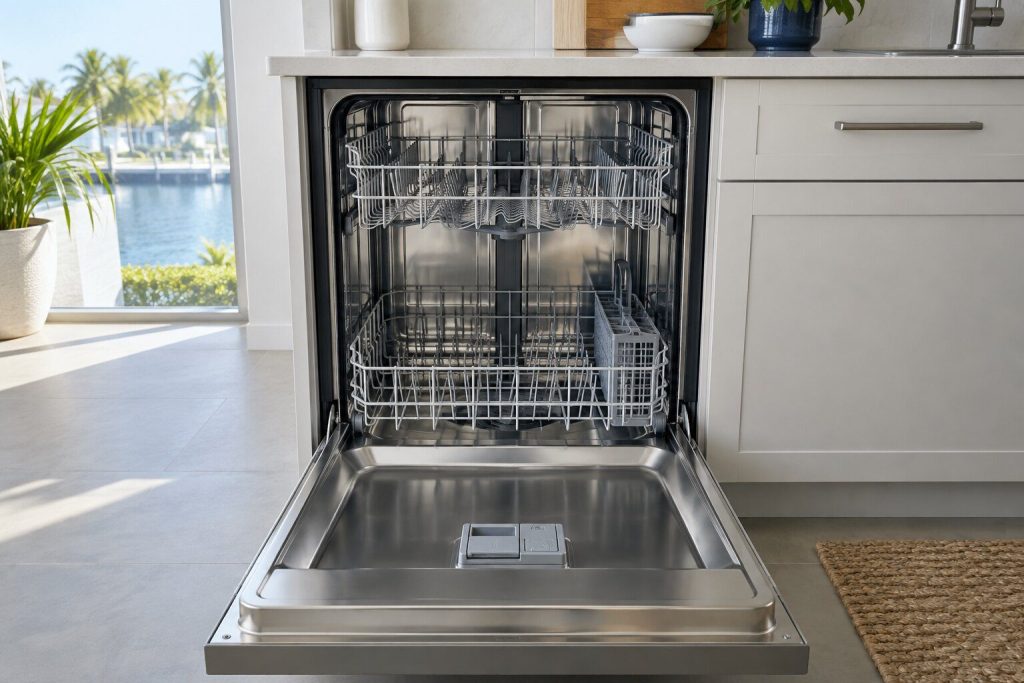
The open door of a built-in dishwasher with its stainless tub and empty racks, seen from a standing height.

And several point outside the machine

Five of this maker's codes are not ours to bill for

EF1 is the dryer vent. H4/B4 is the wiring at the outlet. H2/B2 is the supply reaching the building. E11 and HO SE are crossed washer hoses. The manufacturer sends all five back to whoever installed the machine or to the utility.

If that is what we find, we say so and charge for the diagnostic rather than fitting a part that was never the problem.

Dryer symptoms
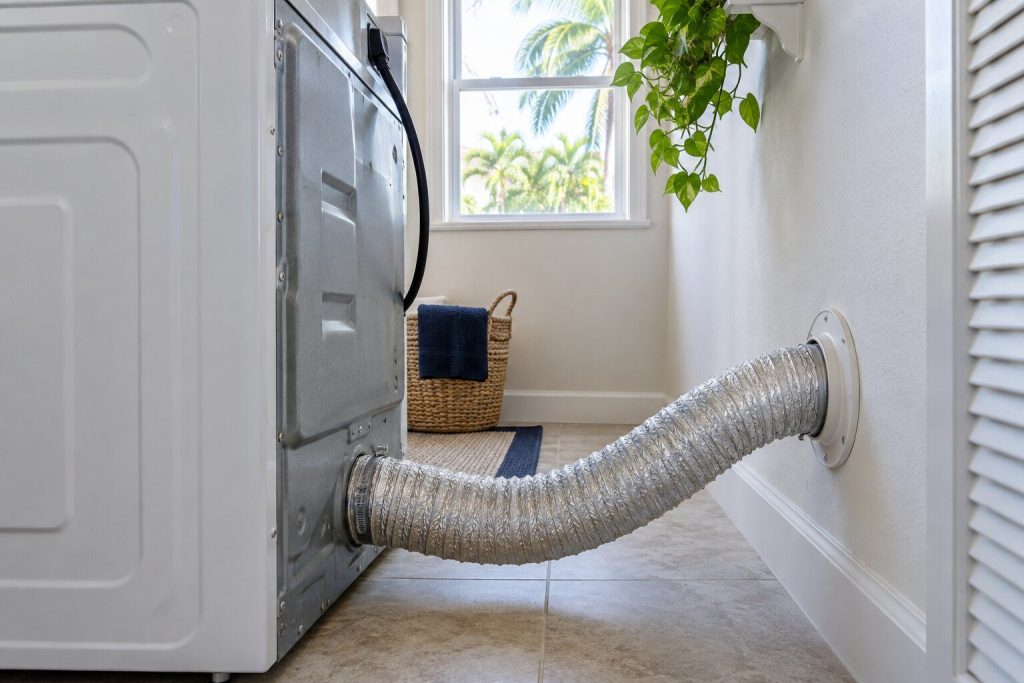
A flexible dryer duct running from the back of a machine to a wall outlet in a laundry closet, the machine pulled forward.

Before you book

Four things that shorten the visit

Have these to hand

  • The model and serial off the rating plate. On this badge it also settles whether we are looking at the current line or at the built-in range that came before it.
  • A photograph of whatever the panel is showing, taken before anybody cuts the power — this maker keeps evidence that a reset destroys.
  • Whether the appliance is freestanding or fitted in. Almost everything this make sells is built into something, and that decides the length of the visit more than the part does.
  • Whether it is a rental or an association-managed unit, so the written findings reach whoever is paying for them.

Worth checking first

  • Whether the machine is locked rather than broken. A dash on a cooktop and LOC on a washer both look exactly like a dead panel.
  • Whether a new oven is in demo mode. It accepts every setting, counts down a preheat, and never heats — and it costs somebody a call-out every year.
  • The drawer under an induction cooktop. Packed to the top it blocks the cooling path and the zones cut out in August.
  • For laundry, the vent run and the drain hose before the machine itself. Five of this maker's own codes point outside the appliance.

Or start from the machine

By appliance instead

If you already know which appliance and want everything about it in one place.

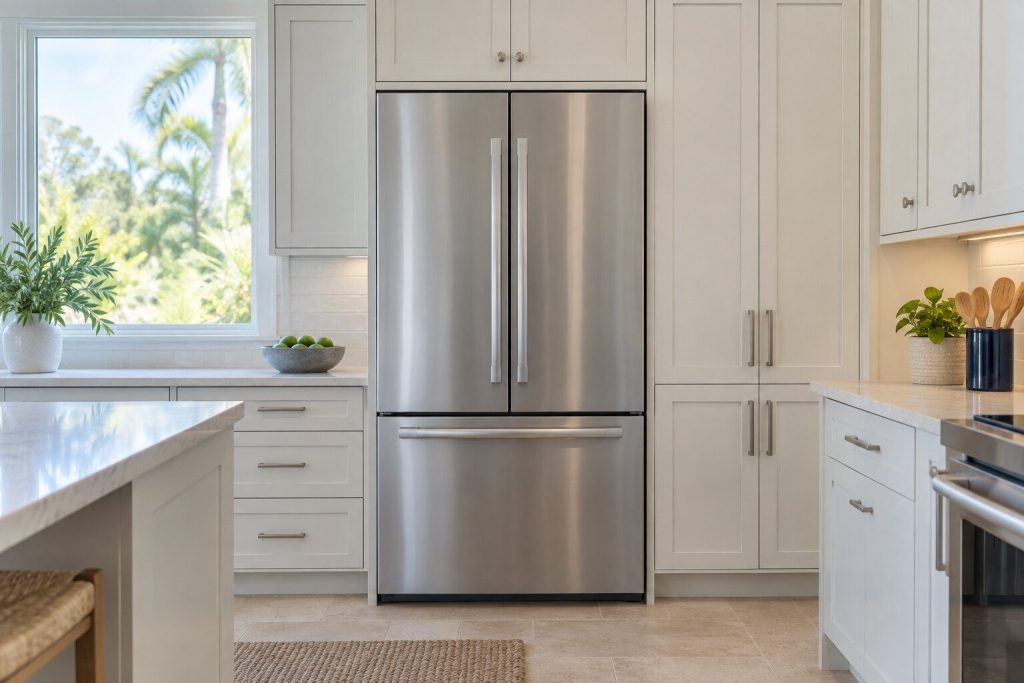
  • A stainless counter-depth French-door refrigerator set flush into a run of pale painted cabinets so its doors sit level with the fronts, seen square on from a few feet back, doors closed.
    Counter-depth French door · 33-inch columns

    Refrigerators

    Six cabinets in the whole current line, and every French door among them is counter-depth — three of them, at 21 and 23 cubic feet. There is no standard-depth box here, no side-by-side and no top-freezer; the deep end of this line is a pair of 33-inch columns, one refrigerator and one freezer, sold with trim kits so they read as cabinetry. That is a refrigerator somebody drew into a plan, and it changes the work: the cabinet is tight in its surround, the water line runs where the joiner left it, and getting the unit out is half the visit before anything is diagnosed.

    • Six cabinets total — three counter-depth French doors and a 33-inch column pair
    • Counter-depth means a tight surround: access is part of every job here
    • TasteLock Plus crispers and the TempAdapt drawer are the parts people call about
    Refrigerator repair
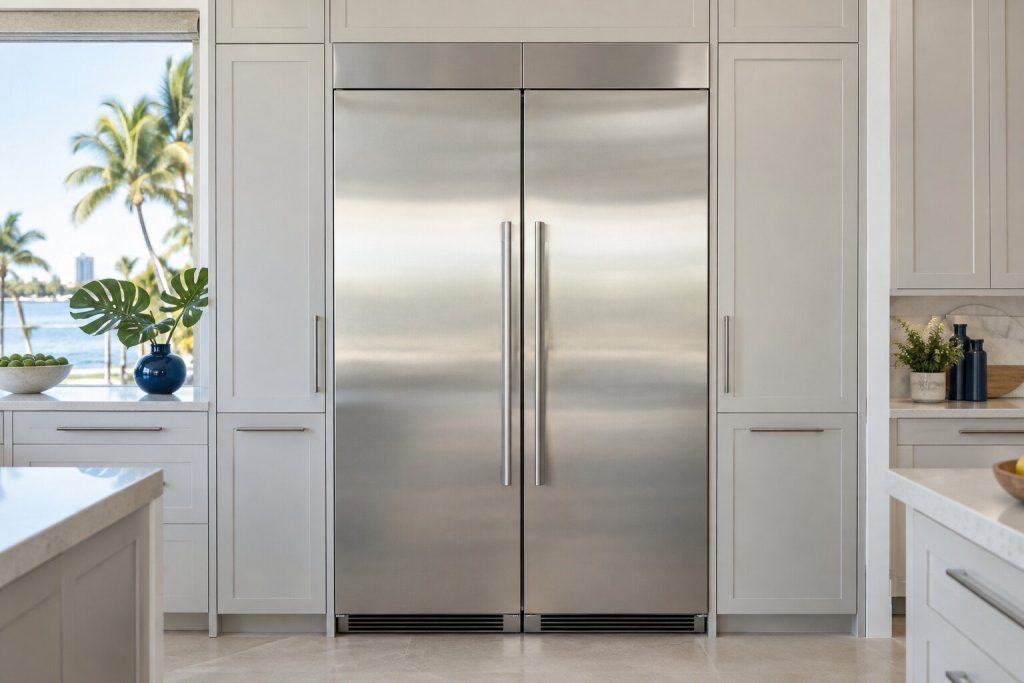
  • Two tall stainless columns of identical width standing side by side in a run of pale cabinetry, a single trim panel across the tops of both, doors closed, seen square on.
    33-inch all-freezer column

    Freezers

    Two freezers in the line, and both of them are the same thing: a 33-inch, 19 cubic foot all-freezer column, built to stand beside the refrigerator column of the same size and be trimmed to match. There is no chest freezer here, no upright for a garage and no convertible box. A freezer on this badge is half of a wall of cabinetry, usually in a kitchen or a butler's pantry, and it is treated as joinery by everybody except the person who has to open it up. Practically, that means everything the refrigerator column needs — clearance, a clean air path, access — matters here twice over.

    • Two models, and they are one design: a 19 cu. ft. 33-inch all-freezer column
    • No chest freezer and no garage upright — this line does not build them
    • Sold as a pair with the refrigerator column, behind matching trim
    Freezer repair
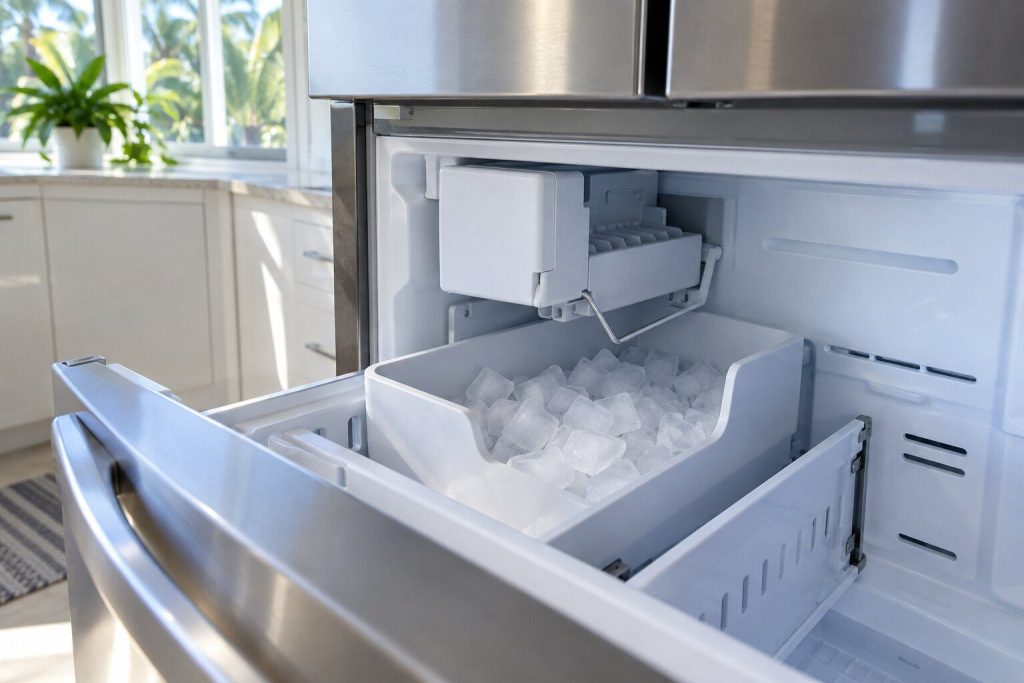
  • The ice-making module in the upper left of an open freezer drawer, its white plastic housing and bin-level arm visible, cubes in the bin below.
    In-cabinet ice · the 15-inch unit

    Ice makers

    This make currently sells no standalone ice maker at all — zero cabinets in the live catalog. So this page is about the two ice makers we actually attend on this badge: the module inside the French-door cabinets, and the 15-inch under-counter unit from the earlier built-in line, which is still in plenty of South Florida bars and butler's pantries. Both are worth writing about honestly rather than implying a product line that has been discontinued. Ice is also the one part of a refrigerator that this make gives its own error code — DI SP, for a jam in the chute — and that code is the start of most of these calls.

    • No standalone ice maker in the current line — this page is about what is installed
    • The in-cabinet module and the older 15-inch under-counter unit
    • DI SP is the maker's own code for a jam, and it is where most calls begin
    Ice maker repair
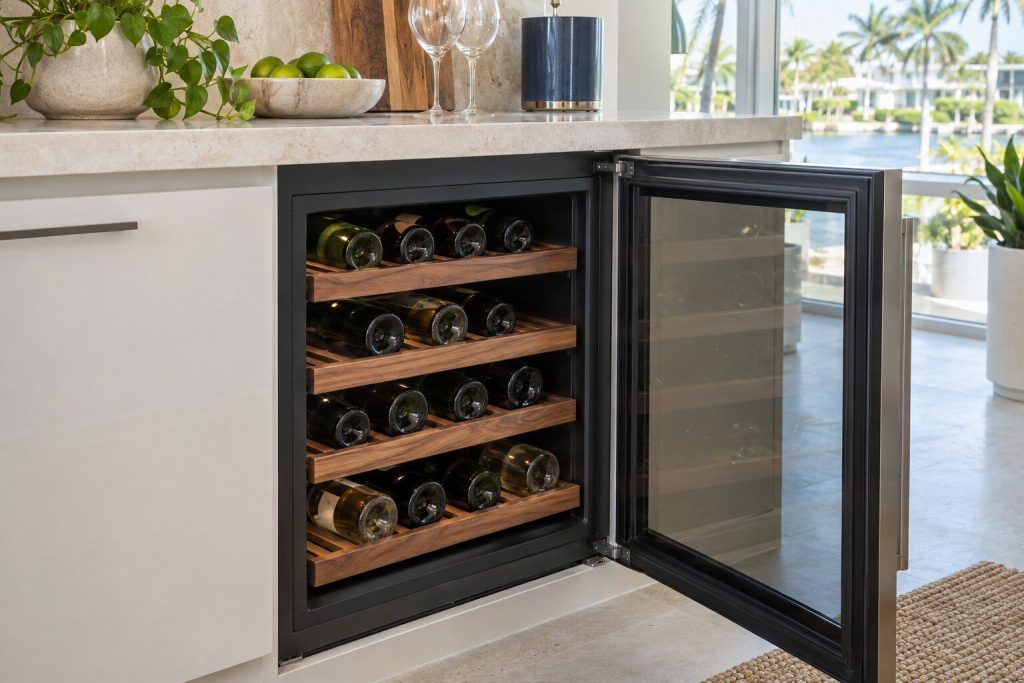
  • A 24-inch glass-fronted wine cabinet built in under a pale stone counter, its door open to show wide walnut-slat shelves with bottles lying on their sides.
    24-inch wine cooler · beverage center

    Wine and beverage coolers

    Two cabinets, both 24 inches and both under a counter: a wine cooler with wide walnut-slat shelving, and a 5.1 cubic foot beverage center. There is no full-height wine column on this badge and there never was in this generation — anybody selling you one has a different make in mind. These live in a bar run or an island, behind a glass door, in a house where the ambient never really drops, and the calls follow from that geometry rather than from any weakness in the machine: losing ground through a hot afternoon, misted glass, and a fan that has become audible from the next room.

    • Two cabinets — a 24-inch wine cooler and a 24-inch beverage center
    • No full-height wine column exists on this badge
    • Walnut-slat shelving takes bottles of different diameters without stacking
    Wine cooler repair
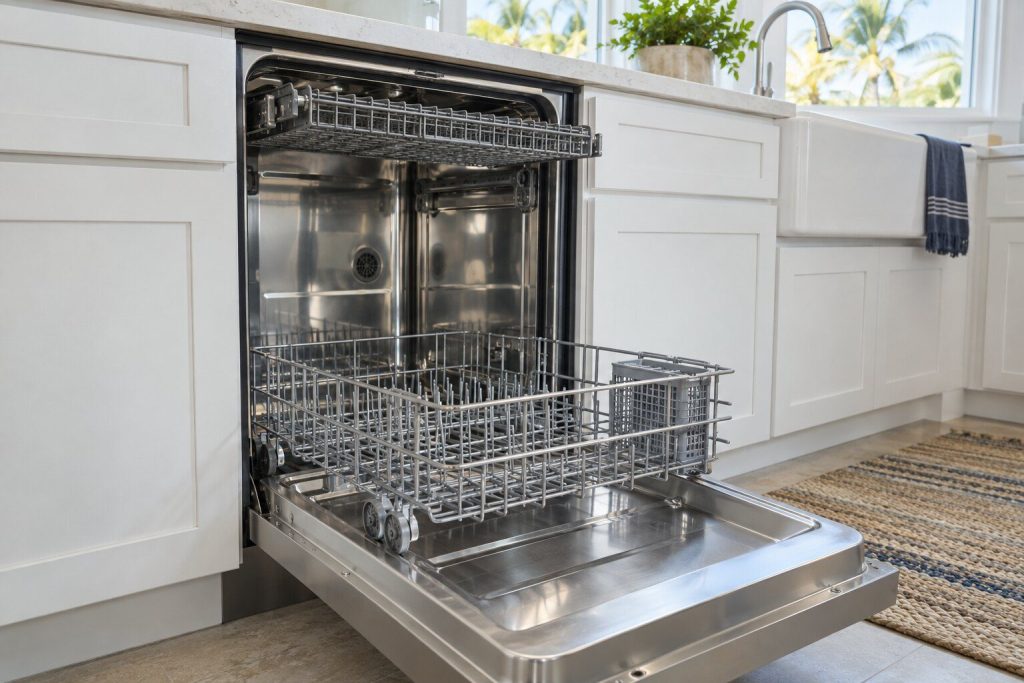
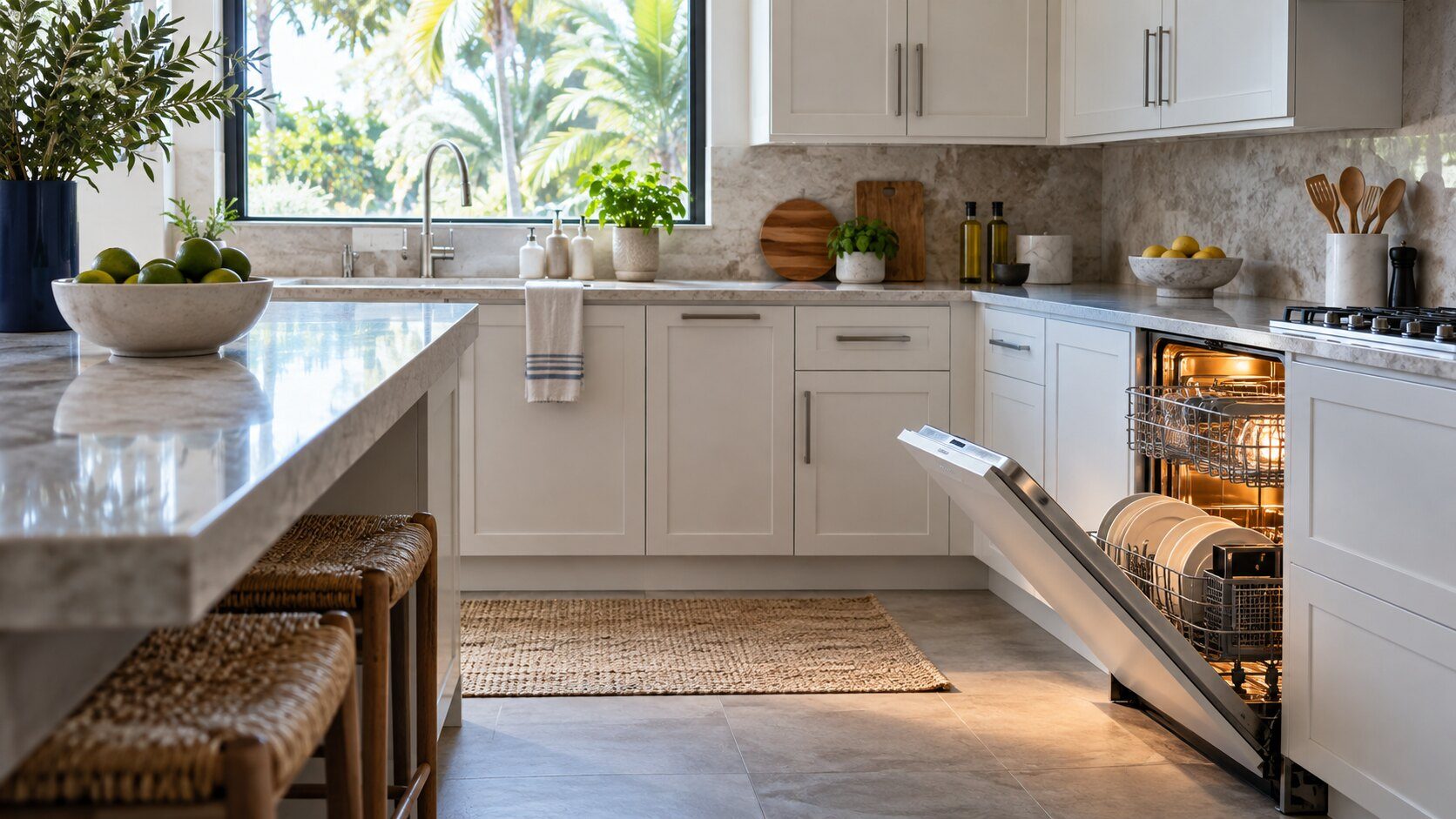
  • A built-in dishwasher with its door fully open showing a stainless steel tub, the lower rack drawn out and a narrow third rack across the top, clean and empty.
    24-inch stainless tub · SmartBoost

    Dishwashers

    Two machines in the entire current line, both 24 inches, both stainless tub, and both carrying SmartBoost — the feature that premixes water and detergent before it reaches the dishes. Two models is not a thin line so much as a single machine in two door treatments, which is unusually simple to work on: what we open is nearly always the same platform, and the spares behind it are the group's, which run deep. This make publishes three dishwasher codes and two of them are not failures at all — a delay counting down and a heat delay waiting for water. The third, i40, is a filter.

    • Two models, one platform — a 24-inch stainless tub with SmartBoost
    • Three published codes, and two of them are modes rather than failures
    • i40 is the filter and the sump, and it is maintenance rather than parts
    Dishwasher repair
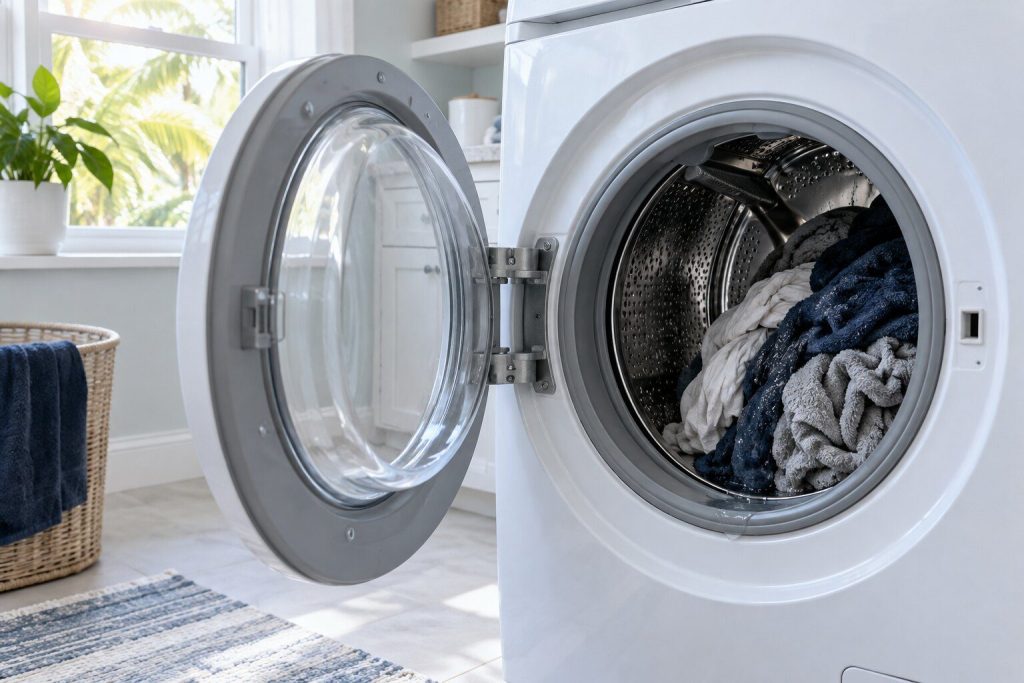
  • A front-load washing machine in a laundry closet with its round door standing open, the gray rubber gasket around the opening plainly visible, tiled floor.
    Front load only · 300 to 700 Series

    Washers

    Six machines, and every one of them is a front loader — 300, 400, 500, 600 and 700 Series plus a 24-inch compact. This make builds no top-load washer at all, which is the clearest single difference between this badge and the mass-market half of the same group. Laundry is the deep end of this line rather than an afterthought: 22 machines across washers, dryers and towers against six refrigerators. The maker publishes eight washer codes with real procedures behind them, and — worth knowing before you are quoted — three of those eight are installation problems rather than failures.

    • Six washers, all front-load, 300 through 700 Series plus a 24-inch compact
    • No top loader is built on this badge at all
    • Three of the eight published codes are installation problems, not failures
    Washer repair
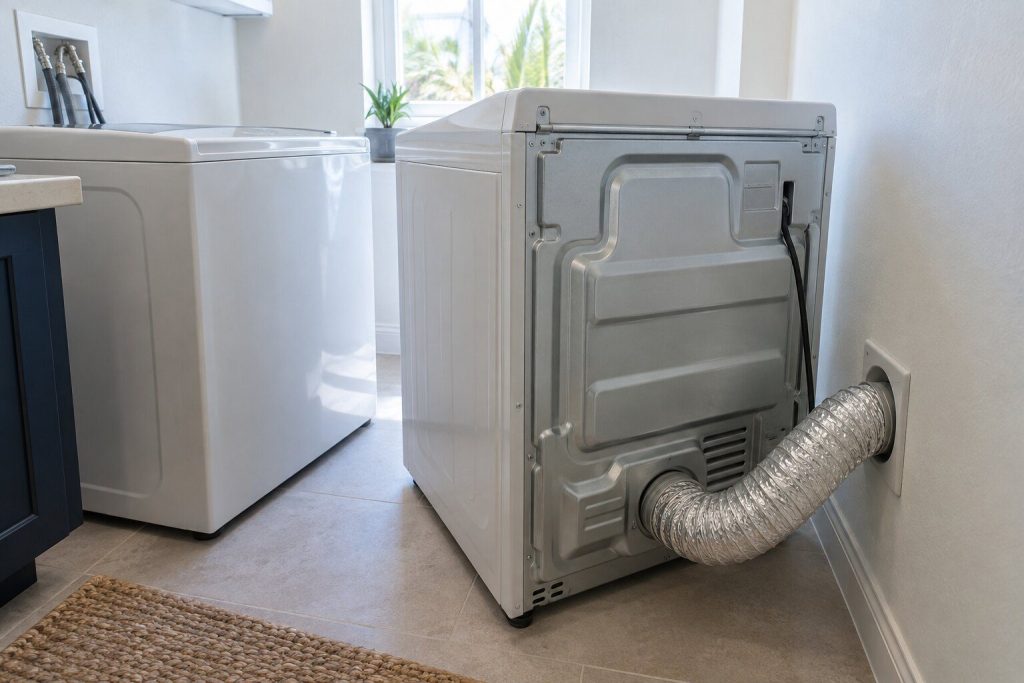
  • The back of a dryer pulled forward from a laundry closet wall, its flexible vent hose visible running to the wall outlet, the washer beside it.
    Eleven dryers · gas and electric

    Dryers

    Eleven dryers — the largest single family in this maker's whole US line, bigger than every refrigerator, range and dishwasher it sells put together. Electric and gas at each of the 300, 400, 500, 600 and 700 Series, all at 8.0 cubic feet, plus a 24-inch compact at 4.0. Four more machines are laundry towers, where the washer and dryer are one unit. This badge also publishes a dryer error code guide, which its mass-market sister does not publish at all — seven rows, and three of them send you back to the installer rather than to a repair company.

    • Eleven dryers plus four towers — the deepest family in the line
    • A published seven-row code guide, which the sister badge does not have
    • EF1 is airflow, and in a condominium that is the vent run rather than the machine
    Dryer repair
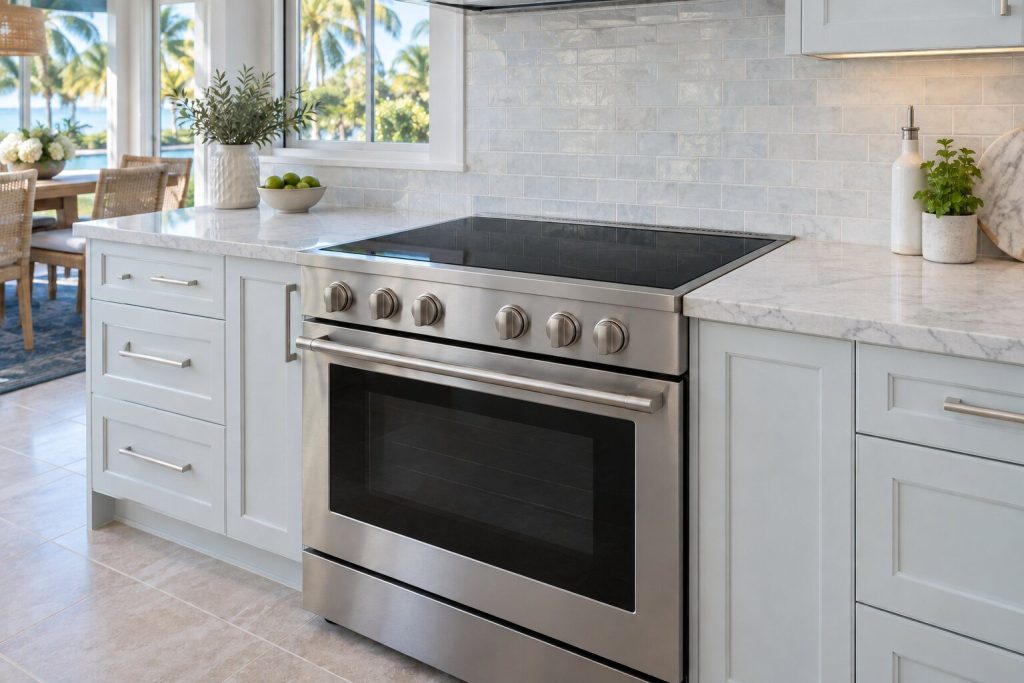
  • A 36-inch stainless freestanding induction range set between pale cabinets, its smooth black glass cooking surface clean and empty, front control knobs along the fascia.
    Induction · dual-fuel · gas, 30 and 36 inch

    Ranges

    Six ranges, at 30 and 36 inches, in three fuels: induction, dual-fuel and front-control gas. There is no electric coil range and no plain radiant range in this line at all — which is precisely the machine that fills the rental kitchens its sister badge sells into. A 36-inch range is a deliberate purchase and usually the center of the room, and that shows in how these calls come in: people describe what the range was doing when it stopped, not just that it stopped. Almost every published range code on this badge is a name plus a power cycle, so the honest page says that rather than inventing a checklist.

    • Six ranges — induction, dual-fuel and gas, at 30 and 36 inches
    • No electric coil and no plain radiant range is built on this badge
    • Most published range codes are a name and a thirty-second power cycle
    Range repair

Worth saying

One appliance we ask you not to open

A microwave. The high-voltage capacitor holds a charge that can kill long after the unit has been unplugged, and there is no consumer-level check worth that risk. Filters, the damper and the door alignment are fine to look at. Everything behind the inner panel is ours.

Before you book

The questions this page is asked

There is no code. Is that bad?

No. This maker publishes nothing at all for freezers, wine cabinets, ice makers, microwaves and the commercial line, so on those the behavior is the diagnosis. A page that invented a code table for them would be worse than useless.

Should I reset it before calling?

Photograph the display first. A power cycle is often the right thing to do and it is always the thing that destroys the evidence, so do it in that order.

It stopped doing it by itself.

Worth writing down what it was doing and when. Intermittent behavior that clears on its own is still information, and on a control problem the timing matters more than the symptom.

In more detail

What these pages are for, and the order they answer in

Ten minutes first

Every page here opens with what to do in the next ten minutes, before any theory. On this badge a real share of those ten minutes end the problem entirely: a delay start counting down, a control lock, demo mode, a drawer packed under an induction cooktop, a corner of a towel in a washer seal.

Codes where the maker publishes them, and silence where it does not

This maker documents codes on 7 of the 12 types this site covers and publishes nothing at all for the commercial line, freezer, ice maker, microwave, wine cooler. On those, the observable behavior is the whole diagnosis, and every page here names only codes this maker actually prints.

What we would rather you did not do

Clear the display before reading it. These cabinets keep the peak temperature behind a high-temperature alert and show it once; a second press deletes it. A photograph of the panel before the power goes off is worth more than any description of the noise.
Describe it and we will tell you which page you want

What it is doing, when it started, and what the panel says if anything. That is usually enough to name the part before anybody is dispatched.
This article is based on:

  • Official manufacturer documentation
  • Internal repair procedures
  • Technician repair history
  • Company quality standards
Call (305) 912-9018