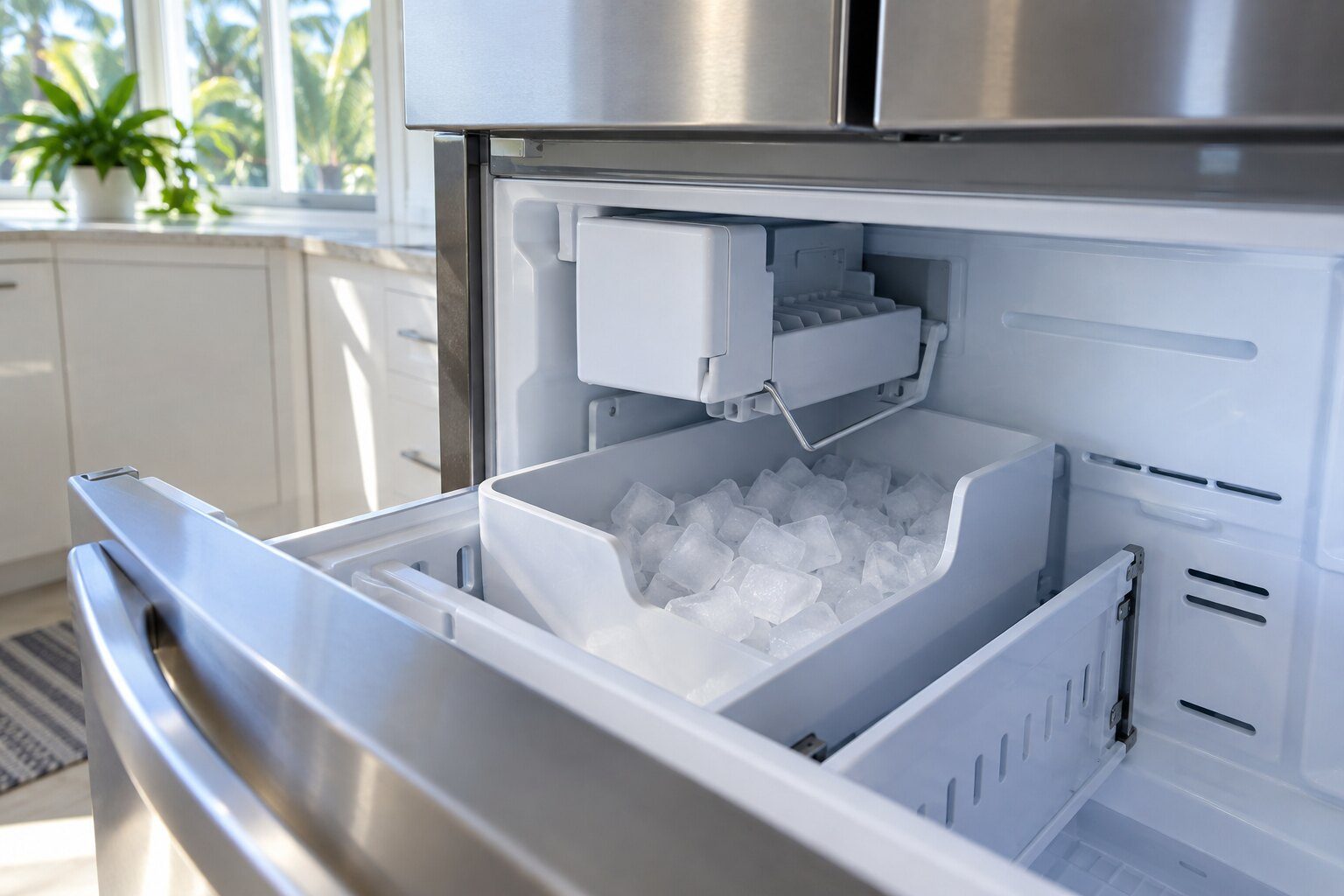
Appliance
Electrolux ice makers
This make currently sells no standalone ice maker at all — zero cabinets in the live catalog. So this page is about the two ice makers we actually attend on this badge: the module inside the French-door cabinets, and the 15-inch under-counter unit from the earlier built-in line, which is still in plenty of South Florida bars and butler's pantries. Both are worth writing about honestly rather than implying a product line that has been discontinued. Ice is also the one part of a refrigerator that this make gives its own error code — DI SP, for a jam in the chute — and that code is the start of most of these calls.
- 3 symptoms we are called out to
- From $95 diagnostic, credited to the repair
- 59 cities and neighborhoods covered
- OEM parts available on order
The short version
What this equipment is, for a repair
Configurations
In-cabinet ice · the 15-inch unit
Access
Planned before the visit, not discovered on arrival
Parts
OEM, available on order
Diagnostic
From $95, credited to the repair
What goes wrong with it
Symptoms we are called out to on Electrolux ice makers
Each one covers the likely causes in the order they are worth checking, and what to do in five minutes before booking anything.
-
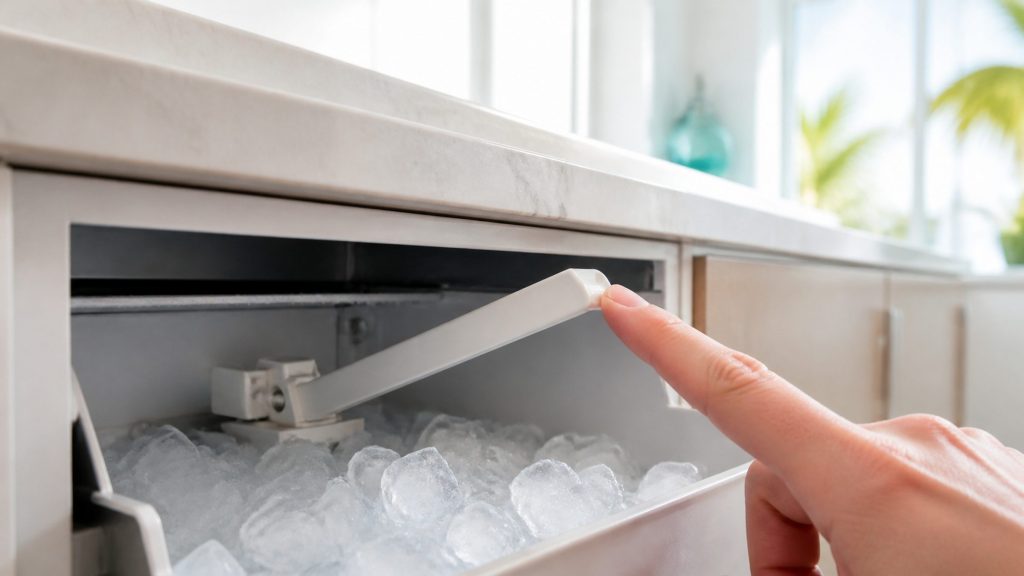
The bin is empty and stays empty Ice maker not making ice
This maker sells no standalone ice maker today, so what has stopped is either the module inside a French-door cabinet or the 15-inch under-counter unit from the built-in range that came before. Either way the first question is whether any water is arriving at all, because roughly half of these are a supply problem rather than a mechanism problem — and the supply half is the cheaper half.
- Half of these are water arriving, not the mechanism failing
- The module inside a cabinet and the older 15-inch unit are different jobs
- A freezer above 10 °F will not let the module harvest at all
-
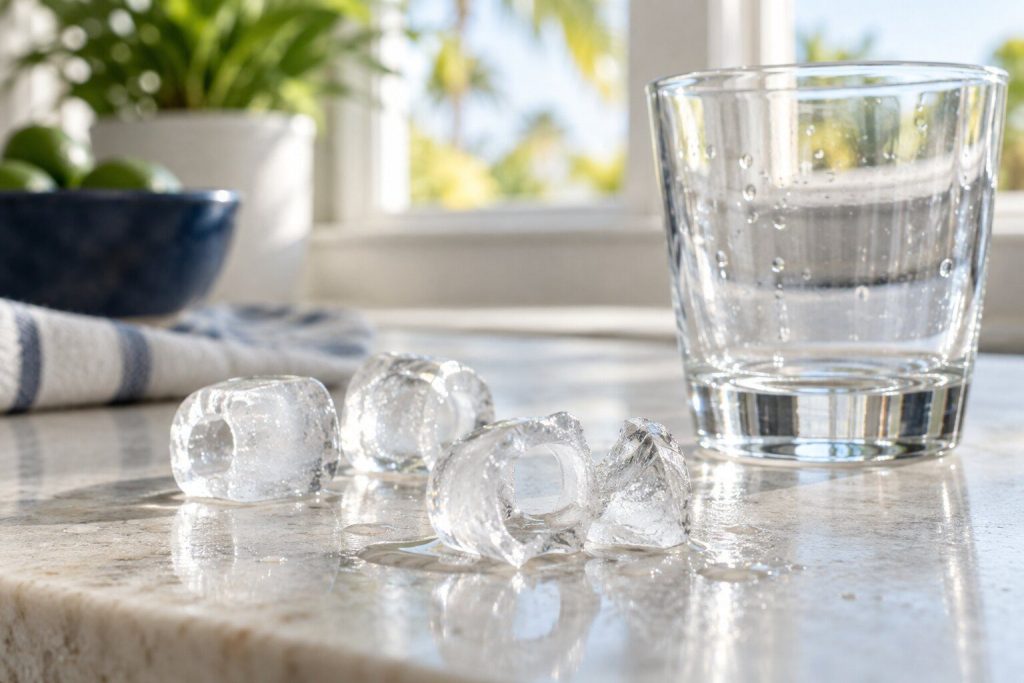
Ice arrives, but it is not right Ice cubes small or hollow
This is a water problem almost every time, and it is worth knowing because it is the cheap one. The mold is filled by a valve that opens for a fixed time and then harvests on schedule whatever arrived. Restrict the supply anywhere along the chain — filter, shutoff, a line squeezed behind a built-in cabinet — and you get a short fill, a thin shell and cubes that look hollow because they are.
- A timed fill plus a restricted supply gives exactly this
- Check the dispenser: slow water confirms it in seconds
- The filter is the first thing and often the only thing
-
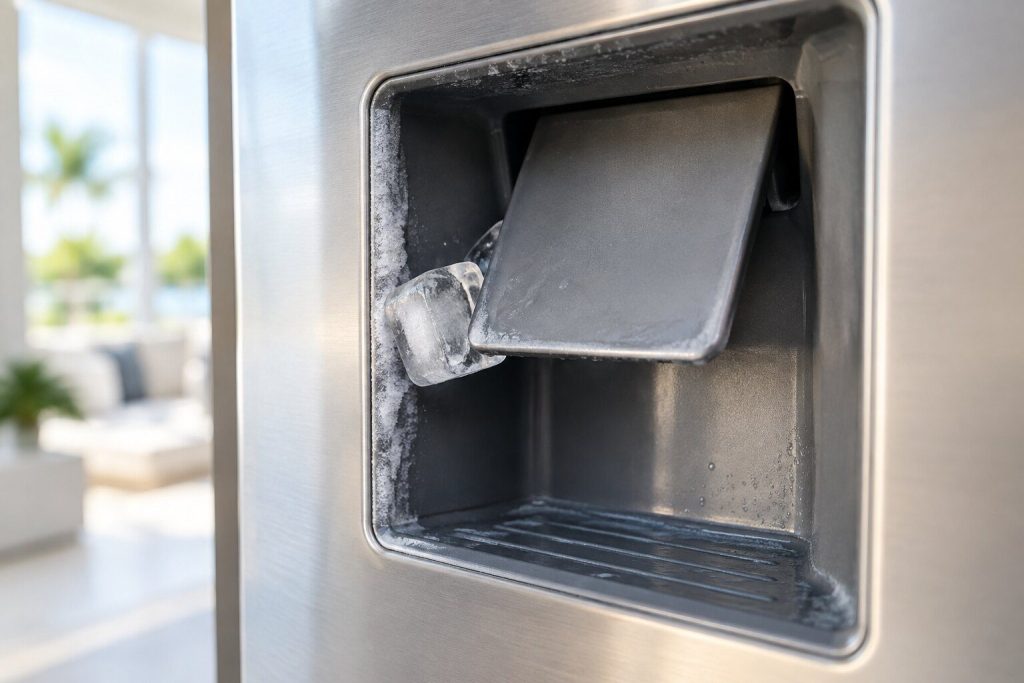
The display reads DI SP and nothing comes out Ice jammed in the dispenser
This maker has its own code for it — DI SP, sometimes shown as DISP — and publishes three causes, all of which are about a bin that stood still: light use, temperature swings, a power cut. Cubes part-thaw and refreeze into a single mass around the auger, and the auger then either cannot turn or shears a piece off into the chute. In a region with summer outages this is seasonal rather than occasional.
- DI SP is the maker's own code, and it means a jam rather than a failure
- Light use, temperature swings and power cuts are its published causes
- Forcing the paddle against a jam is how augers get bent
What we do on it
Repairs we carry out on Electrolux ice makers
Starting figures for this equipment in South Florida. The exact cost is confirmed after an on-site diagnostic — and this is not the whole list of what can go wrong, so call if your problem is not here.
-
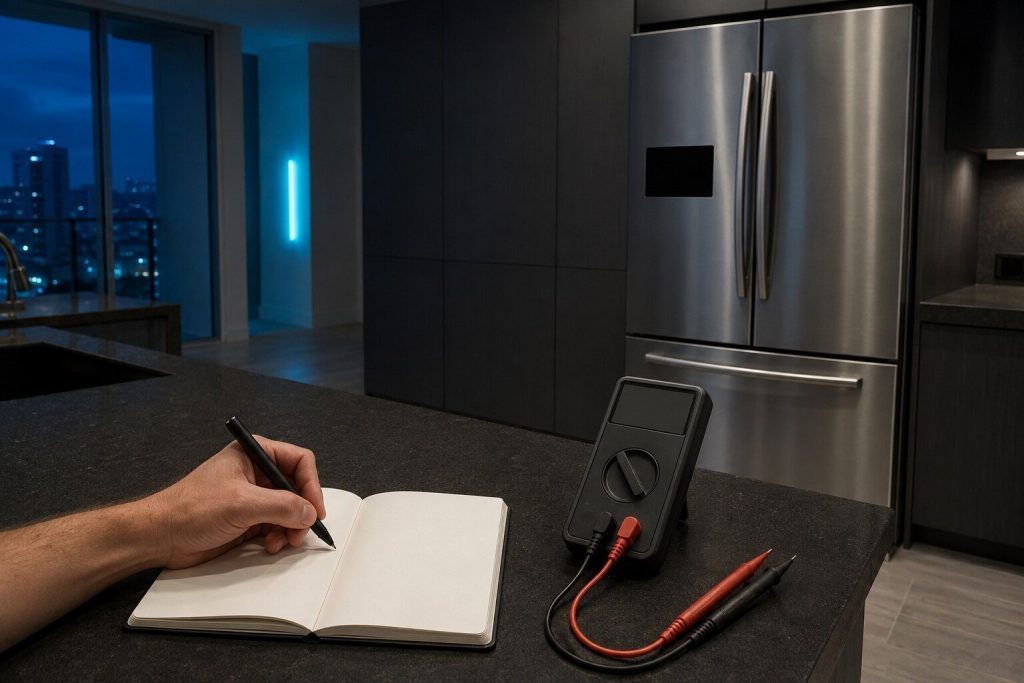
from $95 Diagnostic visit
Finding out what has actually gone wrong, before any part is named or priced. On this badge the opening question is usually about access rather than age: a counter-depth cabinet scribed into an opening, a column captured behind a trim kit, a wall oven sitting in a tall unit — each has to be brought far enough forward to be reached, and establishing that in advance is what separates one appointment from two. The charge is credited against the repair if you go ahead. Where our honest recommendation turns out to be that the machine is not worth mending, you still get that recommendation, and the charge does not change.
- Access comes first — built-in equipment is most of what this badge sells
- A written figure ahead of the work, credited against the repair
- If mending it is the wrong call we tell you, rather than selling a part
-
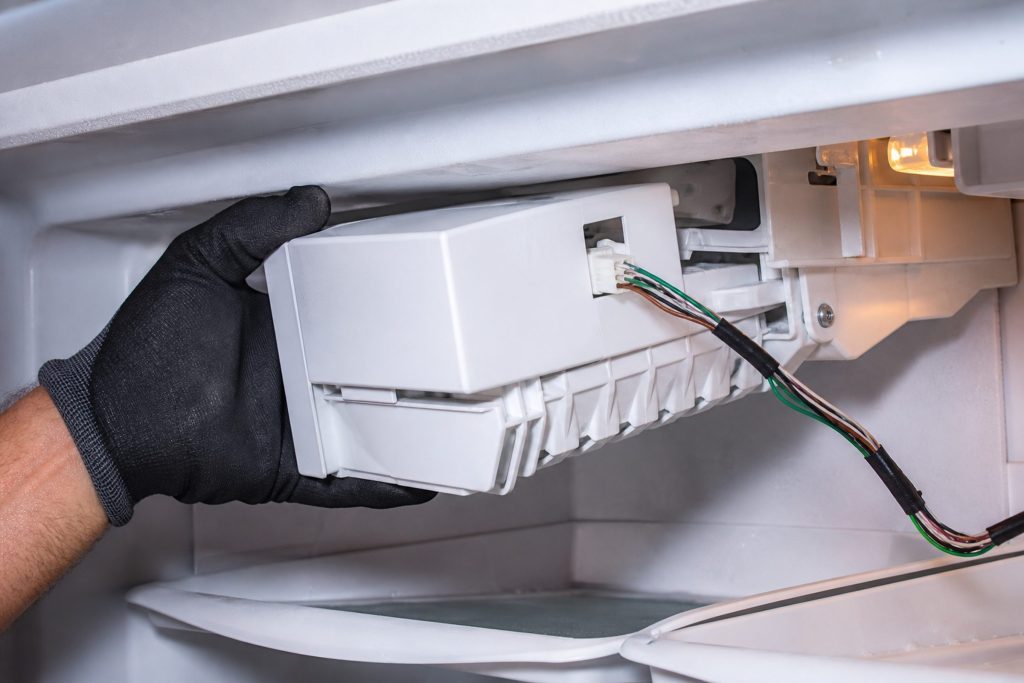
from $155 Ice maker repair
This maker sells no standalone ice maker today, so what we repair is the module inside the French-door cabinets and the 15-inch under-counter unit from the built-in range that preceded the current line. Both are proper appliances with parts behind them. The commonest calls are no ice at all, ice that arrives hollow or small, and a bin that has bonded into one mass after a week away — which in a region with summer outages is a seasonal rather than an occasional problem.
- The in-cabinet module and the older 15-inch under-counter unit
- Hollow or undersized cubes are water supply, not the ice maker
- A bin that stood still through an outage is the region's own failure
-
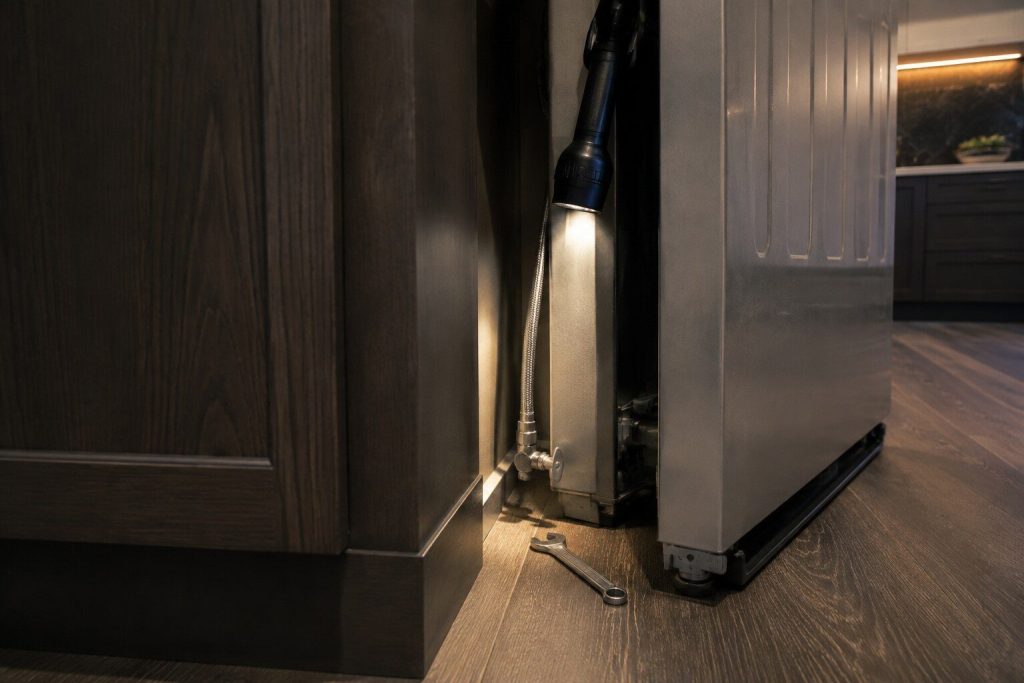
from $135 Ice maker water line and valve
Most ice complaints are water complaints. The line from the wall, the shutoff somebody installed behind a cabinet fifteen years ago, the filter, and the fill valve on the appliance are one chain, and a restriction anywhere in it produces the same symptoms. On a built-in cabinet the awkward part is that half of that chain is behind joinery, which is why this is priced as its own job rather than as an add-on to an ice maker repair.
- Line, shutoff, filter and fill valve are one chain
- Half the chain is behind joinery on a built-in cabinet
- A restriction anywhere in it produces identical symptoms
-
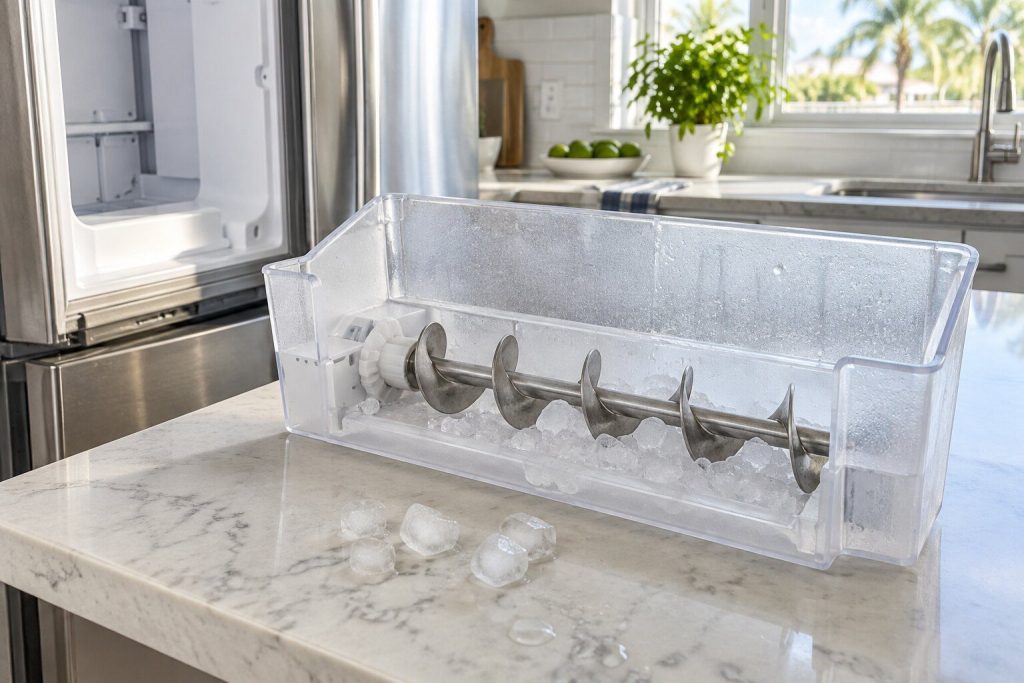
from $145 Ice dispenser and auger repair
Ice in the bin and nothing at the door. The mechanism is a motor, an auger, a chute and a flap that has to close so the cabinet does not lose cold air through it, and this maker has an error code of its own — DI SP — for a cube jammed in that chute. The useful distinction is audible: an auger that will not turn is silent or grinding, while a flap that will not open lets you hear the motor run with nothing arriving.
- DI SP is this maker's own code for a jam in the chute
- A silent auger and a running motor are two different repairs
- A flap that will not close costs cold air continuously
In more detail
About Electrolux ice makers
Why this page exists when the catalog is empty
Being straight about it is more useful than pretending. This make does not currently sell a standalone ice maker. What is installed across South Florida on this badge is the ice module inside the French-door cabinets and the 15-inch under-counter unit from the earlier built-in range, and both of those are repairable appliances with parts behind them. A page claiming a current product line would be a page written to rank rather than to help.
The one error code that belongs to ice
DI SP is the maker's own display code for a jam in the dispenser chute, and it is the single most common reason anybody calls us about ice on this badge. It has its own page on this site with the maker's causes and what to do about them. Most of the time it is a bin that needs emptying and thawing rather than a part.
This article is based on:
- Official manufacturer documentation
- Internal repair procedures
- Technician repair history
- Company quality standards
Before you book
Questions about Electrolux ice makers
The display says DI SP and the dispenser will not work.
A cube is wedged in the chute and the flap cannot close. The maker names three causes and all three are about a bin that stood still — light use, temperature swings, a power cut. Cubes part-thaw and refreeze into one mass around the auger. Taking the bin out, emptying and thawing it clears most of these without a visit, and forcing the paddle instead is how augers get bent.
It makes ice slowly, or makes hollow cubes.
That is water, not ice. A restricted supply — a filter past its life, a saddle valve barely open, a line kinked behind the cabinet — fills the mold short, and the mold harvests on time regardless. On a built-in cabinet the line is often inaccessible, which is why we ask when the filter was last changed before we do anything else.
Is the 15-inch under-counter unit still worth repairing?
Usually yes, and this is a genuine judgement call rather than a sales answer. Those cabinets were built to a standard the current line does not replace, so the alternative to repairing is not a like-for-like swap — it is a different appliance and, frequently, different joinery. We price the repair against that honestly and tell you when it stops making sense.
There is ice in the bin but nothing comes out of the door.
The auger or the door flap, most often, and the two feel completely different from the outside: an auger that will not turn is silent or grinds, a flap that will not open lets you hear the motor run with nothing arriving. Tell us which you have and the part is usually identified before the visit.
Where we do it
Across Miami-Dade, Broward, and Palm Beach
Same terms everywhere we go: an on-site diagnostic first, the price agreed in writing, and the exact figure confirmed once we have seen the unit.
Neighborhoods people ask for by name