Appliance
Electrolux dryers
Eleven dryers — the largest single family in this maker's whole US line, bigger than every refrigerator, range and dishwasher it sells put together. Electric and gas at each of the 300, 400, 500, 600 and 700 Series, all at 8.0 cubic feet, plus a 24-inch compact at 4.0. Four more machines are laundry towers, where the washer and dryer are one unit. This badge also publishes a dryer error code guide, which its mass-market sister does not publish at all — seven rows, and three of them send you back to the installer rather than to a repair company.
- 4 symptoms we are called out to
- From $95 diagnostic, credited to the repair
- 59 cities and neighborhoods covered
- OEM parts available on order
The short version
What this equipment is, for a repair
Configurations
Eleven dryers · gas and electric
Access
Planned before the visit, not discovered on arrival
Parts
OEM, available on order
Diagnostic
From $95, credited to the repair
What goes wrong with it
Symptoms we are called out to on Electrolux dryers
Each one covers the likely causes in the order they are worth checking, and what to do in five minutes before booking anything.
-
It tumbles, the cycle runs, nothing dries Dryer not heating
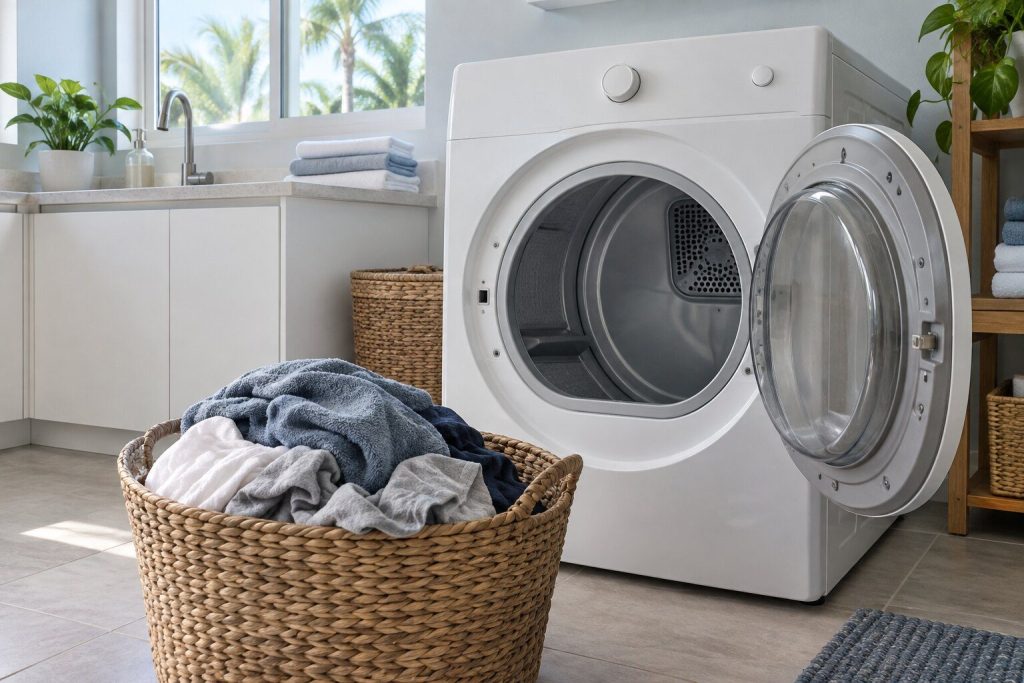
On an electric dryer this pattern says something specific before anybody opens the machine. The motor runs on 120 volts and the heating element needs both legs of 240, so a dryer that tumbles happily without heating is very often a supply problem rather than an appliance one. This maker publishes two codes that say exactly that — H2/B2 for the supply, H4/B4 for wiring — and both send you outside the appliance.
- Tumbling without heat points at the supply as often as at the element
- H2/B2 and H4/B4 both point outside the machine
- Check whether the range went strange at the same time
-
A single load now needs two or three runs Dryer takes too long
Airflow, nearly always, and it is worth acting on rather than living with. This maker publishes EF1 for a ventilation blockage and sends it to the installer rather than to service, which in a South Florida building is more reasonable than it sounds: the run goes up through a wall to a roof or a soffit, it is long, it has elbows, and the part that blocks is the end nobody can see. This is a fire risk before it is a repair.
- EF1 is the maker's own code and the whole answer is the duct
- In a condominium the run is vertical, long and invisible from inside
- A dryer working three times as hard is running three times as hot
-
Automatic cycles end early; timed cycles work Dryer stops before the load is dry
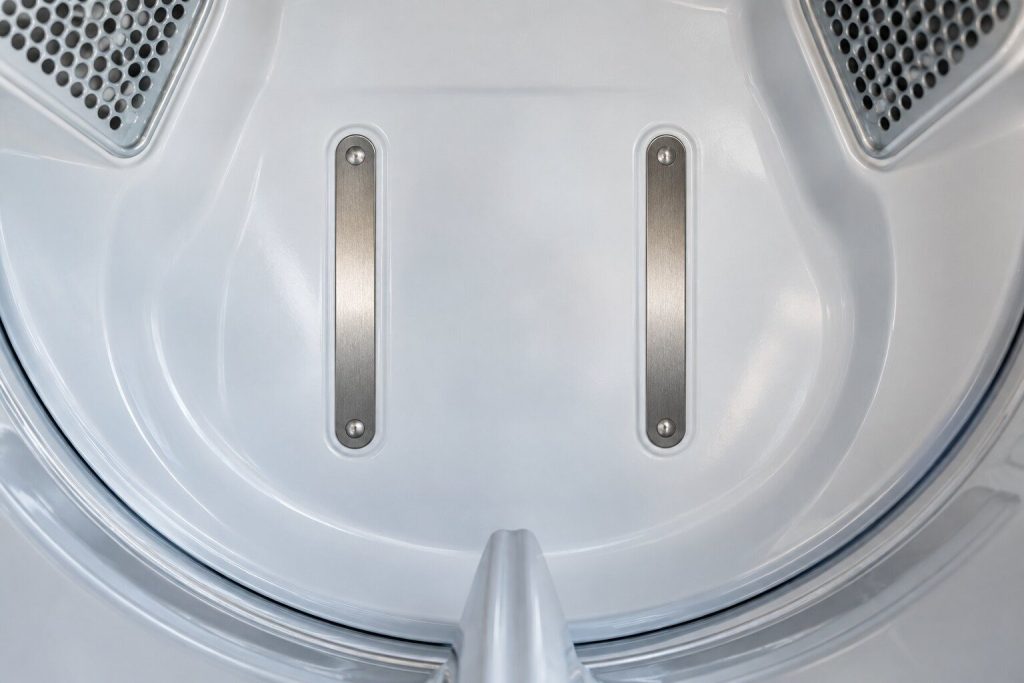
That combination is the moisture sensor, and this maker publishes it as E 4 with unusually generous wording: the dryer keeps working and what you lose is the automatic programs. The sensor is a pair of metal strips inside the drum opening reading the resistance across damp fabric, and the commonest reason they stop reading is a film of fabric softener rather than a failed part.
- Automatic cycles wrong while timed cycles are right — that is the sensor
- E 4, and the maker's own note says the machine keeps working
- Softener film across the strips is the usual cause and it is free
-
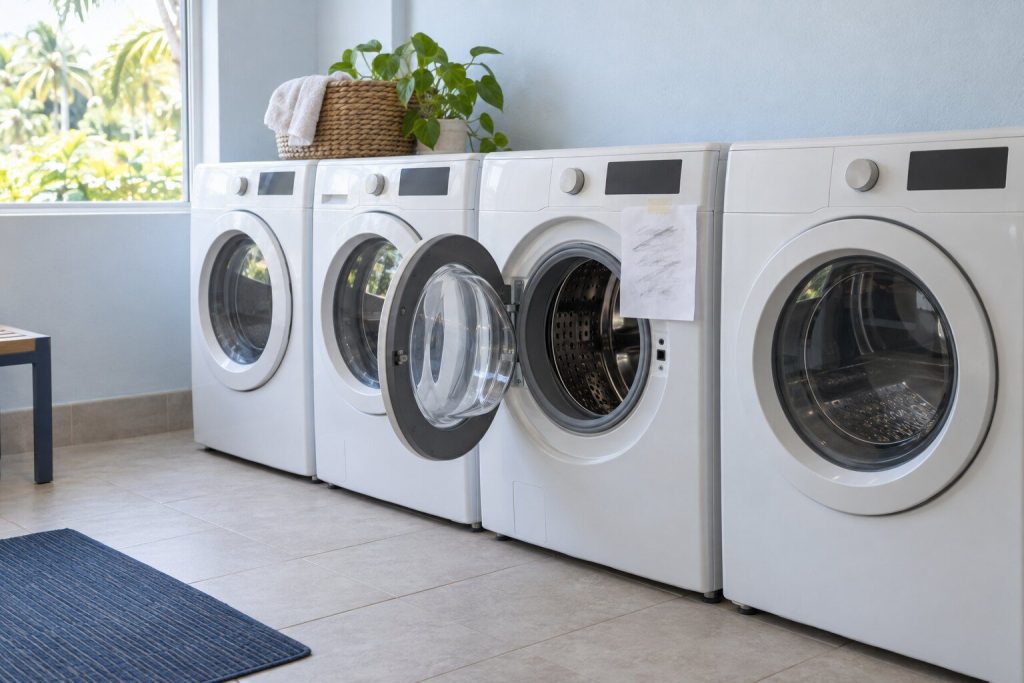
The same repair every few months in the same room Building laundry machine keeps failing
Not a defect, and saying so is the useful part. A front-load washer rated for six or eight cycles a week doing forty wears its pump, its door lock and its bearings at a proportional rate, so a machine that needs attention every few months in a building laundry is doing exactly what the arithmetic predicts. What changes the outcome is not a better machine — it is knowing which part goes first in that particular room and keeping one on a shelf.
- Duty cycle rather than age decides what wears in these rooms
- Pumps go first, then door locks, then bearings
- A part on a shelf turns a three-day outage into an afternoon
What we do on it
Repairs we carry out on Electrolux dryers
Starting figures for this equipment in South Florida. The exact cost is confirmed after an on-site diagnostic — and this is not the whole list of what can go wrong, so call if your problem is not here.
-
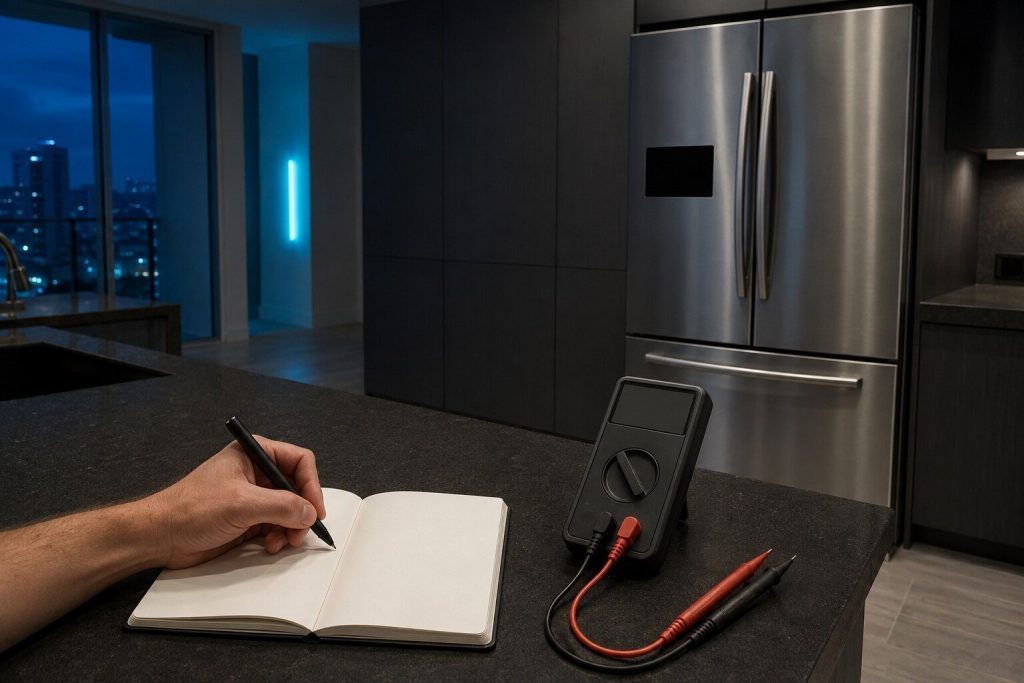
from $95 Diagnostic visit
Finding out what has actually gone wrong, before any part is named or priced. On this badge the opening question is usually about access rather than age: a counter-depth cabinet scribed into an opening, a column captured behind a trim kit, a wall oven sitting in a tall unit — each has to be brought far enough forward to be reached, and establishing that in advance is what separates one appointment from two. The charge is credited against the repair if you go ahead. Where our honest recommendation turns out to be that the machine is not worth mending, you still get that recommendation, and the charge does not change.
- Access comes first — built-in equipment is most of what this badge sells
- A written figure ahead of the work, credited against the repair
- If mending it is the wrong call we tell you, rather than selling a part
-
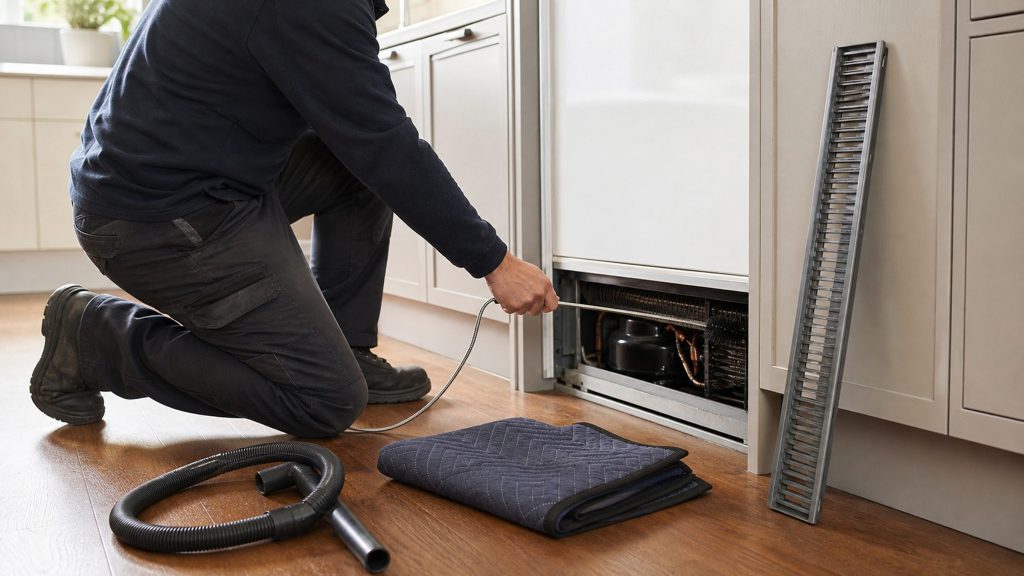
from $149 Appliance maintenance
Scheduled work on the parts that fail from accumulation rather than from age: condenser coils in salt air, a dryer duct that has been narrowing for four years, a dishwasher sump, the fold in a washer door seal that never dries out in this climate. On a kitchen where the appliances were specified together it is worth doing them together — the visit costs less than the sum of its parts and it catches the one that was about to fail.
- Coils, ducts, sumps and seals — the parts that fail from accumulation
- Worth doing as a suite when the kitchen was specified as one
- Finds the failure that was three months away, which is the actual value
-
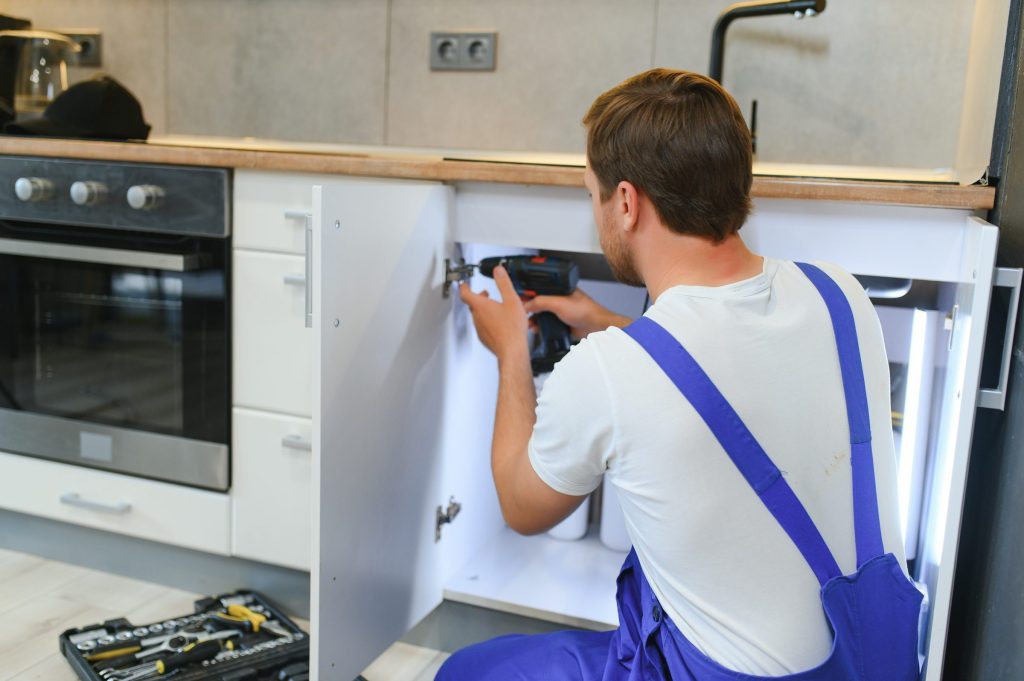
from $175 Appliance installation
Fitting an appliance properly, which on this badge usually means fitting it into something. Columns go behind trim kits, counter-depth cabinets go into openings that were drawn for them, wall ovens and built-in microwaves go into tall units, and every one of those has a clearance and an air path that the appliance depends on. This maker sends three of its own washer codes and two of its dryer codes back to whoever installed the machine — which is a fair measure of how much installation decides here.
- Built-in work: trim kits, openings, clearances and air paths
- Five of this maker's published codes are installation problems, not failures
- Supply, drain and vent checked and documented rather than assumed
-
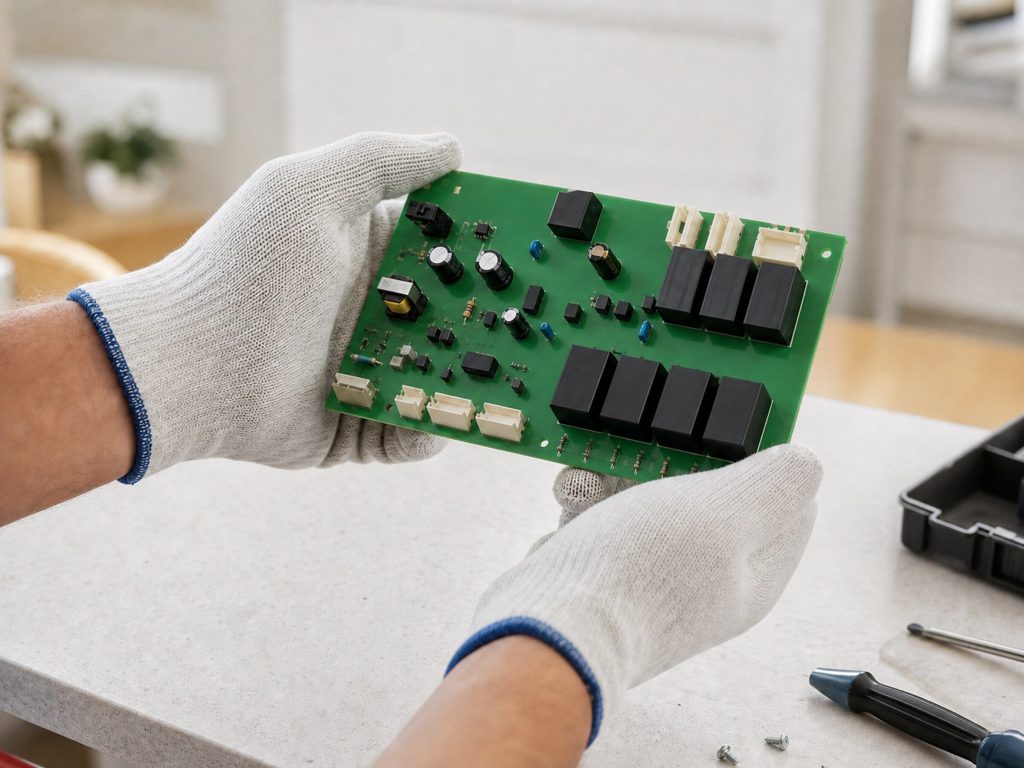
from $245 Control board repair
When the board is genuinely the answer — and it is worth saying that it often is not. A great many appliances condemned as "a board problem" have a sensor lying to a board that is working perfectly. This maker helps here more than most: F12, F13 and the F3/F20/F26 family are published as board-level conditions by name, so when one of them is on the display the diagnosis has a document behind it rather than an assumption.
- Named board conditions — F12, F13 and the communication family
- Most "board problems" are a sensor telling a healthy board something false
- Connectors and harnesses checked before anything is ordered
-
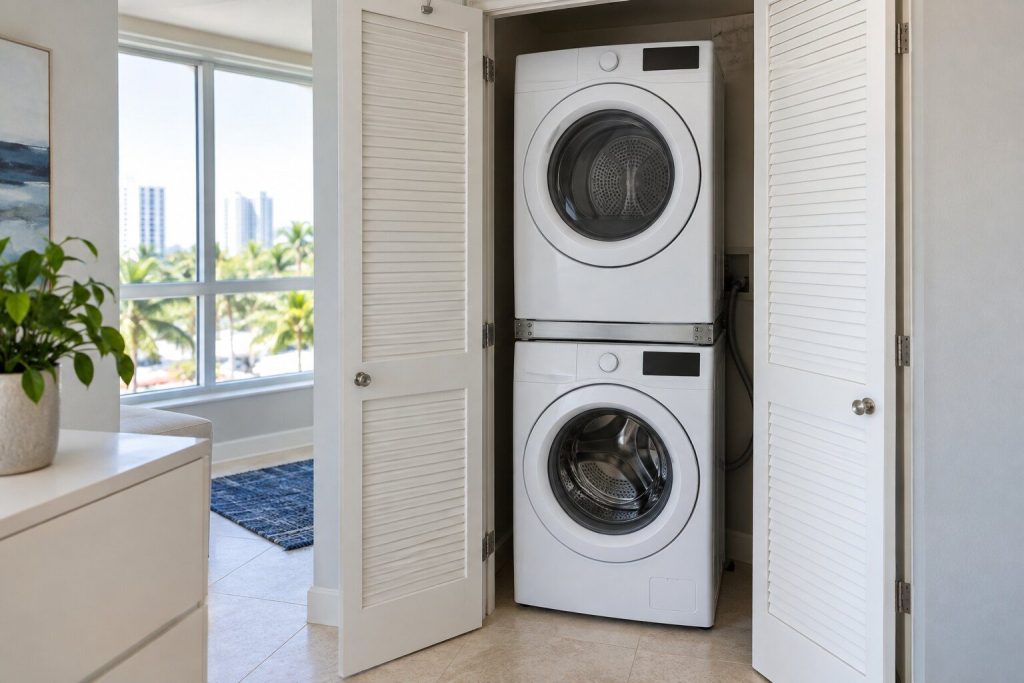
from $159 Compact laundry service
The 24-inch pair — a 2.4 cubic foot washer and a 4.0 cubic foot dryer — is its own design rather than a shrunk version of the full-size machines, and its parts are not interchangeable with them. It lives in condominium closets and in-law units across this region, usually stacked, usually with a vent run that was an afterthought. Telling us on the phone that it is the compact pair saves a visit that arrives with the wrong parts.
- A separate design, not a small version — parts do not interchange
- Usually stacked in a closet with an improvised vent run
- Say it is the compact pair when you book and we arrive correctly equipped
-
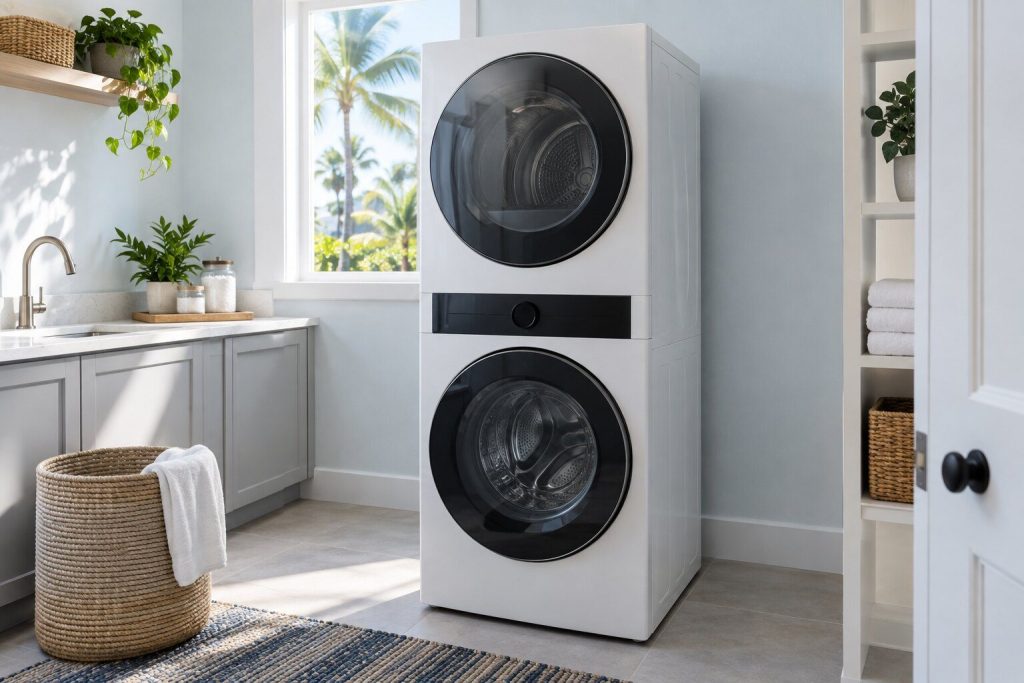
from $185 Laundry tower service
A laundry tower is a washer and a dryer built as one unit behind one control panel, not two machines stacked. That changes access more than mechanism — both halves are reached through the single cabinet — and it changes the replacement conversation completely, because you cannot replace half of it. Four of this maker's laundry machines are towers, and they are increasingly what goes into a renovated condominium laundry.
- One cabinet, one control, two machines — you cannot replace half
- Access is through the single cabinet, which changes the visit
- Four of this maker's laundry models are towers
-
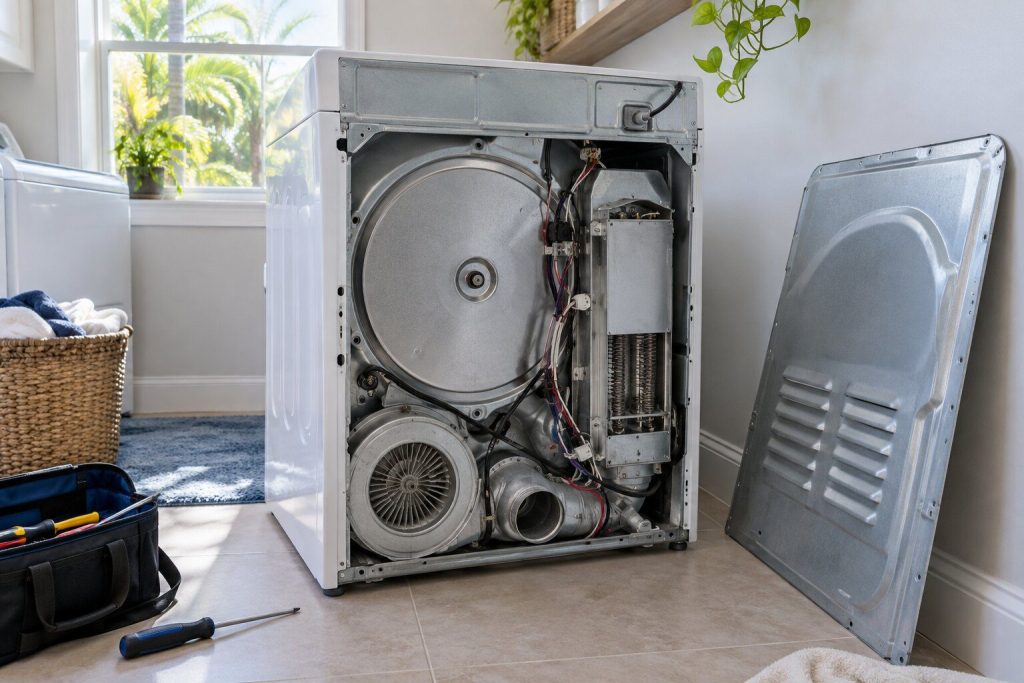
from $149 Dryer not heating repair
The drum turns, the cycle runs, and nothing gets dry. On an electric dryer that pattern says something specific before anybody opens the machine: the motor runs on 120 volts and the element needs both legs of 240, so a dryer that tumbles without heating is very often a supply problem rather than an appliance one. This maker publishes two codes that say exactly that — H2/B2 for the supply and H4/B4 for wiring — and both send you outside the appliance.
- Tumbling without heat points at the supply as often as at the element
- H2/B2 and H4/B4 are this maker's codes and both point outside the machine
- If it is the circuit we will say so rather than fitting a part
-
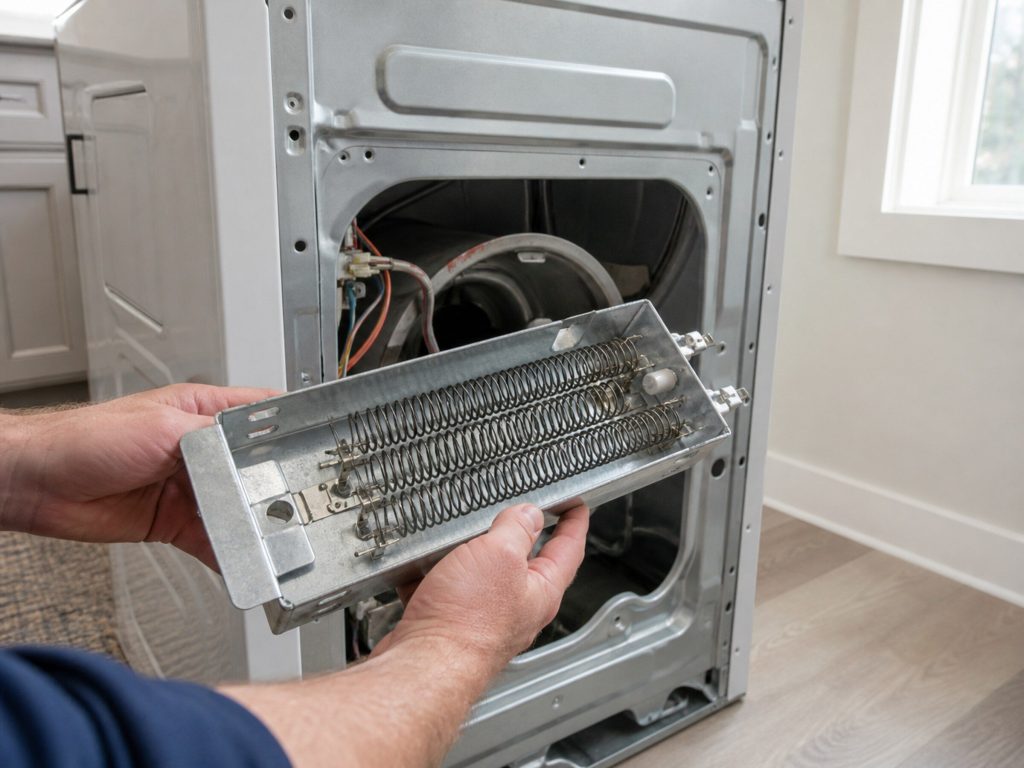
from $165 Dryer heating element replacement
When the element is genuinely open, replacing it is straightforward work — and the part of this job that matters is what is done alongside it. An element rarely fails for no reason: restricted airflow makes it cycle hot, and a thermal fuse or a thermostat that went at the same time is the machine's record of that. Fitting the element and leaving the duct blocked is how the same repair comes back inside a year.
- An open element usually has a restricted duct behind it
- Thermostats and the thermal fuse are checked in the same visit
- Fitting the part without clearing the cause guarantees a repeat
-
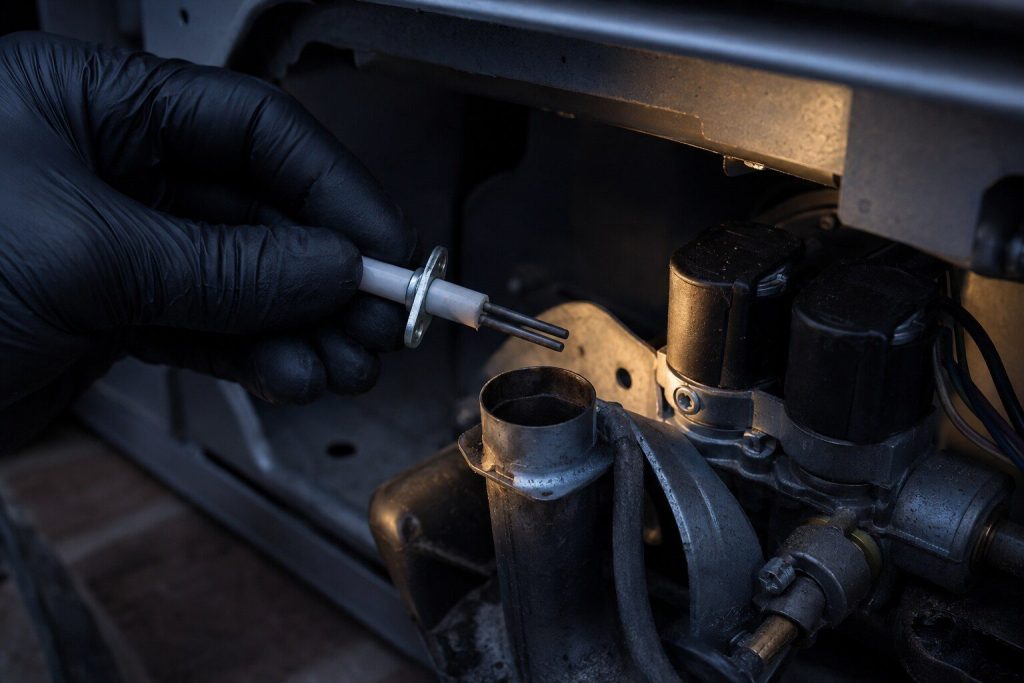
from $175 Gas dryer igniter and valve repair
Six of this maker's eleven dryers are gas, and a gas dryer that tumbles without heat is a different machine from an electric one with the same symptom. The sequence is igniter, flame sensor, then the two coils on the gas valve, and it fails in a way you can hear: an igniter that glows and goes out without a flame is a coil or a sensor, while an igniter that never glows is upstream of that.
- Six of eleven dryers on this badge are gas
- Igniter, flame sensor, then the valve coils — in that order
- Whether the igniter glows at all splits the diagnosis in half
-
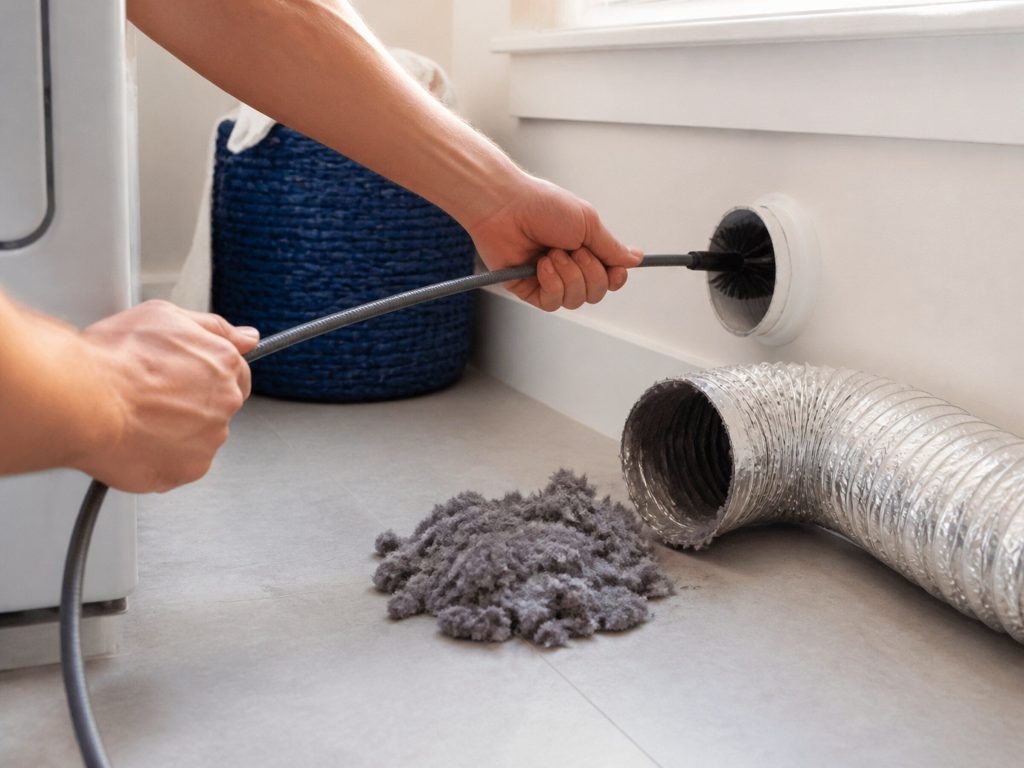
from $119 Dryer vent cleaning
The item on this site where doing nothing is genuinely unsafe. This maker publishes a code for it — EF1, ventilation blockage — and sends it back to the installer rather than to service, which in a South Florida building is fairer than it sounds: the run goes up through a wall to a roof or a soffit, it is long, it has elbows, and the part that blocks is the end nobody can see. A dryer needing two runs for one load has been telling you this for months.
- EF1 is the maker's own code, and the whole solution is the duct
- In a condominium the run is vertical, long, and invisible to the owner
- A fire risk before it is a repair — this is not one to defer
-
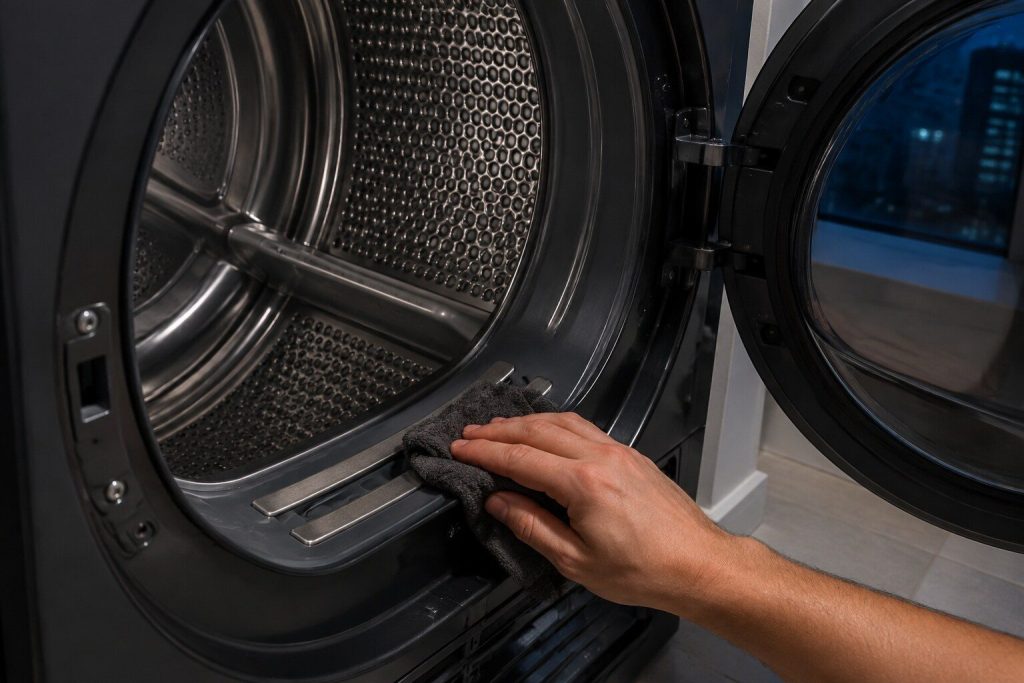
from $129 Dryer moisture sensor service
Automatic cycles that stop too early, run too long, or will not stop at all, while timed cycles work perfectly. That combination is the moisture sensor, and this maker publishes it as E 4 with unusually generous wording: the dryer keeps working, and what you lose is the automatic programs. The sensor is a pair of metal strips inside the drum opening reading the resistance across damp fabric, and the commonest reason they stop reading is a film of fabric softener rather than a failed part.
- Automatic cycles wrong while timed cycles are right — that is the sensor
- E 4, and the maker's own note says the machine keeps working
- Softener film across the strips is the ordinary cause and it is free to fix
-
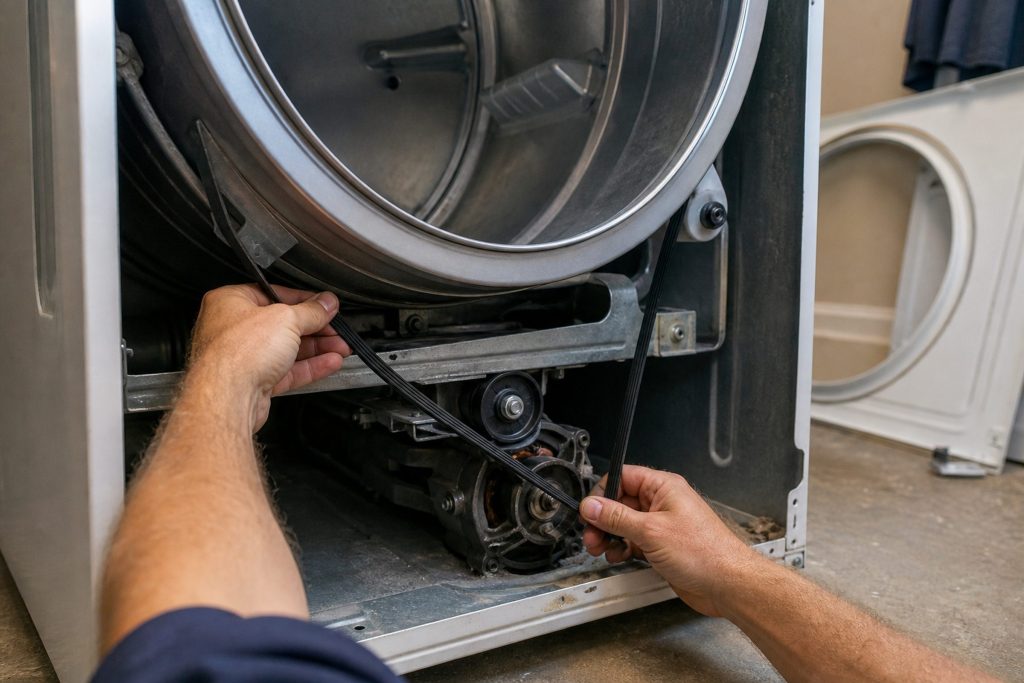
from $165 Dryer drum, belt and roller repair
A dryer that hums without turning, or one that turns with a rumble, a squeal or a thump once per revolution. The drum rides on rollers and is turned by a belt around its circumference, and each of those parts announces itself differently: a snapped belt gives a motor running and a still drum, worn rollers give a rumble that rises with load, and a glazed idler gives a squeal. On a stacked or tower installation the access is most of the job.
- The noise identifies the part before anything is opened
- Belt, rollers and idler are replaced together on a high-hour machine
- On a stacked pair or a tower, access is most of the work
-
from $175 Building laundry service
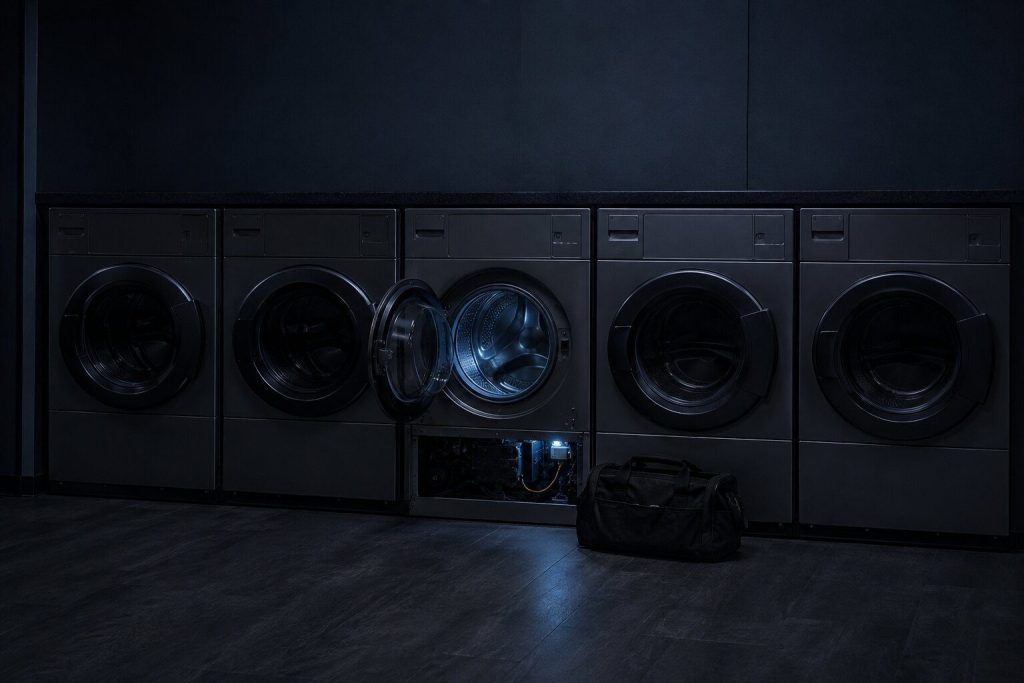
We are not Electrolux Professional — that is a separate business with its own dealers. What we do is the domestic machines on this badge that are doing commercial work, which in this region means a great many of them: building laundry rooms, staff kitchens, small offices. A washer rated for six cycles a week doing forty is not defective; it is reaching in eighteen months the wear a household would reach in ten years, and what helps is knowing which part goes first in that room.
- Domestic machines on commercial duty — not Electrolux Professional equipment
- Duty cycle rather than age decides what fails in these rooms
- Pumps, door locks and bearings go first, in that order
-
from $165 Short-term rental turnaround
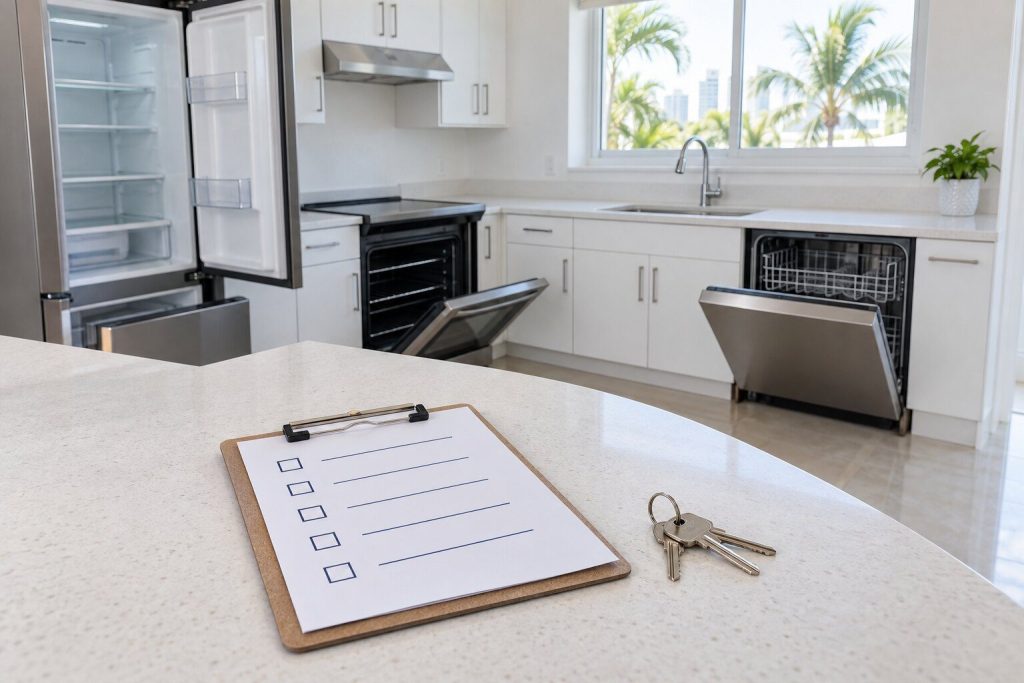
A different service from a repair, and worth booking as one. On a unit that changes guests on a Friday, a diagnosis on Wednesday with the part fitted on Thursday is worth more than a faster visit that ends in something being ordered. Tell us the turnover schedule when you book and we will plan around the calendar rather than against it. Managers with several units usually do better on an arrangement than on individual call-outs.
- Planned around the turnover calendar rather than around our own
- A diagnosis two days early beats a visit that ends in an order
- Several units are usually better handled on an arrangement
In more detail
About Electrolux dryers
The biggest family this make builds
Eleven dryers is more machines than this maker offers in refrigeration, cooking and dishwashing combined, and it tells you where the badge actually lives. If you own one appliance from this make, statistically it is in the laundry room. We stock accordingly.
Why the vent is on this page rather than buried
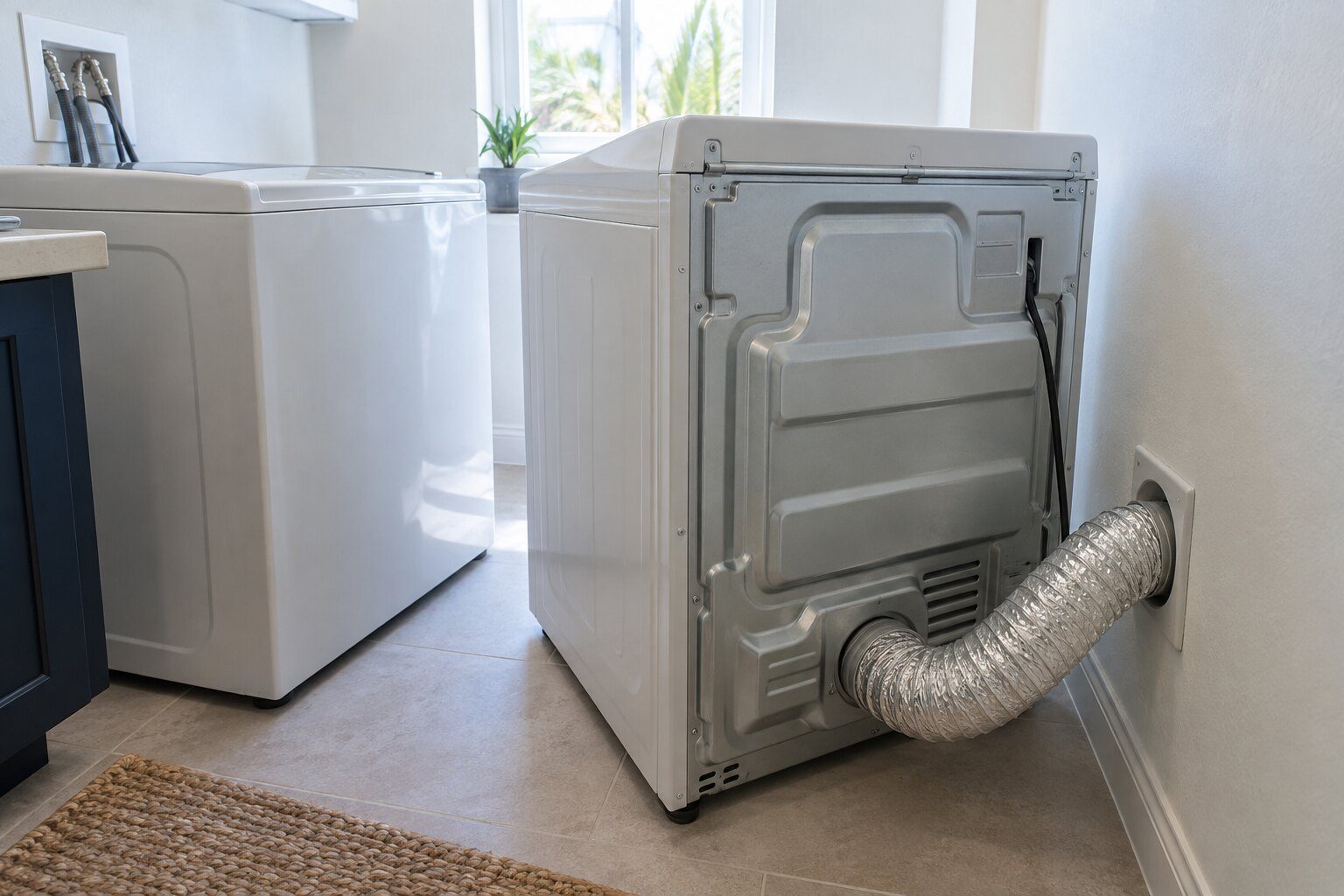
The maker publishes a code, EF1, whose entire solution is the vent — the filter, the hose, the run, the outside flap — and sends it to the installer rather than to service. In a condominium the run is usually vertical, usually long, and usually shared with the building's own construction, which means the owner cannot see the part that has blocked. A dryer being run twice for one load is reporting that duct long before any code does, and it is a fire risk before it is a repair.
Three codes that are not ours to bill for
H4/B4 is wiring, H2/B2 is the supply, and EF1 is the vent. All three are outside the appliance, and if that is what we find we will tell you rather than fitting a part. A diagnostic that ends in "this is your electrician" is still worth what it saves you.
This article is based on:
- Official manufacturer documentation
- Internal repair procedures
- Technician repair history
- Company quality standards
Before you book
Questions about Electrolux dryers
A single load now needs the dryer run twice or three times.
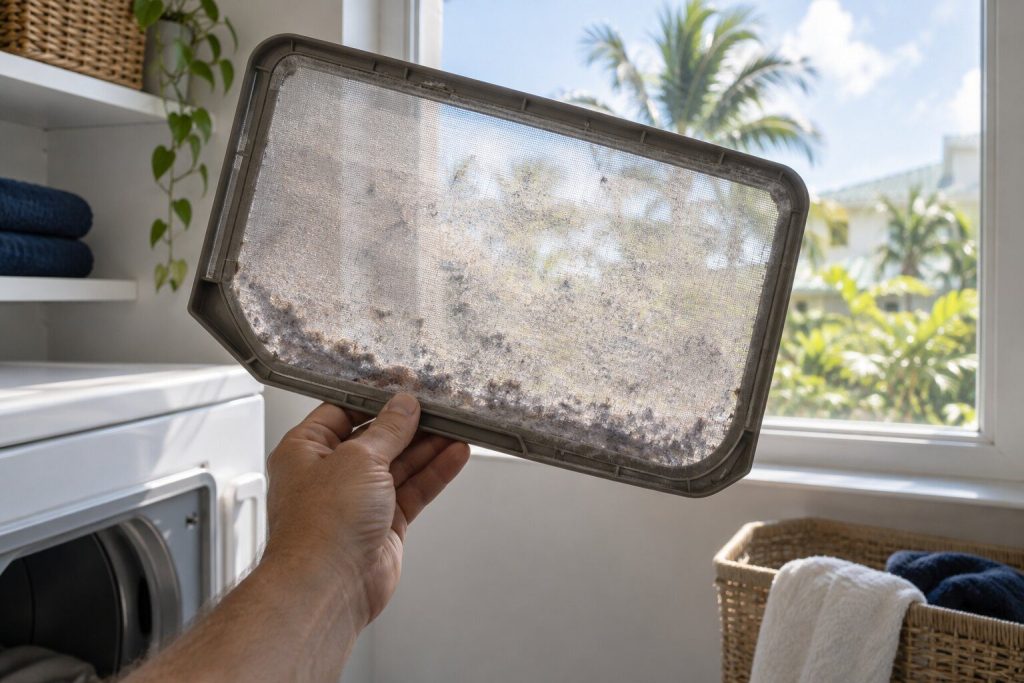
Airflow, nearly always, and it is worth taking seriously rather than living with. Start with the lint filter — and hold it up to a light, because a film of softener residue passes lint and blocks air while looking perfectly clean. Then the hose behind the machine, then the run to the outside. A dryer working three times as hard is also a dryer running three times as hot.
The display shows EF1.
The machine has measured its own airflow and found it insufficient. The maker sends this one to the installer, and in a South Florida building that is more reasonable than it sounds: these runs go up through a wall to a roof or a soffit, they are long, and the part that blocks is the end nobody can see. This is the one item on our site where doing nothing is genuinely unsafe.
It tumbles but never heats.
On an electric dryer that pattern — motor fine, no heat — points at the supply as often as at the element, because the motor runs on 120 volts and the element needs both legs of 240. The maker has codes for exactly this (H2/B2 and H4/B4) and both of them point outside the appliance. Check whether anything else on 240 volts has gone strange at the same time.
What is a laundry tower, and does it change the repair?
It is a washer and dryer built as a single unit with one control panel rather than two machines stacked. It changes access more than mechanism — the two halves are serviced through the one cabinet — and it changes the conversation about replacement, because you cannot replace half of it.
Where we do it
Across Miami-Dade, Broward, and Palm Beach
Same terms everywhere we go: an on-site diagnostic first, the price agreed in writing, and the exact figure confirmed once we have seen the unit.
Neighborhoods people ask for by name