Appliance
Electrolux refrigerators
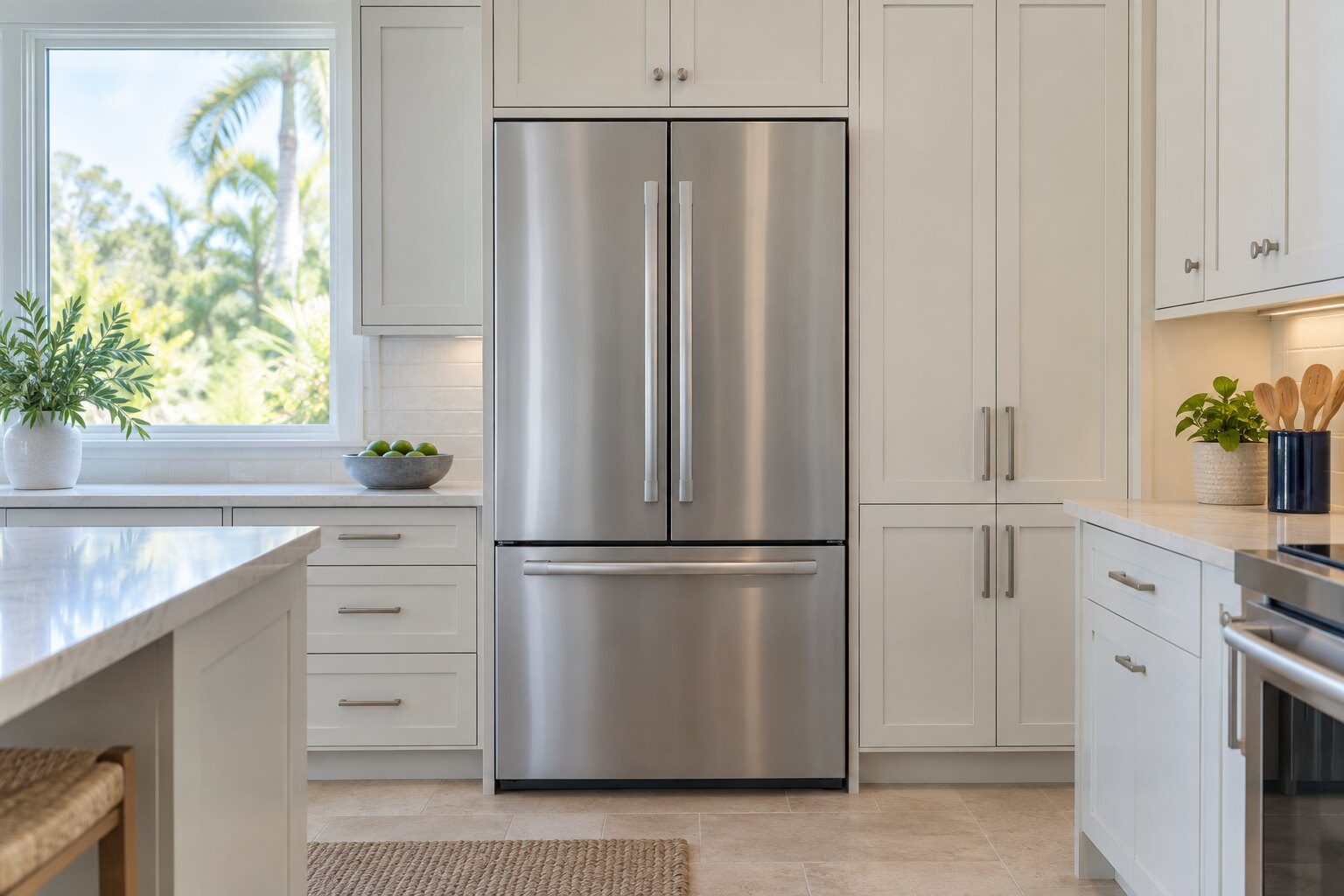
Six cabinets in the whole current line, and every French door among them is counter-depth — three of them, at 21 and 23 cubic feet. There is no standard-depth box here, no side-by-side and no top-freezer; the deep end of this line is a pair of 33-inch columns, one refrigerator and one freezer, sold with trim kits so they read as cabinetry. That is a refrigerator somebody drew into a plan, and it changes the work: the cabinet is tight in its surround, the water line runs where the joiner left it, and getting the unit out is half the visit before anything is diagnosed.
- 10 symptoms we are called out to
- From $95 diagnostic, credited to the repair
- 59 cities and neighborhoods covered
- OEM parts available on order
The short version
What this equipment is, for a repair
Configurations
Counter-depth French door · 33-inch columns
Access
Planned before the visit, not discovered on arrival
Parts
OEM, available on order
Diagnostic
From $95, credited to the repair
What goes wrong with it
Symptoms we are called out to on Electrolux refrigerators
Each one covers the likely causes in the order they are worth checking, and what to do in five minutes before booking anything.
-
It is running, the light works, and the food is warm Refrigerator not cooling
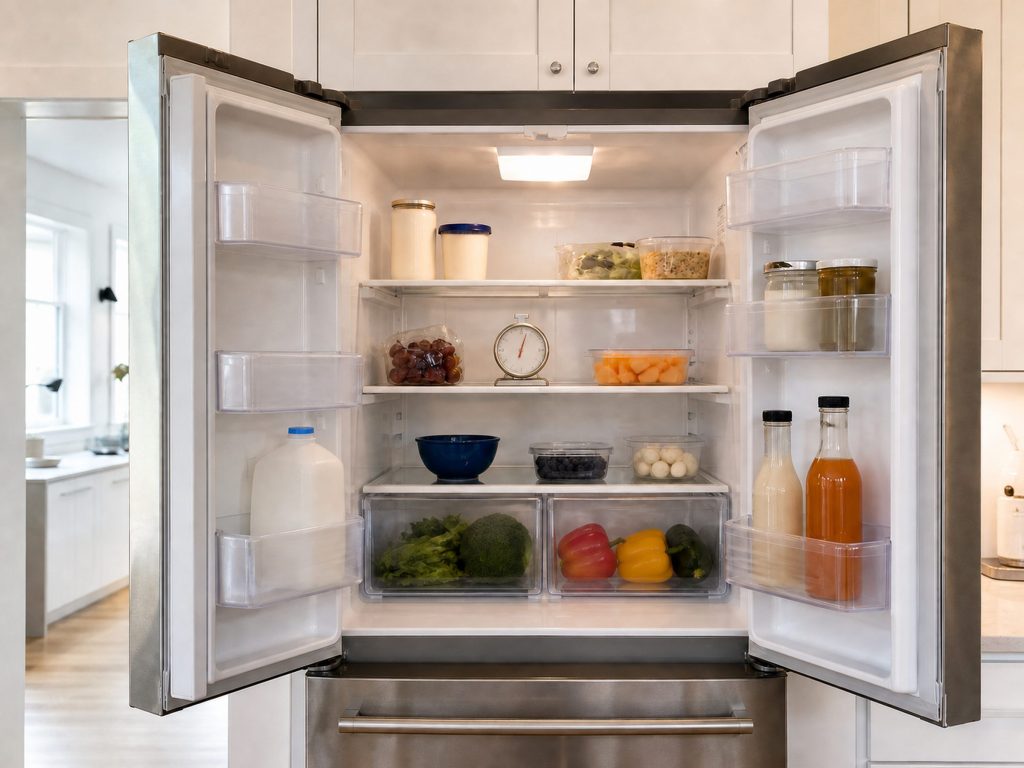
Something is clearly happening inside and the cabinet is still not cold. Two pieces of evidence settle most of what follows, and neither requires tools. The first is yours: a thermometer in each compartment, read twice sixty minutes apart. The second belongs to the appliance — the peak temperature it recorded behind its high-temperature alert, which appears once and is destroyed by a second press of clear. Together they separate an airflow problem from a defrost problem from the sealed system itself. Three unrelated appointments.
- Freezer cold, fresh-food side warm: that is airflow rather than refrigerant
- Press clear once and photograph the peak figure it shows you
- A counter-depth cabinet breathes through one route, and that route is often it
-
One half is perfect and the other is not Warm fridge, cold freezer
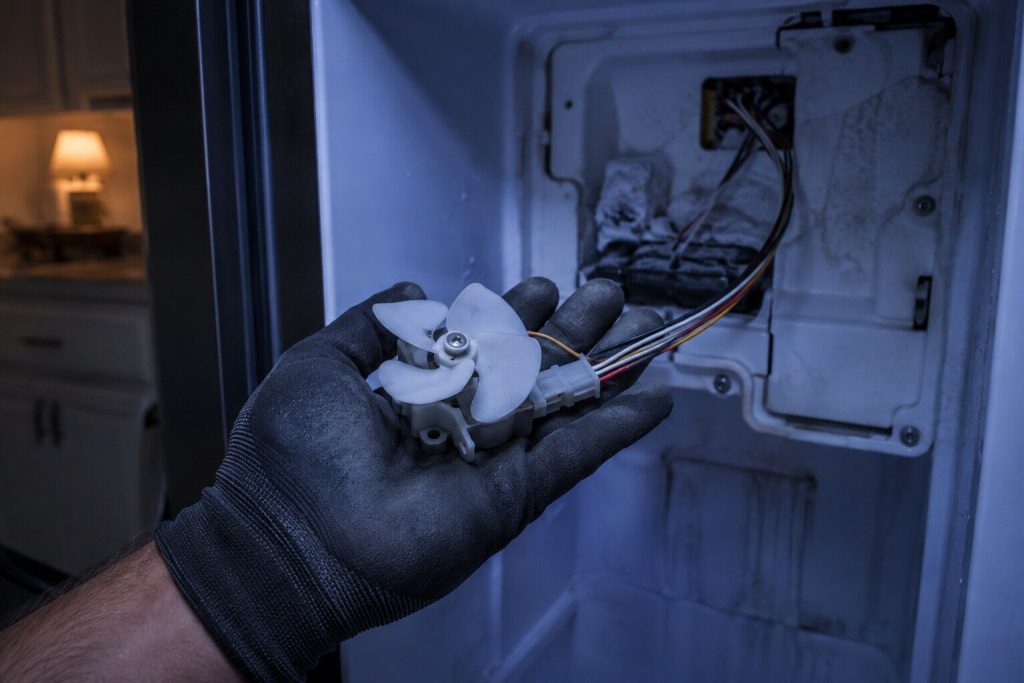
The most diagnostic complaint in refrigeration, and good news more often than not. One sealed system serves both compartments here and air is moved between them, so when only one side is wrong the refrigerant circuit is almost certainly fine and the problem is on the air path. That is the inexpensive half of everything that can go wrong with a refrigerator, and it is worth saying plainly before anybody starts worrying about compressors.
- One warm side almost always means air, not refrigerant
- The fan, a damper, or a duct packed with frost
- The cheap half of refrigeration failure, and it is worth confirming
-
A tone every minute and HI on the display High-temperature alarm
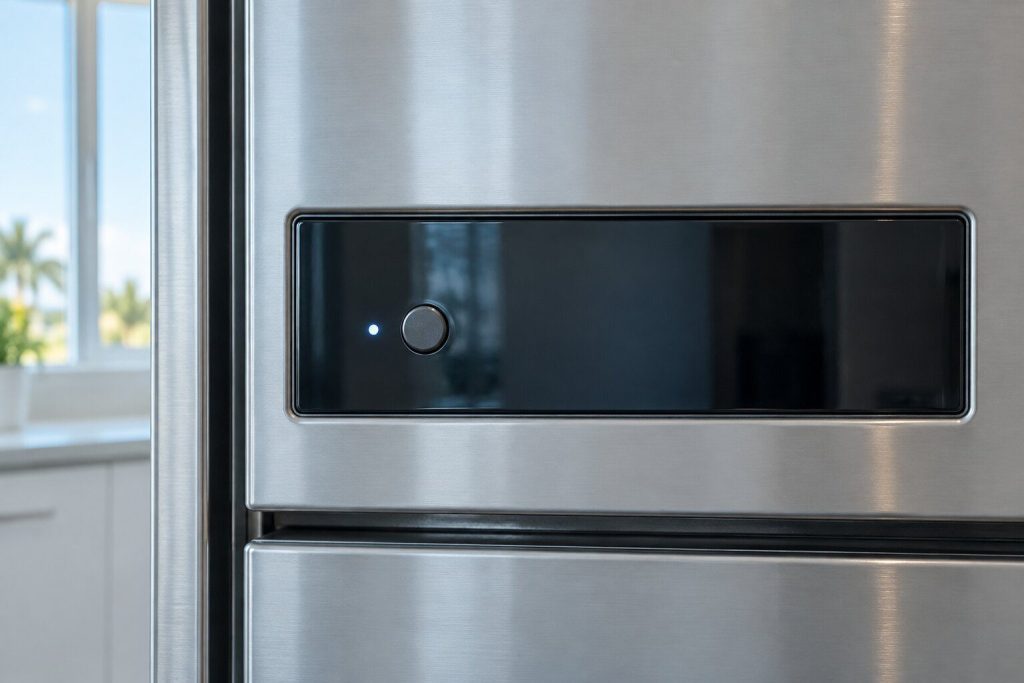
This maker's cabinets announce a warm cabinet rather than leaving you to discover it, and they sound once a minute until acknowledged. The detail almost nobody knows is the useful one: when you clear the alert, the display shows the highest temperature the cabinet actually reached. That single number answers the only question that matters after a power cut — whether the food is safe — and it is gone the second time you press clear.
- Clear it once and write down the peak it shows you
- The maker's own causes start at a door left open and end at a gasket
- In this climate the gasket is the one we find most
-
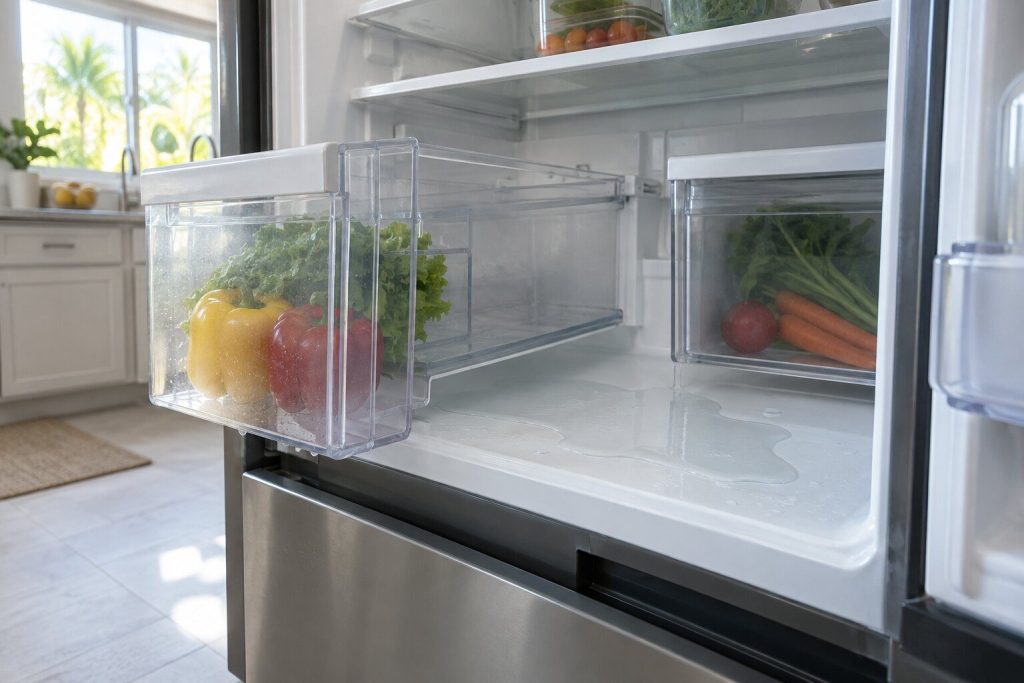
A puddle, a wet floor, or water under the drawers Water under the refrigerator
Three ordinary sources, and where the water shows tells you which. Under the crisper drawers is the defrost drain. Behind or beneath the cabinet is the supply line to the dispenser and ice maker. Down the front of a door is condensation from a seal. In a fitted kitchen the order of urgency is different from a rental, because the water reaches joinery and flooring long before anybody sees a puddle on tile.
- Where the water appears identifies the source before anybody arrives
- In a fitted kitchen it finds the cabinetry before it finds the floor
- A slow leak behind a built-in cabinet is the expensive version
-
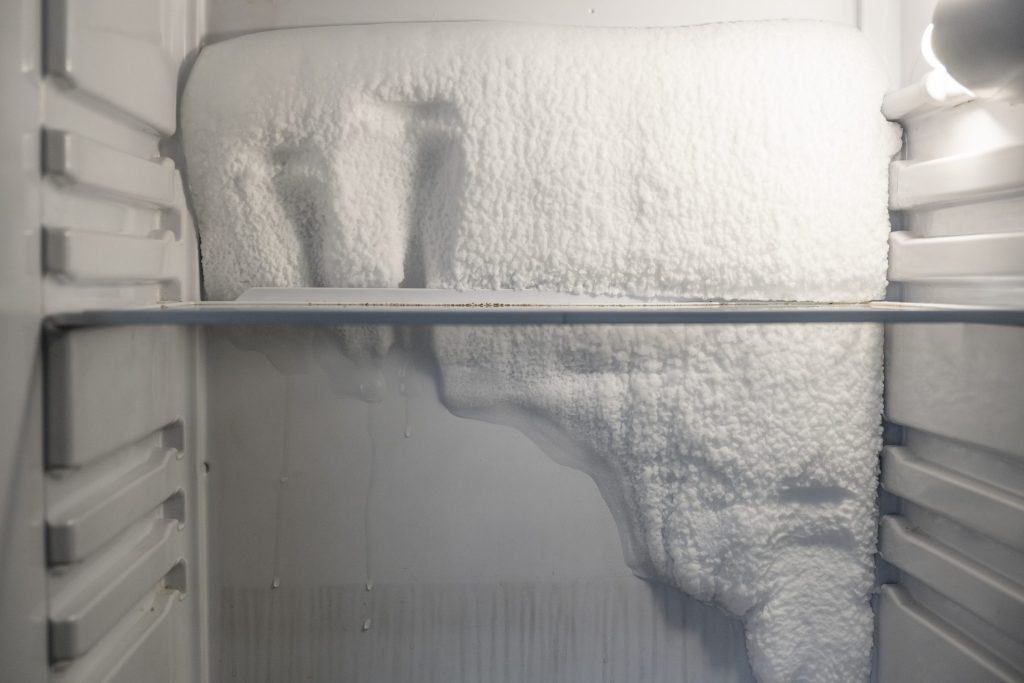
Ice on the walls, the shelves or around the vents Frost building up inside
A no-frost cabinet that is building frost is telling you one of two things: moist air is getting in, or the defrost cycle is not completing. On a 33-inch column the geometry makes this worse than on a small box — the evaporator is tall, ice builds from the bottom upward, and by the time anything is visible on the top shelf there is a great deal of it out of sight behind the rear panel.
- Two causes only: air getting in, or defrost not completing
- On a tall column the ice builds from below and shows late
- A heavy door out of square is the commonest way air gets in
-
A hum, a rattle, a click or a grinding Refrigerator making noise
Most refrigerator noises are normal and a few are not, and the difference is usually when they happen rather than how loud they are. A counter-depth cabinet in a run of joinery also amplifies what it makes — the cabinetry acts as a sounding board — so a noise that would be unremarkable in a freestanding unit becomes the reason somebody calls. Telling us when the noise occurs narrows this faster than any description of the sound.
- When it happens matters more than what it sounds like
- Built-in joinery amplifies noise that a freestanding cabinet would absorb
- Ice against a fan blade is the single most common real cause
What we do on it
Repairs we carry out on Electrolux refrigerators
Starting figures for this equipment in South Florida. The exact cost is confirmed after an on-site diagnostic — and this is not the whole list of what can go wrong, so call if your problem is not here.
-
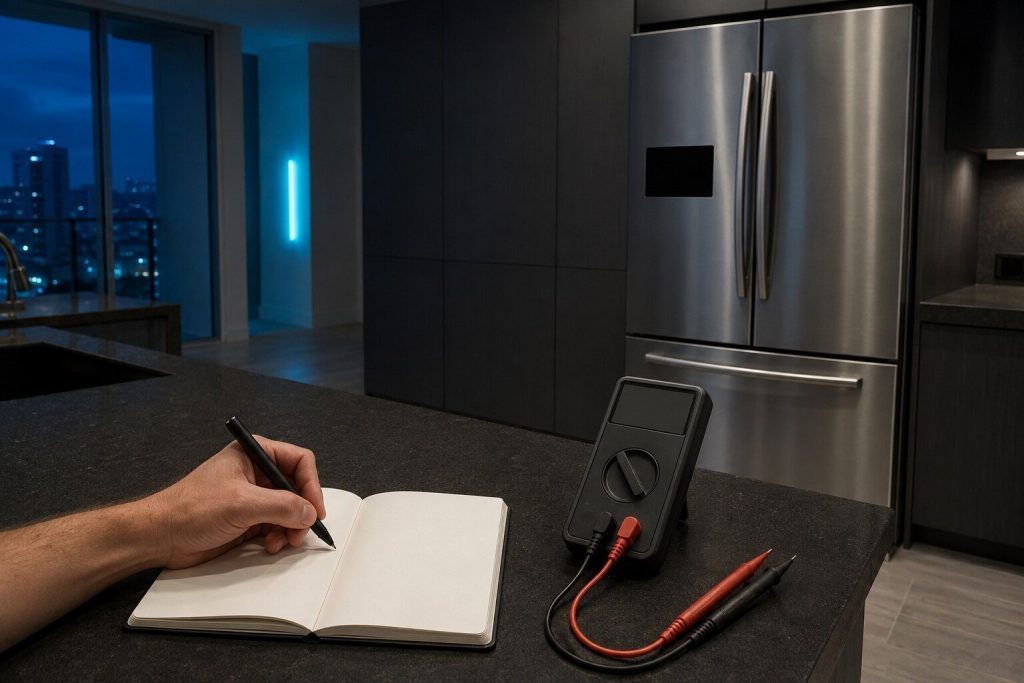
from $95 Diagnostic visit
Finding out what has actually gone wrong, before any part is named or priced. On this badge the opening question is usually about access rather than age: a counter-depth cabinet scribed into an opening, a column captured behind a trim kit, a wall oven sitting in a tall unit — each has to be brought far enough forward to be reached, and establishing that in advance is what separates one appointment from two. The charge is credited against the repair if you go ahead. Where our honest recommendation turns out to be that the machine is not worth mending, you still get that recommendation, and the charge does not change.
- Access comes first — built-in equipment is most of what this badge sells
- A written figure ahead of the work, credited against the repair
- If mending it is the wrong call we tell you, rather than selling a part
-
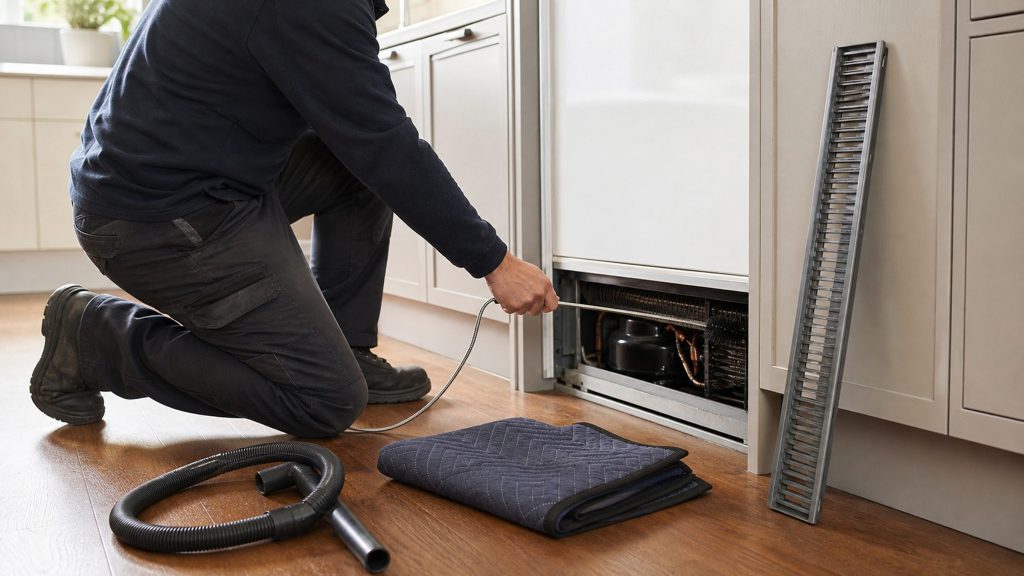
from $149 Appliance maintenance
Scheduled work on the parts that fail from accumulation rather than from age: condenser coils in salt air, a dryer duct that has been narrowing for four years, a dishwasher sump, the fold in a washer door seal that never dries out in this climate. On a kitchen where the appliances were specified together it is worth doing them together — the visit costs less than the sum of its parts and it catches the one that was about to fail.
- Coils, ducts, sumps and seals — the parts that fail from accumulation
- Worth doing as a suite when the kitchen was specified as one
- Finds the failure that was three months away, which is the actual value
-
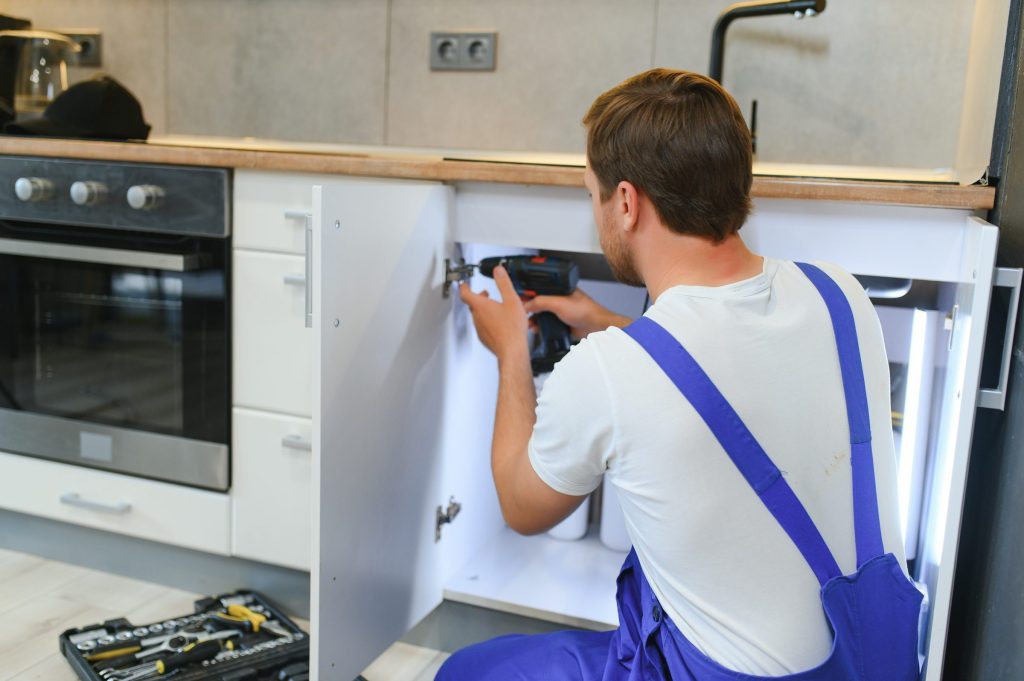
from $175 Appliance installation
Fitting an appliance properly, which on this badge usually means fitting it into something. Columns go behind trim kits, counter-depth cabinets go into openings that were drawn for them, wall ovens and built-in microwaves go into tall units, and every one of those has a clearance and an air path that the appliance depends on. This maker sends three of its own washer codes and two of its dryer codes back to whoever installed the machine — which is a fair measure of how much installation decides here.
- Built-in work: trim kits, openings, clearances and air paths
- Five of this maker's published codes are installation problems, not failures
- Supply, drain and vent checked and documented rather than assumed
-
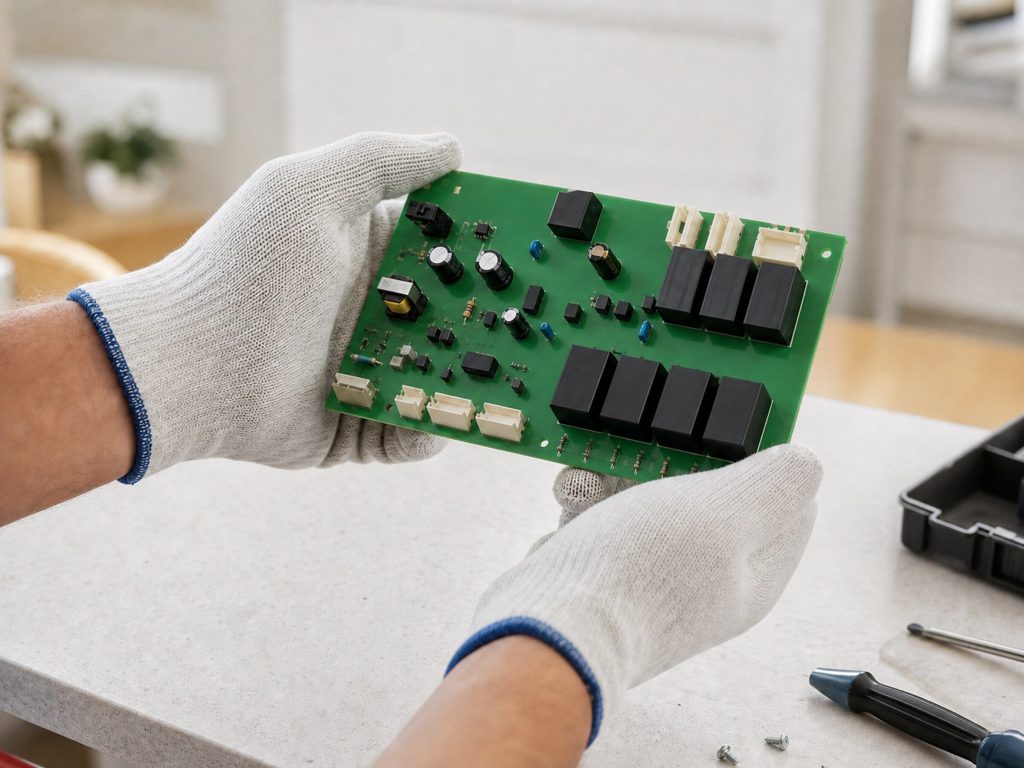
from $245 Control board repair
When the board is genuinely the answer — and it is worth saying that it often is not. A great many appliances condemned as "a board problem" have a sensor lying to a board that is working perfectly. This maker helps here more than most: F12, F13 and the F3/F20/F26 family are published as board-level conditions by name, so when one of them is on the display the diagnosis has a document behind it rather than an assumption.
- Named board conditions — F12, F13 and the communication family
- Most "board problems" are a sensor telling a healthy board something false
- Connectors and harnesses checked before anything is ordered
-
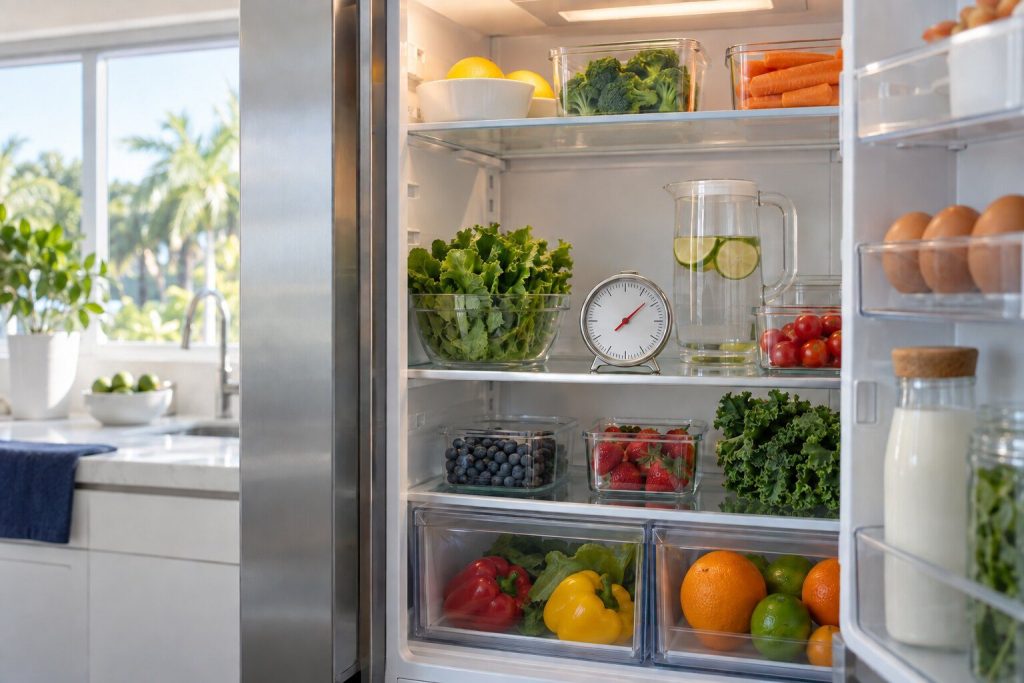
from $175 Refrigerator not cooling repair
The call that matters most and the one where the description decides everything. One warm compartment and one cold one points at air — defrosting, a duct, a damper, the evaporator fan. Both compartments drifting together points at the sealed system or the condenser. On a counter-depth cabinet the difference is worth establishing on the phone, because the expensive half of this visit is getting the unit out of its opening and we would rather do that once with the right part already on the van.
- Which compartment is wrong decides where we start
- Counter-depth cabinets cost access before they cost parts
- Condenser and air path checked before anything is condemned
-
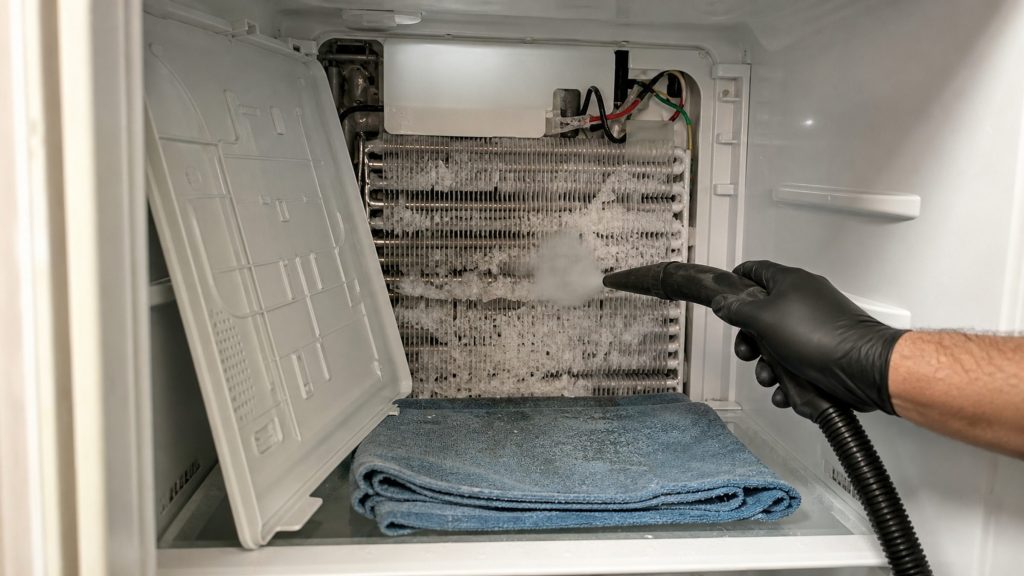
from $165 Defrost system repair
Frost on the shelves, an evaporator sealed into a block of ice, or a cabinet that behaves for a week after every visit and then slides again. Three parts do this job — something that heats, something that decides when, and a route for the water to leave — and on a full-height column the geometry makes it worse than on a small box. The evaporator is tall, the ice climbs from the floor of it upward, and by the time anything is noticeable on the top shelf there is a great deal of ice underneath.
- Heater, the control deciding when to run it, and the drain out
- On a tall column the ice climbs from below and surfaces late
- The drain is the same system and is done in the same visit
-
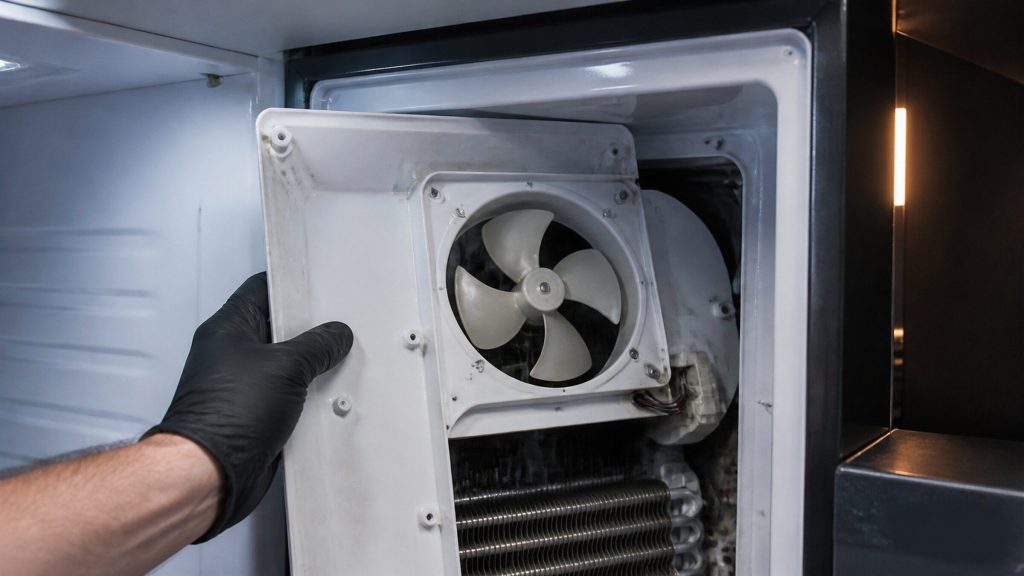
from $149 Evaporator fan repair
Cold is manufactured in one compartment and has to be carried to the other. Let the fan doing the carrying slow, seize or stop, and the freezer stays perfectly cold while the fresh-food side climbs — which is why this single part explains most of what people report as "the freezer is fine and the fridge is not". It is also among the cheaper things that can be wrong with a cabinet of this price, which makes it worth confirming before anyone starts talking about compressors.
- Explains most warm-fridge, cold-freezer complaints on these cabinets
- The part is inexpensive; the cabinet it sits in is not
- Confirm it before any conversation about a sealed system
-
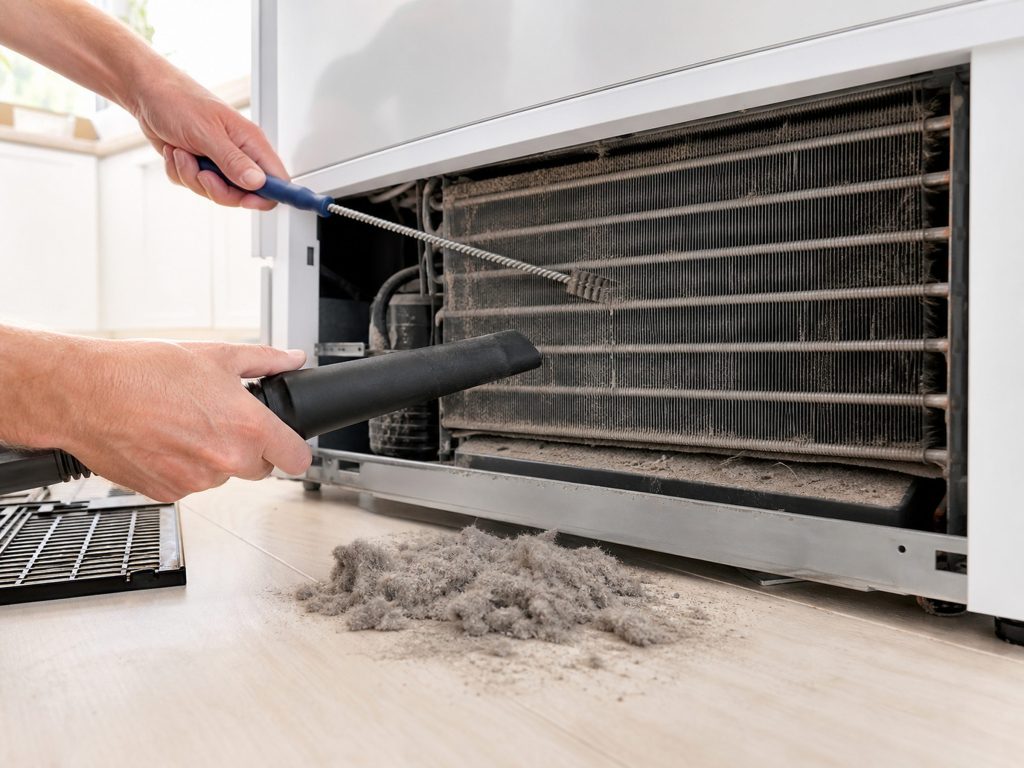
from $119 Condenser cleaning
The highest-value hour anybody spends on refrigeration in this region, and the one most reliably skipped. A condenser sheds the heat the cabinet removes, and in salt air within a few miles of the coast it silts up with a mixture nobody planned for. On a built-in column or a cabinet in a trim kit it is worse, because the air reaches the coil through a defined route that also collects. A choked condenser runs the compressor continuously and shortens the life of the most expensive part in the appliance.
- Coastal air loads a condenser faster than any specification allows for
- Built-in cabinets breathe through one route, and that route collects too
- The compressor is what this protects, and it is the part worth protecting
-
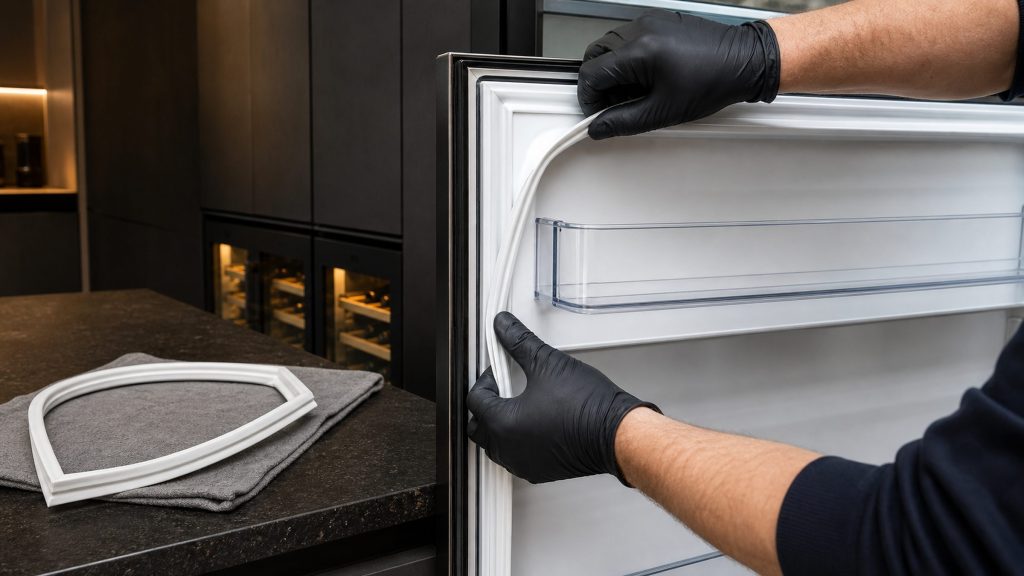
from $155 Door seal replacement
A seal that no longer pulls is a cabinet running continuously and losing anyway, and in this humidity it also means condensation, frost and eventually a door that is wet more often than it is dry. On this badge the doors are heavy — a 33-inch column door, often carrying a panel or a trim kit — and years of that weight take the door slightly out of square before the gasket itself is worn out. Which of the two it is decides whether this is a part or an adjustment.
- A heavy column door goes out of square before the gasket wears out
- Condensation and frost follow a seal that has lost its pull
- Hinge adjustment first — it is free and it is often the answer
-
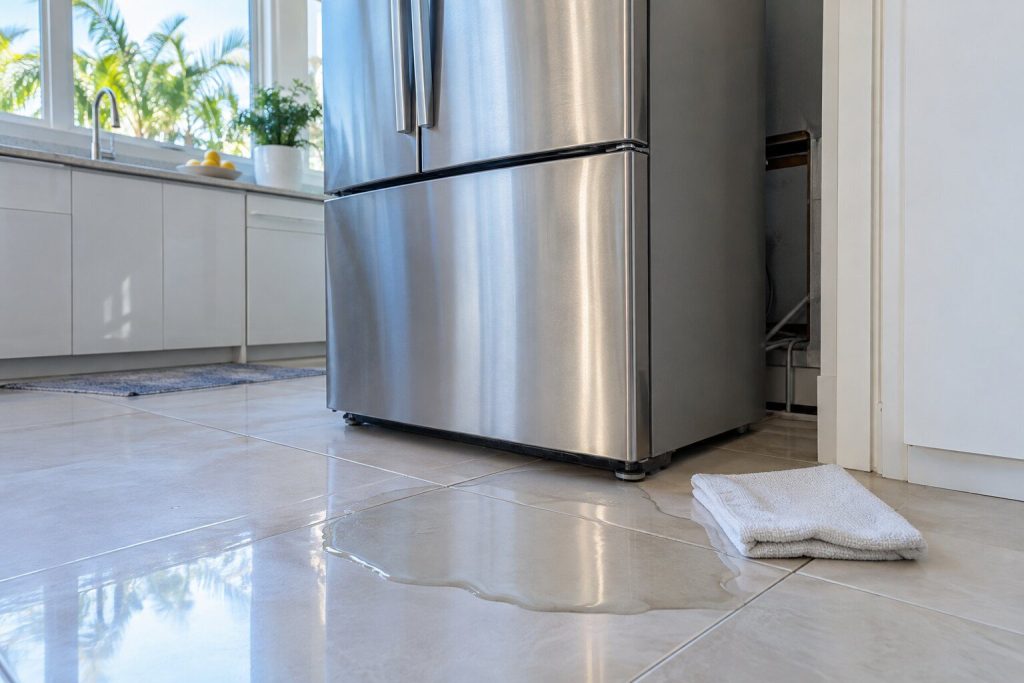
from $145 Refrigerator leak repair
Water on the floor from a refrigerator has three ordinary sources and they are easy to tell apart once you know: the defrost drain, the water line to the dispenser and ice maker, or condensation from a seal that is not sealing. On a built-in cabinet the order of urgency is different from a freestanding one, because the water reaches joinery and flooring before anybody sees a puddle — which is why a slow leak in a fitted kitchen costs more than a fast one in a rental.
- Three ordinary sources, and they are distinguishable before anybody arrives
- In a fitted kitchen the water finds the cabinetry before it finds the floor
- A slow leak in joinery is more expensive than a fast leak on tile
-
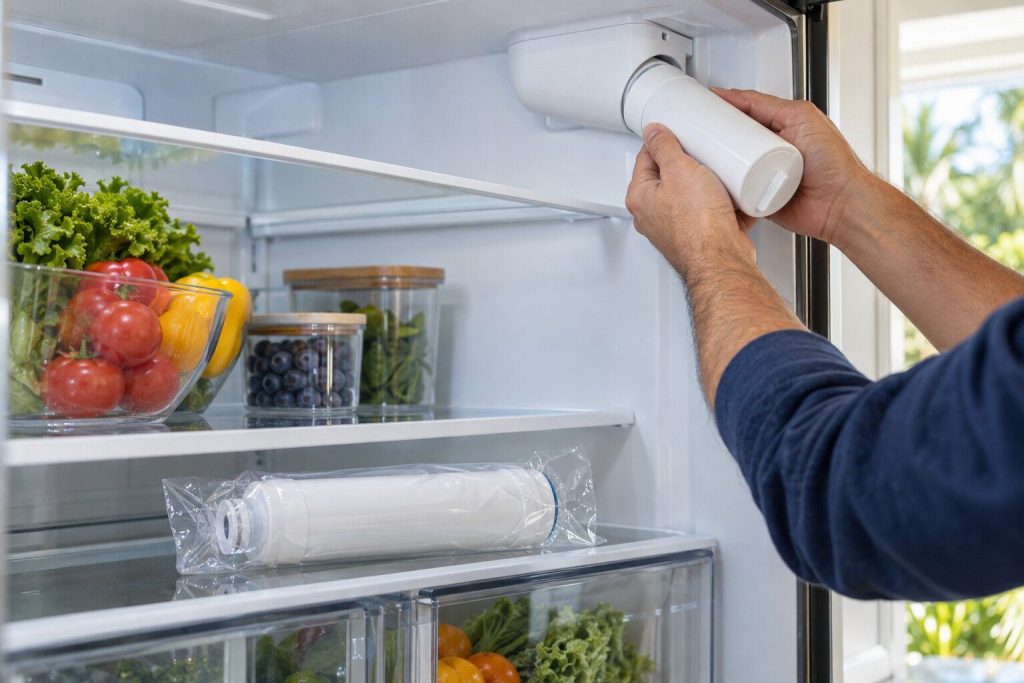
from $129 Water dispenser and filter service
Slow water, no water, water that tastes of nothing good, or a filter that will not seat. Most of this is the filter and the line rather than the dispenser, and the tell is usually how the ice is behaving at the same time: hollow or undersized cubes alongside slow water means restriction upstream of both. On a built-in cabinet the shutoff is often behind the unit or under the floor, which is a reason to have somebody who can reach it do the work.
- Slow water and hollow ice together means restriction, not two problems
- The filter, its housing and the line before the dispenser itself
- On a built-in cabinet the shutoff is not where a homeowner can reach it
-
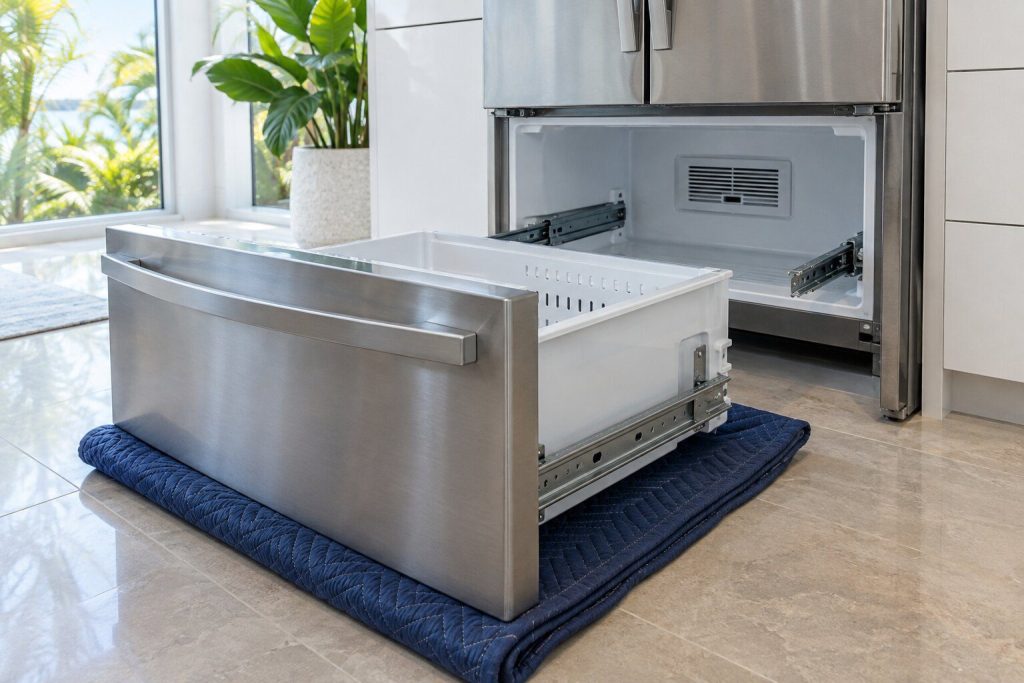
from $165 Convertible drawer repair
The drawer this maker calls TempAdapt runs from −6 °F to 45 °F, which is a span no ordinary compartment attempts, and it does it with its own air path, its own damper and its own sensor. That independence is the useful part of the diagnosis: the drawer can fail while the rest of the cabinet is faultless, and that is an ordinary outcome rather than a contradiction. It is also one of the features people specified the cabinet for, so it is worth repairing rather than working around.
- A −6 °F to 45 °F span on its own damper and its own sensor
- It fails independently of the cabinet, and that is normal rather than odd
- One of the reasons the cabinet was chosen — worth fixing properly
-
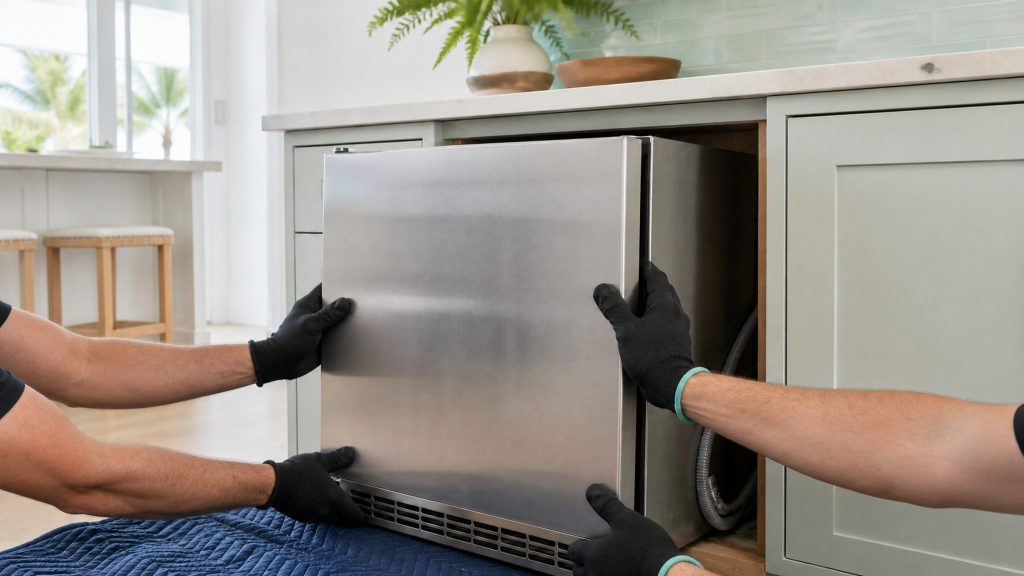
from $185 Built-in and column access
Not a repair in itself — the work that has to happen before one. Columns sit behind trim kits, counter-depth cabinets are scribed into openings, and under-counter units are captured by the countertop above them. Getting any of those out far enough to reach the back is genuine work, sometimes two people, and occasionally it means removing trim that was fitted by a joiner. We price it separately so you can see it rather than finding it inside a repair bill.
- Trim kits, scribed openings and captured under-counter units
- Priced separately so the access is visible rather than buried in a part
- Sometimes a two-person job, and we say so when we book it
-
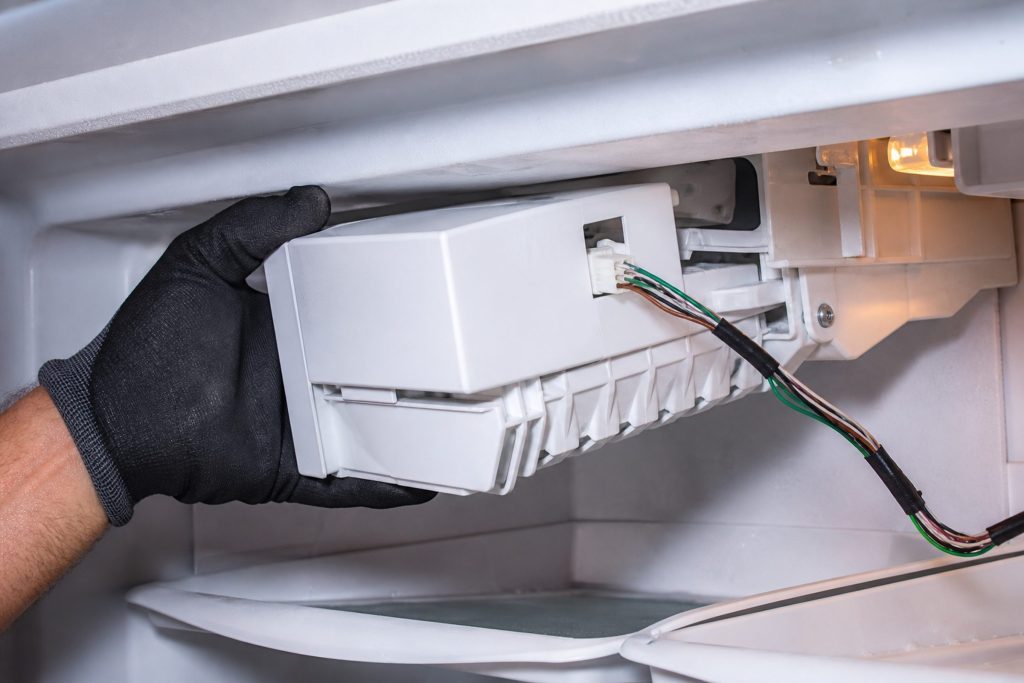
from $155 Ice maker repair
This maker sells no standalone ice maker today, so what we repair is the module inside the French-door cabinets and the 15-inch under-counter unit from the built-in range that preceded the current line. Both are proper appliances with parts behind them. The commonest calls are no ice at all, ice that arrives hollow or small, and a bin that has bonded into one mass after a week away — which in a region with summer outages is a seasonal rather than an occasional problem.
- The in-cabinet module and the older 15-inch under-counter unit
- Hollow or undersized cubes are water supply, not the ice maker
- A bin that stood still through an outage is the region's own failure
-
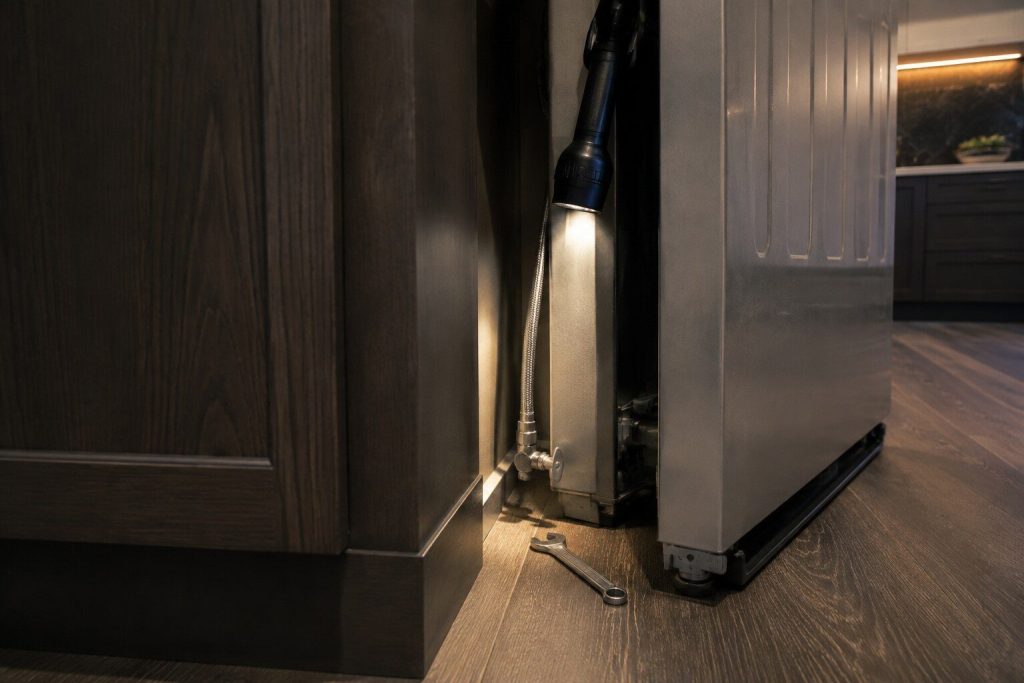
from $135 Ice maker water line and valve
Most ice complaints are water complaints. The line from the wall, the shutoff somebody installed behind a cabinet fifteen years ago, the filter, and the fill valve on the appliance are one chain, and a restriction anywhere in it produces the same symptoms. On a built-in cabinet the awkward part is that half of that chain is behind joinery, which is why this is priced as its own job rather than as an add-on to an ice maker repair.
- Line, shutoff, filter and fill valve are one chain
- Half the chain is behind joinery on a built-in cabinet
- A restriction anywhere in it produces identical symptoms
-
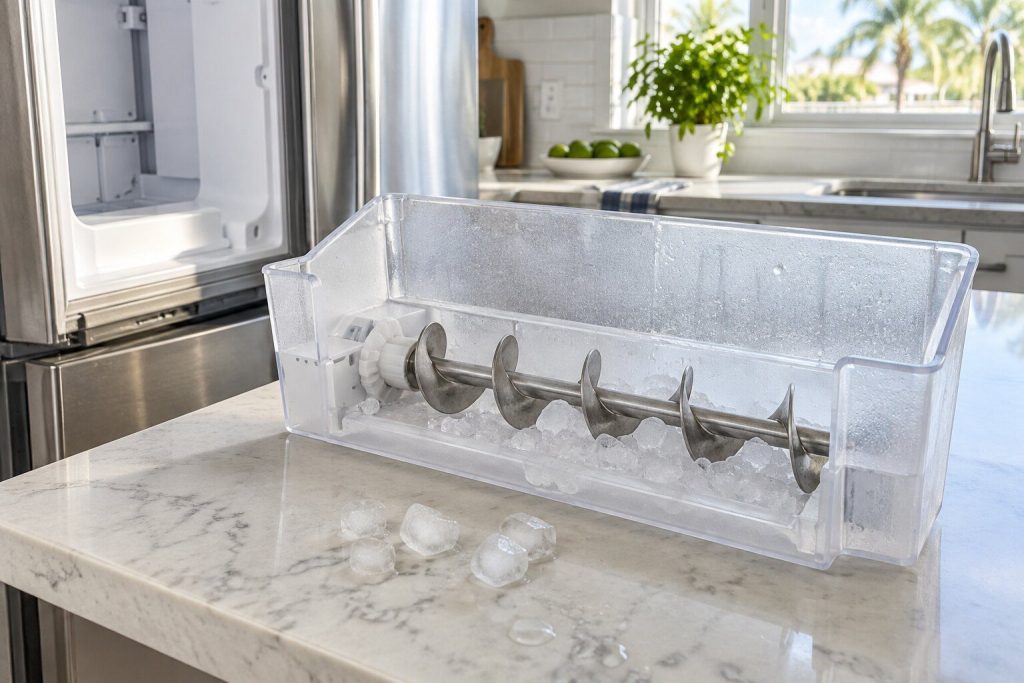
from $145 Ice dispenser and auger repair
Ice in the bin and nothing at the door. The mechanism is a motor, an auger, a chute and a flap that has to close so the cabinet does not lose cold air through it, and this maker has an error code of its own — DI SP — for a cube jammed in that chute. The useful distinction is audible: an auger that will not turn is silent or grinding, while a flap that will not open lets you hear the motor run with nothing arriving.
- DI SP is this maker's own code for a jam in the chute
- A silent auger and a running motor are two different repairs
- A flap that will not close costs cold air continuously
-
from $165 Short-term rental turnaround
A different service from a repair, and worth booking as one. On a unit that changes guests on a Friday, a diagnosis on Wednesday with the part fitted on Thursday is worth more than a faster visit that ends in something being ordered. Tell us the turnover schedule when you book and we will plan around the calendar rather than against it. Managers with several units usually do better on an arrangement than on individual call-outs.
- Planned around the turnover calendar rather than around our own
- A diagnosis two days early beats a visit that ends in an order
- Several units are usually better handled on an arrangement
In more detail
About Electrolux refrigerators
Six cabinets, and what that tells you
A line this small is not a gap in the catalog; it is a decision. This make sells counter-depth French doors and full-height columns, and it does not sell the standard-depth boxes that fill rental kitchens. What we open, therefore, is almost always an appliance that was specified — chosen at the same time as the cabinetry around it, often as part of a matched set with the freezer beside it.
What a trim kit changes about a repair
The column pair is sold with flat or louvered trim kits so the two cabinets read as one run of joinery. That is why we ask, when the appointment is made, whether the unit is freestanding or built in. A column in a trim kit has a defined air path through the top or the base, and a blocked one produces exactly the symptoms of a failing sealed system while nothing inside the cabinet is wrong at all. Two minutes settles it, and it settles it often enough to be the first thing we do.
The named parts, and why we ask about them
TasteLock Plus is the crisper system and TempAdapt is the convertible drawer. Both have their own seals, their own sensors and, in the drawer's case, its own damper. When somebody tells us which of the two is misbehaving, the part is usually identified before we arrive — which on a built-in cabinet is the difference between one visit and two.
This article is based on:
- Official manufacturer documentation
- Internal repair procedures
- Technician repair history
- Company quality standards
Before you book
Questions about Electrolux refrigerators
The fridge is cold and the freezer is warm, or the other way round.
Which side is wrong tells us where to start before anyone is dispatched. One sealed system serves both compartments here and air is moved between them, so when only one side has gone wrong the cause is nearly always on the air path — defrosting, a duct, a damper, the fan over the evaporator — and not the compressor. On a counter-depth cabinet that matters more than usual, because pulling the unit out of a flush run is the expensive part of the visit and we would rather do it once, with the right part already on the van.
My TempAdapt drawer will not hold the temperature I set.
The drawer runs from −6 °F to 45 °F, which is a wide span for one compartment, and it achieves that with its own air path and its own sensor rather than by borrowing from the fridge. So the drawer failing while the rest of the cabinet is perfect is an ordinary outcome and not a contradiction. We check the drawer's own damper and sensor first; it is frequently a part rather than a system.
Is a counter-depth cabinet harder to repair?
Harder to reach, not harder to repair. The mechanism is conventional; what is different is that the cabinet is fitted flush into joinery, often with a trim kit and sometimes with a water line that was run before the floor went down. We allow for that in how the visit is booked, and we would rather be told in advance that the unit is built in than discover it at the door.
Water is pooling beneath the crisper drawers.
Nine times in ten the defrost drain has blocked, and in South Florida no refrigeration complaint reaches us more often. Meltwater with nowhere to go travels forward instead of down to the pan. Where that is all it is, the repair is quick — book it early, because in a built-in cabinet the water finds the joinery long before it finds the floor.
Where we do it
Across Miami-Dade, Broward, and Palm Beach
Same terms everywhere we go: an on-site diagnostic first, the price agreed in writing, and the exact figure confirmed once we have seen the unit.
Neighborhoods people ask for by name