Model
ERFC2393A repair
Electrolux ERFC2393A repair in Miami: what owners of this refrigerator search for, what those symptoms usually point at, and what the work involves. Diagnostic from $95, credited toward the repair.
- From $95 diagnostic, credited to the repair
- 59 cities and neighborhoods covered
- OEM parts available on order
- In writing the price, before anything is opened
The short version
What the number tells us
The generation decides which parts exist, how quickly they arrive and what a repair on this cabinet is worth. It is the first thing we ask for.
Model
ERFC2393A
Give us this number when you book and the technician arrives knowing what the unit is and which parts it takes.
or call (305) 912-9018
Parts
OEM on order; legacy parts take longer
Diagnostic
From $95, credited to the repair
What we can tell you
What this number means for a repair
Not a specification table. Capacity, dimensions and production years are not something we can verify, and a plausible-looking table of them would be invention rather than information.
-
The full number is the first thing we ask for
It decides what the display can tell you and how easily parts are found, and the data plate settles it in one line. Letters after the digits are not decoration — they identify the configuration, and two units sharing the digits can take different components.
-
What we ask you to read off the unit
The data plate, not the box or the invoice. On this equipment it sits inside the cabinet — along a side wall, behind the lowest drawer, or under the lid of a wine cabinet — and it carries the full number and the service index together. A photograph of it is worth more than any table we could publish.
What owners of this model ask about
The symptoms searched most often with the ERFC2393A
Taken from real search suggestions rather than from a list we made up. Each page says what the symptom usually points at and what to check first.
-
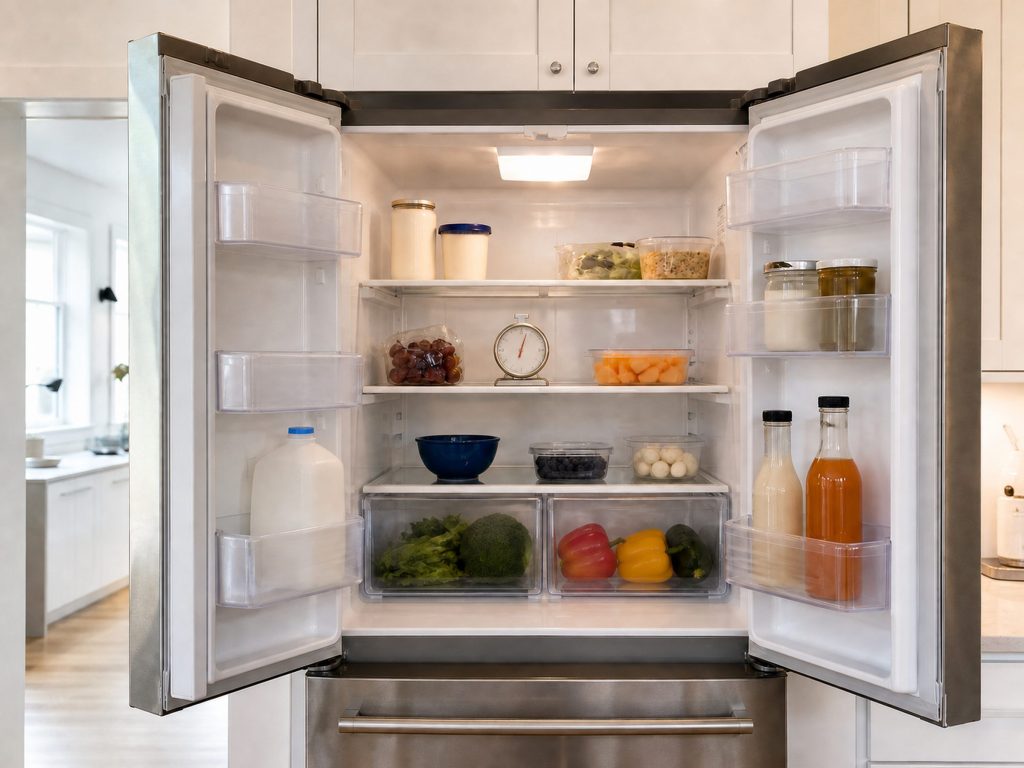
It is running, the light works, and the food is warm Refrigerator not cooling
Something is clearly happening inside and the cabinet is still not cold. Two pieces of evidence settle most of what follows, and neither requires tools. The first is yours: a thermometer in each compartment, read twice sixty minutes apart. The second belongs to the appliance — the peak temperature it recorded behind its high-temperature alert, which appears once and is destroyed by a second press of clear. Together they separate an airflow problem from a defrost problem from the sealed system itself. Three unrelated appointments.
- Freezer cold, fresh-food side warm: that is airflow rather than refrigerant
- Press clear once and photograph the peak figure it shows you
- A counter-depth cabinet breathes through one route, and that route is often it
-
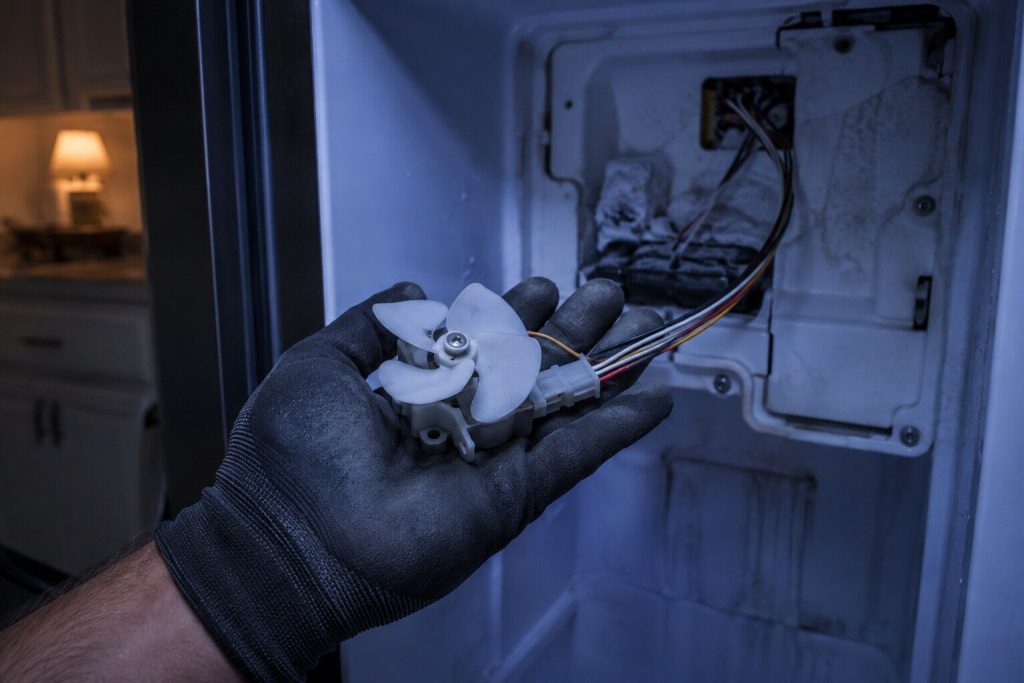
One half is perfect and the other is not Warm fridge, cold freezer
The most diagnostic complaint in refrigeration, and good news more often than not. One sealed system serves both compartments here and air is moved between them, so when only one side is wrong the refrigerant circuit is almost certainly fine and the problem is on the air path. That is the inexpensive half of everything that can go wrong with a refrigerator, and it is worth saying plainly before anybody starts worrying about compressors.
- One warm side almost always means air, not refrigerant
- The fan, a damper, or a duct packed with frost
- The cheap half of refrigeration failure, and it is worth confirming
-
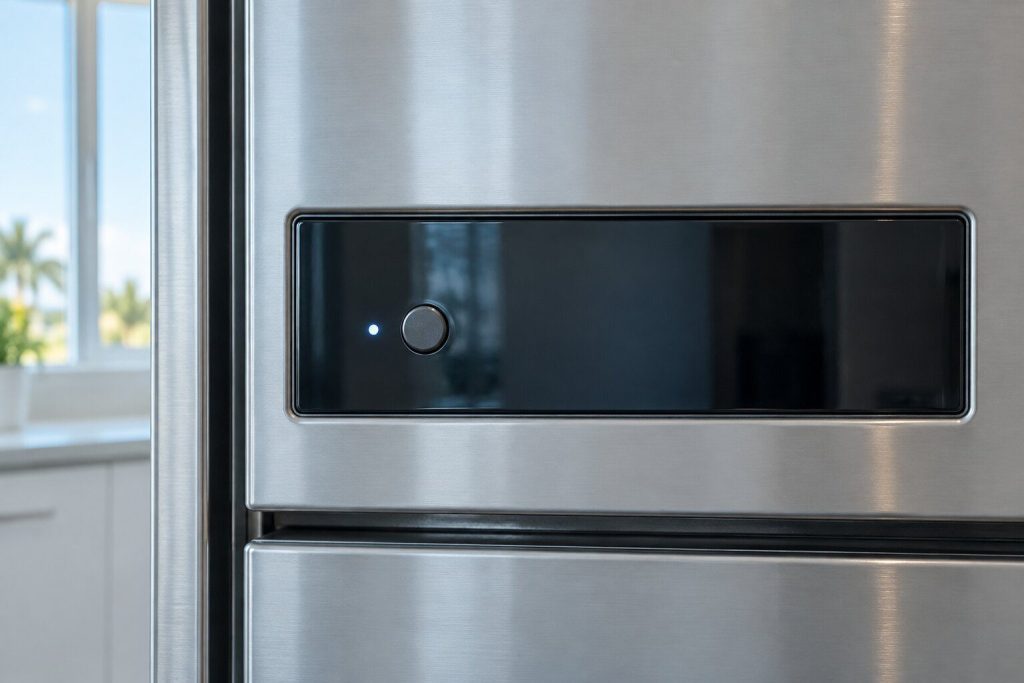
A tone every minute and HI on the display High-temperature alarm
This maker's cabinets announce a warm cabinet rather than leaving you to discover it, and they sound once a minute until acknowledged. The detail almost nobody knows is the useful one: when you clear the alert, the display shows the highest temperature the cabinet actually reached. That single number answers the only question that matters after a power cut — whether the food is safe — and it is gone the second time you press clear.
- Clear it once and write down the peak it shows you
- The maker's own causes start at a door left open and end at a gasket
- In this climate the gasket is the one we find most
-
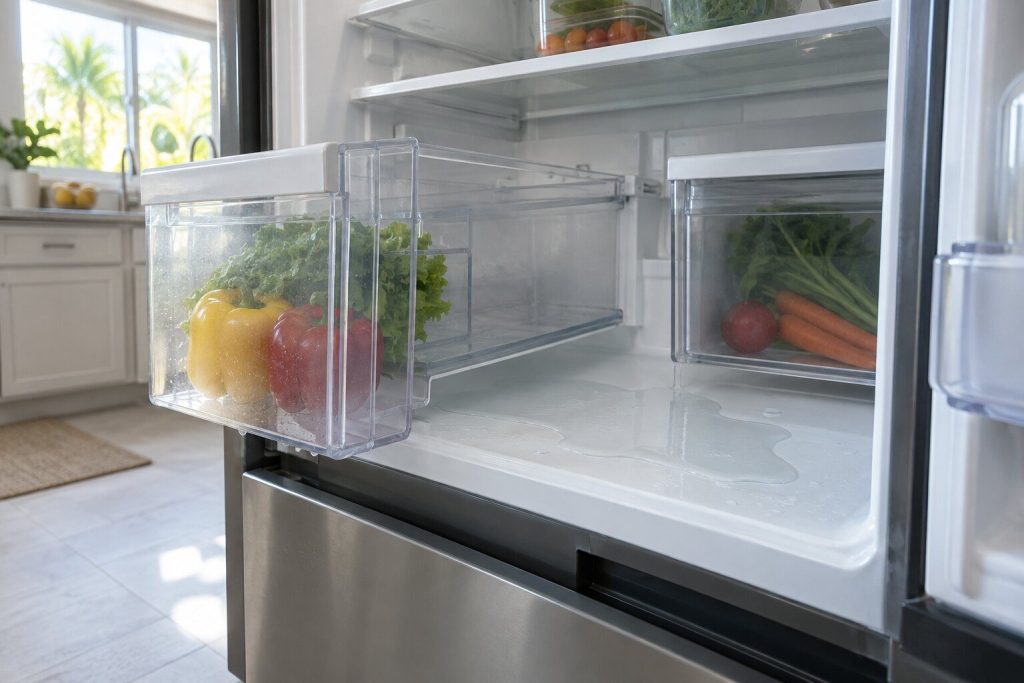
A puddle, a wet floor, or water under the drawers Water under the refrigerator
Three ordinary sources, and where the water shows tells you which. Under the crisper drawers is the defrost drain. Behind or beneath the cabinet is the supply line to the dispenser and ice maker. Down the front of a door is condensation from a seal. In a fitted kitchen the order of urgency is different from a rental, because the water reaches joinery and flooring long before anybody sees a puddle on tile.
- Where the water appears identifies the source before anybody arrives
- In a fitted kitchen it finds the cabinetry before it finds the floor
- A slow leak behind a built-in cabinet is the expensive version
-
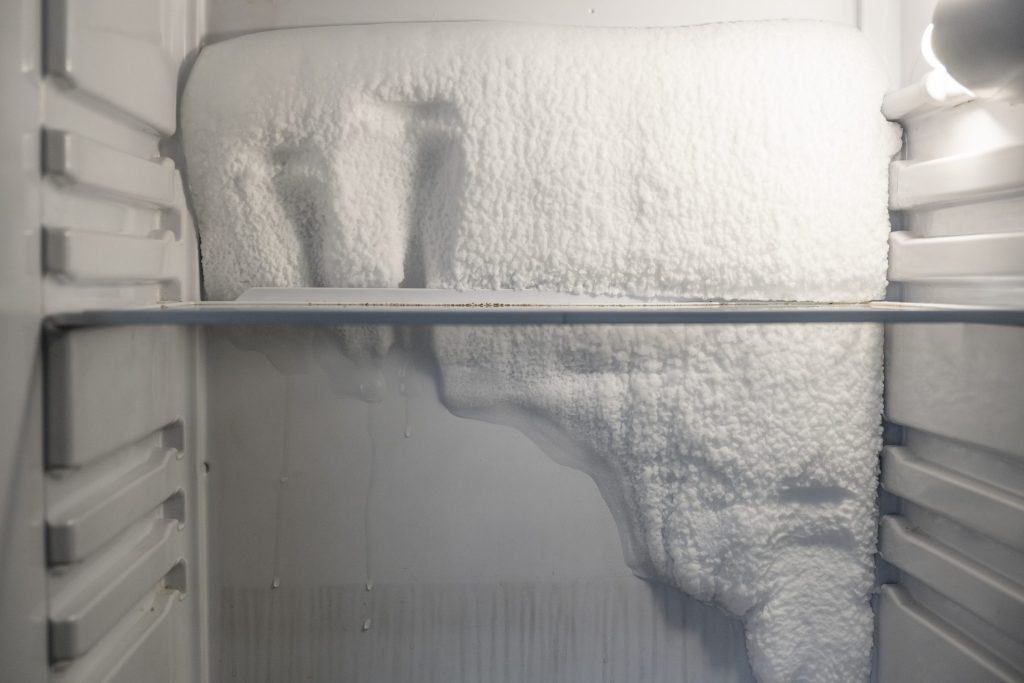
Ice on the walls, the shelves or around the vents Frost building up inside
A no-frost cabinet that is building frost is telling you one of two things: moist air is getting in, or the defrost cycle is not completing. On a 33-inch column the geometry makes this worse than on a small box — the evaporator is tall, ice builds from the bottom upward, and by the time anything is visible on the top shelf there is a great deal of it out of sight behind the rear panel.
- Two causes only: air getting in, or defrost not completing
- On a tall column the ice builds from below and shows late
- A heavy door out of square is the commonest way air gets in
-
A hum, a rattle, a click or a grinding Refrigerator making noise
Most refrigerator noises are normal and a few are not, and the difference is usually when they happen rather than how loud they are. A counter-depth cabinet in a run of joinery also amplifies what it makes — the cabinetry acts as a sounding board — so a noise that would be unremarkable in a freestanding unit becomes the reason somebody calls. Telling us when the noise occurs narrows this faster than any description of the sound.
- When it happens matters more than what it sounds like
- Built-in joinery amplifies noise that a freestanding cabinet would absorb
- Ice against a fan blade is the single most common real cause
-
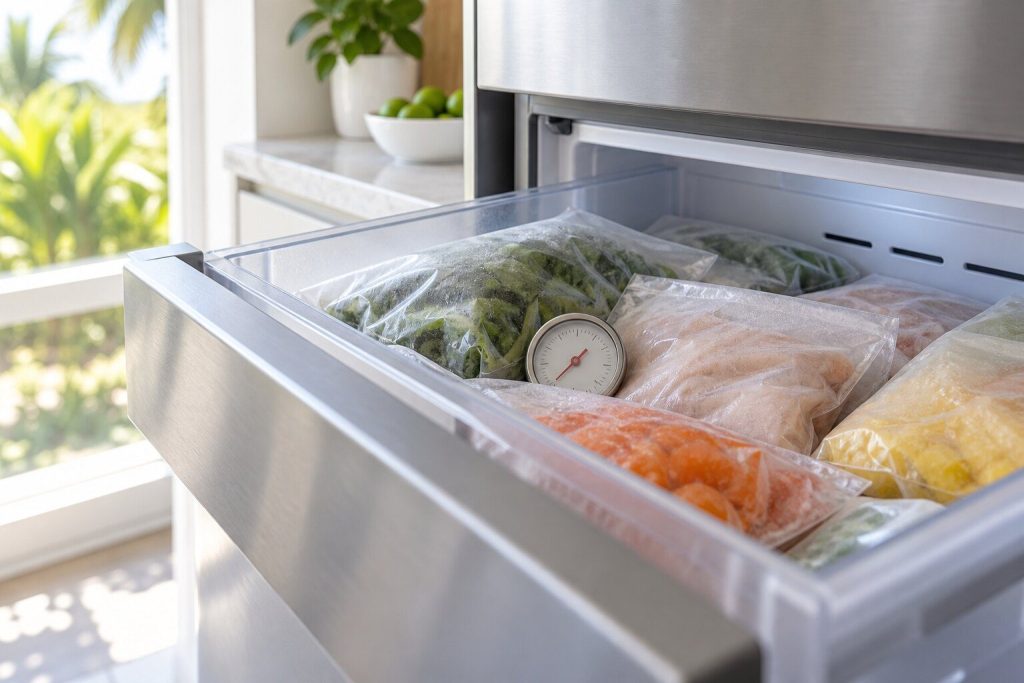
The drawer will not reach what you set it to Convertible drawer not holding
The drawer this maker calls TempAdapt runs from −6 °F to 45 °F, which is a wider span than any other compartment in the cabinet attempts, and it manages it with its own air path, its own damper and its own sensor. That independence is the whole diagnosis: this drawer can fail completely while the rest of the refrigerator is perfect, and that is an ordinary outcome rather than a contradiction somebody needs explaining away.
- It has its own damper and sensor, so it fails on its own
- Reaching some settings and not others points at the damper
- A drawer that will not close fully will never hold its lower settings
-
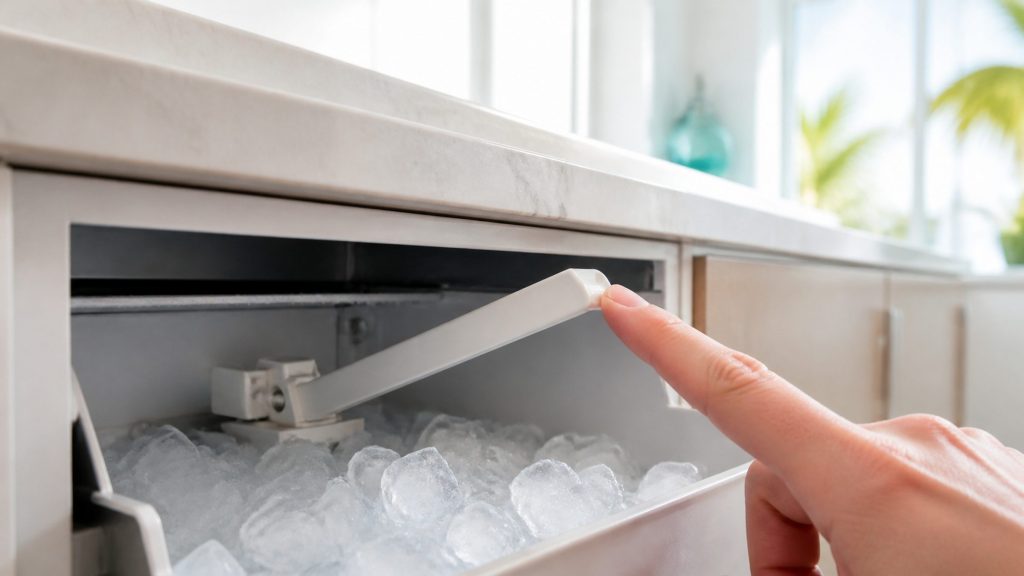
The bin is empty and stays empty Ice maker not making ice
This maker sells no standalone ice maker today, so what has stopped is either the module inside a French-door cabinet or the 15-inch under-counter unit from the built-in range that came before. Either way the first question is whether any water is arriving at all, because roughly half of these are a supply problem rather than a mechanism problem — and the supply half is the cheaper half.
- Half of these are water arriving, not the mechanism failing
- The module inside a cabinet and the older 15-inch unit are different jobs
- A freezer above 10 °F will not let the module harvest at all
-

Ice arrives, but it is not right Ice cubes small or hollow
This is a water problem almost every time, and it is worth knowing because it is the cheap one. The mold is filled by a valve that opens for a fixed time and then harvests on schedule whatever arrived. Restrict the supply anywhere along the chain — filter, shutoff, a line squeezed behind a built-in cabinet — and you get a short fill, a thin shell and cubes that look hollow because they are.
- A timed fill plus a restricted supply gives exactly this
- Check the dispenser: slow water confirms it in seconds
- The filter is the first thing and often the only thing
-
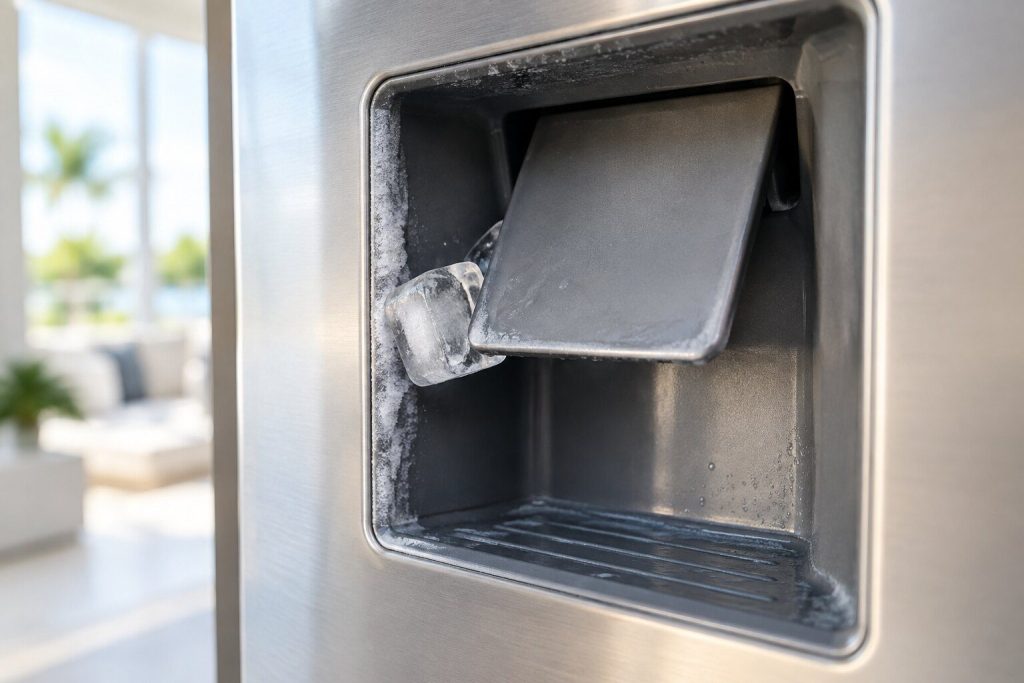
The display reads DI SP and nothing comes out Ice jammed in the dispenser
This maker has its own code for it — DI SP, sometimes shown as DISP — and publishes three causes, all of which are about a bin that stood still: light use, temperature swings, a power cut. Cubes part-thaw and refreeze into a single mass around the auger, and the auger then either cannot turn or shears a piece off into the chute. In a region with summer outages this is seasonal rather than occasional.
- DI SP is the maker's own code, and it means a jam rather than a failure
- Light use, temperature swings and power cuts are its published causes
- Forcing the paddle against a jam is how augers get bent
Also called out to on this equipment
- Freezer column not freezing
- Wine cooler not cold enough
- Dishwasher will not start
- Dishwasher not draining
- Dishes coming out dirty
- Dishes coming out wet
- Washer will not fill
- Washer will not drain
- Washer will not spin
- Washer door will not lock
- Washer cycle never ends
- Dryer not heating
- Dryer takes too long
- Dryer stops before the load is dry
- Oven not heating
- Oven door locked shut
- Gas burner will not light
- Induction zone shuts off
- Microwave not heating
- Building laundry machine keeps failing
In more detail
About ERFC2393A repair
What owners of the ERFC2393A search for
These are the phrases people pair with this model number, taken from real search suggestions rather than from a list we made up. They are a fair map of what tends to go wrong on it — and each one has a page of its own explaining the likely causes.
- electrolux erfc2393a
- electrolux counter-depth french door erfc2393a
What the display can tell you
The refrigerator reports very little through its display, which is why more of the diagnosis on this generation is measured rather than read. If something is showing on yours, photograph it before it clears and look it up in the full error code list — codes do not wait, and the number is often gone by the time a technician arrives.
What we do not publish about it
No specification table: capacity, dimensions, configuration and production years are not something we can verify, and a plausible-looking table of them would be invention rather than information. What we can tell you is what the number means for a repair — which generation it is, what its display can report, and how easily parts are found.
Before you call
- Check the full model number on the data plate — the three digits are the family, and the letters after them matter for parts
- Photograph the display if anything is showing on it
- Look at the condenser through the grille
- Note whether this started after a power cut
This article is based on:
- Official manufacturer documentation
- Internal repair procedures
- Technician repair history
- Company quality standards
Before you book
Questions about ERFC2393A repair
Is the ERFC2393A still worth repairing?
Usually. A refrigerator of this generation was made to be repaired, and one in good condition is worth keeping. Where the work approaches what the unit is worth, or a second major failure is already visible, we say so on the visit rather than after.
Can you still get parts for the ERFC2393A?
For most of what fails, yes — OEM parts are ordered against your model. Legacy parts can take a few days to source, which is why we confirm a part is the problem before ordering it rather than after.
Where do I find the full model number on a ERFC2393A?
On the data plate inside, usually high on the left or right wall of the fresh food compartment, and on an undercounter cabinet behind the grille at the bottom. Photograph the whole plate rather than writing it down — the letters after the digits decide which parts fit, and they are the part people misread most often.
What tends to go wrong on the ERFC2393A?
Judging by what its owners search for: convertible drawer not holding temperature, ice cubes small or hollow, ice dispenser jammed, ice maker not making ice, refrigerator frost buildup, refrigerator high temp alarm, refrigerator leaking water, refrigerator noisy, refrigerator not cooling, and refrigerator warm fridge cold freezer. Each of those has a page explaining the likely causes and what to check before booking anything.
Do you publish specifications for the ERFC2393A?
No. Capacity, dimensions, configuration and production years are not something we can verify, and a plausible-looking table of them would be invention rather than information. What we can tell you is what the number means for a repair.