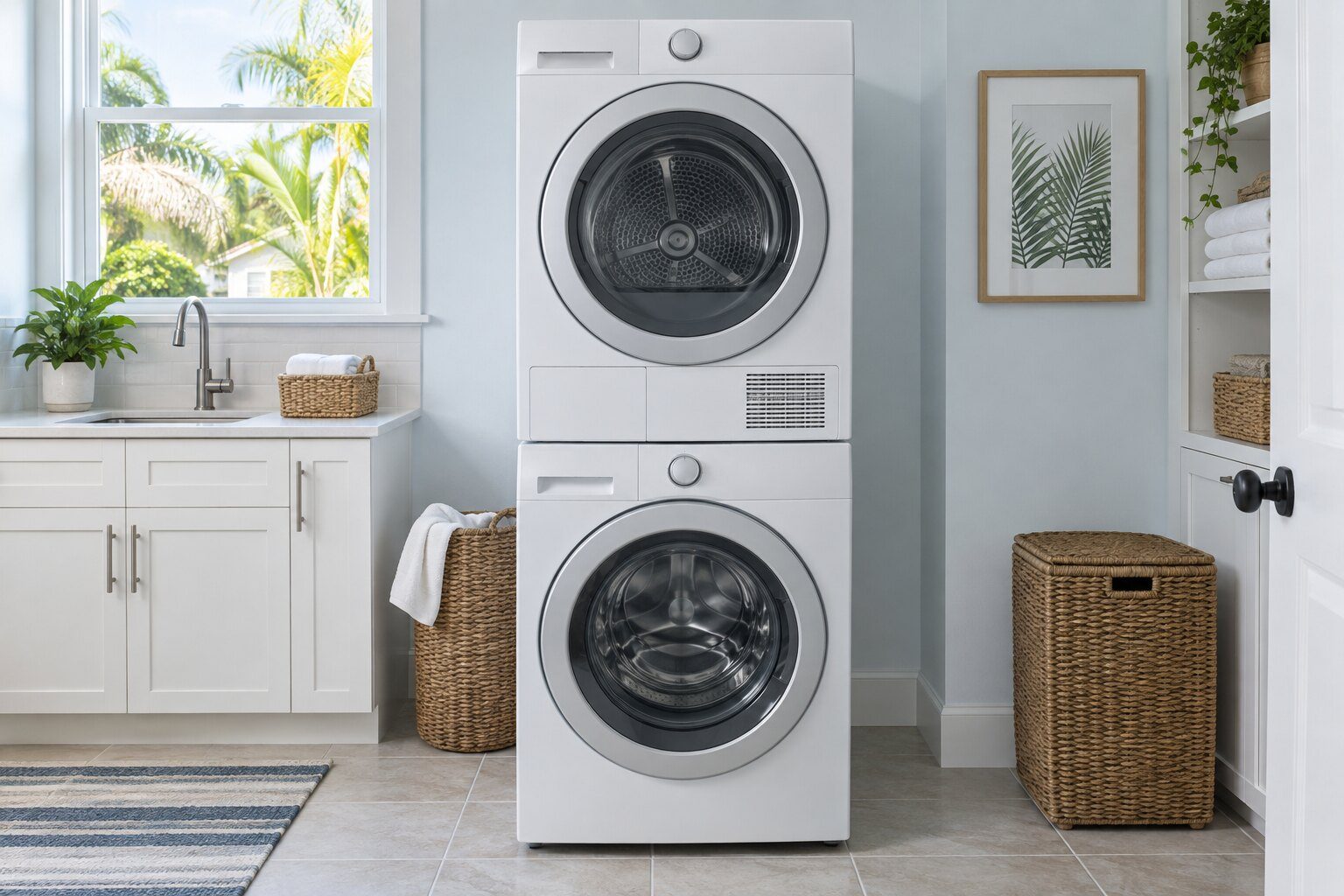
Model
ELTG7300A repair
Electrolux ELTG7300A repair in Miami: what owners of this 300 Series unit search for, what those symptoms usually point at, and what the work involves. Diagnostic from $95, credited toward the repair.
- From $95 diagnostic, credited to the repair
- 59 cities and neighborhoods covered
- OEM parts available on order
- In writing the price, before anything is opened
The short version
What the number tells us
The generation decides which parts exist, how quickly they arrive and what a repair on this cabinet is worth. It is the first thing we ask for.
Model
ELTG7300A
Give us this number when you book and the technician arrives knowing what the unit is and which parts it takes.
or call (305) 912-9018
Generation
Parts
OEM on order; legacy parts take longer
Diagnostic
From $95, credited to the repair
What we can tell you
What this number means for a repair
Not a specification table. Capacity, dimensions and production years are not something we can verify, and a plausible-looking table of them would be invention rather than information.
-
The full number is the first thing we ask for
It decides what the display can tell you and how easily parts are found, and the data plate settles it in one line. Letters after the digits are not decoration — they identify the configuration, and two units sharing the digits can take different components.
-
What we ask you to read off the unit
The data plate, not the box or the invoice. On this equipment it sits inside the cabinet — along a side wall, behind the lowest drawer, or under the lid of a wine cabinet — and it carries the full number and the service index together. A photograph of it is worth more than any table we could publish.
What owners of this model ask about
The symptoms searched most often with the ELTG7300A
Taken from real search suggestions rather than from a list we made up. Each page says what the symptom usually points at and what to check first.
-
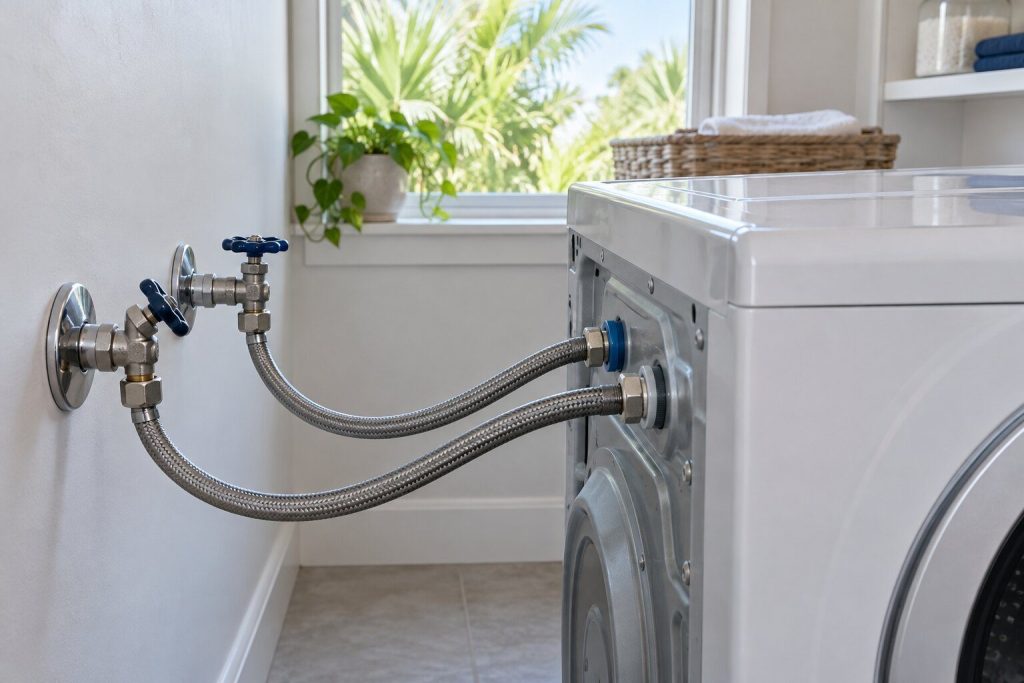
It starts, it waits, and no water arrives Washer will not fill
This maker publishes three codes across this ground and two of them are installation problems rather than failures. E11 is a long fill; HO SE is the machine detecting for itself that the hot and cold hoses are crossed; E35 is the pressure sensor reporting overfill. If the machine was fitted or moved in the last month, the fix is very likely free and it is not ours to charge for.
- Two of the three codes here are installation problems
- E11 locks the machine for six minutes and unplugging restarts that clock
- Crossed hoses fill a washer badly for years without ever failing
-
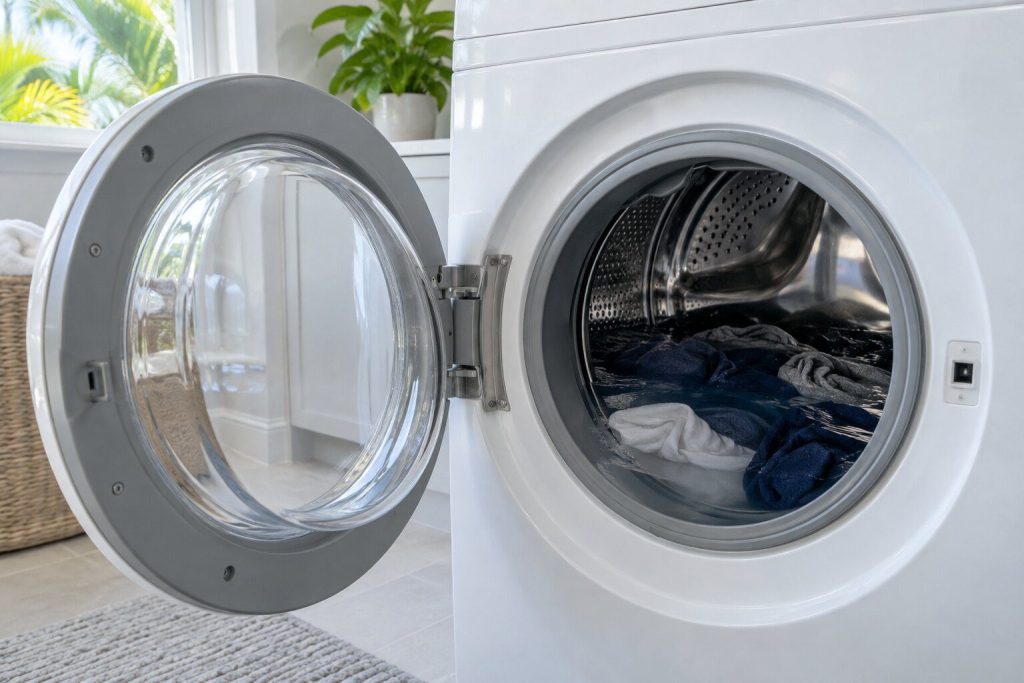
The cycle ends with water still in the drum Washer will not drain
E21 is the maker's code for a pump-out taking too long, and its own first answer is not a part: a kinked drain hose. In a laundry closet where the machine has been pushed back so the louvered door will shut, the machine has folded its own hose behind itself — and the symptom arrives weeks after an installation that was perfectly good on the day.
- E21, and the maker's first answer is a folded drain hose
- The pump filter collects sand here, not just lint
- A silent pump and a straining one are different parts
-
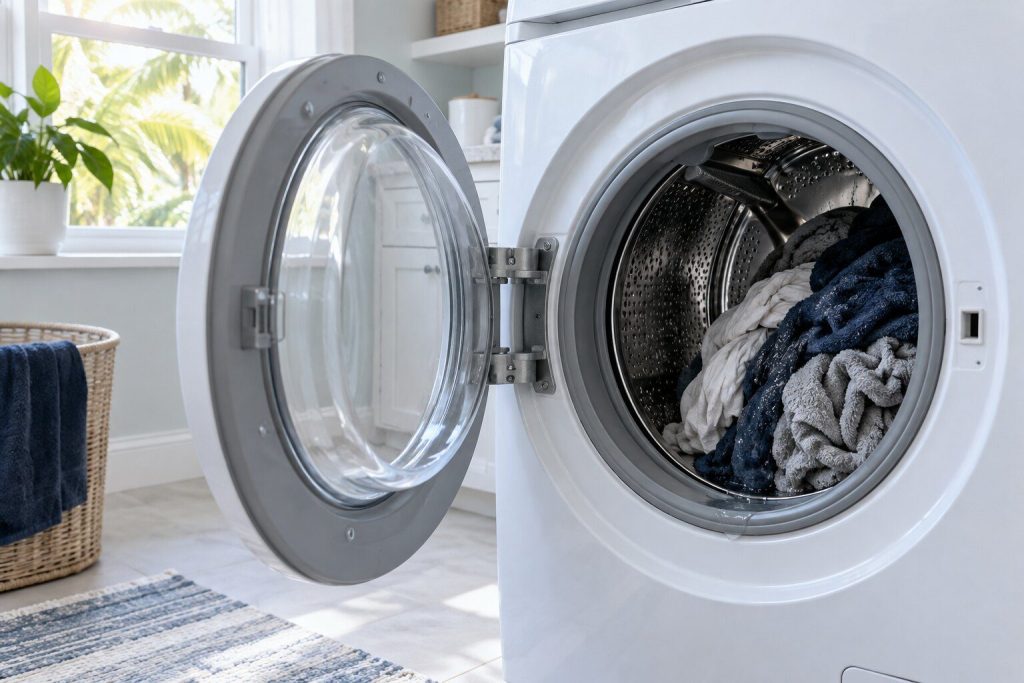
Clothes come out soaked Washer will not spin
A front loader will refuse to spin a load it cannot balance rather than damage itself, so a machine that spins small loads perfectly and large ones not at all is behaving correctly and telling you about its suspension. The other frequent cause is not the spin at all: no confirmed door lock means no spin, and that presents identically from outside.
- Refusing to spin an unbalanced load is correct behavior
- Spins small loads but not large is the suspension
- No confirmed door lock means no spin, and that is a different repair
-
It will not start, and the display says so Washer door will not lock
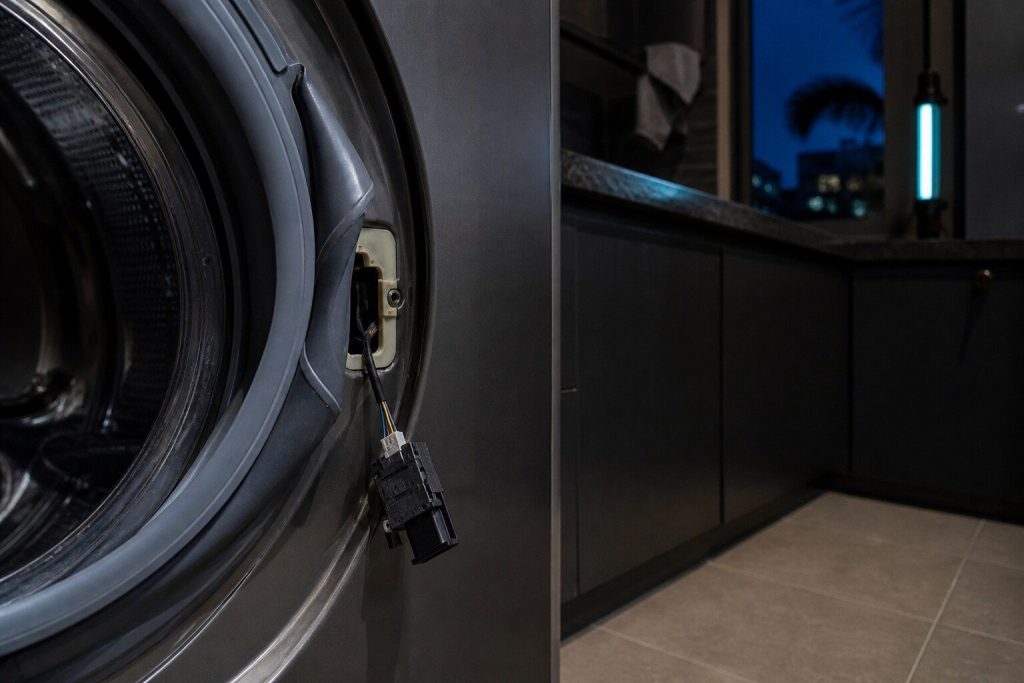
Two codes, two parts, one symptom. E41 means the control is not being told the door is closed; E42 means the lock will not confirm it engaged. From outside the machine they are indistinguishable and inside they are different components. The most common cause of both costs nothing: a corner of fabric caught in the seal doing an excellent impression of a closed door.
- E41 is the switch, E42 is the lock — same symptom, different parts
- A towel corner in the gasket is the most common cause of both
- This is not a lock to defeat, and we will not defeat it
-
It keeps rinsing, five minutes at a time Washer cycle never ends
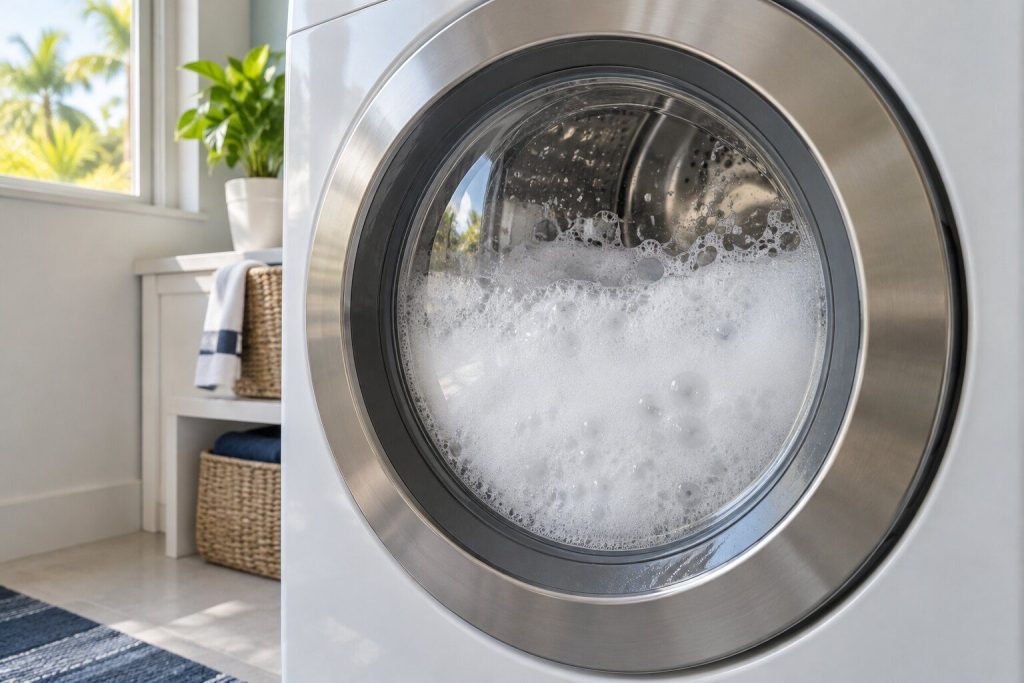
SU dS is the maker's code and the machine is handling the problem correctly — it rinses again, and again, until the foam has gone, adding about five minutes each time. This is the most common washer call we take that is not a repair at all. A front loader uses a fraction of the water a top loader does, so an ordinary dose of the wrong detergent oversuds every single time.
- SU dS, and the machine is doing exactly the right thing
- A non-HE detergent cannot work in this machine at any dose
- Most households use roughly twice what these drums need
-
It tumbles, the cycle runs, nothing dries Dryer not heating
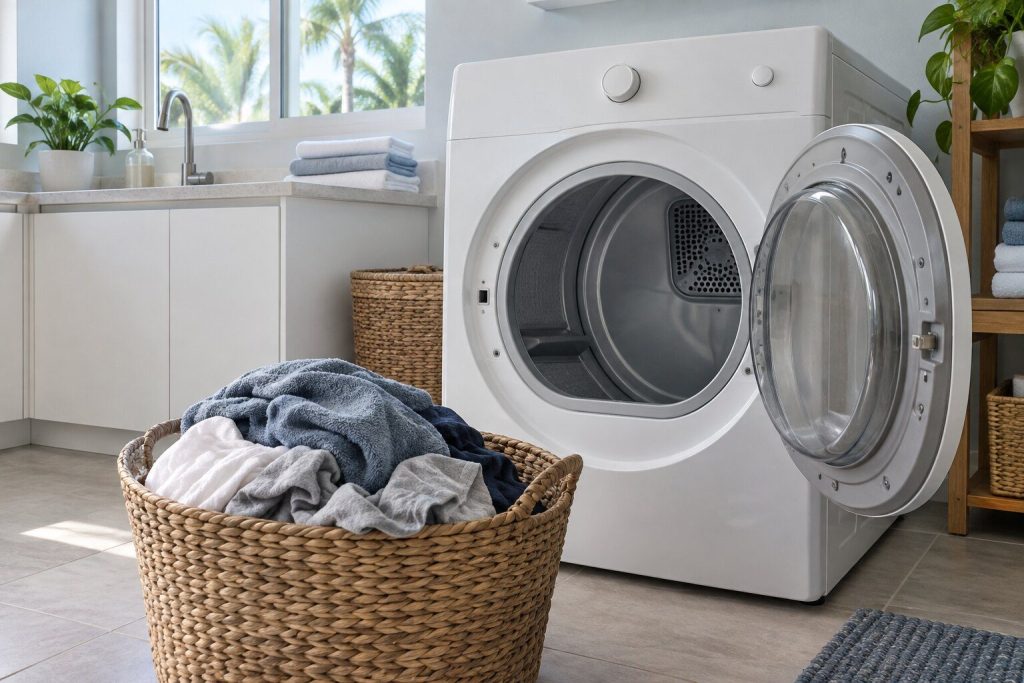
On an electric dryer this pattern says something specific before anybody opens the machine. The motor runs on 120 volts and the heating element needs both legs of 240, so a dryer that tumbles happily without heating is very often a supply problem rather than an appliance one. This maker publishes two codes that say exactly that — H2/B2 for the supply, H4/B4 for wiring — and both send you outside the appliance.
- Tumbling without heat points at the supply as often as at the element
- H2/B2 and H4/B4 both point outside the machine
- Check whether the range went strange at the same time
-
A single load now needs two or three runs Dryer takes too long
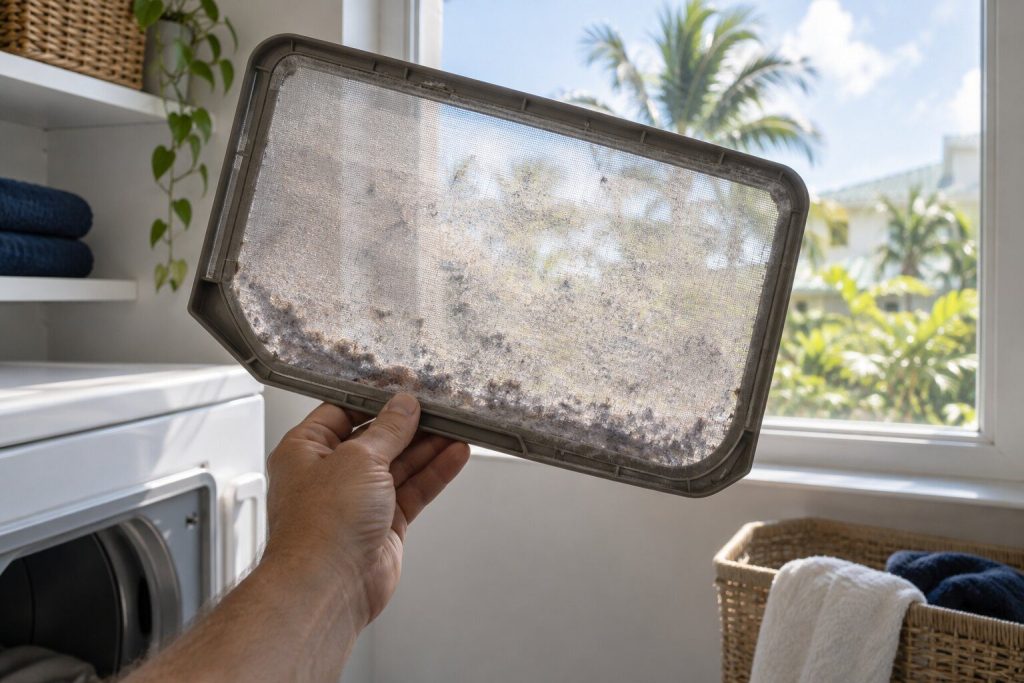
Airflow, nearly always, and it is worth acting on rather than living with. This maker publishes EF1 for a ventilation blockage and sends it to the installer rather than to service, which in a South Florida building is more reasonable than it sounds: the run goes up through a wall to a roof or a soffit, it is long, it has elbows, and the part that blocks is the end nobody can see. This is a fire risk before it is a repair.
- EF1 is the maker's own code and the whole answer is the duct
- In a condominium the run is vertical, long and invisible from inside
- A dryer working three times as hard is running three times as hot
-
Automatic cycles end early; timed cycles work Dryer stops before the load is dry
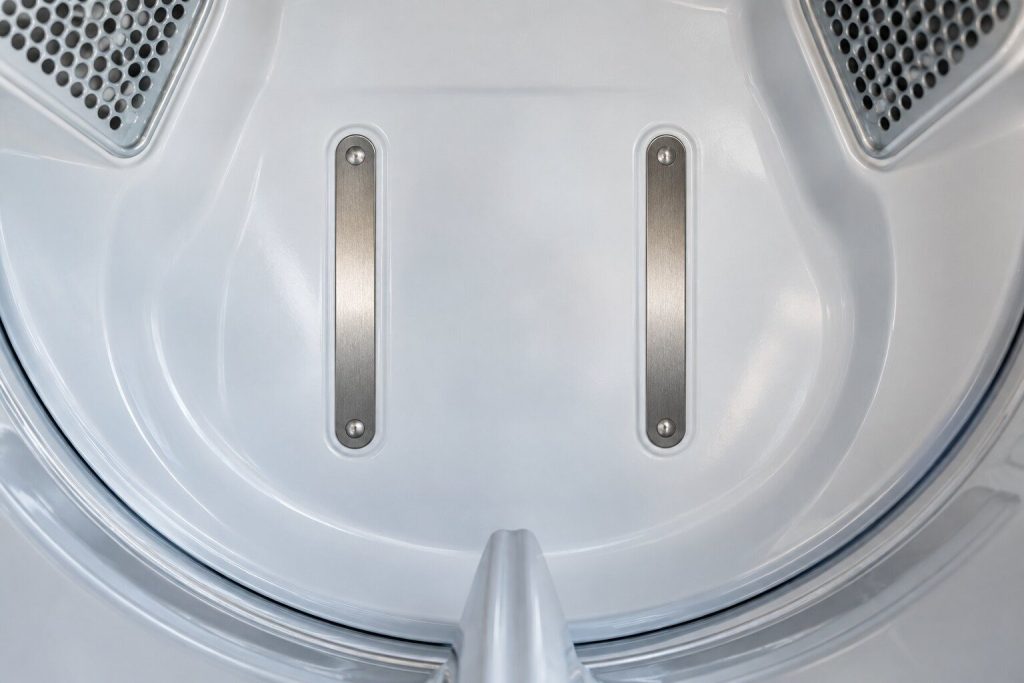
That combination is the moisture sensor, and this maker publishes it as E 4 with unusually generous wording: the dryer keeps working and what you lose is the automatic programs. The sensor is a pair of metal strips inside the drum opening reading the resistance across damp fabric, and the commonest reason they stop reading is a film of fabric softener rather than a failed part.
- Automatic cycles wrong while timed cycles are right — that is the sensor
- E 4, and the maker's own note says the machine keeps working
- Softener film across the strips is the usual cause and it is free
Also called out to on this equipment
- Refrigerator not cooling
- Warm fridge, cold freezer
- High-temperature alarm
- Water under the refrigerator
- Frost building up inside
- Refrigerator making noise
- Convertible drawer not holding
- Freezer column not freezing
- Ice maker not making ice
- Ice cubes small or hollow
- Ice jammed in the dispenser
- Wine cooler not cold enough
- Dishwasher will not start
- Dishwasher not draining
- Dishes coming out dirty
- Dishes coming out wet
- Oven not heating
- Oven door locked shut
- Gas burner will not light
- Induction zone shuts off
- Microwave not heating
- Building laundry machine keeps failing
In more detail
About ELTG7300A repair
What owners of the ELTG7300A search for
These are the phrases people pair with this model number, taken from real search suggestions rather than from a list we made up. They are a fair map of what tends to go wrong on it — and each one has a page of its own explaining the likely causes.
- electrolux eltg7300a
- electrolux laundry tower eltg7300a
What the display can tell you
The 300 Series reports very little through its display, which is why more of the diagnosis on this generation is measured rather than read. If something is showing on yours, photograph it before it clears and look it up in the full error code list — codes do not wait, and the number is often gone by the time a technician arrives.
What we do not publish about it
No specification table: capacity, dimensions, configuration and production years are not something we can verify, and a plausible-looking table of them would be invention rather than information. What we can tell you is what the number means for a repair — which generation it is, what its display can report, and how easily parts are found.
Before you call
- Check the full model number on the data plate — the three digits are the family, and the letters after them matter for parts
- Photograph the display if anything is showing on it
- Look at the condenser through the grille
- Note whether this started after a power cut
This article is based on:
- Official manufacturer documentation
- Internal repair procedures
- Technician repair history
- Company quality standards
Before you book
Questions about ELTG7300A repair
Is the ELTG7300A still worth repairing?
Usually. The 300 Series was built to be repaired, and a cabinet in good condition with sound cabinetry is worth keeping well past twenty years. Where the work approaches what the unit is worth, or a second major failure is already visible, we say so on the visit rather than after.
Can you still get parts for the ELTG7300A?
For most of what fails, yes — OEM parts are ordered against your model. Legacy parts can take a few days to source, which is why we confirm a part is the problem before ordering it rather than after.
Where do I find the full model number on a ELTG7300A?
Inside the door opening or under the lid, on the frame. Photograph the whole plate rather than writing it down — the letters after the digits decide which parts fit, and they are the part people misread most often.
What tends to go wrong on the ELTG7300A?
Judging by what its owners search for: dryer not heating, dryer stops before dry, dryer takes too long, washer door will not lock, washer too many suds, washer will not drain, washer will not fill, and washer will not spin. Each of those has a page explaining the likely causes and what to check before booking anything.
Do you publish specifications for the ELTG7300A?
No. Capacity, dimensions, configuration and production years are not something we can verify, and a plausible-looking table of them would be invention rather than information. What we can tell you is what the number means for a repair.