ElectroluxRepair Miami

32 codes · 12 appliances

The panel is showing something. Here is what the maker says it means.

One page per code per appliance, because the same characters on a washer and on a range are two different repairs. The maker's own wording is quoted and attributed; the reading and the steps are ours.

  • 32 codes published
  • 11 answered with a power cycle and nothing more
  • 5 appliance types with none at all
  • 272 maker articles read

All of them

The full index

Filter by appliance before you type. The same letter and number are not the same condition on a washer and on a dryer, and choosing the machine first turns a list of near-misses into one page.

Everything here was read from this maker's own owner support library and every entry links back to the article it came from. What is the maker's is quoted as the maker's and marked: the code, which appliance shows it, and the sentence published about it. The reading and the steps are ours, written per code. Where the maker publishes only a name and a power cycle, that is what the page says.

Read this before you reset

A power cycle destroys the evidence

Photograph the display before you cut power, including the spacing — on this make the spacing is part of the code, and SU dS and SB SB are not typing errors. The high-temperature alert on a refrigerator shows the peak temperature it reached exactly once.

Most of the range codes are published by the maker as a name and thirty seconds at the breaker, so the reset is usually right. Doing it in the wrong order is what costs you the diagnosis.

Range codes
A pale stone counter edge meeting a stainless appliance front, close and square on, a soft daylight reflection along the steel.

Several are not problems

Modes wearing a code's clothes

A dash is the cooktop lock. LOC is the washer control lock. A number between one and twenty-four on a dishwasher is the delay start. Hd is the heat delay. AD is an automatic dryer cycle. SB SB is Sabbath mode, and DEMO is a showroom setting.

Each has a page here saying so plainly, because from across a room every one of them looks exactly like a dead appliance.

Dishwasher codes
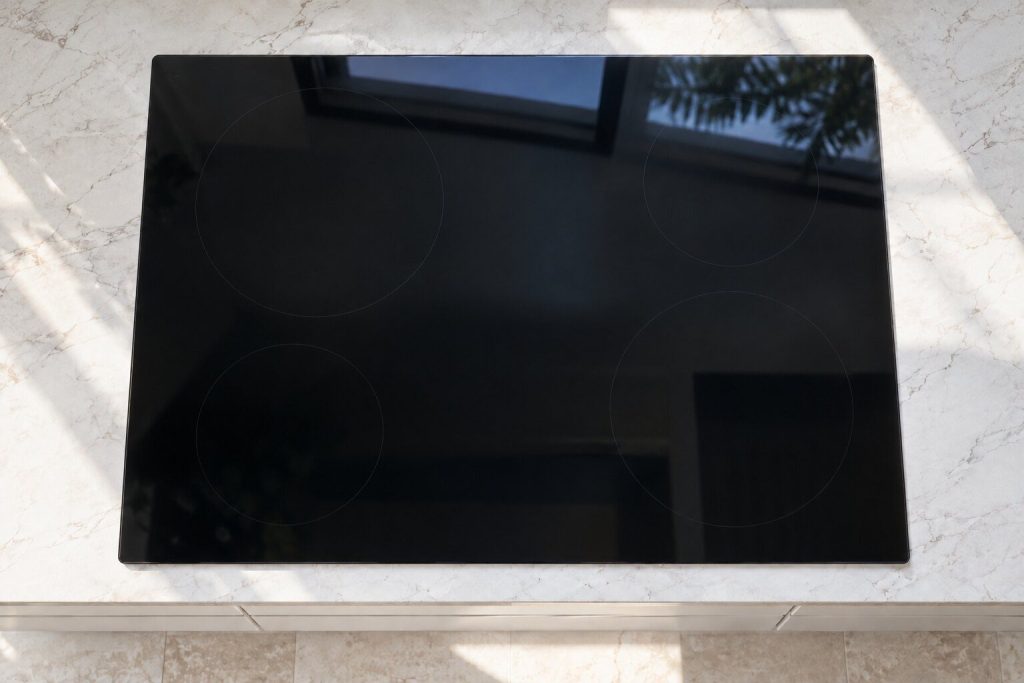
A black glass induction cooking surface seen from directly above, clean and empty, the zone rings faintly visible.

Before you book

Four things that shorten the visit

Have these to hand

  • The model and serial off the rating plate. On this badge it also settles whether we are looking at the current line or at the built-in range that came before it.
  • A photograph of whatever the panel is showing, taken before anybody cuts the power — this maker keeps evidence that a reset destroys.
  • Whether the appliance is freestanding or fitted in. Almost everything this make sells is built into something, and that decides the length of the visit more than the part does.
  • Whether it is a rental or an association-managed unit, so the written findings reach whoever is paying for them.

Worth checking first

  • Whether the machine is locked rather than broken. A dash on a cooktop and LOC on a washer both look exactly like a dead panel.
  • Whether a new oven is in demo mode. It accepts every setting, counts down a preheat, and never heats — and it costs somebody a call-out every year.
  • The drawer under an induction cooktop. Packed to the top it blocks the cooling path and the zones cut out in August.
  • For laundry, the vent run and the drain hose before the machine itself. Five of this maker's own codes point outside the appliance.

Or start from what it is doing

By symptom instead

If there is no code, or the code does not match what you are seeing.

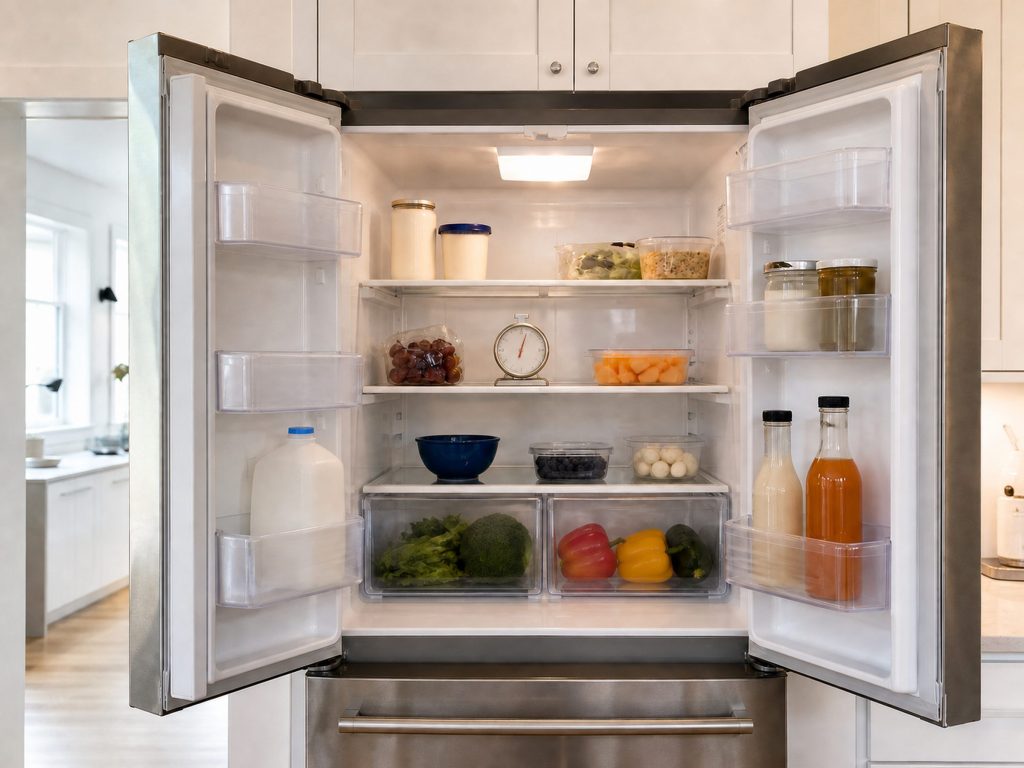
  • The inside of a French-door refrigerator with the door open and the interior light on
    It is running, the light works, and the food is warm

    Refrigerator not cooling

    Something is clearly happening inside and the cabinet is still not cold. Two pieces of evidence settle most of what follows, and neither requires tools. The first is yours: a thermometer in each compartment, read twice sixty minutes apart. The second belongs to the appliance — the peak temperature it recorded behind its high-temperature alert, which appears once and is destroyed by a second press of clear. Together they separate an airflow problem from a defrost problem from the sealed system itself. Three unrelated appointments.

    • Freezer cold, fresh-food side warm: that is airflow rather than refrigerant
    • Press clear once and photograph the peak figure it shows you
    • A counter-depth cabinet breathes through one route, and that route is often it
    What it usually means
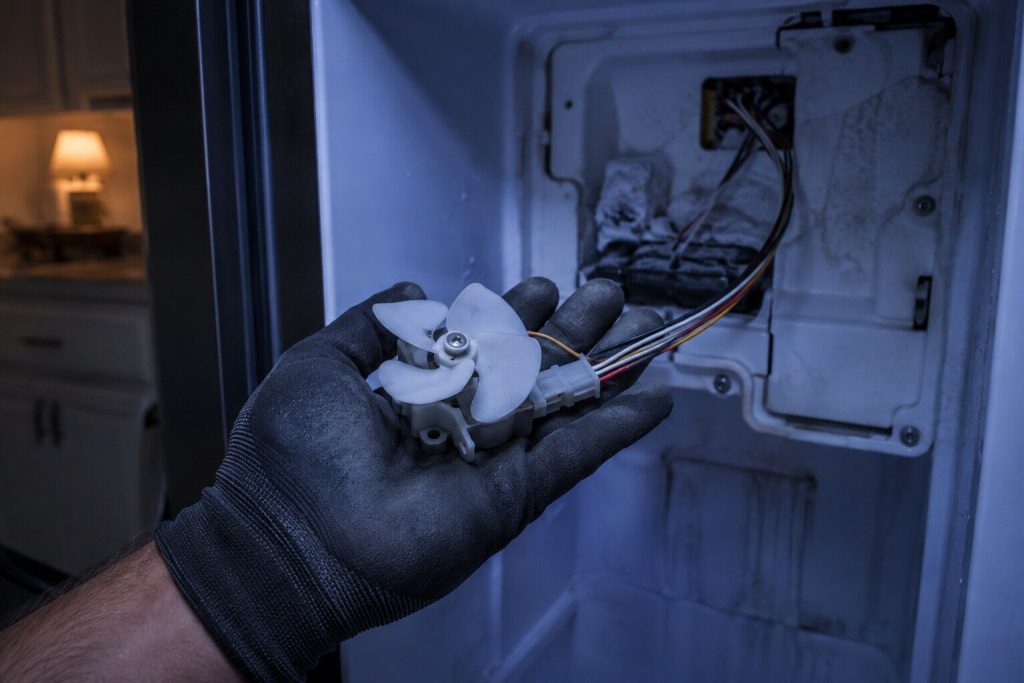
  • A small evaporator fan motor with its blade still fitted lifted out on a gloved palm
    One half is perfect and the other is not

    Warm fridge, cold freezer

    The most diagnostic complaint in refrigeration, and good news more often than not. One sealed system serves both compartments here and air is moved between them, so when only one side is wrong the refrigerant circuit is almost certainly fine and the problem is on the air path. That is the inexpensive half of everything that can go wrong with a refrigerator, and it is worth saying plainly before anybody starts worrying about compressors.

    • One warm side almost always means air, not refrigerant
    • The fan, a damper, or a duct packed with frost
    • The cheap half of refrigeration failure, and it is worth confirming
    What it usually means
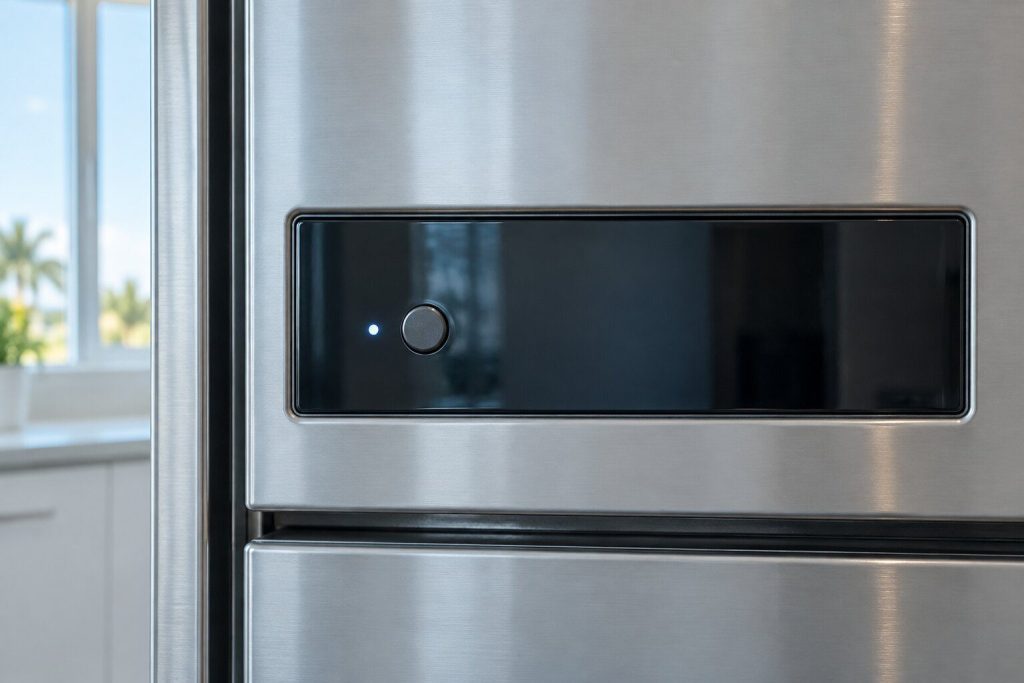
  • A refrigerator control panel photographed close and square on with one small indicator lit beside an unmarked button, the rest of the panel dark.
    A tone every minute and HI on the display

    High-temperature alarm

    This maker's cabinets announce a warm cabinet rather than leaving you to discover it, and they sound once a minute until acknowledged. The detail almost nobody knows is the useful one: when you clear the alert, the display shows the highest temperature the cabinet actually reached. That single number answers the only question that matters after a power cut — whether the food is safe — and it is gone the second time you press clear.

    • Clear it once and write down the peak it shows you
    • The maker's own causes start at a door left open and end at a gasket
    • In this climate the gasket is the one we find most
    What it usually means
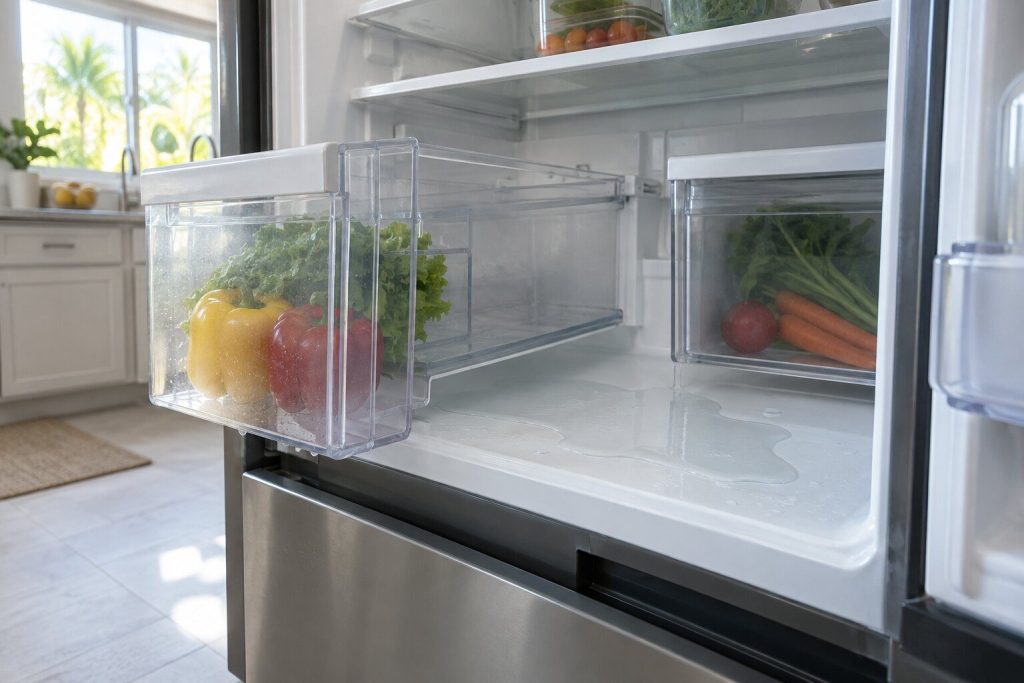
  • Water standing under the crisper drawers of an open refrigerator, one drawer drawn out to show the wet floor of the compartment.
    A puddle, a wet floor, or water under the drawers

    Water under the refrigerator

    Three ordinary sources, and where the water shows tells you which. Under the crisper drawers is the defrost drain. Behind or beneath the cabinet is the supply line to the dispenser and ice maker. Down the front of a door is condensation from a seal. In a fitted kitchen the order of urgency is different from a rental, because the water reaches joinery and flooring long before anybody sees a puddle on tile.

    • Where the water appears identifies the source before anybody arrives
    • In a fitted kitchen it finds the cabinetry before it finds the floor
    • A slow leak behind a built-in cabinet is the expensive version
    What it usually means
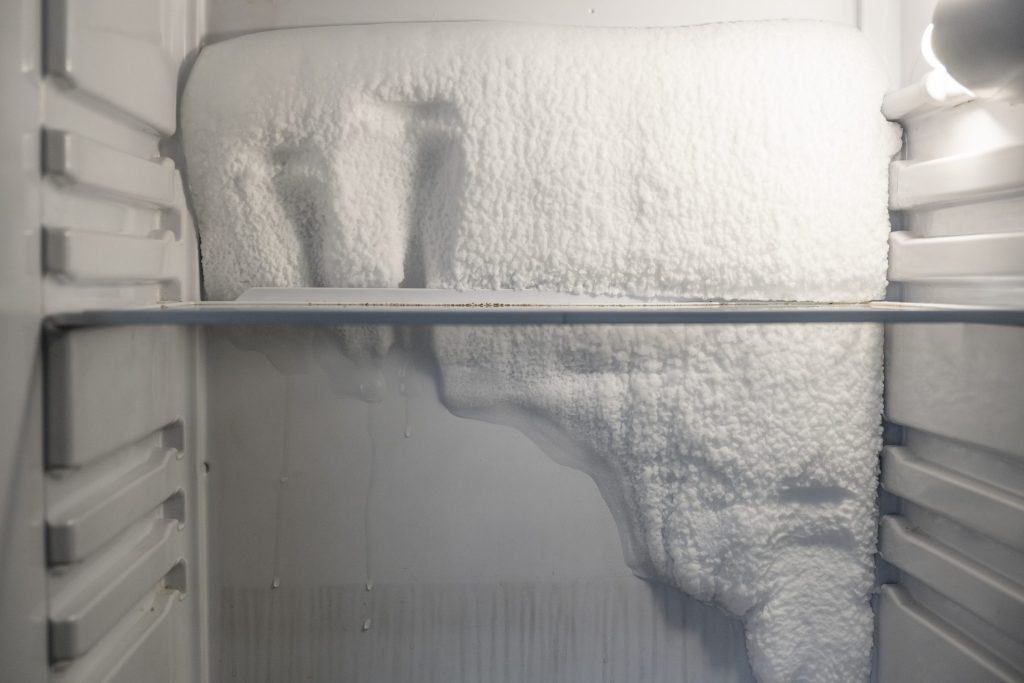
  • A thick slab of frost across the back wall and shelf of a freezer compartment
    Ice on the walls, the shelves or around the vents

    Frost building up inside

    A no-frost cabinet that is building frost is telling you one of two things: moist air is getting in, or the defrost cycle is not completing. On a 33-inch column the geometry makes this worse than on a small box — the evaporator is tall, ice builds from the bottom upward, and by the time anything is visible on the top shelf there is a great deal of it out of sight behind the rear panel.

    • Two causes only: air getting in, or defrost not completing
    • On a tall column the ice builds from below and shows late
    • A heavy door out of square is the commonest way air gets in
    What it usually means
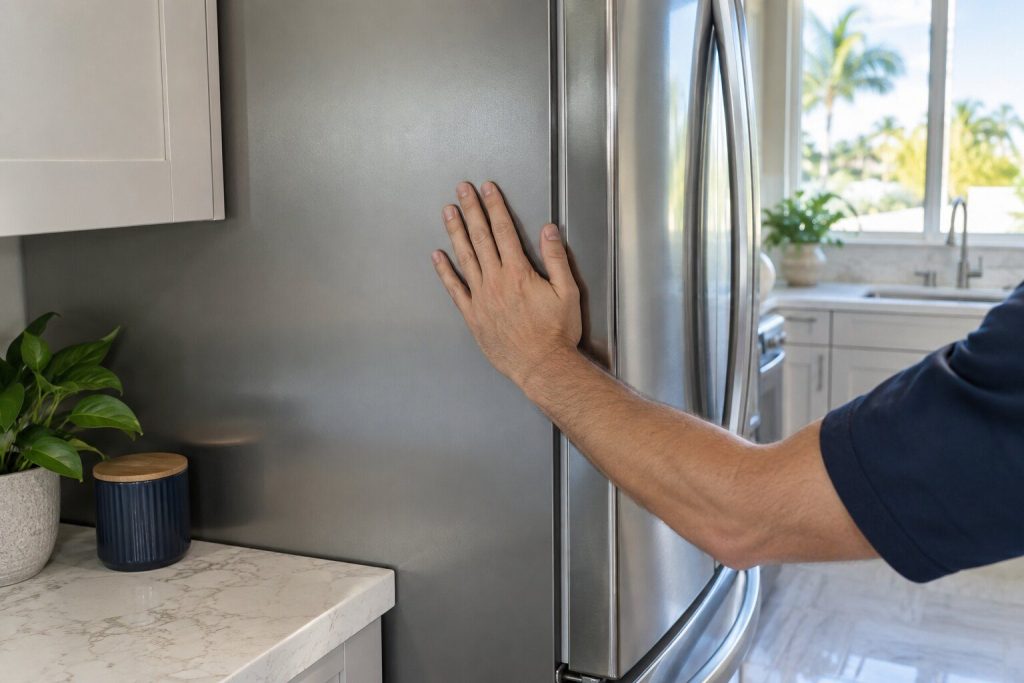
  • A hand held flat against the side panel of a stainless refrigerator standing in a run of cabinets, the person out of frame.
    A hum, a rattle, a click or a grinding

    Refrigerator making noise

    Most refrigerator noises are normal and a few are not, and the difference is usually when they happen rather than how loud they are. A counter-depth cabinet in a run of joinery also amplifies what it makes — the cabinetry acts as a sounding board — so a noise that would be unremarkable in a freestanding unit becomes the reason somebody calls. Telling us when the noise occurs narrows this faster than any description of the sound.

    • When it happens matters more than what it sounds like
    • Built-in joinery amplifies noise that a freestanding cabinet would absorb
    • Ice against a fan blade is the single most common real cause
    What it usually means
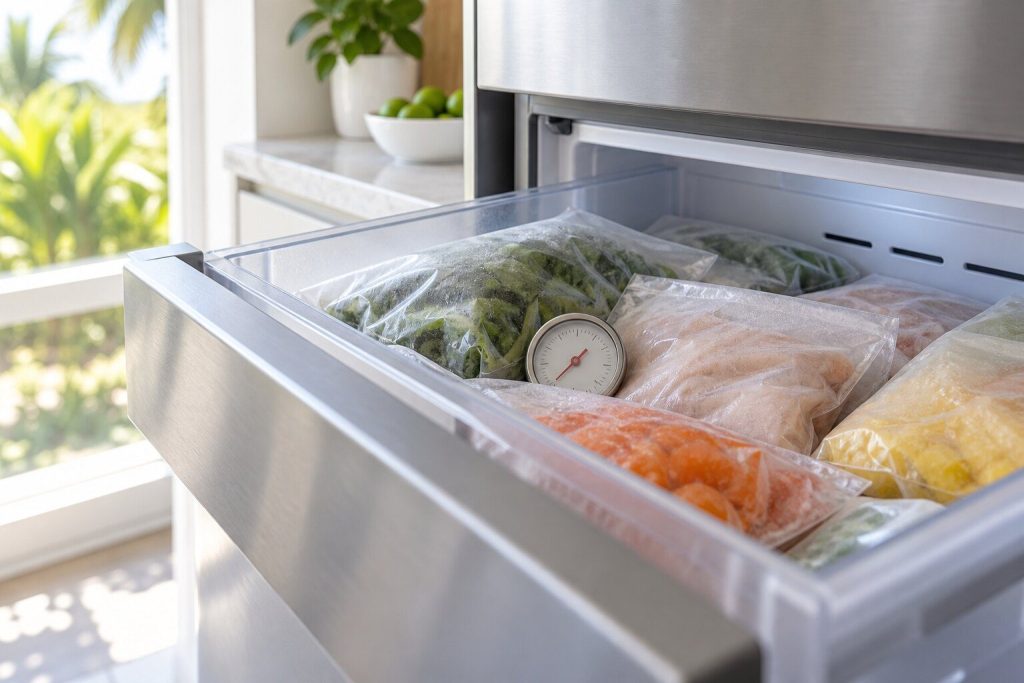
  • A small dial thermometer lying among packets inside a refrigerator drawer drawn half out.
    The drawer will not reach what you set it to

    Convertible drawer not holding

    The drawer this maker calls TempAdapt runs from −6 °F to 45 °F, which is a wider span than any other compartment in the cabinet attempts, and it manages it with its own air path, its own damper and its own sensor. That independence is the whole diagnosis: this drawer can fail completely while the rest of the refrigerator is perfect, and that is an ordinary outcome rather than a contradiction somebody needs explaining away.

    • It has its own damper and sensor, so it fails on its own
    • Reaching some settings and not others points at the damper
    • A drawer that will not close fully will never hold its lower settings
    What it usually means
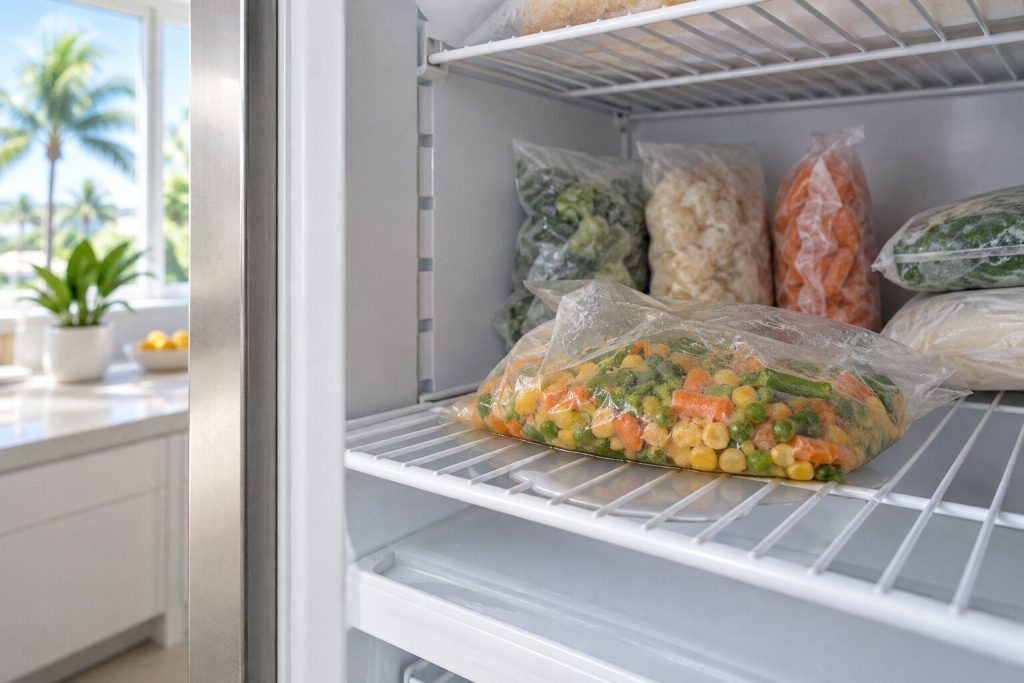
  • A clear bag of frozen vegetables gone soft and slumped flat on the wire shelf of a tall freezer column, a ring of meltwater on the shelf under it and the packets behind it still firm.
    The column is running and the contents are soft

    Freezer column not freezing

    The only freezer this badge builds is a 19 cubic foot, 33-inch column designed to stand beside its refrigerator twin behind matching trim. That matters here because everything written about freezer repair online is about a chest in a garage, and none of it applies. The failures are a tall evaporator icing from the bottom, a heavy trim-paneled door losing its seal, and an air path through the joinery that silted up years ago.

    • A 19 cu. ft. column, not a chest and not a garage upright
    • Ice builds from the bottom of a tall evaporator and shows late
    • A door carrying a trim panel goes out of square before its gasket wears
    What it usually means

Worth saying

Where the maker publishes only a name, so do we

Most of the F-codes on the electric range are published as a title and a power cycle and nothing else. Those pages say exactly that and mark the record as such, rather than inventing a checklist behind a name. Where the maker does publish a procedure — the washer’s E-codes, the dryer guide, the dishwasher’s i40 — the procedure is quoted and our own reading is written around it.

Before you book

The questions this page is asked

The same code is on two appliances. Which page do I want?

The one for your appliance. E42 on a washer is a door lock that will not confirm; E42 on a dryer of the same make is a plain open door. Read the code with the machine, never on its own.

My freezer has a code and there is no page for it.

This maker publishes no freezer codes at all, so what you are seeing is likely a high-temperature alert, which does have a page, or a mode. Send a photograph and we will tell you which.

Should I keep resetting it?

Once is a test. Three times is a habit that hides how often it is happening. Note the date each time instead — a code that appears weekly and one that appears twice a year need different conversations.

In more detail

What is here, what is not, and why the list is honest rather than long

Every code traces to one of the maker’s own articles

These come out of 272 articles of this maker’s own Owner Center library. A code with no article behind it does not go on this site, which is why the list is 32 long rather than a hundred. A sibling fleet once shipped about thirty-eight “codes” that were symptoms somebody invented.

Five appliance types this maker documents nothing for

The commercial line, Freezer, Ice maker, Microwave, Wine cooler. No article, no table, no list. Those appliances have symptom pages on this site and no code pages, which is the honest answer rather than borrowing a table from the machine next door.

And one family the sister badge does not have

This maker publishes a seven-row dryer code guide. The volume badge in the same corporate group publishes no dryer code whatsoever. Three of those seven rows are installation problems the manufacturer sends back to the installer rather than to a repair company.
Code not on this list?

Then this maker does not publish it, or the appliance is not one this site covers. Tell us what the panel shows and which machine it is, and we will say which of the two it is.

This article is based on:

  • Official manufacturer documentation
  • Internal repair procedures
  • Technician repair history
  • Company quality standards
Call (305) 912-9018