Common Problems
Why a Front-Load Washer Smells, and Why It Is Worse Here
An Electrolux washer smells because a front loader seals tight — that is what lets it wash with a fraction of the water a top loader uses, and it is also what traps the water it used. The door gasket has a fold at the bottom that holds water, lint and detergent residue after every cycle, and in a South Florida laundry closet it is still damp when the next load goes in. Most of the fix is a cloth and a habit: dry the fold after the last load, leave the door ajar between washes, and run an occasional empty hot cycle. Where the smell persists after that, residue is sitting in the sump below the drum where wiping the gasket never reaches — and overdosing non-HE detergent is what puts it there.
The full guide
An Electrolux washer that smells is the complaint everybody has and nobody mentions until something else needs fixing.
The trade that causes it
A front loader uses a fraction of the water a top loader does. That is the whole point of the design, and it is achieved by sealing the door tightly against a rubber gasket so the drum can tumble laundry through a small quantity of water rather than submerging it.
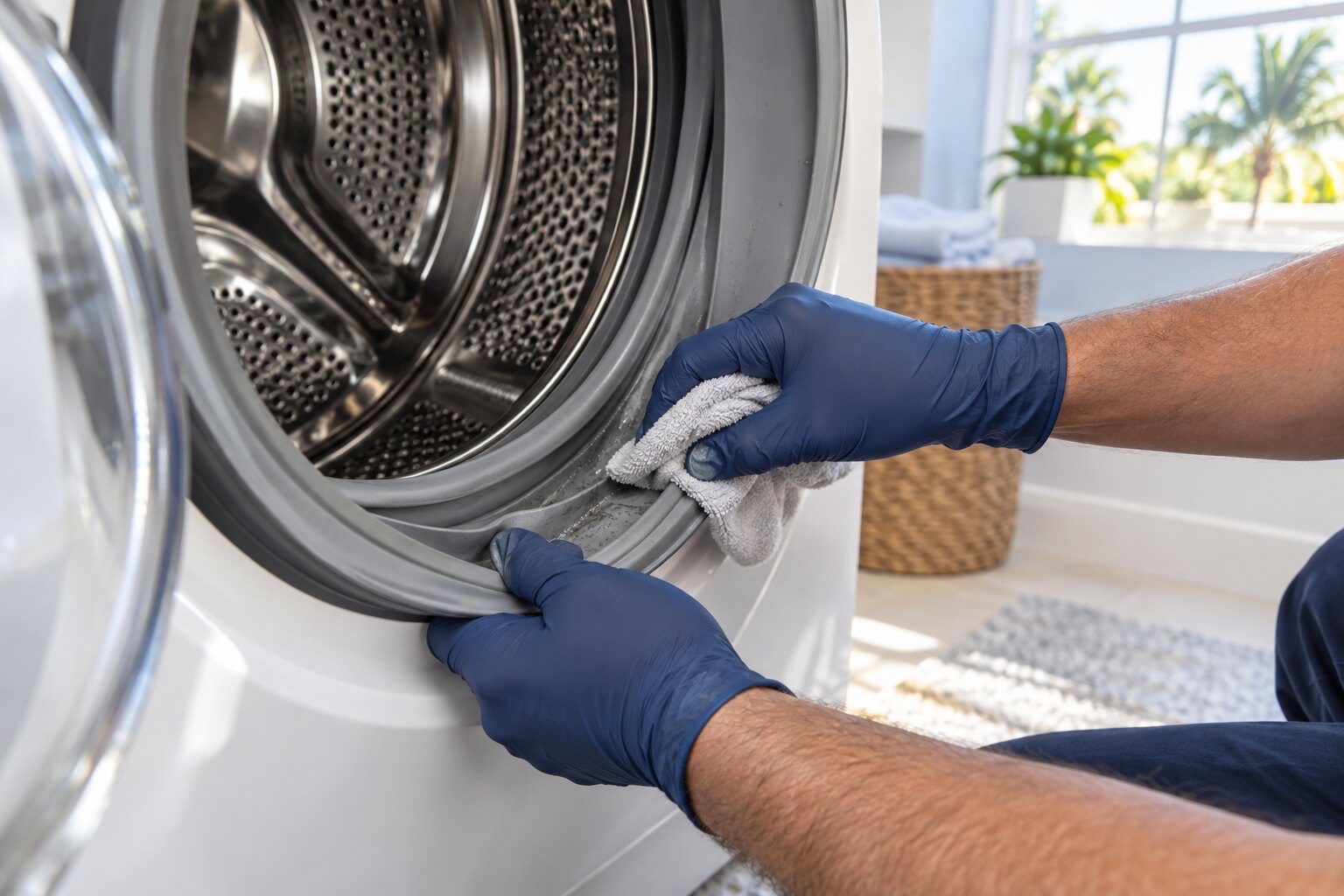
The same seal that keeps water in during the cycle keeps it in afterwards. Every front loader of this generation has a fold at the bottom of that gasket, and after every wash it holds a small amount of water, lint and detergent.
In a dry climate it dries between loads. In a South Florida laundry closet at seventy percent humidity, with the door shut, it does not.
Open it and look
This is the part that surprises people. Pull the fold open all the way round with your fingers — it opens further than it looks like it should.
What is in there explains the smell in about five seconds, and it is usually more than anybody expects.
What actually fixes it
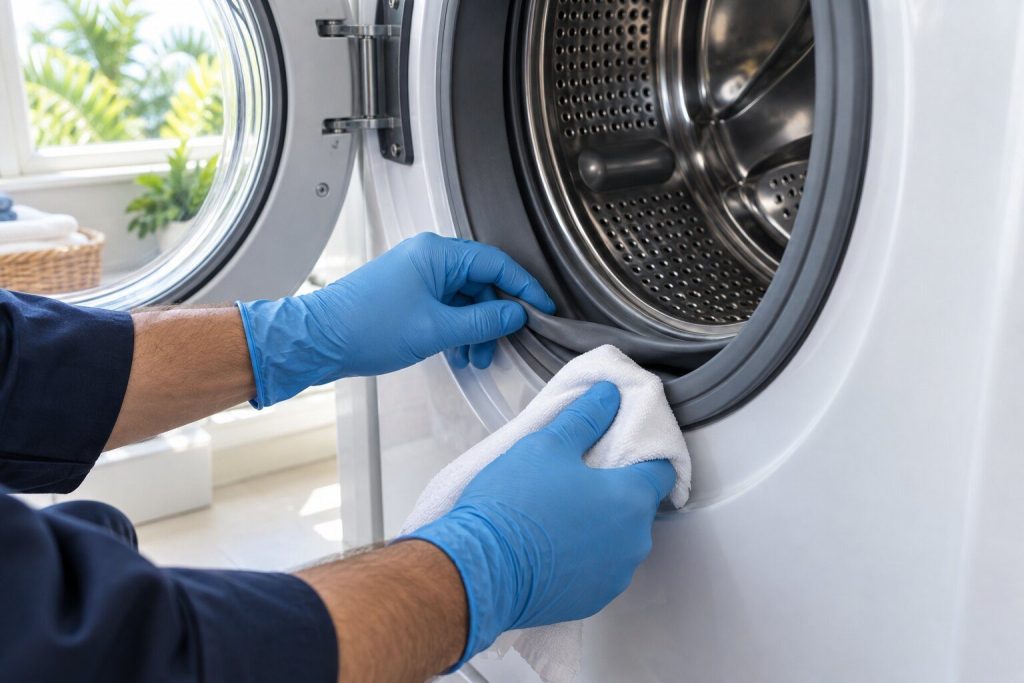
Dry the fold after the last load of the day. A cloth, thirty seconds, round the whole perimeter. This is the single most effective thing anybody does about this.
Leave the door ajar between washes. Not wide — just off the latch. It is the difference between a gasket that dries and one that never does.
Run an occasional empty hot cycle, with the machine's own cleaning program if it has one and nothing in the drum.
Check the detergent. A non-HE product cannot work in a drum that uses this little water at any dose, and most households use roughly twice what these machines need. Excess detergent does not rinse away; it sits in the sump and feeds everything that smells.
When it is not the gasket
If the fold is clean and dry and the smell is still there, residue is sitting below the drum in the sump, and no amount of wiping reaches it. That is the point at which this becomes a service visit rather than a habit.
It is also worth pulling the pump filter — behind the small panel at the bottom front, designed to be opened by the owner, opened by almost nobody. In a coastal household it collects sand as reliably as it collects lint, and what comes out of it after two years is frequently part of the answer.
Why we would rather tell you than sell you a gasket
Because a gasket that cleans up is a maintenance visit, and a torn one is a part that is not small on a front loader. Those are very different numbers, and the difference is a cloth and two minutes.
If it turns out to be a repair
What this leads to, and what it costs
Every job on this site is priced the same way: an on-site diagnostic first, the figure agreed in writing before anybody starts.
-
from $145 Washer seal and odor service
The complaint everybody has and nobody mentions until something else needs fixing. A front loader seals tight, which is what lets it wash with so little water and also what traps the water it used. The gasket has a fold at the bottom that holds water, lint and detergent, and in this climate it does not dry between loads on its own. Most of this is maintenance rather than repair, and we would rather tell you that than sell you a part.
- The fold in the gasket holds water, and here it never dries
- Mostly maintenance — we will say so rather than sell a part
- Where it is not, the sump or the drain hose is holding residue
-
Front load only · 300 to 700 Series Washers
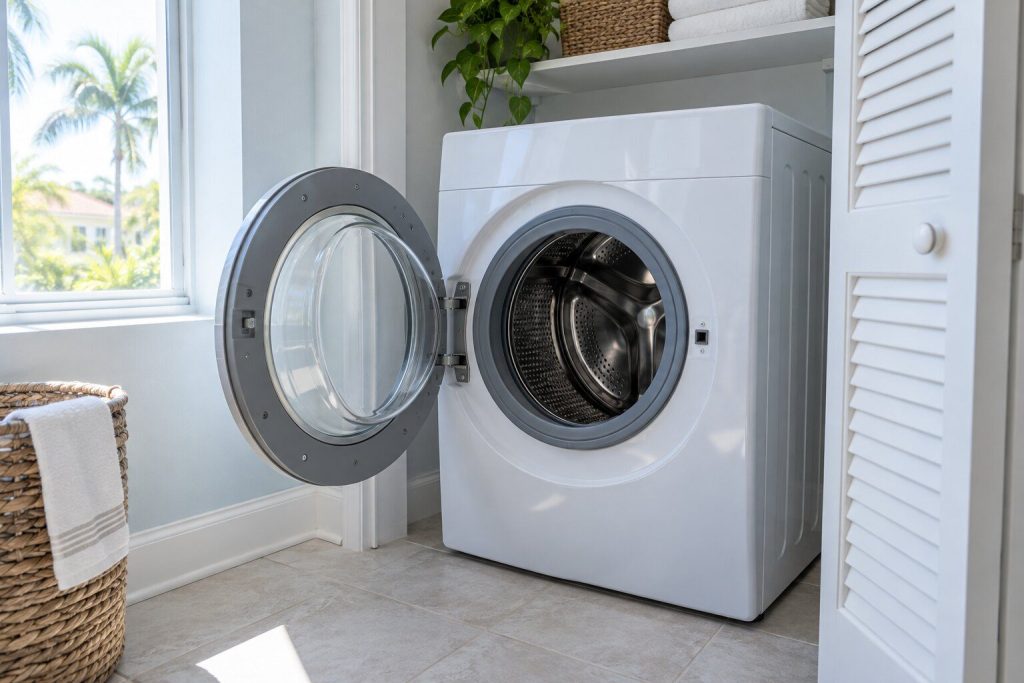
Six machines, and every one of them is a front loader — 300, 400, 500, 600 and 700 Series plus a 24-inch compact. This make builds no top-load washer at all, which is the clearest single difference between this badge and the mass-market half of the same group. Laundry is the deep end of this line rather than an afterthought: 22 machines across washers, dryers and towers against six refrigerators. The maker publishes eight washer codes with real procedures behind them, and — worth knowing before you are quoted — three of those eight are installation problems rather than failures.
- Six washers, all front-load, 300 through 700 Series plus a 24-inch compact
- No top loader is built on this badge at all
- Three of the eight published codes are installation problems, not failures
Questions people ask about this
Is the smell harming the machine?
Not much. It is harming the laundry — clothes out of a drum that smells will smell, and no amount of detergent covers it.
Will a cleaning tablet fix it?
It helps and it does not reach the fold, which is where most of it lives. Run one by all means, and wipe the gasket by hand as well.
Should I stop using fabric softener?
It is worth trying. Softener leaves a film that holds everything else, and it is also what stops a dryer's moisture sensor reading correctly. Two problems, one product.
Common Problems
More guides like this one
-
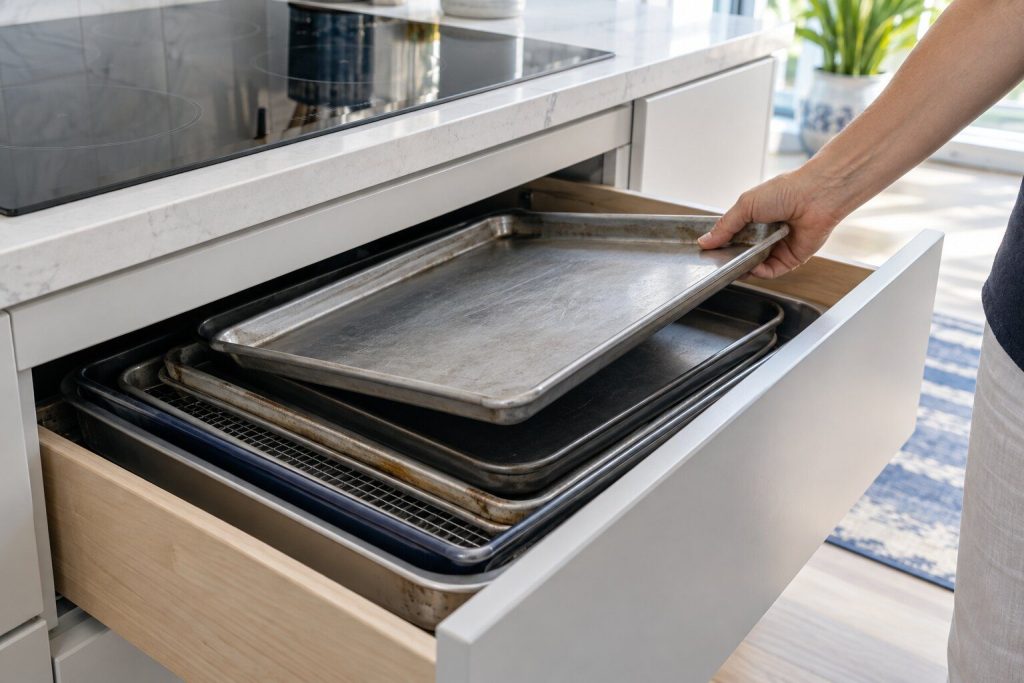
Your Induction Zone Cut Out. Three of the Four Reasons Are Not a Failure
Every glass cooking surface this maker builds is induction, so the general advice about radiant tops does not apply. A drawer packed tight underneath is a genuine cause and appears in no troubleshooting list anywhere.
Read more -

Warm Fridge, Cold Freezer: Why That Is Usually Good News
One sealed system serves both compartments and air is carried between them. So a single warm side points at the air path rather than at refrigerant — the inexpensive half of refrigeration.
Read more -

Most Refrigerator Noises Are Normal. Four Are Not
When a noise happens matters more than what it sounds like — and a counter-depth cabinet in joinery re-radiates everything it makes, so a sound that would be unremarkable becomes the reason somebody calls.
Read more
Tell us the model number and what it is doing.
This article is based on:
- Official manufacturer documentation
- Internal repair procedures
- Technician repair history
- Company quality standards