Common Problems
Warm Fridge, Cold Freezer: Why That Is Usually Good News
When an Electrolux refrigerator is not cooling but the freezer is fine, the refrigerant circuit is almost certainly healthy. These cabinets make cold in one place and move it to the other, so a compressor problem shows on both sides at once. One warm compartment over a cold one means the air is not arriving: the evaporator fan has slowed or stopped, a damper has stuck, or frost has closed the duct because the defrost cycle is not completing. All three are among the least expensive things that can be wrong with a refrigerator. The ten-second test is to hold the door switch in and listen — the fan is wired to stop when the door opens, which is why a fan problem is silent exactly when you are looking at it.
The full guide
An Electrolux refrigerator not cooling but freezer is fine is the most diagnostic sentence an owner can say about a refrigerator, and it is usually the cheaper of the two possible answers.
Why one warm side rules so much out
These cabinets have a single sealed system. Cold is manufactured in one compartment and carried into the other by a fan through a duct, metered by a damper.
That layout means a compressor problem, a refrigerant leak or a condenser that cannot shed heat all show up on both sides at once, because there is only one source of cold and it has stopped supplying either.
So when one compartment is perfect and the other is climbing, everything expensive has already been ruled out by the appliance itself. What is left is the delivery.
The three things that carry the air
The evaporator fan. The most common of the three by a wide margin. When it slows, seizes or stops, the freezer keeps its own temperature comfortably and the fresh-food side has nothing arriving.
The damper. A mechanical flap that meters how much cold crosses over. Stuck shut, the fresh-food compartment starves while everything else looks entirely normal.
The duct, closed by frost. A defrost circuit that is no longer completing packs the evaporator with ice until air cannot pass it. On a full-height column that ice builds from the bottom of a very tall coil upward, which is why this reads as sudden when it has been happening since spring.
The ten-second test
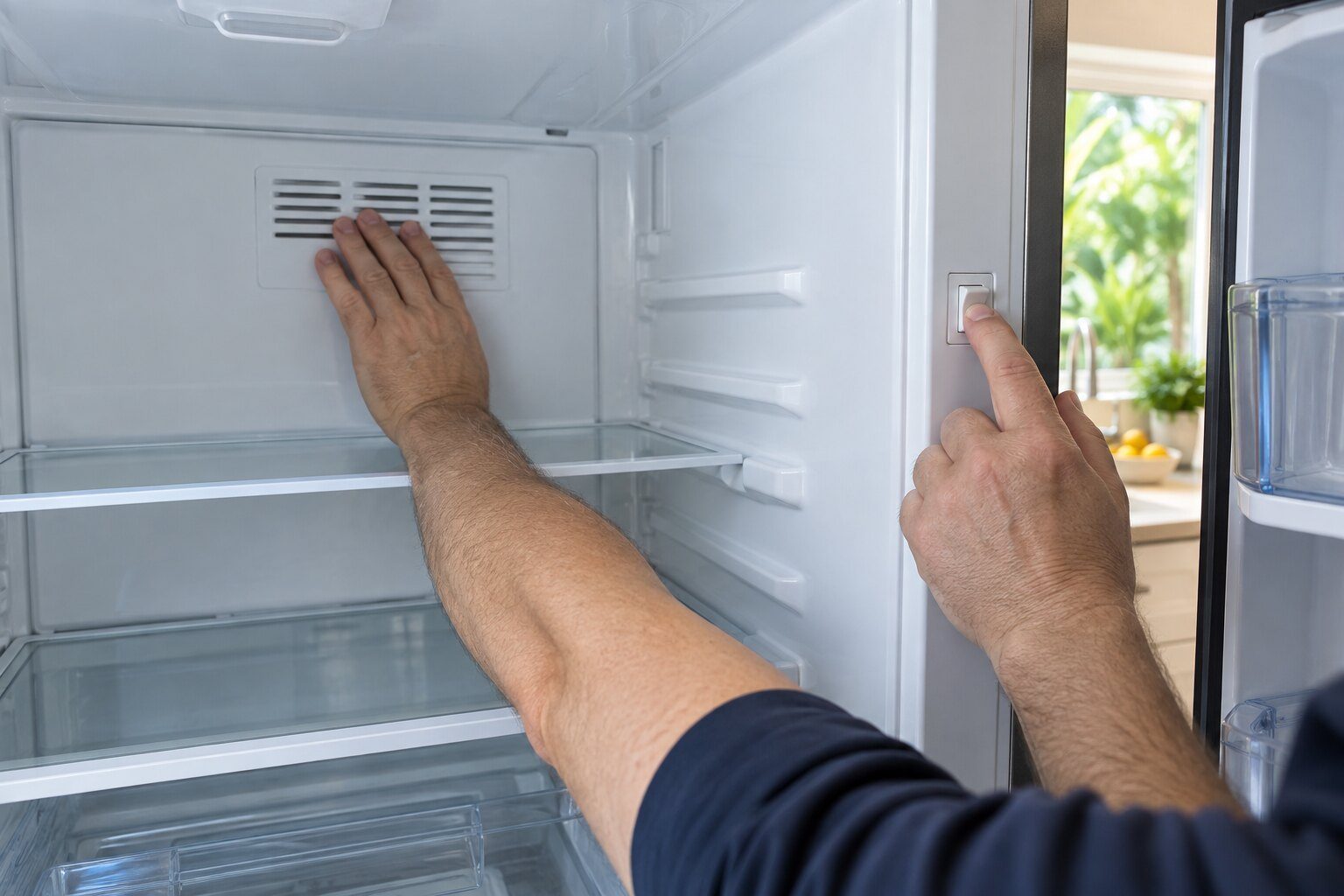
Open the door and hold the door switch in — the small plunger the door presses when it closes — and listen.
The fan is wired to stop when the door opens. That is the entire reason a fan problem is silent at precisely the moment you are standing there investigating it, and why holding the switch is the trick that settles it.
Fan running: it is the damper or the duct. Nothing at all: it is the fan.
Then look at the back wall
While the door is open, look at the rear wall inside the fresh-food compartment.
Visible frost there points at the defrost circuit rather than at the fan. So does ice you can see around the vents. If you clear it manually and it returns in days, that is a door letting humid air in; weeks, and it is the defrost circuit.
What not to do
Do not turn the fresh-food side colder. It feels like the obvious response and it makes things worse — the machine runs longer, builds more ice on a coil that is already struggling for air, and the next stage arrives sooner.
Do not empty the cabinet either. A loaded cabinet holds temperature better than a bare one. Move what is genuinely perishable into a cooler if the fresh-food side is above 40°F, and leave the rest where it is.
If it turns out to be a repair
What this leads to, and what it costs
Every job on this site is priced the same way: an on-site diagnostic first, the figure agreed in writing before anybody starts.
-
One half is perfect and the other is not Warm fridge, cold freezer
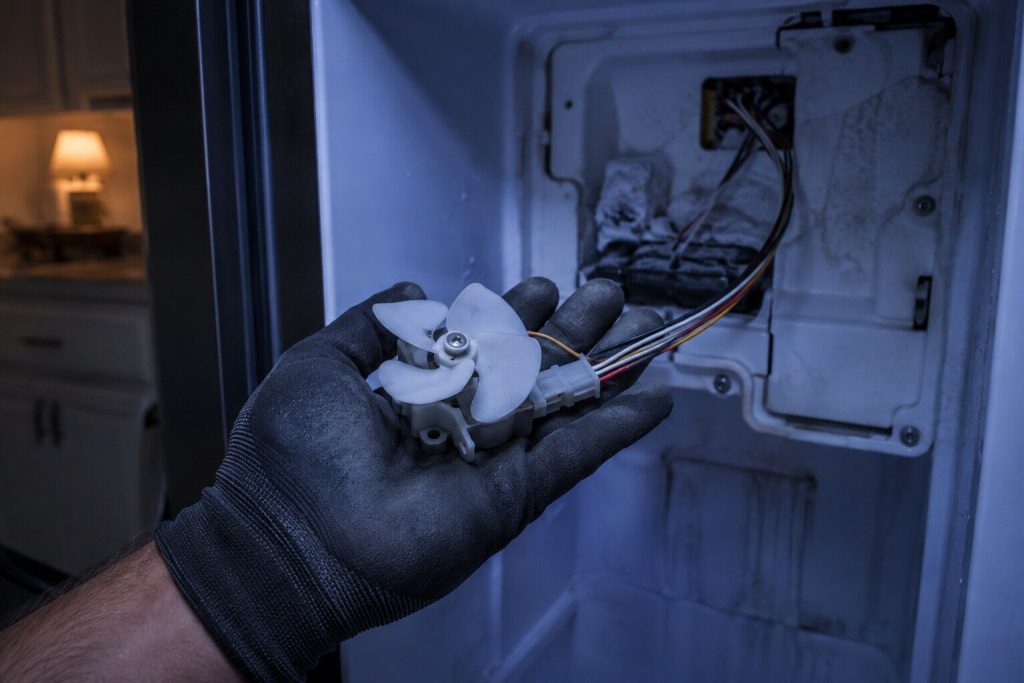
The most diagnostic complaint in refrigeration, and good news more often than not. One sealed system serves both compartments here and air is moved between them, so when only one side is wrong the refrigerant circuit is almost certainly fine and the problem is on the air path. That is the inexpensive half of everything that can go wrong with a refrigerator, and it is worth saying plainly before anybody starts worrying about compressors.
- One warm side almost always means air, not refrigerant
- The fan, a damper, or a duct packed with frost
- The cheap half of refrigeration failure, and it is worth confirming
-
from $149 Evaporator fan repair
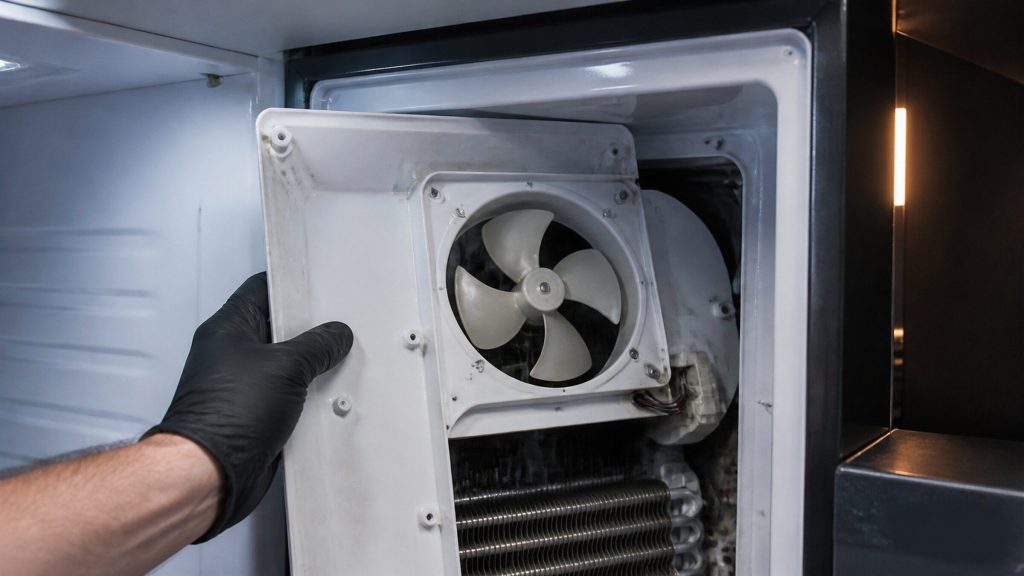
Cold is manufactured in one compartment and has to be carried to the other. Let the fan doing the carrying slow, seize or stop, and the freezer stays perfectly cold while the fresh-food side climbs — which is why this single part explains most of what people report as "the freezer is fine and the fridge is not". It is also among the cheaper things that can be wrong with a cabinet of this price, which makes it worth confirming before anyone starts talking about compressors.
- Explains most warm-fridge, cold-freezer complaints on these cabinets
- The part is inexpensive; the cabinet it sits in is not
- Confirm it before any conversation about a sealed system
Questions people ask about this
Should I turn the fridge down colder while I wait?
No, and it usually makes it worse. A colder setting makes the machine run longer, which builds more frost on a coil already struggling to breathe.
Can I keep using the freezer?
Yes. That side is unaffected. Keep perishables out of the fresh-food compartment until it is holding below 40°F again.
Why does telling you this shorten the visit?
Because it decides what goes on the van. One warm side sends a technician out with a fan motor, a damper and a defrost kit; both sides drifting sends them out with gauges. On a cabinet that has to be drawn out of its opening, getting that right the first time is one appointment instead of two.
Common Problems
More guides like this one
-

Why a Front-Load Washer Smells, and Why It Is Worse Here
The seal that lets these machines wash in so little water is the same seal that traps it. In a laundry closet at this humidity the fold at the bottom of the gasket is still damp when the next load goes in.
Read more -
Your Induction Zone Cut Out. Three of the Four Reasons Are Not a Failure
Every glass cooking surface this maker builds is induction, so the general advice about radiant tops does not apply. A drawer packed tight underneath is a genuine cause and appears in no troubleshooting list anywhere.
Read more -
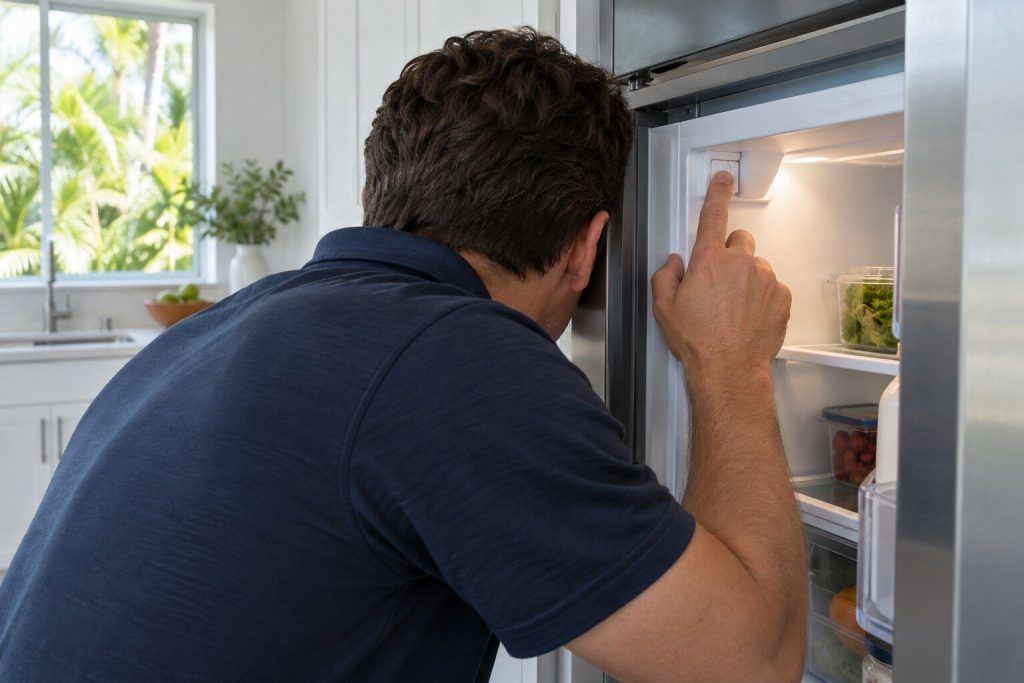
Most Refrigerator Noises Are Normal. Four Are Not
When a noise happens matters more than what it sounds like — and a counter-depth cabinet in joinery re-radiates everything it makes, so a sound that would be unremarkable becomes the reason somebody calls.
Read more
Tell us the model number and what it is doing.
This article is based on:
- Official manufacturer documentation
- Internal repair procedures
- Technician repair history
- Company quality standards