
Common Problems
Most Refrigerator Noises Are Normal. Four Are Not
An Electrolux refrigerator making noise is usually doing something it was designed to do. Water running is refrigerant moving and meltwater reaching the pan during a defrost cycle. Cracking and popping is plastic contracting as the cabinet cools. Short bursts every couple of hours are the ice maker filling and harvesting. The noises that matter are a rhythmic tick or warble that stops when the door opens — that is ice catching the evaporator fan blade — a drone from the condenser fan that has collected coastal grit, and anything new that arrived suddenly. Built-in cabinets complicate this: a counter-depth unit scribed into a run touches the structure on three sides, and the joinery re-radiates sound that a freestanding cabinet would lose to the room.
The full guide
An Electrolux refrigerator making noise is nearly always a refrigerator doing its job out loud, and the useful question is not what it sounds like but when it happens.
What a healthy cabinet does
Water running. Refrigerant moving through the evaporator, and meltwater running down to the drain pan during a defrost cycle. Both sound like a tap left half open somewhere behind the wall.
Popping and cracking. Plastic liners and shelving contracting as the cabinet cools and expanding as it warms. Loudest in a new appliance and after a door has been open a while.
Short bursts every couple of hours. The ice maker filling, then the harvest, then cubes dropping into the bin. In a quiet kitchen with a column in it this genuinely startles people, and it is the machine working.
A fan running on after everything else stops. Normal on anything with electronics to cool.
The one that usually turns out to be real
A rhythmic tick, warble or whirring that stops the moment the door opens.
That is ice catching the evaporator fan blade. The fan is wired to stop when the door opens, so a fan problem falls silent exactly when you go to investigate it — which is why the trick is to hold the door switch in with a finger and listen with the door open.
It is worth acting on, and not only for the noise. A blade fighting frost is also a defrost problem wearing a fan problem's clothes, and the cooling complaint arrives a few weeks later.
The second: the condenser fan
A drone rather than a tick, continuous rather than intermittent, and usually louder from the front of the cabinet than from inside it.
In coastal air the condenser fan collects a fine grit that puts it out of balance, and behind a trim kit that vibration travels straight into the joinery. Cleaning it is the same visit as cleaning the coil, and it is the cheapest thing anybody does to refrigeration in this region.
Why built-in cabinets sound worse
A freestanding refrigerator stands in air. Most of what it makes goes into the room and disperses.
A counter-depth cabinet scribed into an opening, or a column behind a trim kit, is in contact with the structure on three sides. The joinery takes the vibration and re-radiates it, so a noise that would be completely unremarkable in a freestanding unit becomes the reason somebody calls a repair company.
We check for contact points before assuming a mechanical failure. Packing a cabinet off a side panel, or easing a unit that is bearing on its scribe, has ended more of these calls than any part we have ever fitted.
What to tell us
Not the adjective. The timing.
Continuously, or in bursts. Only with the doors shut, or with them open too. Every couple of hours, or all the time. Since delivery, or since last month.
"It has been like this since it was installed" and "it started three weeks ago" are completely different conversations, and the second one is the sentence worth telling us first.
If it turns out to be a repair
What this leads to, and what it costs
Every job on this site is priced the same way: an on-site diagnostic first, the figure agreed in writing before anybody starts.
-
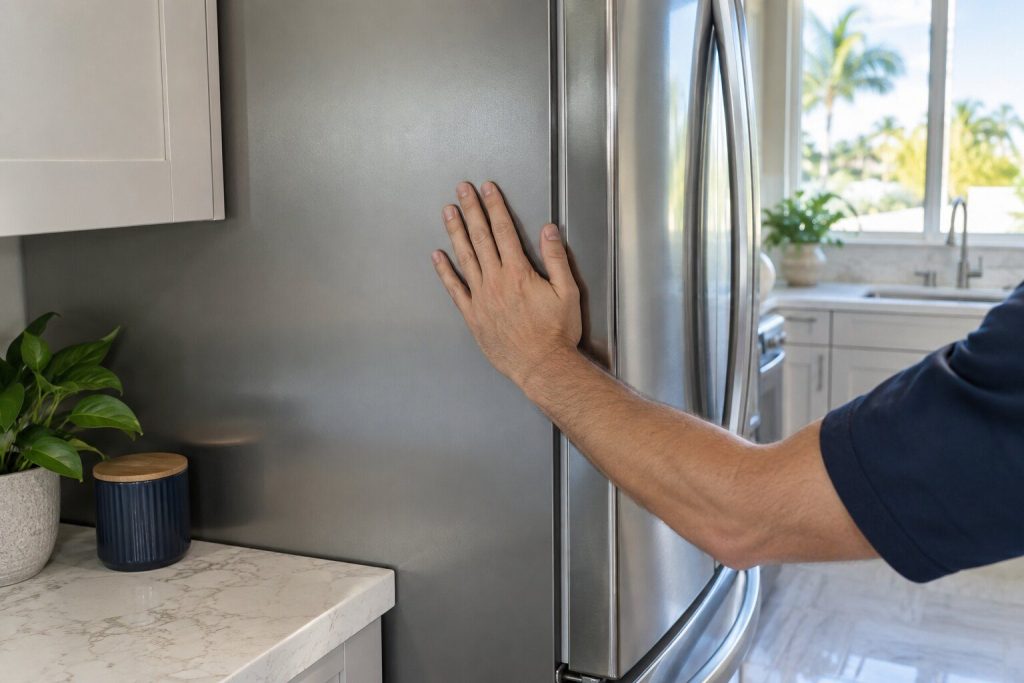
A hum, a rattle, a click or a grinding Refrigerator making noise
Most refrigerator noises are normal and a few are not, and the difference is usually when they happen rather than how loud they are. A counter-depth cabinet in a run of joinery also amplifies what it makes — the cabinetry acts as a sounding board — so a noise that would be unremarkable in a freestanding unit becomes the reason somebody calls. Telling us when the noise occurs narrows this faster than any description of the sound.
- When it happens matters more than what it sounds like
- Built-in joinery amplifies noise that a freestanding cabinet would absorb
- Ice against a fan blade is the single most common real cause
-
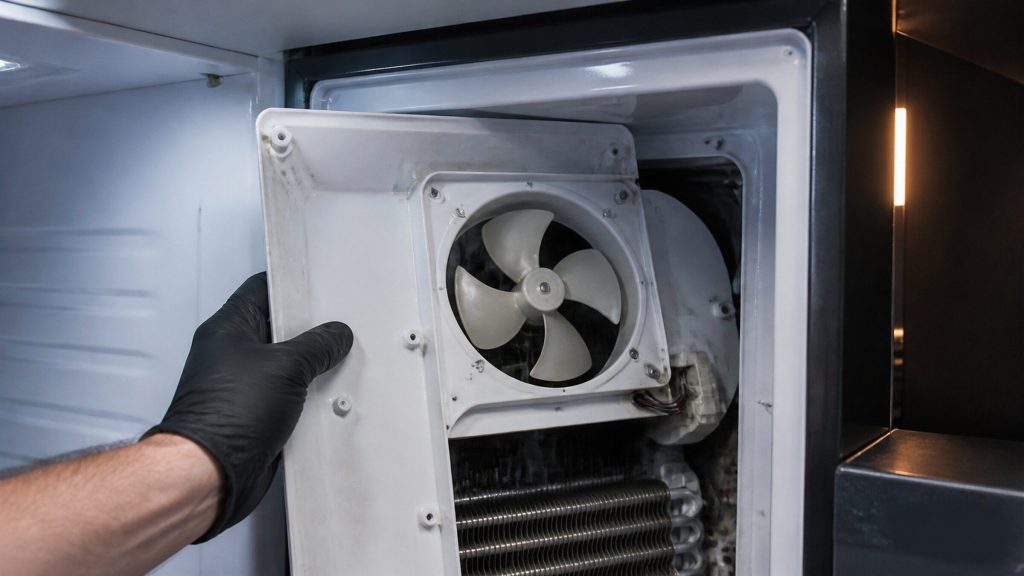
from $149 Evaporator fan repair
Cold is manufactured in one compartment and has to be carried to the other. Let the fan doing the carrying slow, seize or stop, and the freezer stays perfectly cold while the fresh-food side climbs — which is why this single part explains most of what people report as "the freezer is fine and the fridge is not". It is also among the cheaper things that can be wrong with a cabinet of this price, which makes it worth confirming before anyone starts talking about compressors.
- Explains most warm-fridge, cold-freezer complaints on these cabinets
- The part is inexpensive; the cabinet it sits in is not
- Confirm it before any conversation about a sealed system

Questions people ask about this
It only does it at night.
The house is quiet and the compressor runs longer when the kitchen is warm from the day. Both are normal, and a noise noticeable only at night is usually not new.
It sounds like water running inside.
That is normal. Refrigerant moving through the system and meltwater running to the drain pan during a defrost cycle both sound exactly like that.
It started right after delivery.
Then check what the cabinet is touching. A counter-depth unit resting against a side panel transmits everything it does into the kitchen, and packing it off the joinery has solved more of these calls than any part we have fitted.
Common Problems
More guides like this one
-
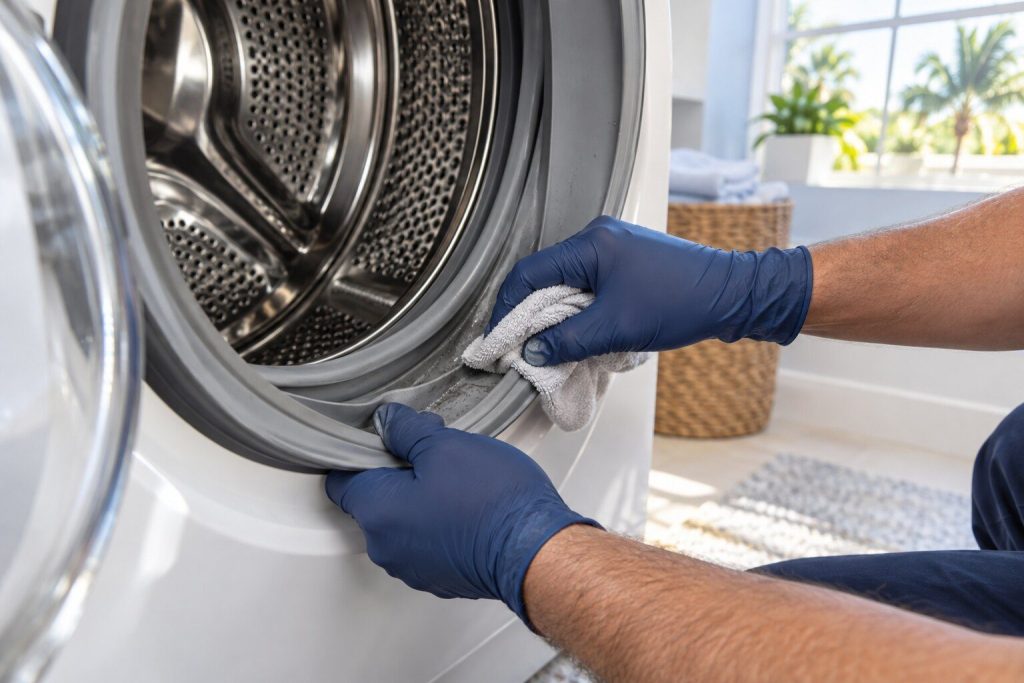
Why a Front-Load Washer Smells, and Why It Is Worse Here
The seal that lets these machines wash in so little water is the same seal that traps it. In a laundry closet at this humidity the fold at the bottom of the gasket is still damp when the next load goes in.
Read more -
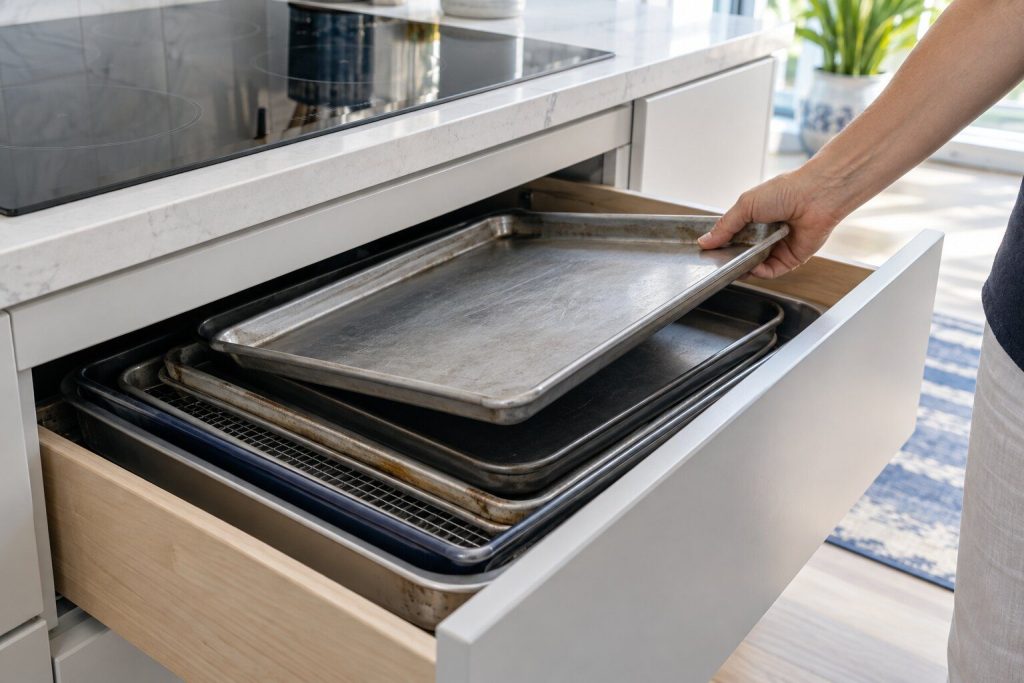
Your Induction Zone Cut Out. Three of the Four Reasons Are Not a Failure
Every glass cooking surface this maker builds is induction, so the general advice about radiant tops does not apply. A drawer packed tight underneath is a genuine cause and appears in no troubleshooting list anywhere.
Read more -

Warm Fridge, Cold Freezer: Why That Is Usually Good News
One sealed system serves both compartments and air is carried between them. So a single warm side points at the air path rather than at refrigerant — the inexpensive half of refrigeration.
Read more
Tell us the model number and what it is doing.
This article is based on:
- Official manufacturer documentation
- Internal repair procedures
- Technician repair history
- Company quality standards