Common Problems
Your Induction Zone Cut Out. Three of the Four Reasons Are Not a Failure
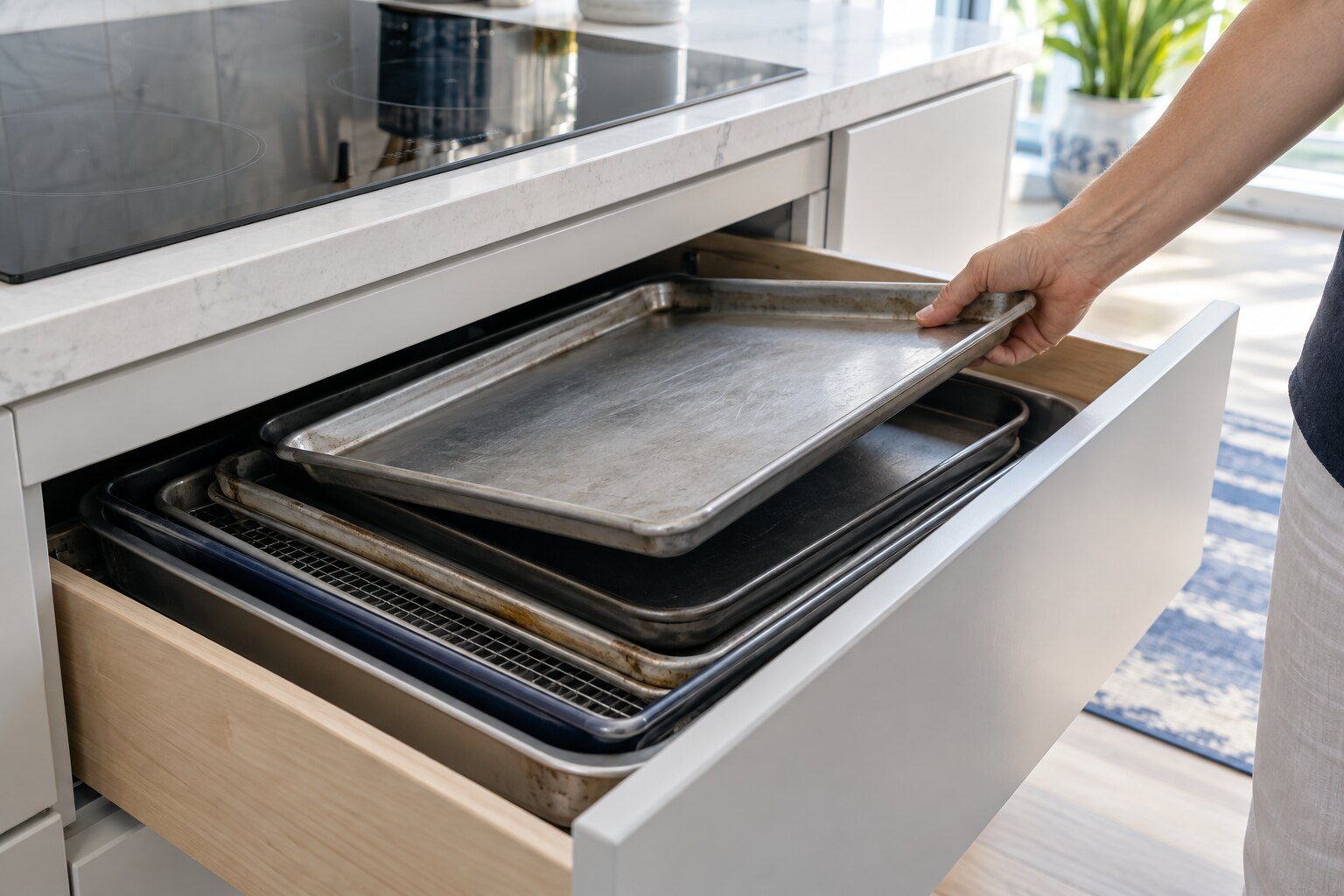
An Electrolux induction cooktop turns off mainly to protect something, and three of the four ordinary reasons are the appliance working rather than failing. Induction puts a coil under the glass and heats the pan directly, so the electronics beneath need a cooling path — and a drawer or cupboard packed tight against the underside of the unit blocks it, causing genuine shutdowns in summer that never happen in winter. A pan whose base has warped couples intermittently and reads as a failing zone. A zone held on high with little in the pan overheats the glass and cuts out until it cools. Only a power stage or its sensor actually failing earns a service visit, and that shows as one zone consistently dead while the rest are perfect.
The full guide
When an Electrolux induction cooktop turns off by itself, it is usually protecting something — and almost everything written online about "glass cooktops" is about a different appliance.
This maker does not build a radiant top
Worth saying first, because it invalidates most of the advice you will find. Search for glass cooktop troubleshooting and you get pages about radiant elements under ceramic: burnt-out elements, infinite switches, surface thermostats.
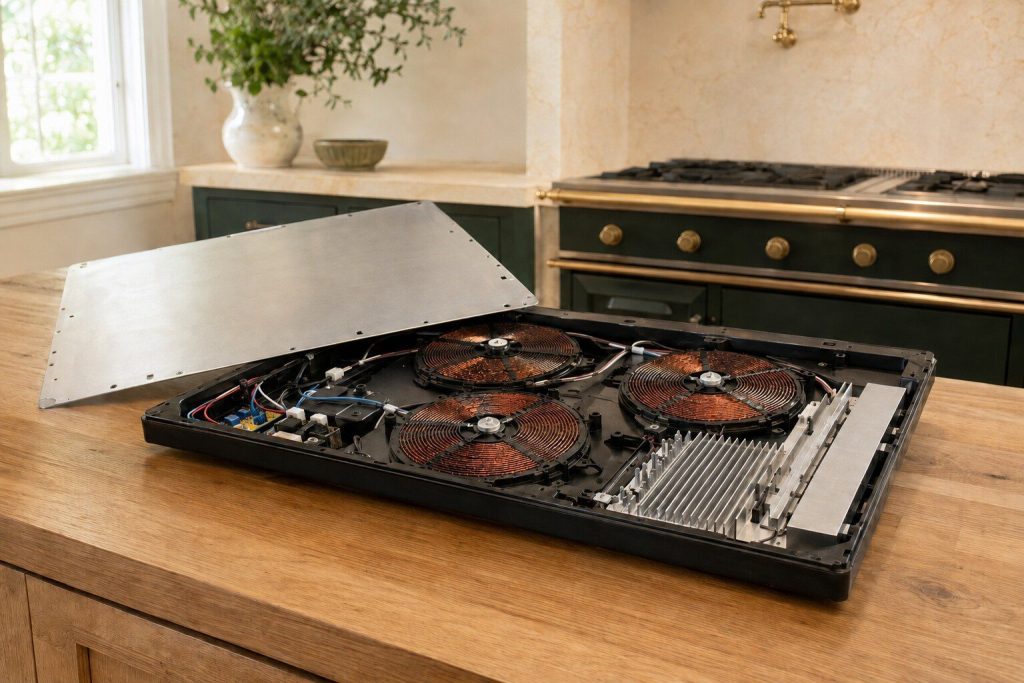
There is none of that in this line. Every glass cooking surface this maker sells is induction — a coil under the glass creating a field that heats the pan directly. That brings power electronics, cooling fans and air paths that a radiant top simply does not have, and it fails in ways a radiant top does not.
The cause nobody expects
The electronics under the glass are cooled by a fan, and that fan has to draw air from somewhere and push it somewhere.
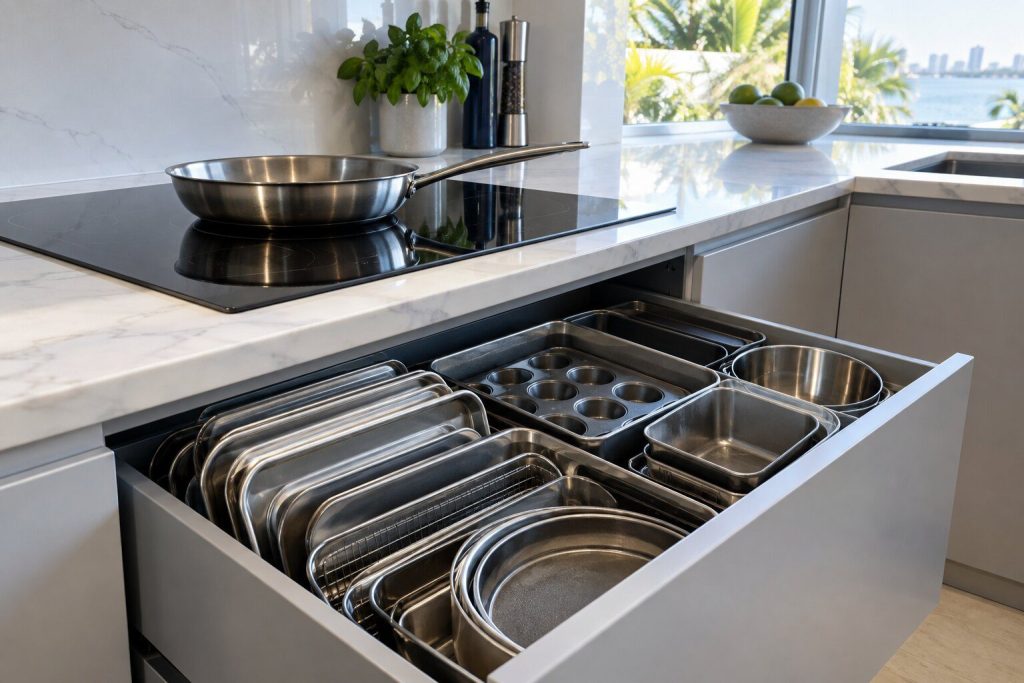
On a drop-in cooktop, "somewhere" is usually the cabinet or the drawer directly underneath. Fill that drawer to the top — baking trays standing upright, a stack of pans pressed against the underside of the unit — and the cooling path closes.
The result is a cooktop that works perfectly in February and starts cutting out on hot afternoons in August. Nothing is broken. It appears in no general troubleshooting list anywhere, and emptying the top of that drawer is free.
The second free cause
A pan whose base has warped.
Induction couples to a flat ferrous base. A base that has gone slightly convex touches the glass in a ring rather than across its face, and the zone senses that inconsistently — powering, losing the pan, powering again, and eventually giving up.
Two tests settle it in a minute: the same pan on a different zone, and a different pan on the same zone. If the pan is the variable, it is the pan.
The third: the zone protecting the counter
A zone held on maximum with very little in the pan heats the glass far more than it heats the food. The cooktop senses that and shuts the zone down until it cools, because the alternative is the countertop underneath it.
That is not something to work around. It is the appliance declining to damage your kitchen.
The one that earns a visit
One zone consistently dead while everything else is perfect.
That is actually good news in diagnostic terms. Zones are driven by their own power stages, so a single dead zone points at that stage or its sensor rather than at the whole board — and the cooktop remains usable while the part comes, which matters when it is the only cooking in the house.
All zones dead at once is a different question and usually points at the board or the supply rather than at the cooking surface.
What is normal and gets reported anyway
The fan running for several minutes after you finish. The buzz at high power, which is the cookware. A brief pause when a zone changes power level. All three are the appliance behaving exactly as designed, and all three reach us as complaints.
If it turns out to be a repair
What this leads to, and what it costs
Every job on this site is priced the same way: an on-site diagnostic first, the figure agreed in writing before anybody starts.
-
It heats for a moment and then stops Induction zone shuts off
Usually the cooktop protecting itself rather than failing, and two of the ordinary causes are free. Induction zones shut down on their own temperature, and the commonest reason they get hot is a blocked cooling path underneath — a drawer packed tight against the unit is enough. The other is a pan too warped to couple properly. Every glass cooking surface on this badge is induction; none of the general advice about radiant tops applies.
- No radiant cooktop exists on this badge — this is induction
- A drawer packed against the underside is a genuine cause of shutdowns
- One dead zone means one power stage, not the whole board
-
from $195 Induction cooktop repair
Every glass cooking surface on this badge is induction — there is no radiant element in the line at all — and it fails in ways a radiant top does not. Zones that heat for a moment and cut out are usually the unit protecting itself: a blocked vent underneath, often a drawer packed tight against it, or a pan too warped to couple properly. Both are free to rule out. Beyond that, zones are driven by their own power stages, so one dead zone is good news rather than bad.
- There is no radiant cooktop on this badge — general glass-top advice does not apply
- Cutting out is usually thermal protection, and often a packed drawer
- One dead zone means one power stage, not the whole board
Questions people ask about this
It buzzes at high power. Is that a problem?
No, and it is the cookware rather than the appliance. A multi-ply base resonates at high power. The same pan on a lower setting is usually quiet.
The fan runs long after I finish cooking.
Also normal. It is cooling the power electronics under the glass, and on these units it can run for several minutes after everything is switched off.
Is a cracked top worth repairing?
The glass is a replaceable part, and one of the more expensive single parts on the appliance — so it deserves an honest quote against the value of the unit. In the meantime the top should not be used: the glass is structural.
Common Problems
More guides like this one
-
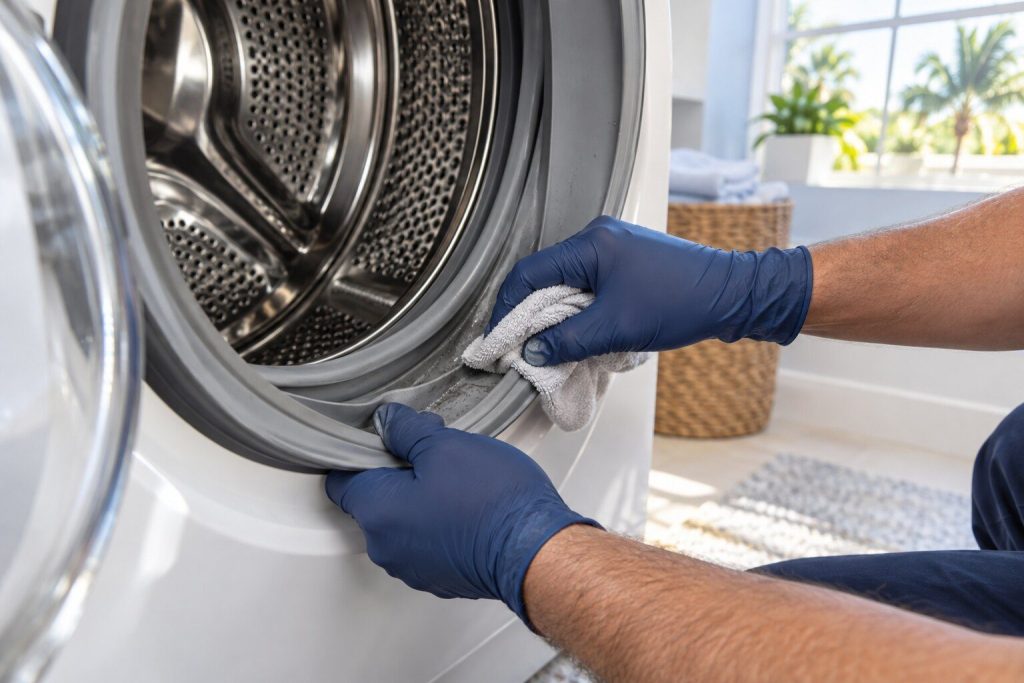
Why a Front-Load Washer Smells, and Why It Is Worse Here
The seal that lets these machines wash in so little water is the same seal that traps it. In a laundry closet at this humidity the fold at the bottom of the gasket is still damp when the next load goes in.
Read more -
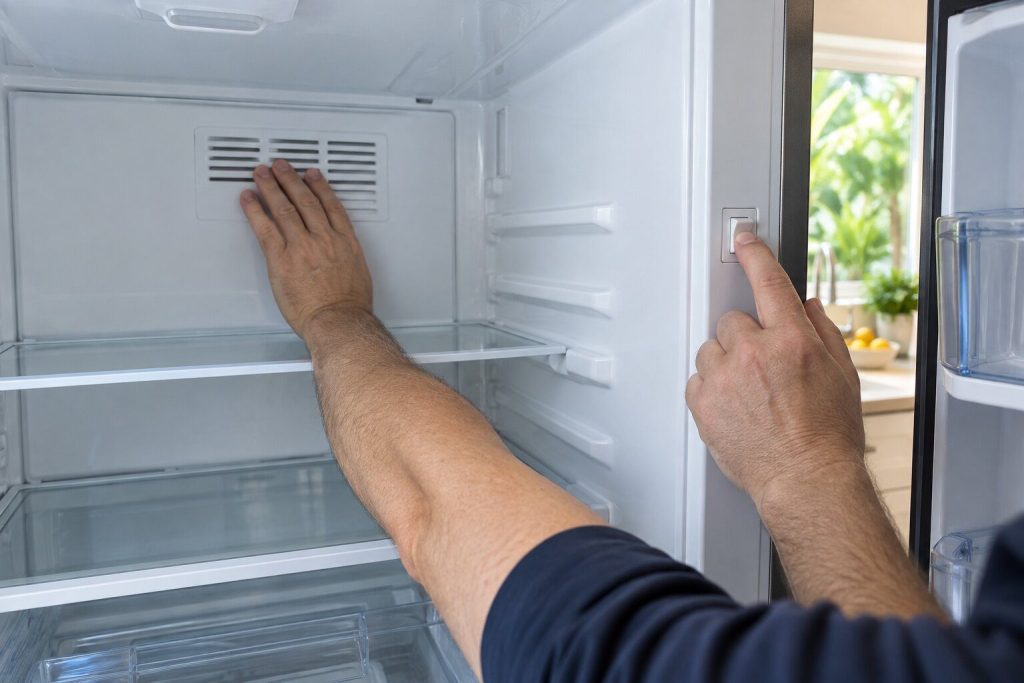
Warm Fridge, Cold Freezer: Why That Is Usually Good News
One sealed system serves both compartments and air is carried between them. So a single warm side points at the air path rather than at refrigerant — the inexpensive half of refrigeration.
Read more -
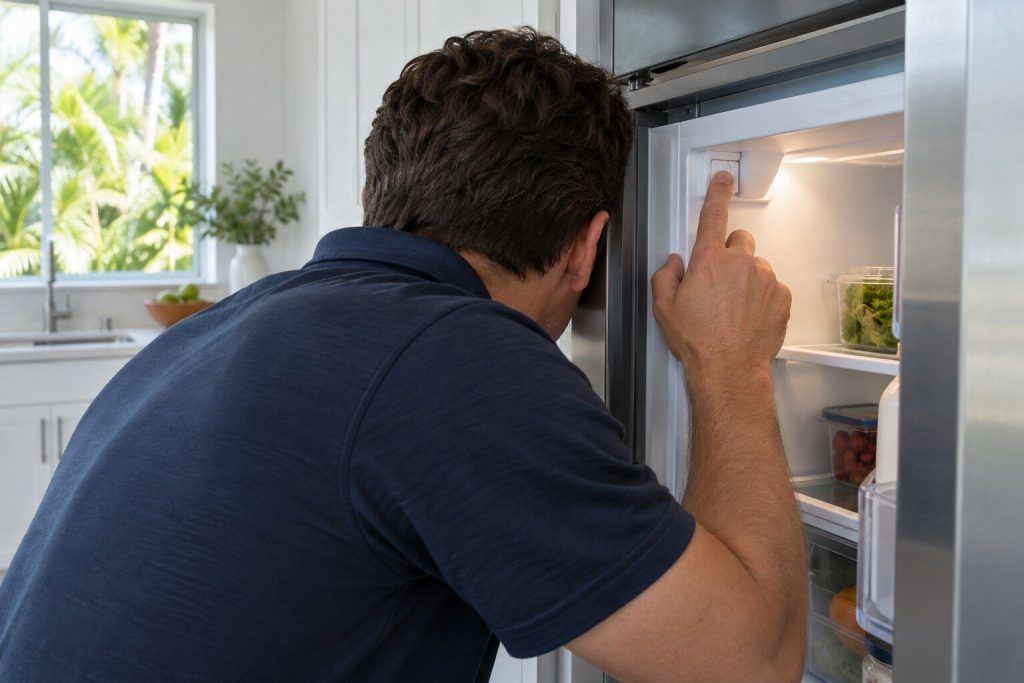
Most Refrigerator Noises Are Normal. Four Are Not
When a noise happens matters more than what it sounds like — and a counter-depth cabinet in joinery re-radiates everything it makes, so a sound that would be unremarkable becomes the reason somebody calls.
Read more
Tell us the model number and what it is doing.
This article is based on:
- Official manufacturer documentation
- Internal repair procedures
- Technician repair history
- Company quality standards