Troubleshooting
Resetting an Electrolux Range, and What the Reset Actually Proves
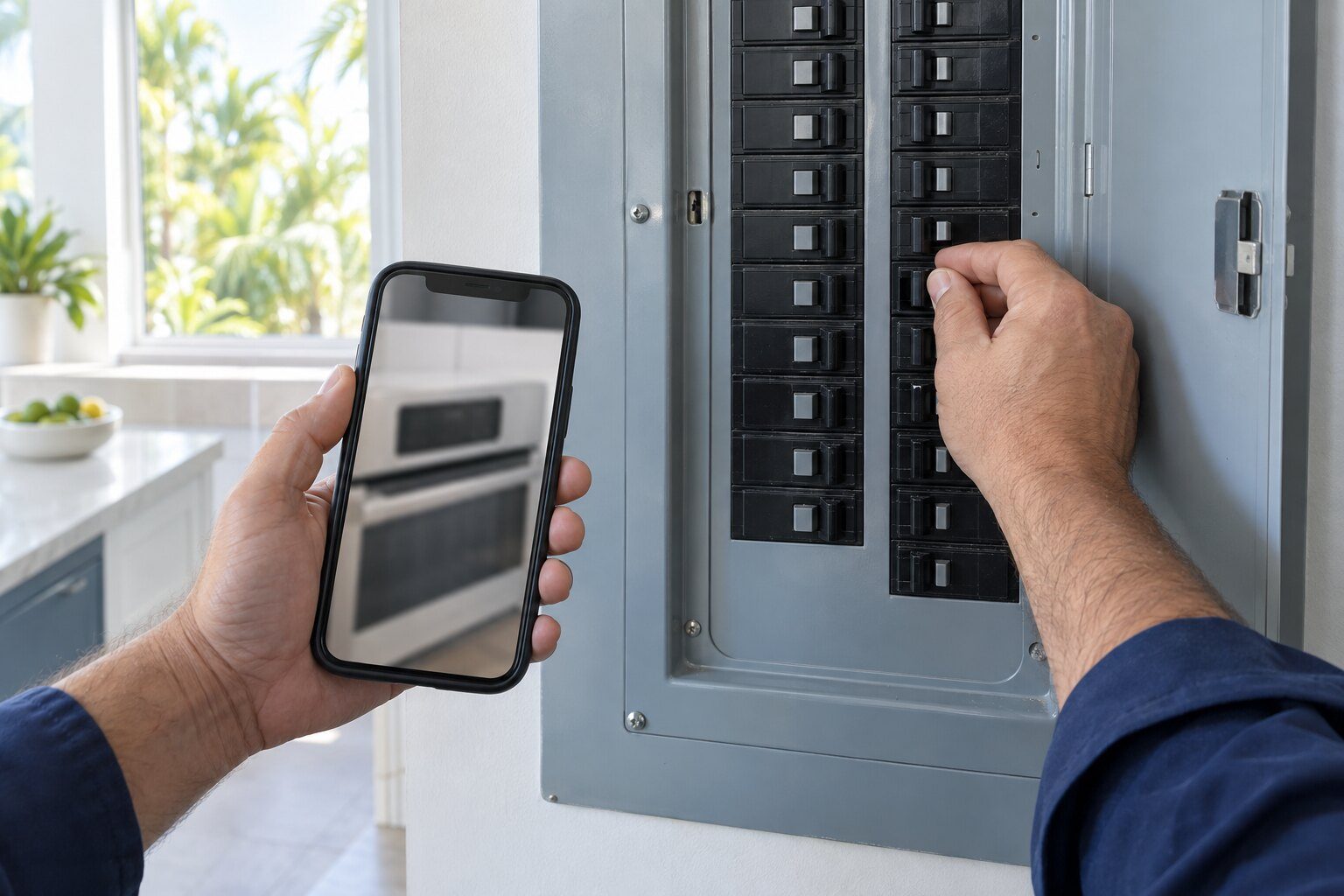
How to reset an Electrolux range: photograph the display, then cut power at the breaker for a full thirty seconds and restore it. Thirty is the maker's own figure and a quick flick is not enough — these controls hold charge long enough to carry their own state across a short interruption. The reset matters less than the order. Most F-codes on this range are published by the manufacturer as a title plus a power cycle and nothing further, so cutting power is genuinely the documented answer; it is also the only copy of the evidence. A code that clears and stays clear was a condition. A code that returns has a part behind it, and the third reset tells you nothing the first one did not.
The full guide
How to reset an Electrolux range is one of those questions where the answer is easy and the order is the whole thing.
The reset itself
Cut power at the breaker for a full thirty seconds, then restore it. Not a flick — these controls hold enough charge to carry their own state across a short interruption, which is why an off-and-on that takes two seconds appears to change nothing.
That is the manufacturer's own instruction. Read this maker's range guide and most entries are exactly that: a title and a power cycle. F1 shorted key pad. F12 micro identification. F13. F30 open probe. F31 shorted probe. A name, thirty seconds at the fuse box, and nothing further published behind any of them.
So resetting is not a workaround here. It is the documented answer.
What it costs you if you do it first
The display is the only copy of the evidence. Once power goes, the number is gone and nothing on the appliance will give it back — there is no service log to interrogate and no way to ask the range what it was complaining about.
Photograph it before you touch the breaker, and photograph it rather than copying it by hand, because on this make the spacing is part of the code. SU dS and SB SB are not typing errors. DI SP is two words on purpose. A code written down as "susd" sends somebody looking for the wrong thing.
While you are there, note what the range was doing. Preheating, mid-bake, part-way through a self-clean, or sitting idle. On a control problem that timing is worth more to a technician than the number is.
What the reset actually proves
This is the part worth carrying away.
A code that clears and stays clear was a condition rather than a failure. Something transient — a spike, a moment of heat, a door switch that did not close — and the control noticed correctly and then recovered.
A code that comes back has a part behind it. That is not a worse outcome; it is a more useful one, because it narrows the work.
What is not useful is the third reset. One is a test. Four is a habit, and a habit hides how often this is actually happening. Write the date down each time instead.
The two exceptions
F10 on an oven. This one means the cavity is reading hotter than it was asked for and has stopped itself. Turn the oven off and let it go completely cold before anything else — that is what the manufacturer asks for and there is no version of this where hurrying it is sensible. If you have a stone-baked pizza mode, check the Pizza Shield is in rack position 7 first; the maker names a shield in the wrong slot as the ordinary cause on those models.
The door-lock family, F90 through F94. Press UNLOCK and follow the prompt on screen — these ovens hand you a code to type back, which is not obvious unless you know it exists. If a clean cycle has just run, wait until the cavity is cold; the latch will not release while the oven considers itself hot, and that is correct. Only then the breaker.
And if the panel is showing a dash rather than a code, nothing is wrong at all. That is the cooktop lock, and six seconds on OFF releases it.
If it turns out to be a repair
What this leads to, and what it costs
Every job on this site is priced the same way: an on-site diagnostic first, the figure agreed in writing before anybody starts.
-
from $245 Control board repair
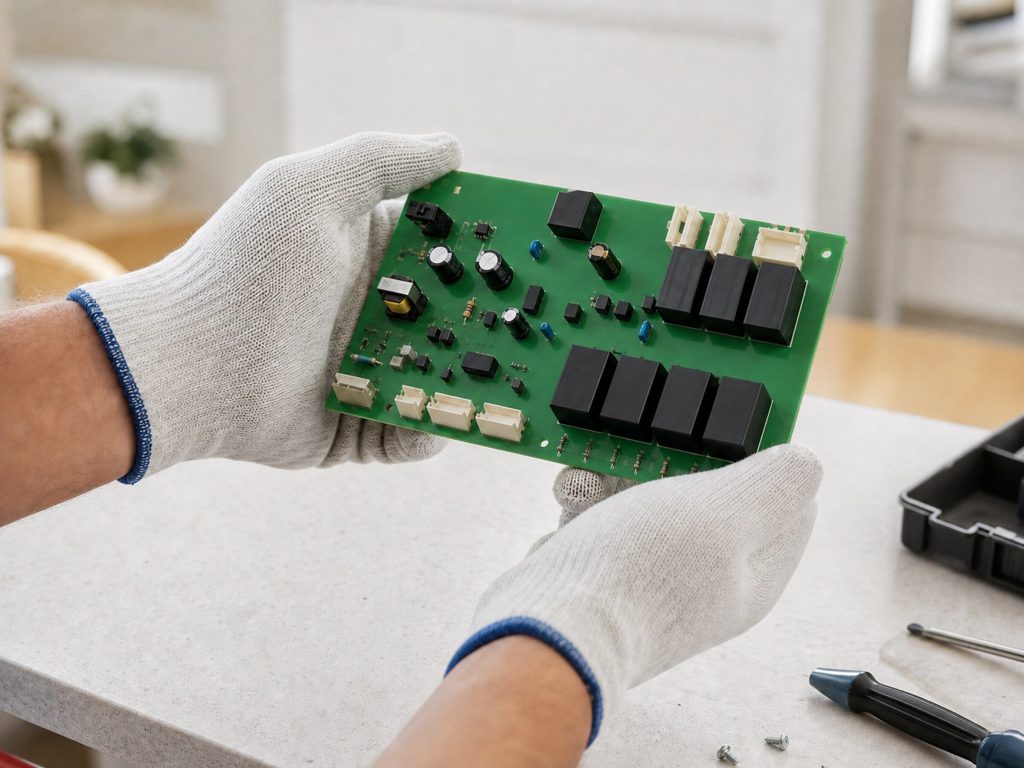
When the board is genuinely the answer — and it is worth saying that it often is not. A great many appliances condemned as "a board problem" have a sensor lying to a board that is working perfectly. This maker helps here more than most: F12, F13 and the F3/F20/F26 family are published as board-level conditions by name, so when one of them is on the display the diagnosis has a document behind it rather than an assumption.
- Named board conditions — F12, F13 and the communication family
- Most "board problems" are a sensor telling a healthy board something false
- Connectors and harnesses checked before anything is ordered
-
Induction · dual-fuel · gas, 30 and 36 inch Ranges
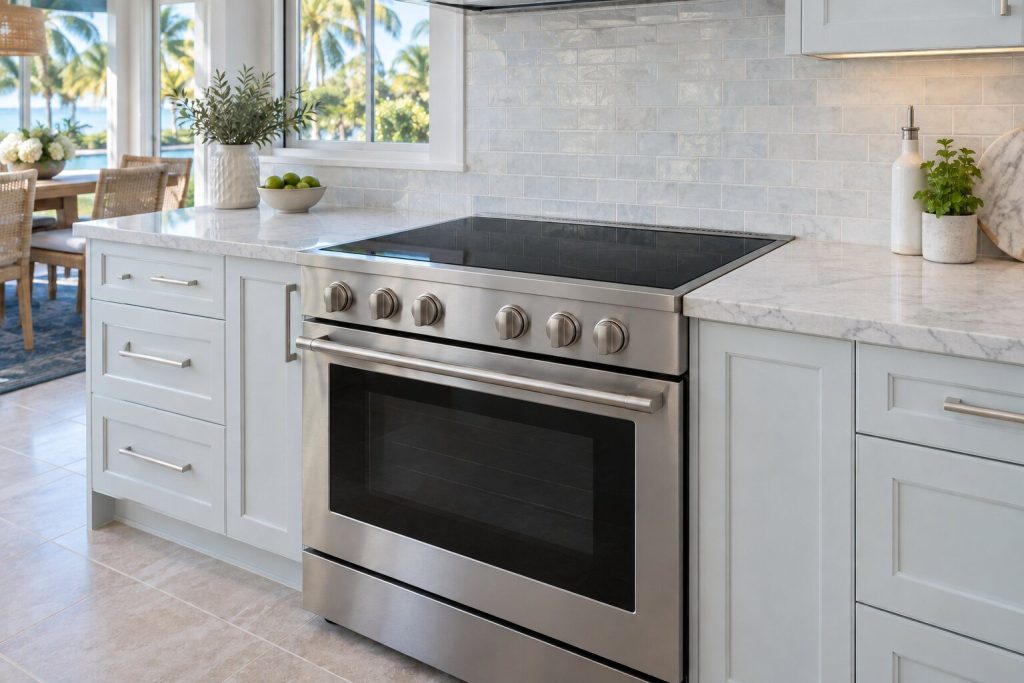
Six ranges, at 30 and 36 inches, in three fuels: induction, dual-fuel and front-control gas. There is no electric coil range and no plain radiant range in this line at all — which is precisely the machine that fills the rental kitchens its sister badge sells into. A 36-inch range is a deliberate purchase and usually the center of the room, and that shows in how these calls come in: people describe what the range was doing when it stopped, not just that it stopped. Almost every published range code on this badge is a name plus a power cycle, so the honest page says that rather than inventing a checklist.
- Six ranges — induction, dual-fuel and gas, at 30 and 36 inches
- No electric coil and no plain radiant range is built on this badge
- Most published range codes are a name and a thirty-second power cycle

Questions people ask about this
Why thirty seconds rather than switching it off and on?
The control holds enough charge to carry its own state across a short interruption, so a quick flick appears to do nothing and proves nothing. Thirty seconds is the figure this maker publishes, and on the oven's demo mode it asks for forty-five.
The code came straight back. What does that mean?
That there is a part behind it rather than a passing condition. That is useful information and it is the point at which to book rather than to keep trying. Note the date each time — a code that arrives weekly and one that arrives twice a year are different conversations.
Is there a reset that does not involve the breaker?
On the cooktop lock, yes: press and hold OFF for a full six seconds. Most people let go at three. A locked cooktop and a dead cooktop look identical from across a kitchen, and one of them costs nothing.
Troubleshooting
More guides like this one
-
It Looks Like One Appliance. It Is Two
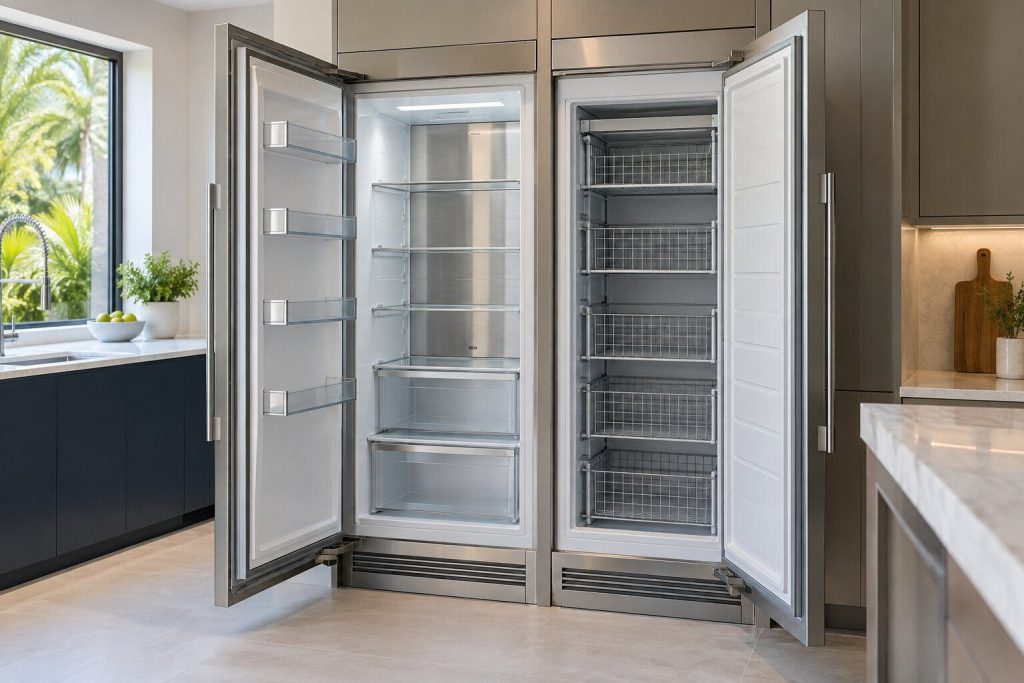
The 33-inch refrigerator and freezer columns share a trim kit and a grille and nothing else. Two sealed systems, two controls, and model numbers that differ by a single letter.
Read more -
Your Refrigerator Kept a Number for You. Read It Before You Clear It
Clearing the alert once shows the highest temperature the cabinet reached. Clearing it a second time deletes that number, and it is the one that decides what happens to the food.
Read more -
The Panel Lights Up and Ignores You. Check the Lock First
A washer showing LOC and a cooktop showing a dash are the same thing: a deliberate feature that reads as a dead appliance from six feet away. Thirty seconds of looking ends a lot of these.
Read more
Tell us the model number and what it is doing.
This article is based on:
- Official manufacturer documentation
- Internal repair procedures
- Technician repair history
- Company quality standards