Troubleshooting
Your Refrigerator Kept a Number for You. Read It Before You Clear It
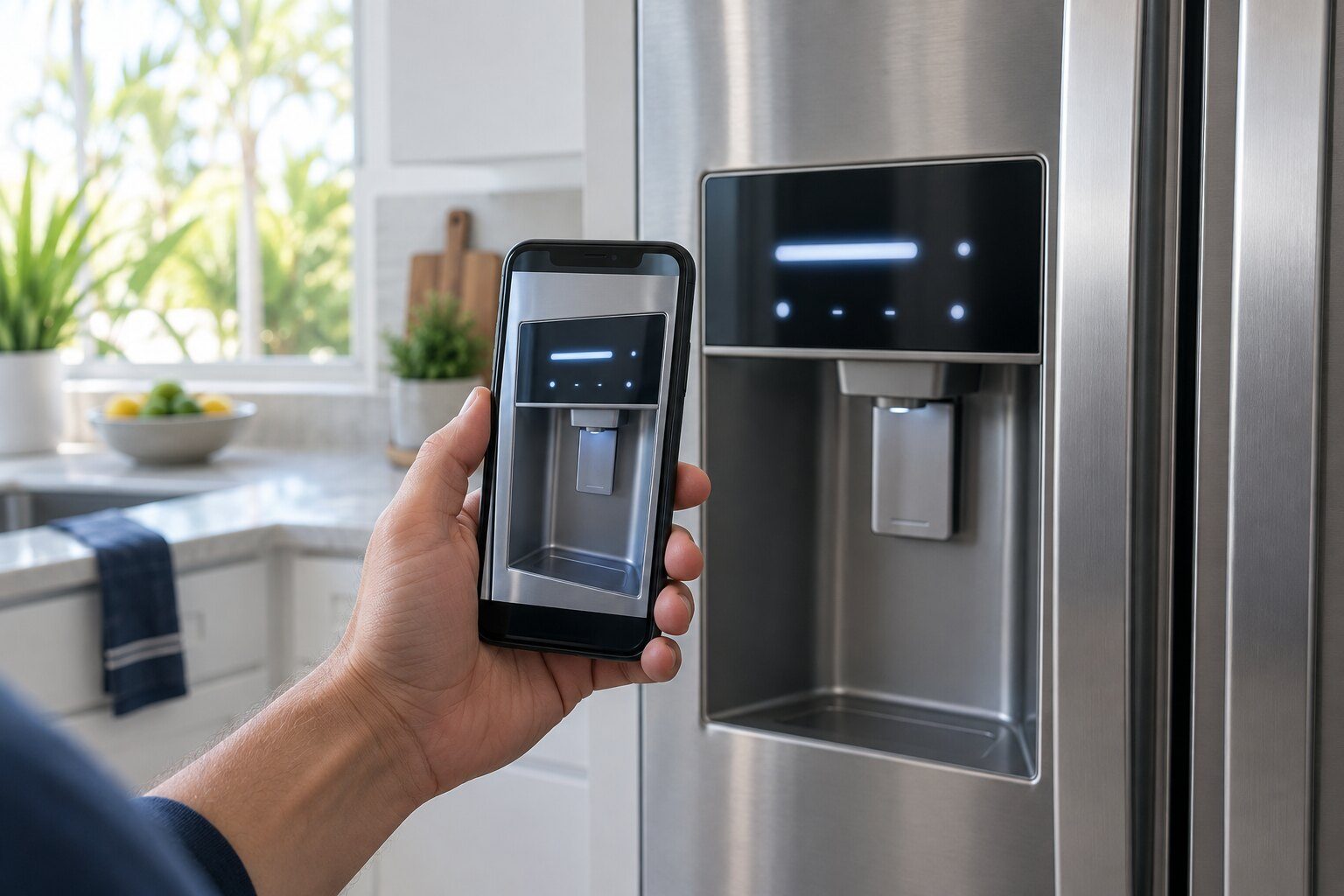
An Electrolux refrigerator high temp alarm sounds roughly once a minute and lights an indicator beside the clear-alerts button. Press CLEAR ALERTS once and the display shows the highest temperature the cabinet actually reached — and that single number, not the temperature now, is what decides whether the food is safe. A second press throws it away permanently. The maker's own list of causes starts with a door left open for a long period, moves to settings that were adjusted, and ends at a gasket no longer sealing; in this climate the gasket is the one we find. Recommended settings are 37°F for the fresh-food compartment and 0°F for the freezer.
The full guide
An Electrolux refrigerator high temp alarm is one of the few things in a kitchen that records evidence for you, and almost nobody knows it.
What it is doing
The cabinet has been warmer than it should be for long enough to say so. An indicator lights beside the clear-alerts button and a tone sounds about once a minute until somebody acknowledges it.
The tone is the part people react to. The useful part is the other one.
Press it once, and write down what it shows
When you acknowledge the alarm, the display shows the highest temperature the cabinet actually reached. Not the temperature now — the peak, while you were out.
That is the number that answers the only question that matters after an outage or an open door: whether the food is safe. A cabinet that touched 48°F for two hours and one that sat at 60°F overnight look completely identical when you open the door in the morning, and the thermometer on the shelf will tell you nothing about either.
Press clear a second time and that number is gone. There is no history screen and no way to ask for it again.
So: press once, photograph the display, and then deal with the rest.
The maker's own list of causes
Published, in this order.
A door left open. The commonest, and on a counter-depth cabinet in a fitted run it takes less than people expect — a drawer pushed out too far, a carton on a shelf, a bag of something leaning against the liner.
Settings that were adjusted. The recommended pair is 37°F for the fresh-food compartment and 0°F for the freezer. Somebody nudging a control while wiping the panel is a real and free cause.
A seal that is no longer sealing. This is the one we find most in South Florida. On this badge the doors are heavy — a 33-inch column door frequently carries a trim panel — and years of that weight take the door fractionally out of square before the rubber is worn out at all. Humid air entering all day past a tired gasket makes the cabinet run continuously and lose ground anyway.
One thing that surprises people
In Sabbath mode, the lights, the dispenser and the control panel all stop responding — and the high-temperature alarm stays active, deliberately, for health reasons. A cabinet that appears half dead and still alarms is behaving exactly as it was designed to. The mode also survives a power cut, which is why a refrigerator that comes back from a storm still dark and silent is very often this rather than a failure.
If it is genuinely not holding
Then the alarm has done its job and the diagnosis moves on. Which compartment is wrong is the next question and it is worth answering before anybody is dispatched: one warm side over a cold one points at the air path — a fan, a damper, a duct closed up with ice — while both drifting together points at the condenser or the sealed system.
Those are two different visits. On a cabinet that has to be drawn out of an opening it was scribed into, getting that right the first time is the difference between one appointment and two.
If it turns out to be a repair
What this leads to, and what it costs
Every job on this site is priced the same way: an on-site diagnostic first, the figure agreed in writing before anybody starts.
-
A tone every minute and HI on the display High-temperature alarm
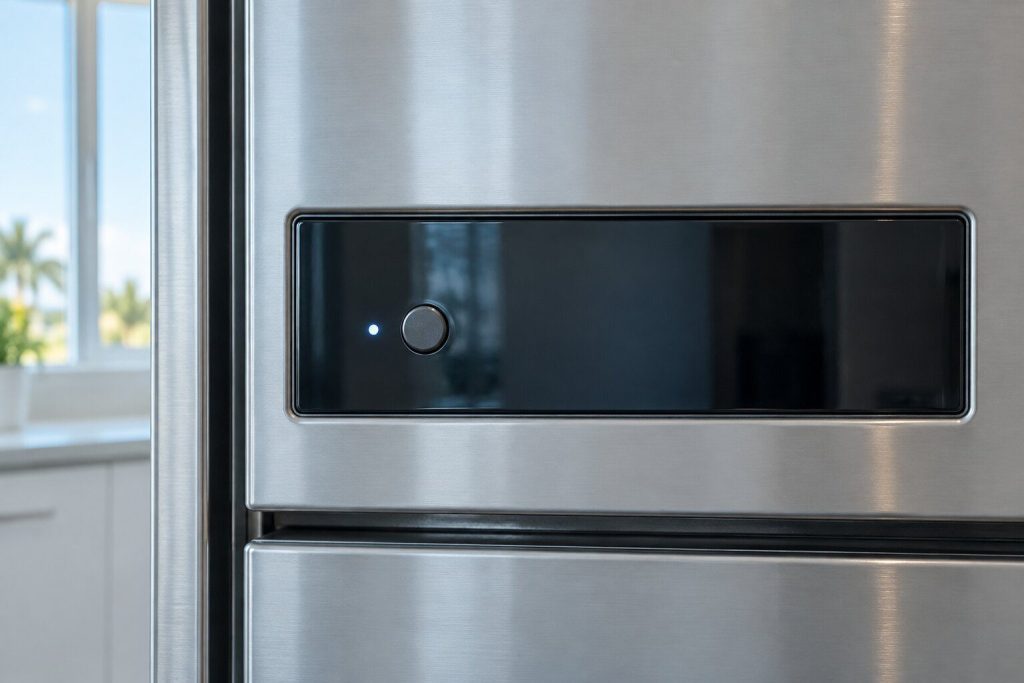
This maker's cabinets announce a warm cabinet rather than leaving you to discover it, and they sound once a minute until acknowledged. The detail almost nobody knows is the useful one: when you clear the alert, the display shows the highest temperature the cabinet actually reached. That single number answers the only question that matters after a power cut — whether the food is safe — and it is gone the second time you press clear.
- Clear it once and write down the peak it shows you
- The maker's own causes start at a door left open and end at a gasket
- In this climate the gasket is the one we find most
-
Counter-depth French door · 33-inch columns Refrigerators
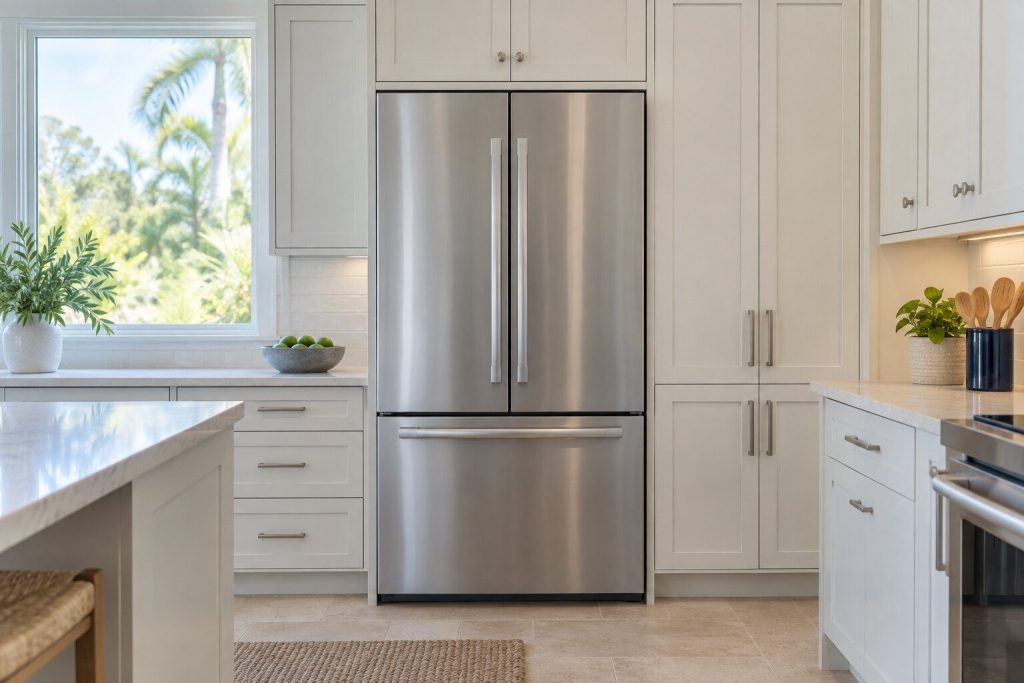
Six cabinets in the whole current line, and every French door among them is counter-depth — three of them, at 21 and 23 cubic feet. There is no standard-depth box here, no side-by-side and no top-freezer; the deep end of this line is a pair of 33-inch columns, one refrigerator and one freezer, sold with trim kits so they read as cabinetry. That is a refrigerator somebody drew into a plan, and it changes the work: the cabinet is tight in its surround, the water line runs where the joiner left it, and getting the unit out is half the visit before anything is diagnosed.
- Six cabinets total — three counter-depth French doors and a 33-inch column pair
- Counter-depth means a tight surround: access is part of every job here
- TasteLock Plus crispers and the TempAdapt drawer are the parts people call about
Questions people ask about this
The alarm went quiet by itself. Is it over?
On some models the audible part silences after a while and the indicator stays lit. That is normal and it does not mean the condition went away. The indicator is the part to look at.
There was a power cut. What do I actually do?
Clear the alert once, photograph the peak it shows, and judge the food on that figure. If the peak stayed under 40°F and the outage was short, the cabinet did its job. Above that, and for how long, is the question worth answering properly.
It keeps coming back with the doors shut.
Then the cabinet is genuinely not holding and the alarm is doing exactly what it exists for. Run a hand round the seals first — in this climate a gasket that never fully dries is the ordinary cause — and check the grille is not blocked.
Troubleshooting
More guides like this one
-
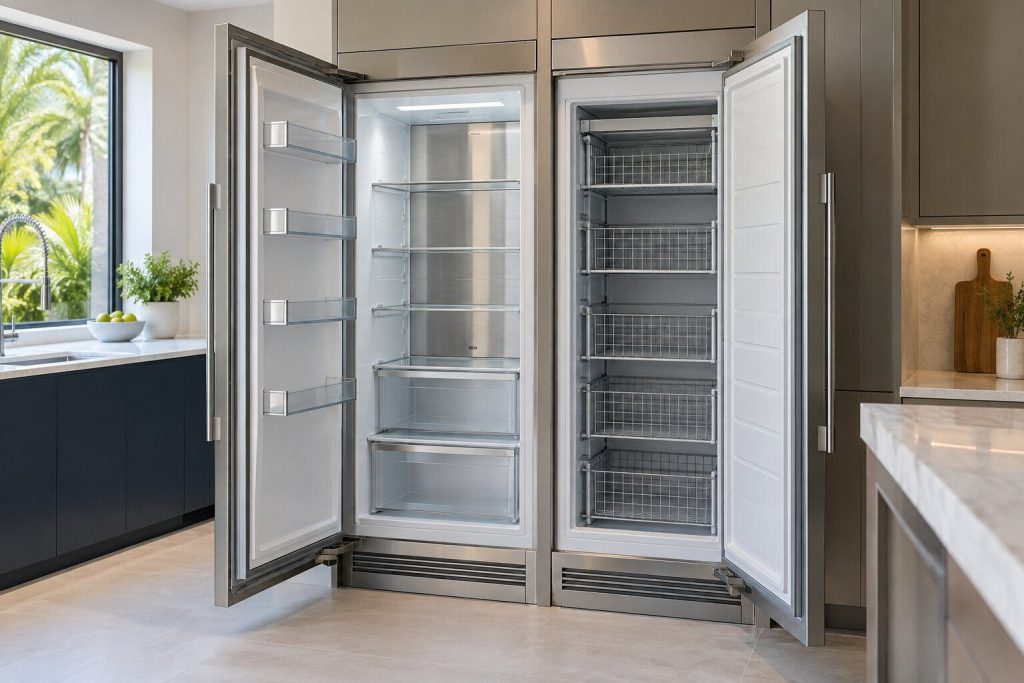
It Looks Like One Appliance. It Is Two
The 33-inch refrigerator and freezer columns share a trim kit and a grille and nothing else. Two sealed systems, two controls, and model numbers that differ by a single letter.
Read more -
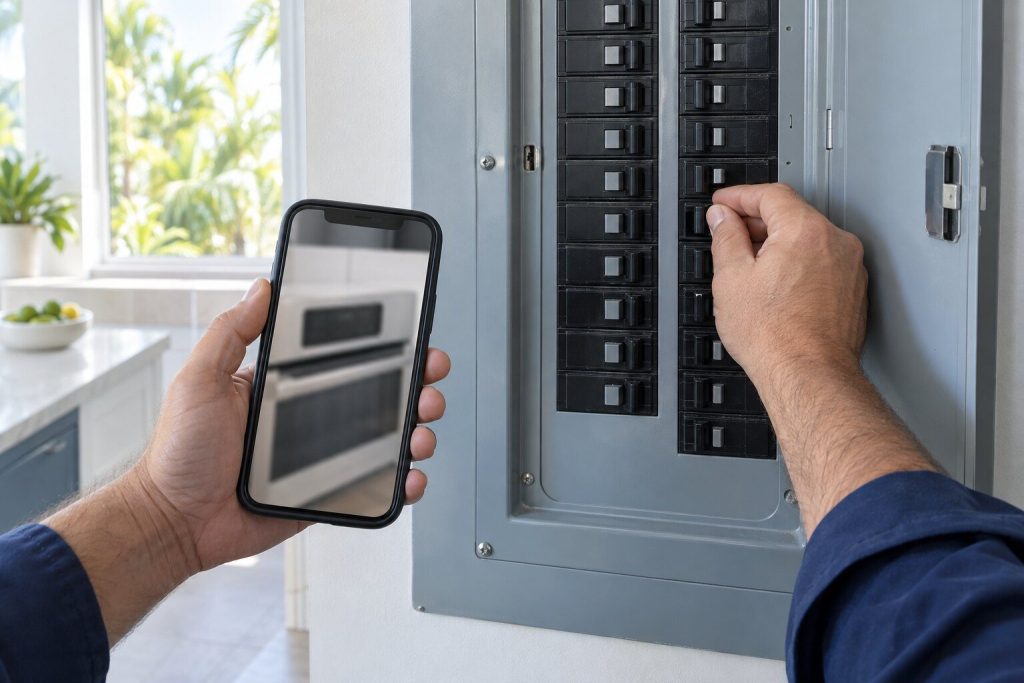
Resetting an Electrolux Range, and What the Reset Actually Proves
Most of this maker's range codes are published as a name and thirty seconds at the breaker. The reset is usually right. Doing it before you have written the code down is not.
Read more -
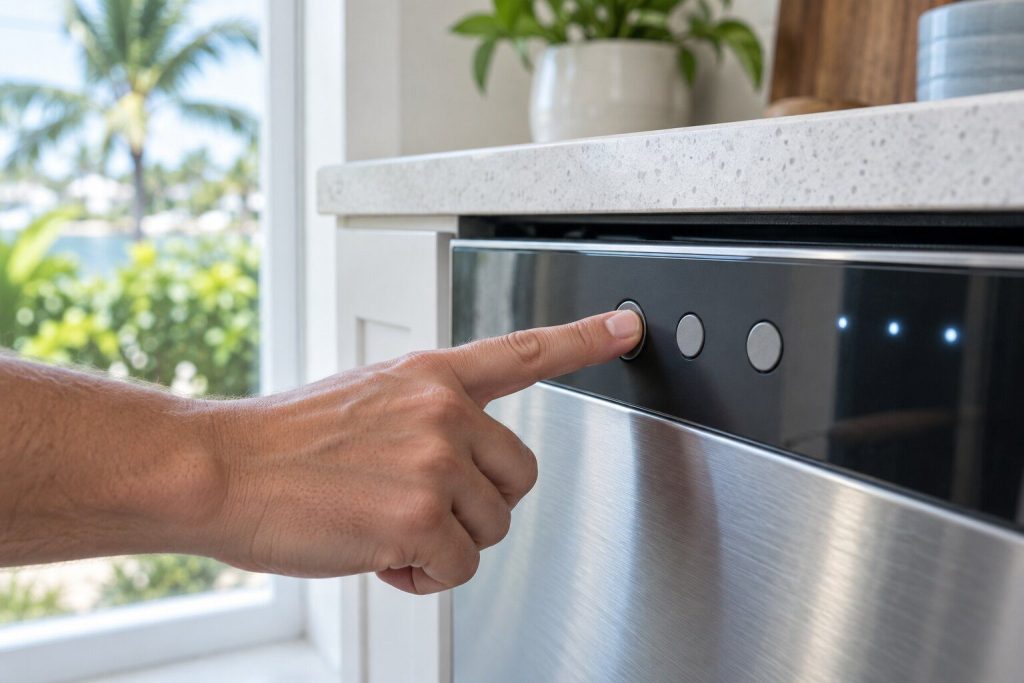
The Panel Lights Up and Ignores You. Check the Lock First
A washer showing LOC and a cooktop showing a dash are the same thing: a deliberate feature that reads as a dead appliance from six feet away. Thirty seconds of looking ends a lot of these.
Read more
Tell us the model number and what it is doing.
This article is based on:
- Official manufacturer documentation
- Internal repair procedures
- Technician repair history
- Company quality standards