Safety & Risks
Four Signs to Stop Using an Appliance Today
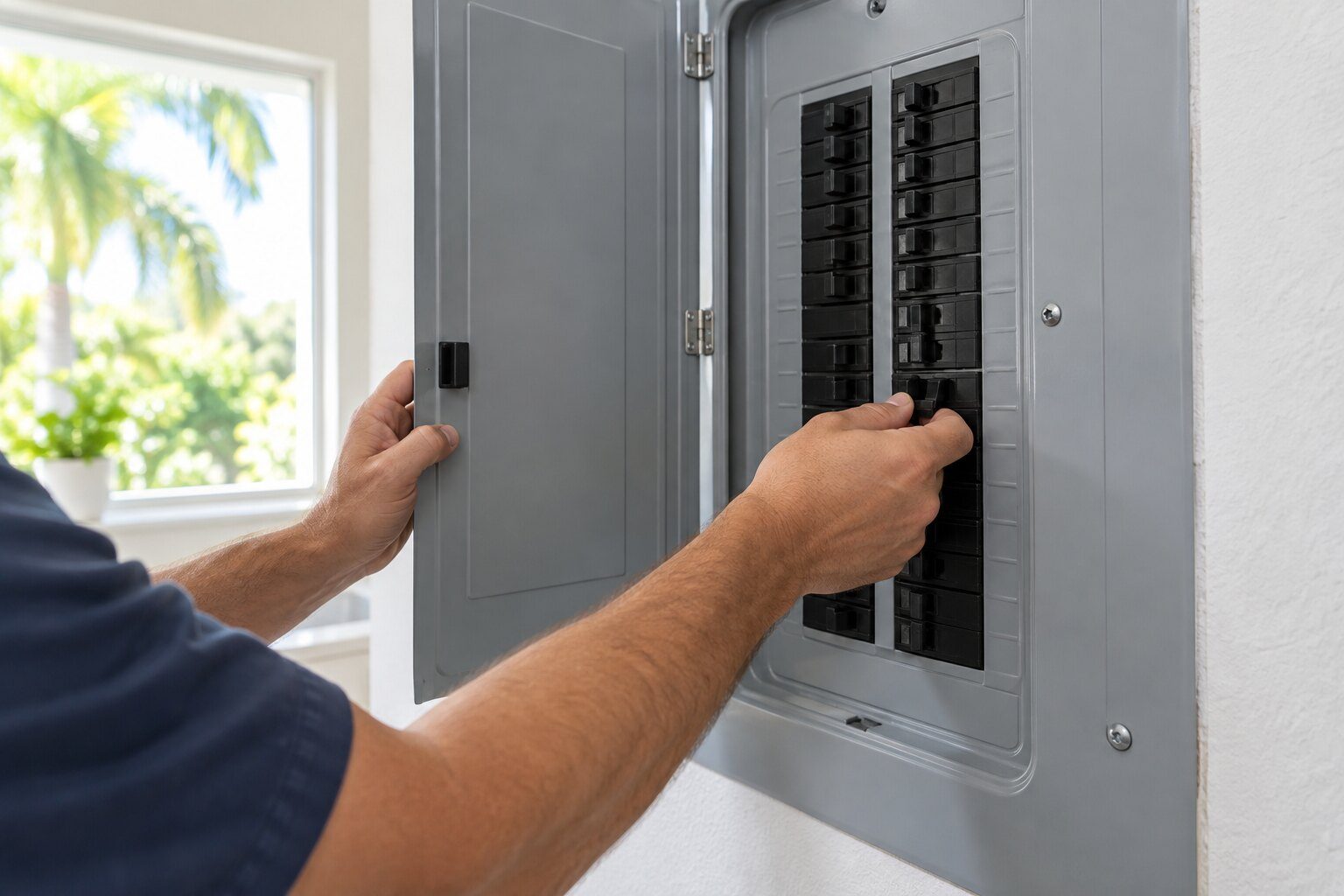
If an Electrolux appliance smells like burning, stop using it and isolate it before working out why — the order is the safety content. Four things move an appliance from a booking next week to switching it off now: a smell of burning insulation or hot plastic that is not food; a breaker that trips repeatedly on the same circuit; heat, discoloration or a scorch mark at the plug or outlet; and a microwave running with a damaged or misaligned door. Resetting a breaker to make an appliance run again is the single response that turns a protected situation into an unprotected one — the breaker is the part of the installation that is working, and overriding it removes the protection rather than the problem.
The full guide
Almost everything on this site is about cost and inconvenience. This page is not.
One: a burning smell that is not food
Hot plastic, scorched insulation, an acrid electrical smell. Not a spill on an oven floor and not a new appliance burning off manufacturing residue in its first few cycles — those both stop.
What matters is a smell that arrives on an appliance that has been fine for years, or one that comes back.
Isolate it first, then work out why. Switch it off at the breaker rather than at the appliance, and leave it off. The question of what caused it keeps perfectly well until the unit is cold.
Two: a breaker that trips repeatedly
Once can be a coincidence. Twice on the same circuit is information.
A breaker is the part of your installation that is working. It has detected a current it does not like and interrupted it, which is its entire job.
Resetting it to make the appliance run again is the one response on this page that actively makes things worse: it removes the protection rather than the problem, and it does so on a circuit that has already told you twice.
Note what the appliance was doing each time — filling, heating, spinning, mid-cycle — and tell us. That timing narrows the problem more than the trip itself does.
Three: heat or marking at the plug
Put a hand near — not on — the plug and the outlet after the appliance has been running.
Warm is not necessarily wrong on a heavy load. Hot is. So is discoloration around the pins, a brown halo on the faceplate, or a smell at the outlet rather than at the machine.
On a 240-volt appliance this matters more, and it is also the one on this list that is most often outside the appliance entirely. This maker publishes two dryer codes — H4/B4 for incorrect wiring and H2/B2 for a supply problem — that point exactly here, and both send you to an electrician rather than to us. If that is what we find, we say so.
Four: a microwave with a damaged door
Cracked, bent, or no longer closing square.
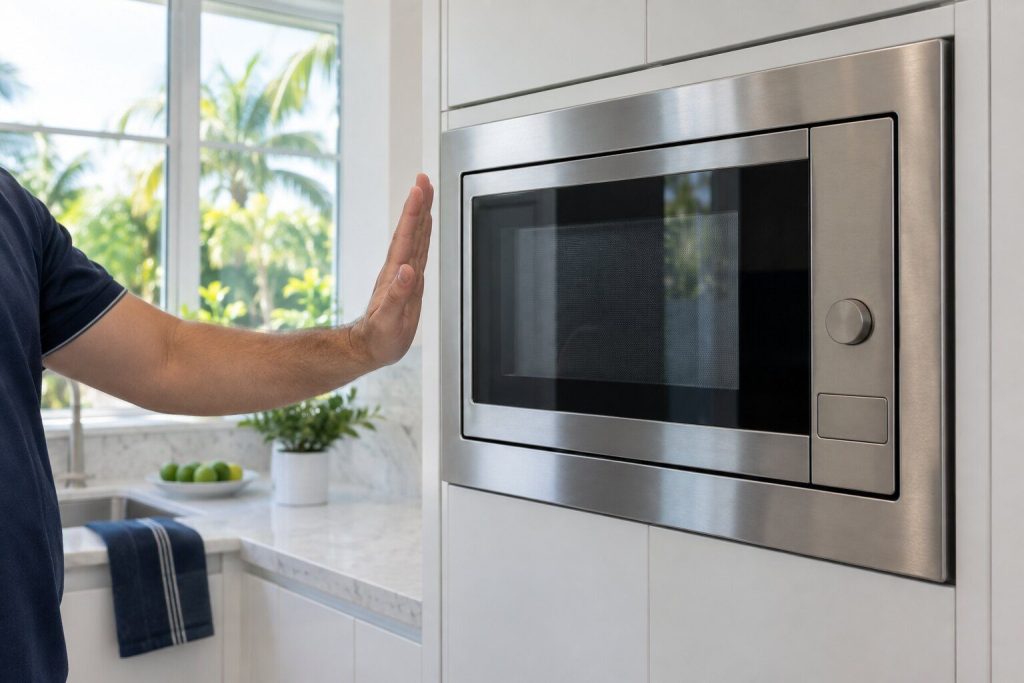
The door is what contains the field. Three interlock switches live in it and they are what allow the unit to run at all. A door that has dropped on its hinges is usually a microwave that will not start — but the condition worth stopping for is one that still runs while not closing as it should.
Unplug it. This is the one appliance where the correct response is out of service today, not at the weekend.
What is not on this list
A noise. A cycle that takes too long. A code on a display. Water under a machine, unless it is reaching an outlet.
All of those are worth attending to and none of them is a reason to stop using the appliance this afternoon. The four above are, and the distinction is worth keeping clear — a page that treated everything as urgent would make the genuinely urgent things invisible.
If it turns out to be a repair
What this leads to, and what it costs
Every job on this site is priced the same way: an on-site diagnostic first, the figure agreed in writing before anybody starts.
-
from $245 Control board repair
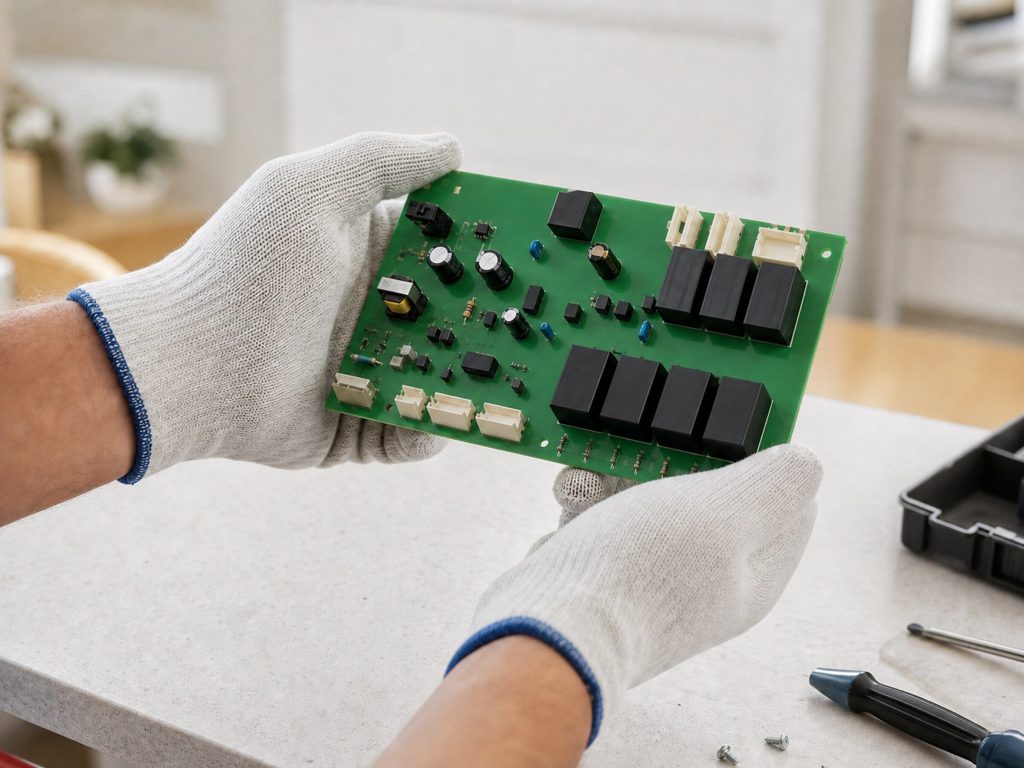
When the board is genuinely the answer — and it is worth saying that it often is not. A great many appliances condemned as "a board problem" have a sensor lying to a board that is working perfectly. This maker helps here more than most: F12, F13 and the F3/F20/F26 family are published as board-level conditions by name, so when one of them is on the display the diagnosis has a document behind it rather than an assumption.
- Named board conditions — F12, F13 and the communication family
- Most "board problems" are a sensor telling a healthy board something false
- Connectors and harnesses checked before anything is ordered
-
from $119 Dryer vent cleaning
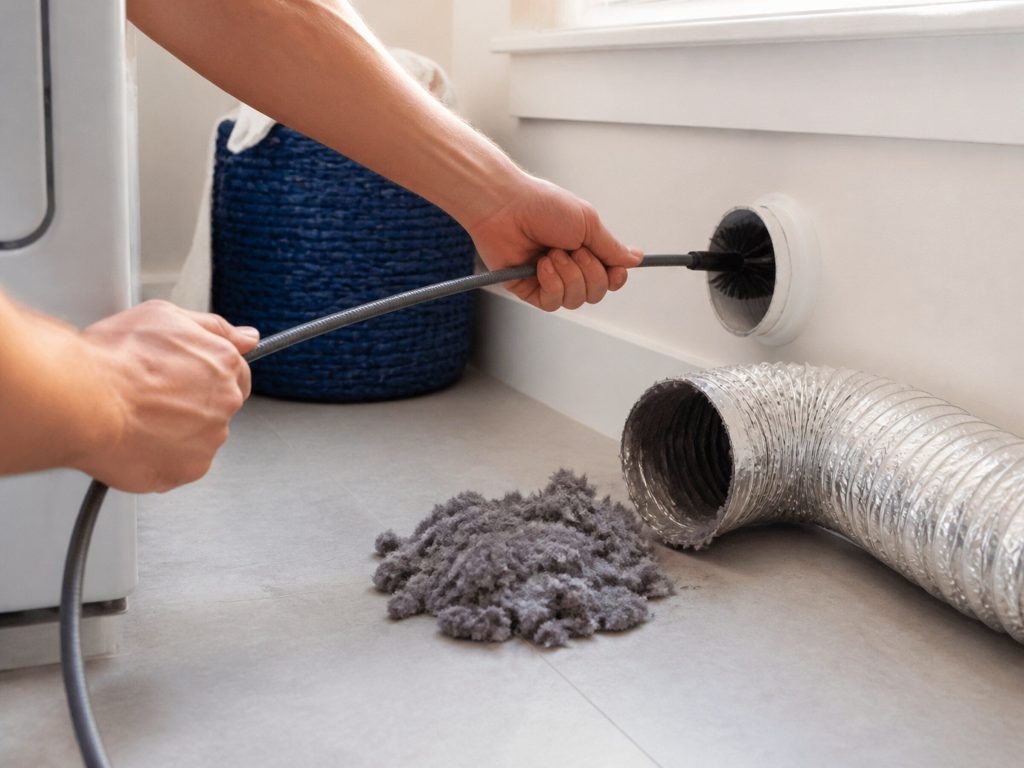
The item on this site where doing nothing is genuinely unsafe. This maker publishes a code for it — EF1, ventilation blockage — and sends it back to the installer rather than to service, which in a South Florida building is fairer than it sounds: the run goes up through a wall to a roof or a soffit, it is long, it has elbows, and the part that blocks is the end nobody can see. A dryer needing two runs for one load has been telling you this for months.
- EF1 is the maker's own code, and the whole solution is the duct
- In a condominium the run is vertical, long, and invisible to the owner
- A fire risk before it is a repair — this is not one to defer

Questions people ask about this
A new oven smells during its first uses. Is that this?
No. A new oven burning off manufacturing residue smells acrid for the first few hot cycles and then stops. What this page is about is a smell that arrives on an appliance that has been fine for years, or one that returns.
The breaker only trips sometimes.
Intermittent is still repeatedly. A breaker that has tripped more than once on the same circuit is reporting something, and the useful information is what the appliance was doing each time.
I can smell gas.
That is not this page. Turn the supply off at the valve if you can reach it safely, open a window, do not operate any switch, leave, and call the utility's emergency line first.
Safety & Risks
More guides like this one
-
The One Appliance We Ask You Not to Open
Unplugging it does not make the inside safe and neither does waiting overnight. Everything you can usefully observe is outside the cabinet.
Read more -
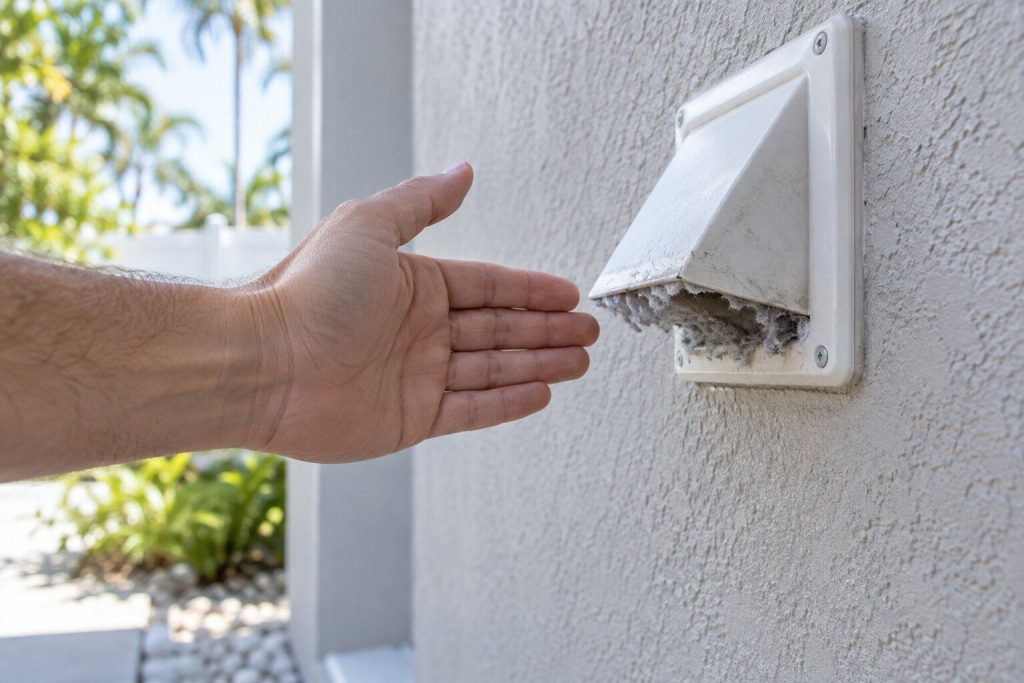
A Blocked Dryer Vent Is a Fire Before It Is a Repair
This maker publishes a code whose entire solution is the duct, and sends it to the installer. In a condominium the run is long, vertical and invisible to the resident.
Read more -
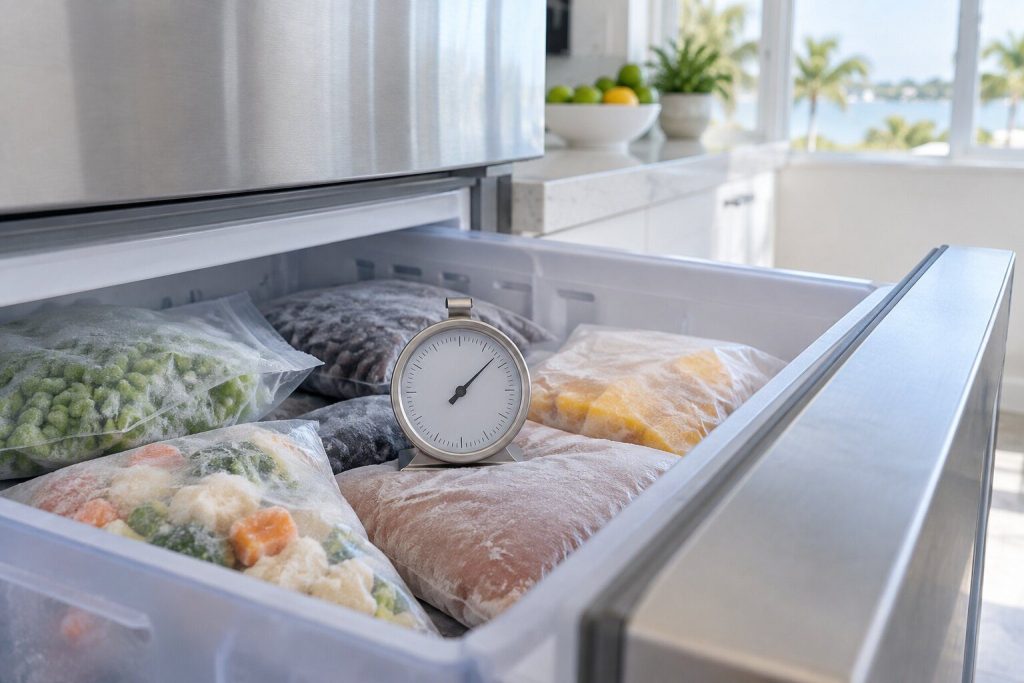
How Long the Food Is Safe After an Outage
USDA thresholds, and every one of them assumes the door stays shut. On this badge the cabinet also kept the peak temperature for you — read it once, before you clear it twice.
Read more
Tell us the model number and what it is doing.
This article is based on:
- Official manufacturer documentation
- Internal repair procedures
- Technician repair history
- Company quality standards