Safety & Risks
A Blocked Dryer Vent Is a Fire Before It Is a Repair
Electrolux dryer vent cleaning is the one maintenance item on this site where deferring it is genuinely unsafe rather than merely expensive. The manufacturer publishes an error code for it — EF1, ventilation blockage — and its documented solution is entirely the duct: the lint filter, the exhaust tube, the vent exit, and then a note sending the owner back to the installer. In a South Florida condominium that run typically goes up through a wall to a roof or a soffit, it is long, it has elbows, and the section that blocks is the end no resident can reach. A dryer running against a restricted duct runs its heater far longer per load than the design assumed, with lint accumulating in the restricted part — which is the documented mechanism of a dryer fire.
The full guide
Electrolux dryer vent cleaning is the only page on this site where the honest advice is not about money.
The manufacturer treats it differently, and that is the tell
Most error codes on most appliances point inward — at a part, a board, a sensor. EF1 does not. Its published solution is: check the lint filter, check the exhaust tube for bends and restrictions and blocks, check the vent exit, clear any debris. And then, unusually, *this is a known installation issue, please contact your installer.*
A manufacturer sending a code back to whoever fitted the machine is a manufacturer telling you the problem is not in the appliance.
What a restricted duct actually does
A dryer works by moving heated air through the drum and out. Restrict the out and three things happen at once.
The load takes longer, so the heater runs for far more minutes per load than the design assumed. The air in the drum runs hotter, because the same heat is going into less airflow. And lint that should have left the machine accumulates in the restricted section — which is warm, enclosed, and full of exactly the material that catches.
That combination is the documented mechanism of a dryer fire. It is not a dramatic claim; it is why the thermal fuse exists.
Which is why a blown fuse is a message
A thermal fuse opens because the machine got hotter than it should. Replacing it and leaving the duct blocked simply blows the next one — and every replacement buys a few more weeks of the condition that caused it.
If a fuse has gone twice, the duct is the repair and the fuse is a symptom.
The condominium problem
In a house the run is often short, horizontal, and endable at a flap you can see from the garden.
In a tower it is not. It goes up through a wall to a roof or a soffit, it is long, it has elbows where lint accumulates fastest, and the resident has no access to any of it. The building does.
That is why our answer sometimes has to be that we have cleared what we can reach and the rest needs the building's own people — and why we put that in writing rather than saying it at the door. It is the only leverage a resident has.
What you can do this weekend
Hold the lint filter up to a light. If you cannot see through it clearly, softener has glazed it. Wash it in hot water with a little detergent.
Pull the machine out and look at the hose. Foil concertina crushed against a wall is extremely common and it leaves no mark.
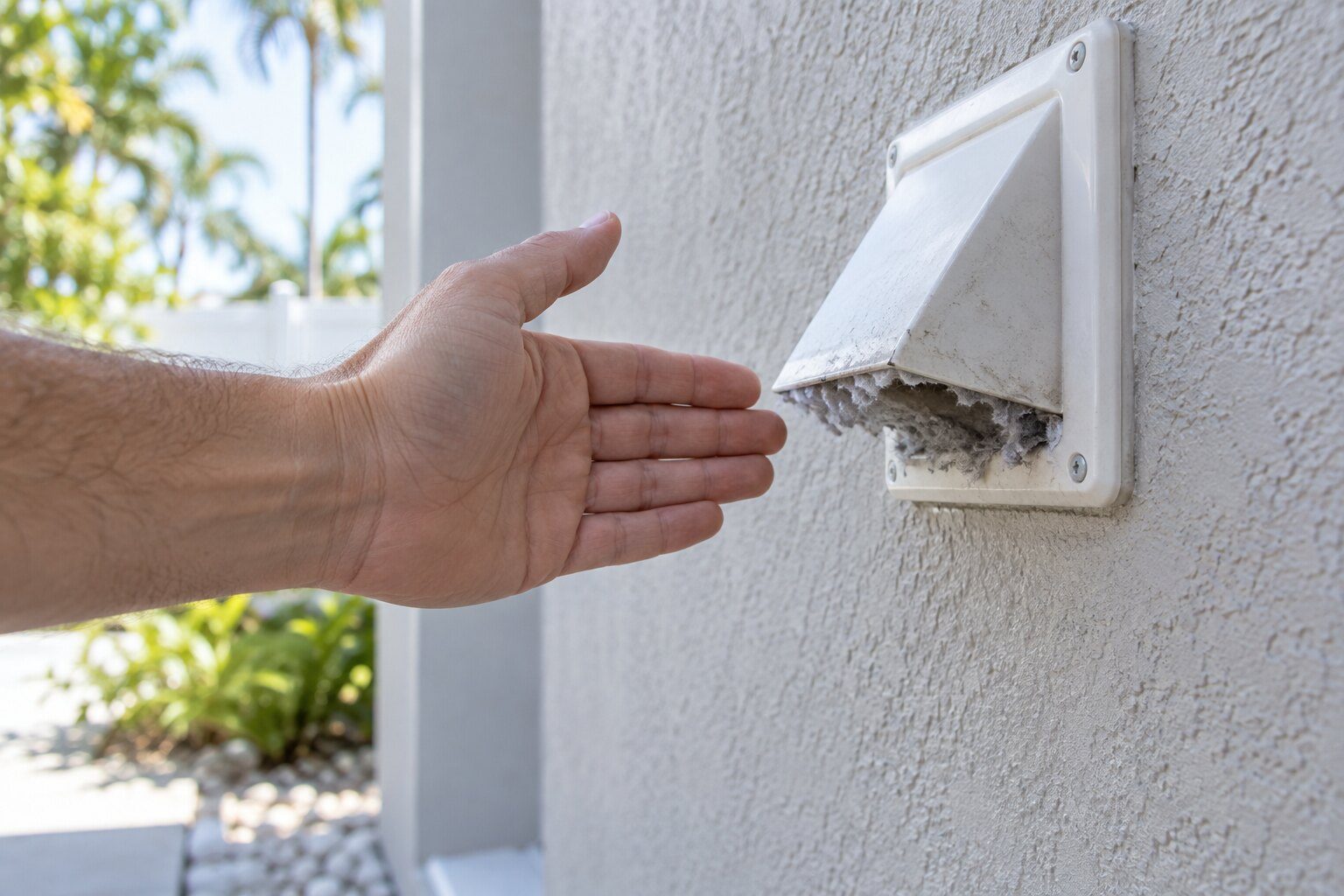
Run it on air-only and go outside. The flap at the vent exit should stand fully open with enough air behind it to feel on your hand. If it barely moves, the run is the problem and nothing inside the machine will fix it.
How often
Roughly every two years in this region, and sooner if the run is long or the household is large. The lint filter is every load, and it is not the same job — which is the confusion this page mainly exists to end.
If it turns out to be a repair
What this leads to, and what it costs
Every job on this site is priced the same way: an on-site diagnostic first, the figure agreed in writing before anybody starts.
-
Dryer vent cleaning
The item on this site where doing nothing is genuinely unsafe. This maker publishes a code for it — EF1, ventilation blockage — and sends it back to the installer rather than to service, which in a South Florida building is fairer than it sounds: the run goes up through a wall to a roof or a soffit, it is long, it has elbows, and the part that blocks is the end nobody can see. A dryer needing two runs for one load has been telling you this for months.
- EF1 is the maker's own code, and the whole solution is the duct
- In a condominium the run is vertical, long, and invisible to the owner
- A fire risk before it is a repair — this is not one to defer
-
Dryer error code EF1
Electrolux dryer error code EF1: The dryer has measured its own airflow and found it insufficient. Which machines can raise it, what the maker publishes about it, and what to do next.
What this one means
Questions people ask about this
The filter is clean and it still takes two cycles.
Hold the filter up to a light rather than looking at it in your hand — softener leaves a film that passes lint and blocks air. If you can see through it clearly, the restriction is further along the run.
Can I clean the run myself?
The first few feet, usually. A vertical run through a building, no — and that is not a sales answer, it is an access one. We clear what we can reach and put in writing what needs the building's own people.
My thermal fuse keeps blowing.
Then stop replacing it and clear the duct. The fuse is not failing; it is doing its job repeatedly, and each replacement buys a few more weeks of the same condition.
Safety & Risks
More guides like this one
-

The One Appliance We Ask You Not to Open
Unplugging it does not make the inside safe and neither does waiting overnight. Everything you can usefully observe is outside the cabinet.
Read more -
How Long the Food Is Safe After an Outage
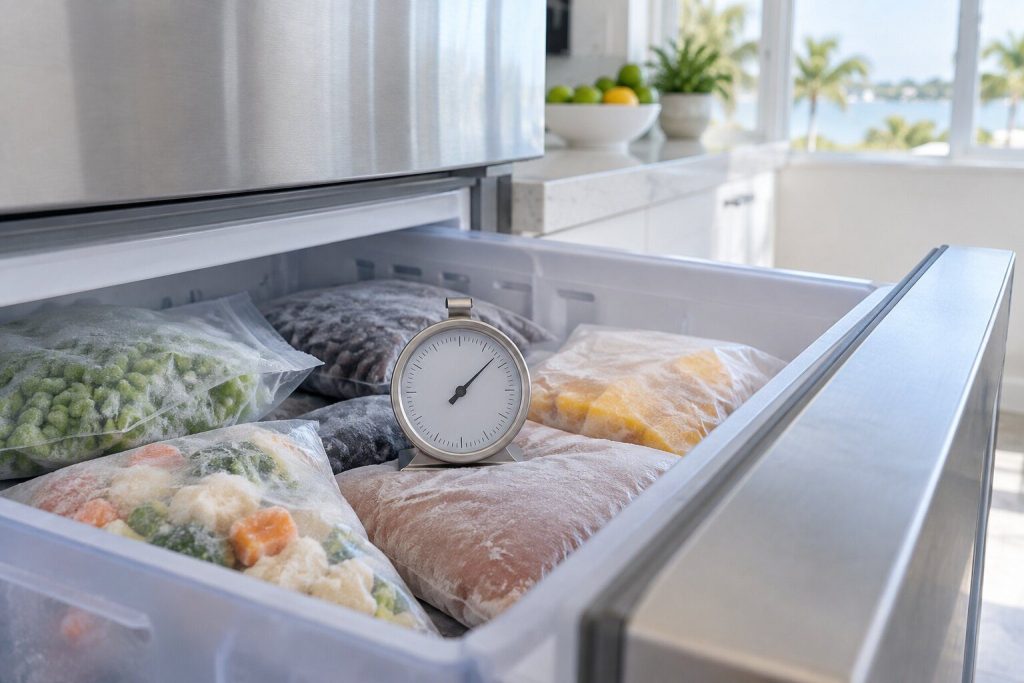
USDA thresholds, and every one of them assumes the door stays shut. On this badge the cabinet also kept the peak temperature for you — read it once, before you clear it twice.
Read more -
Four Signs to Stop Using an Appliance Today
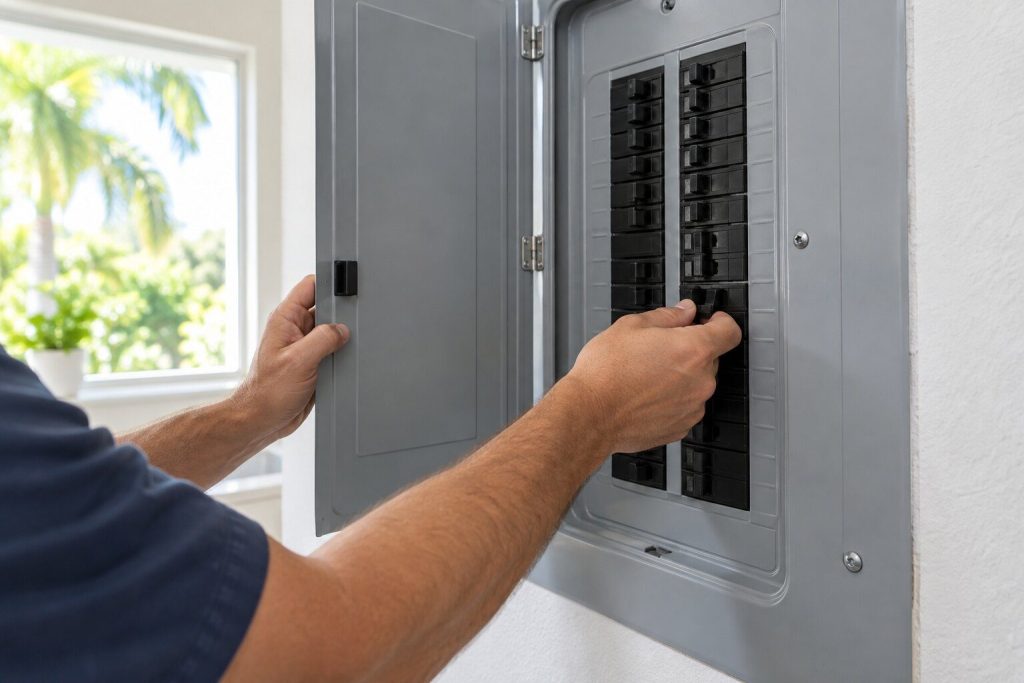
Resetting a breaker to make an appliance run again is the one response that turns a protected situation into an unprotected one.
Read more
Tell us the model number and what it is doing.
This article is based on:
- Official manufacturer documentation
- Internal repair procedures
- Technician repair history
- Company quality standards