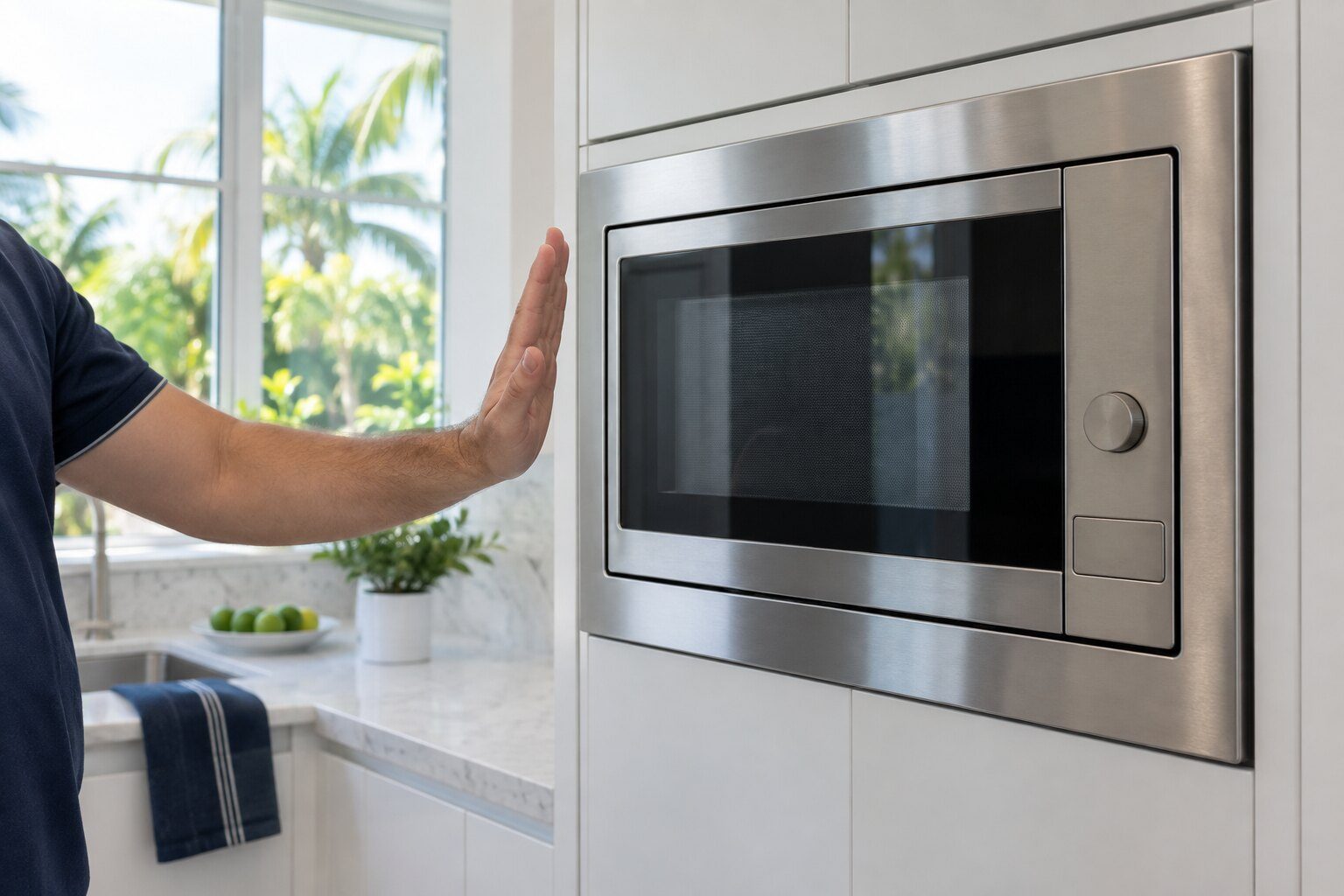
Safety & Risks
The One Appliance We Ask You Not to Open
An Electrolux microwave not heating while the turntable turns and the light comes on is the clearest diagnostic split in a kitchen: the low-voltage control side is alive and the high-voltage side is not. What sits on that high-voltage side is a magnetron, a diode and a capacitor, and the capacitor holds a charge capable of killing long after the unit has been unplugged — waiting overnight does not discharge it. This is the one appliance on this site we ask people not to open at all, and that is not caution for its own sake. What is safe and useful to check is all outside the cabinet: whether the door closes square, whether the grease filters are clogged on an over-the-range unit, and whether the damper opens when the fan runs.
The full guide
An Electrolux microwave not heating gives you the cleanest diagnosis available anywhere in a kitchen, and the least room to act on it yourself.
The split
Turntable turning, light on, fan running, display counting down — and nothing gets warm.
Everything in that list runs on a low-voltage control circuit that has nothing to do with cooking. It is alive. The part that cooks is a separate high-voltage section, and it is not.
That is a complete diagnosis in one observation, and it is worth making before you call: heat a cup of water for a minute and check whether it is even slightly warmer. No heat at all and weak heat are different problems.
Why we stop there
The high-voltage section contains a capacitor, and a capacitor stores energy after the power is removed.
Unplugging the appliance does not discharge it. Waiting overnight does not discharge it. There is no observable difference between one that has bled down and one that has not, and the charge is capable of stopping a heart.
This is not the usual caution attached to appliance advice. It is the one repair on this entire site that we will not walk anybody through, and we would rather say that plainly than write a step-by-step and add a warning nobody reads.
What is safe to look at
All of it is outside the cabinet.
Does the door close square? Three interlock switches have to agree before the unit will run at all, and a door that has dropped on its hinges is a common no-heat that has nothing to do with the magnetron. Look for a gap opening towards the top or the handle side.
On an over-the-range unit, the grease filters. They are the kitchen's ventilation as much as the microwave's, they load up within months in a kitchen that cooks, and almost nobody is told they exist.
And the damper. It should open when the fan runs. Stuck shut, it vents the whole kitchen back into the room, and the complaint is always that the fan has become weak.
Whether to repair it
On a built-in, usually yes — and that surprises people, because the instinct is formed by countertop microwaves, which are replaced for less than a service call.
This maker builds no countertop model. The line is two built-in units and one over-the-range, and a built-in has to match an opening and a trim kit from that list of three. "Just replace it" can mean re-cutting cabinetry, which changes the sum entirely.
And if the door is damaged
Unplug it and stop using it, regardless of whether it still heats.
The door is what contains the field. A door that is cracked, bent, or no longer closing square is the one condition on this page where the appliance should be out of service today rather than at the weekend.
If it turns out to be a repair
What this leads to, and what it costs
Every job on this site is priced the same way: an on-site diagnostic first, the figure agreed in writing before anybody starts.
-
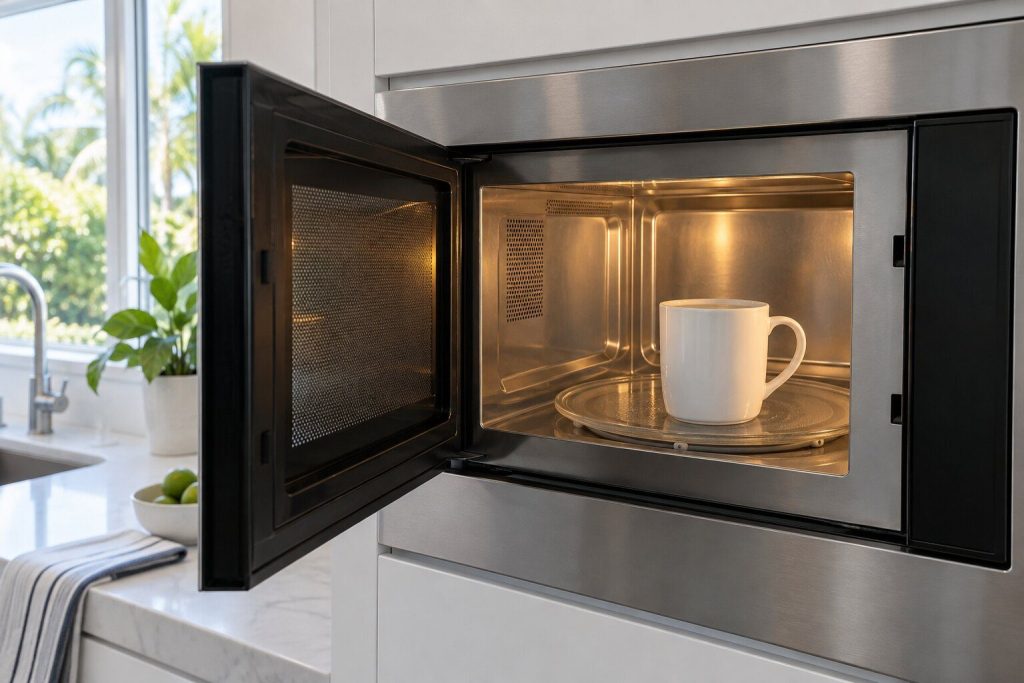
The turntable turns and nothing gets hot Microwave not heating
This is the clearest diagnostic split on any appliance in the kitchen: the low-voltage side is alive and the high-voltage side is not. Lights, turntable, fan and display all run on a control circuit that has nothing to do with cooking. It is also the one appliance on this site we ask people not to open at all — the high-voltage capacitor holds a charge that can kill long after the unit has been unplugged.
- Turntable turning with no heat splits the machine cleanly in two
- Never open one — the capacitor holds a lethal charge after unplugging
- On a built-in, repair is usually right because replacement means the opening
-
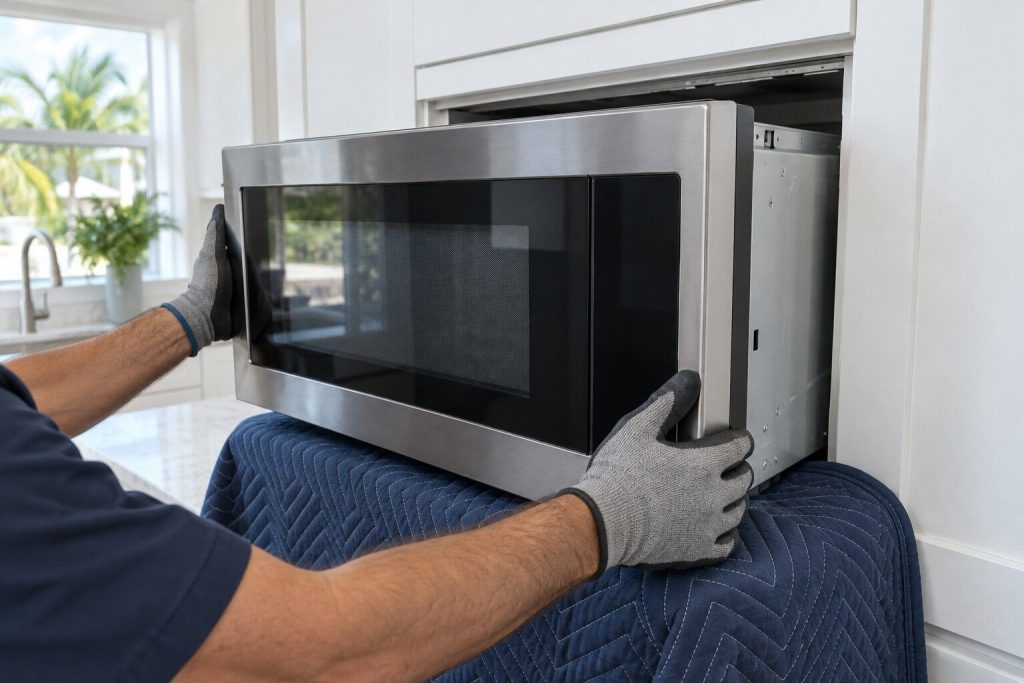
from $185 Built-in microwave repair
This maker builds no countertop microwave — the three it sells are two built-in units and an over-the-range convection model — and that changes the whole economics. A countertop box is replaced for less than a service call; a built-in has to match an opening and a trim kit, and the current line has exactly three models. It is also the one appliance on this site we ask you not to open: the high-voltage capacitor holds a lethal charge long after the unit is unplugged.
- No countertop model on this badge — every one of these is fitted in
- Replacing a built-in can mean re-cutting cabinetry, so repair is usually right
- Never open one: the capacitor holds a charge after unplugging
Questions people ask about this
Can I buy the magnetron and fit it myself?
Please do not. The capacitor in these has killed people who knew what they were doing. It is the one repair on this entire site we will not talk anybody through, and that is a deliberate line rather than a liability sentence.
Is it dangerous to leave it?
A microwave that does not heat is safe left unplugged. A microwave that runs with a damaged or misaligned door should be unplugged and left alone — that one is not about the repair.
Is it worth repairing at all?
On a built-in, usually yes. This maker builds no countertop microwave; every one it sells goes into an opening or over a range, so replacing means matching that opening from a line of three models.
Safety & Risks
More guides like this one
-
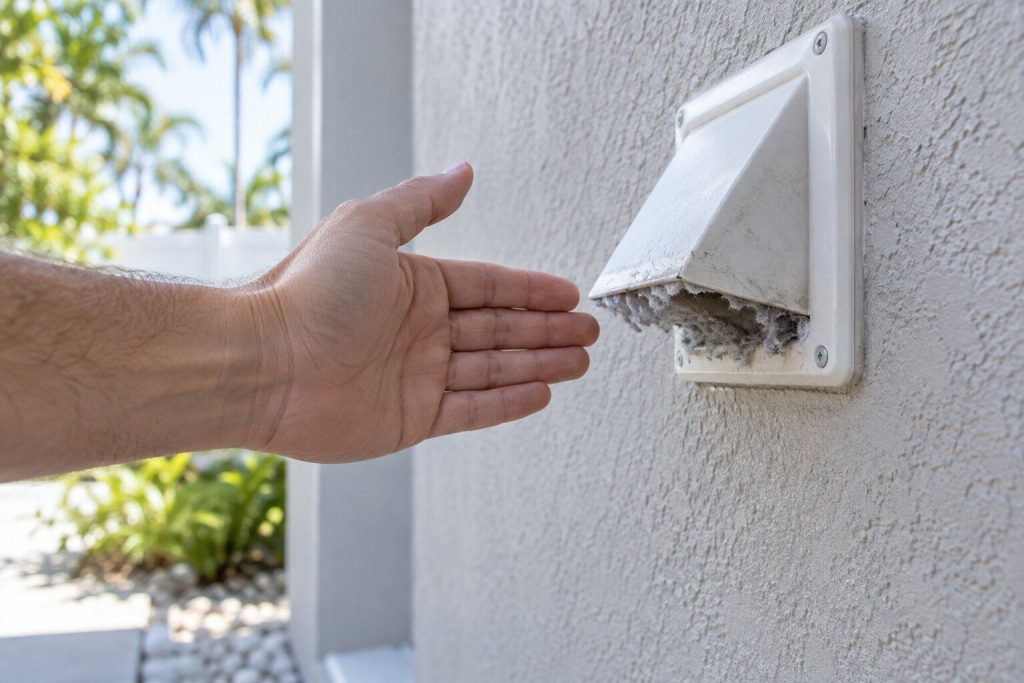
A Blocked Dryer Vent Is a Fire Before It Is a Repair
This maker publishes a code whose entire solution is the duct, and sends it to the installer. In a condominium the run is long, vertical and invisible to the resident.
Read more -
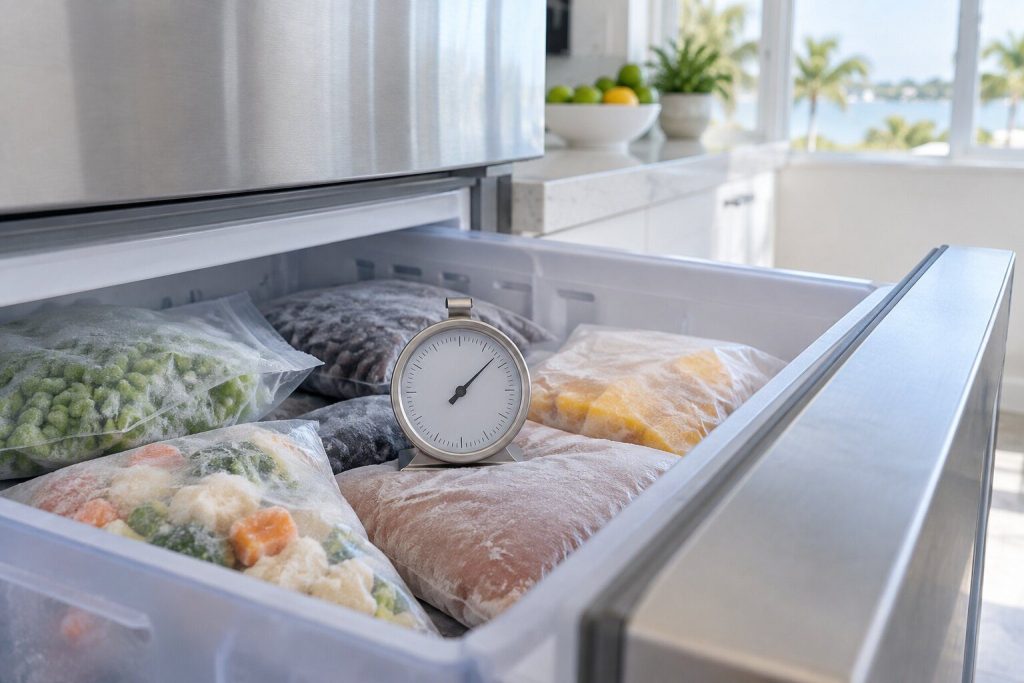
How Long the Food Is Safe After an Outage
USDA thresholds, and every one of them assumes the door stays shut. On this badge the cabinet also kept the peak temperature for you — read it once, before you clear it twice.
Read more -
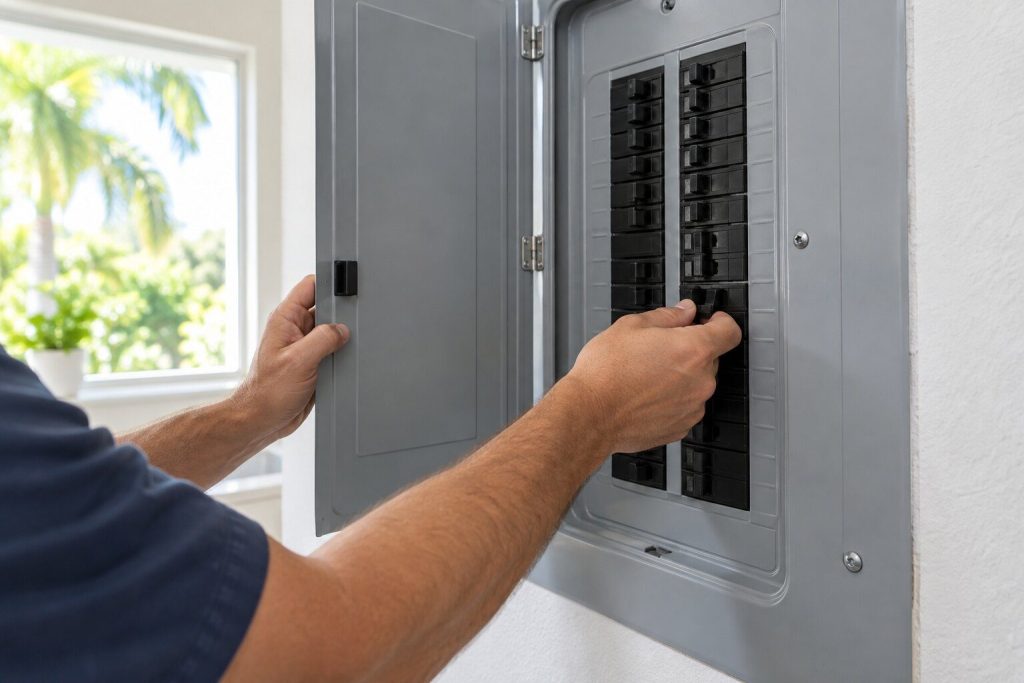
Four Signs to Stop Using an Appliance Today
Resetting a breaker to make an appliance run again is the one response that turns a protected situation into an unprotected one.
Read more
Tell us the model number and what it is doing.
This article is based on:
- Official manufacturer documentation
- Internal repair procedures
- Technician repair history
- Company quality standards