Appliance
Electrolux dishwashers
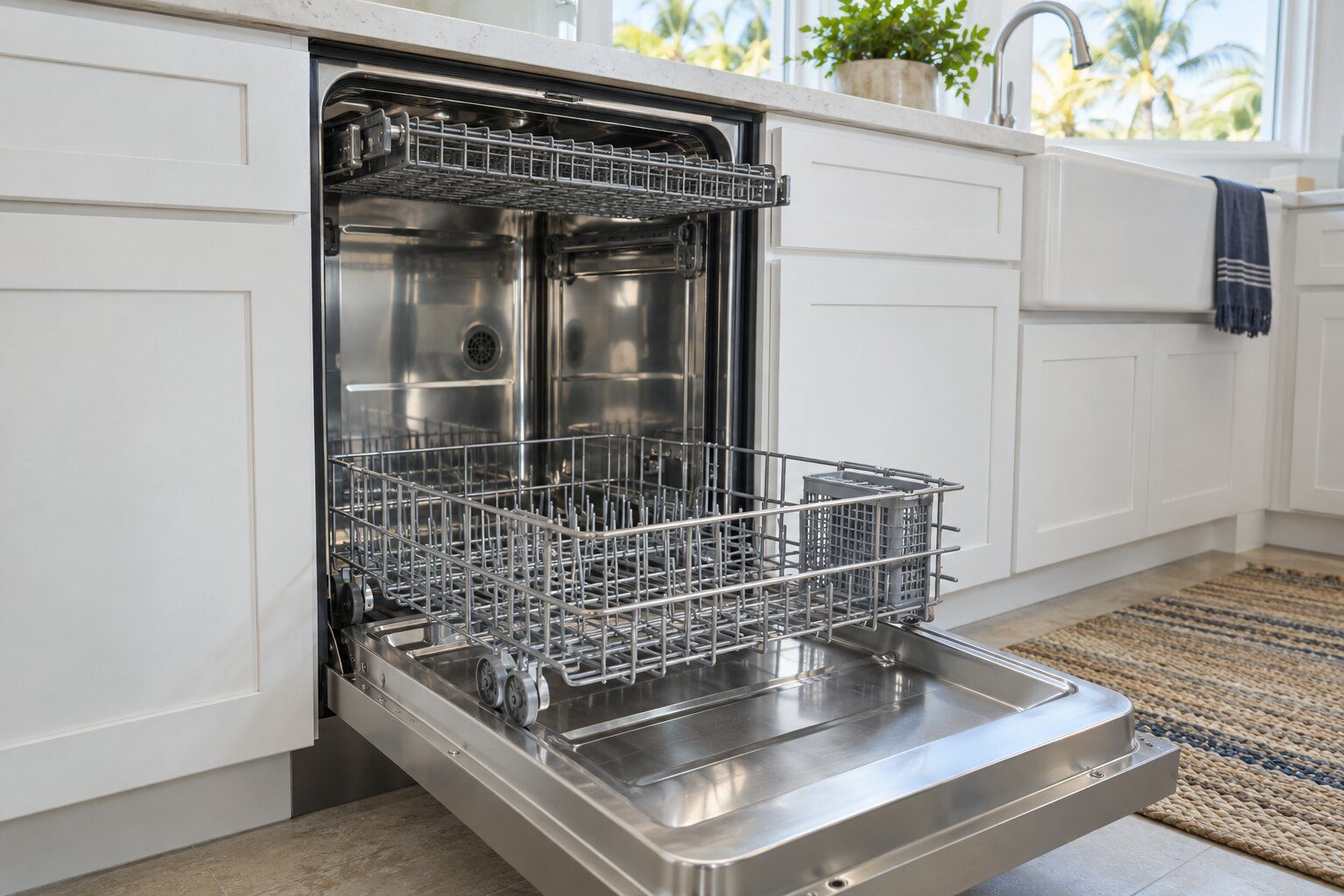
Two machines in the entire current line, both 24 inches, both stainless tub, and both carrying SmartBoost — the feature that premixes water and detergent before it reaches the dishes. Two models is not a thin line so much as a single machine in two door treatments, which is unusually simple to work on: what we open is nearly always the same platform, and the spares behind it are the group's, which run deep. This make publishes three dishwasher codes and two of them are not failures at all — a delay counting down and a heat delay waiting for water. The third, i40, is a filter.
- 4 symptoms we are called out to
- From $95 diagnostic, credited to the repair
- 59 cities and neighborhoods covered
- OEM parts available on order
The short version
What this equipment is, for a repair
Configurations
24-inch stainless tub · SmartBoost
Access
Planned before the visit, not discovered on arrival
Parts
OEM, available on order
Diagnostic
From $95, credited to the repair
What goes wrong with it
Symptoms we are called out to on Electrolux dishwashers
Each one covers the likely causes in the order they are worth checking, and what to do in five minutes before booking anything.
-
The panel lights up and nothing happens Dishwasher will not start
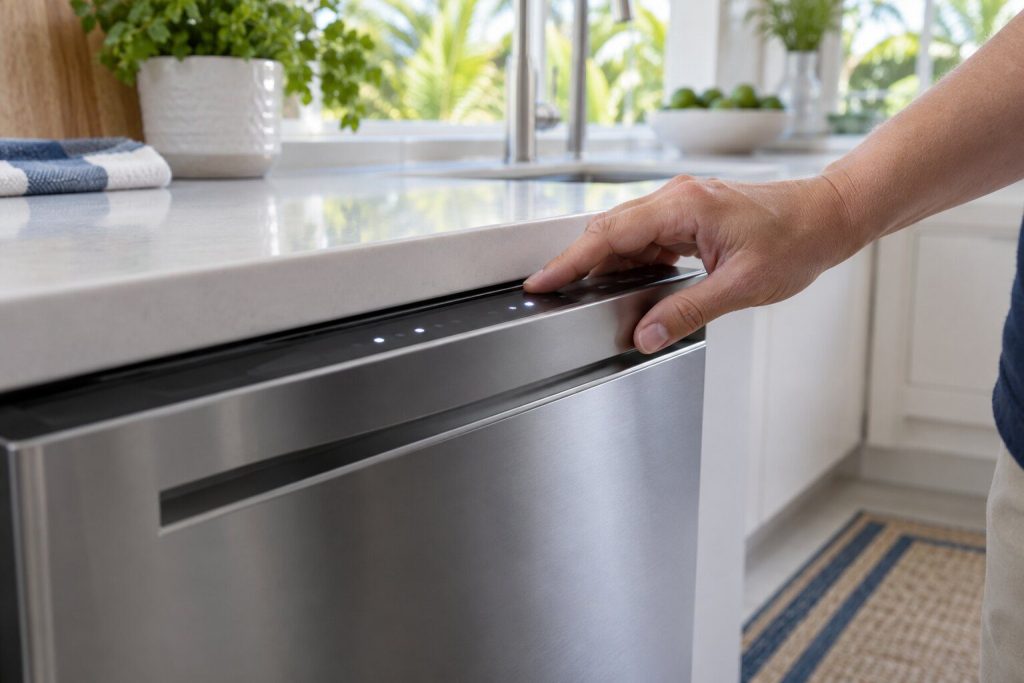
Two of this maker's three dishwasher codes are not problems at all, and both of them present exactly like a machine that will not start. A number between 1 and 24 counting down is the delay option. Hd or HO is the heat delay, waiting for the water to reach temperature. Between them they account for a real share of the no-start calls we take, and both are free to resolve from this page.
- A number from 1 to 24 is the delay start, not an error
- Hd is the machine heating water before it will wash
- The latch has to close a switch before anything runs
-
Standing water in the bottom at the end of a cycle Dishwasher not draining
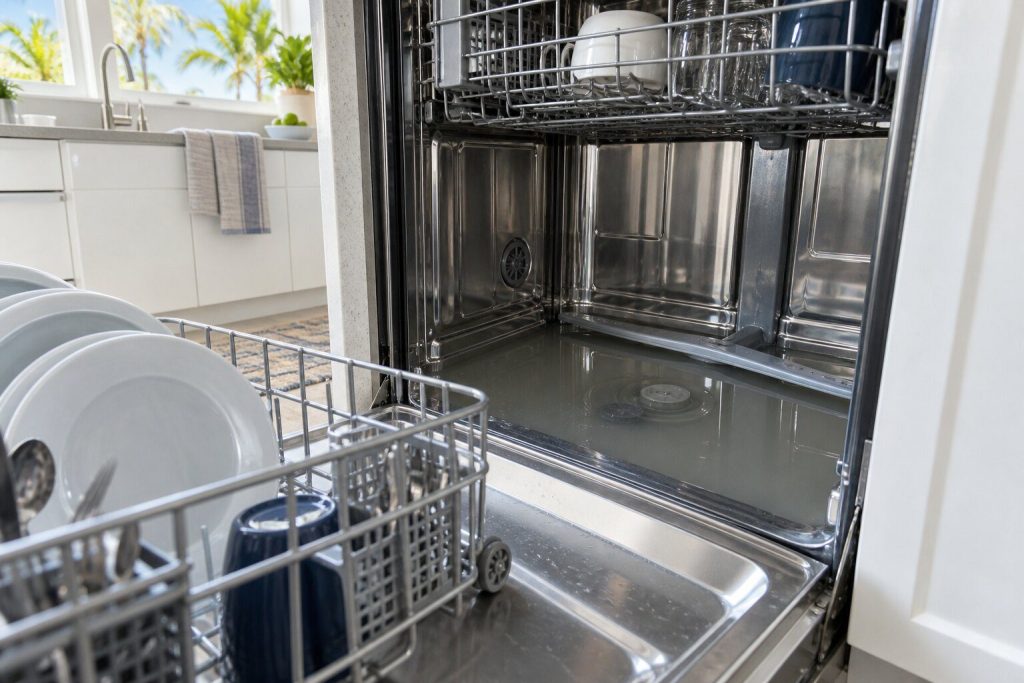
The maker publishes one code for this — i40, a clogged filter or sump — and names the glass trap specifically. A genuine share of these calls end at parts that lift out by hand with no tools. What makes it a repair rather than maintenance is water still standing with the filter removed, and that is a single test anybody can run.
- i40 is the maker's code and it points at the filter first
- Filter and glass trap lift out by hand, no tools
- Water still standing with the filter out is what makes it a repair
-
Grit, film, or food still on the plates Dishes coming out dirty
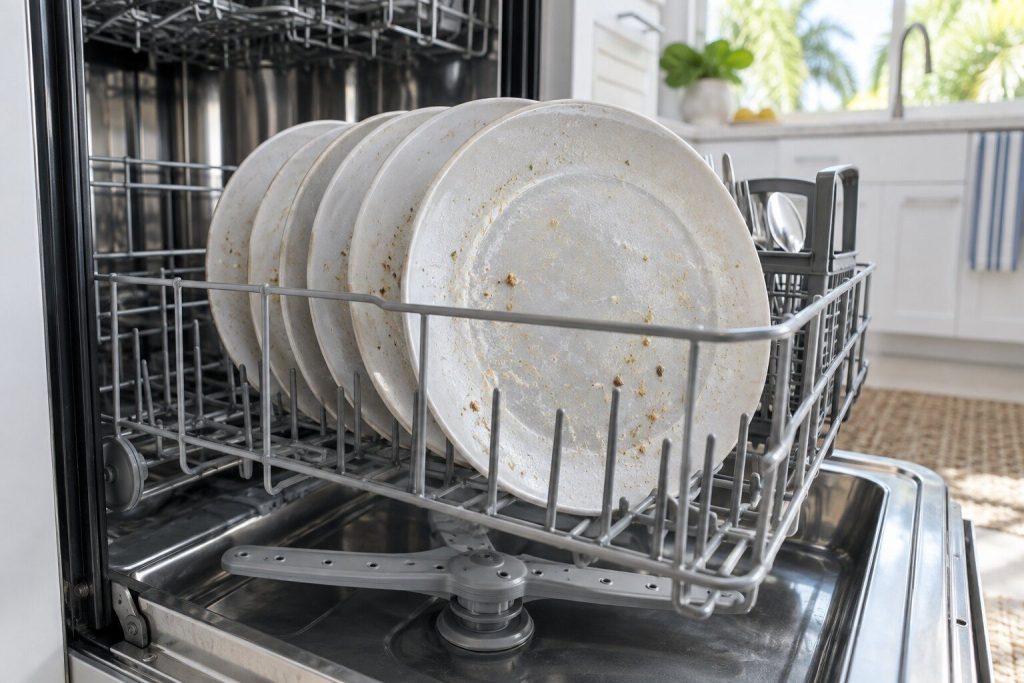
Three free checks come before any part: something tall in the bottom rack fouling the arm above it, a filter that has filled up, and water turning up cold. Beyond those, the feature doing most of the work on these machines is SmartBoost — it premixes detergent with water before the first spray — and when it fails what people notice is not an error but poor results on short cycles, blamed on the detergent for months.
- A tall item blocking the upper arm is the commonest cause and it is free
- SmartBoost failing shows as poor short cycles, not as an error
- Hard water leaves film, and that is descaling rather than repair
-
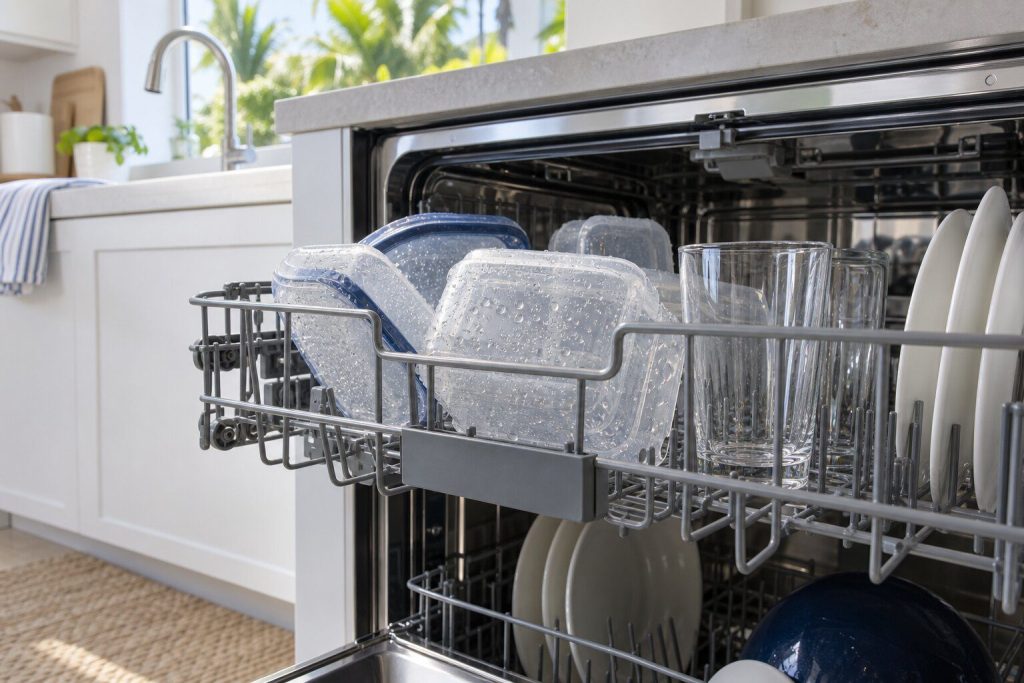
Especially the plastics Dishes coming out wet
Plastics coming out wet is how these machines work and it is worth saying plainly rather than treating as a failure. They dry with residual heat rather than a blast of hot air, so glass and china give up their water and plastic does not. What is not normal is everything wet, or a machine that sits on Hd for half an hour and then washes cold.
- Wet plastics are the design, not a failure
- Everything wet, or a permanent Hd, is the heater or its control
- Rinse aid is doing more work here than people realize
What we do on it
Repairs we carry out on Electrolux dishwashers
Starting figures for this equipment in South Florida. The exact cost is confirmed after an on-site diagnostic — and this is not the whole list of what can go wrong, so call if your problem is not here.
-
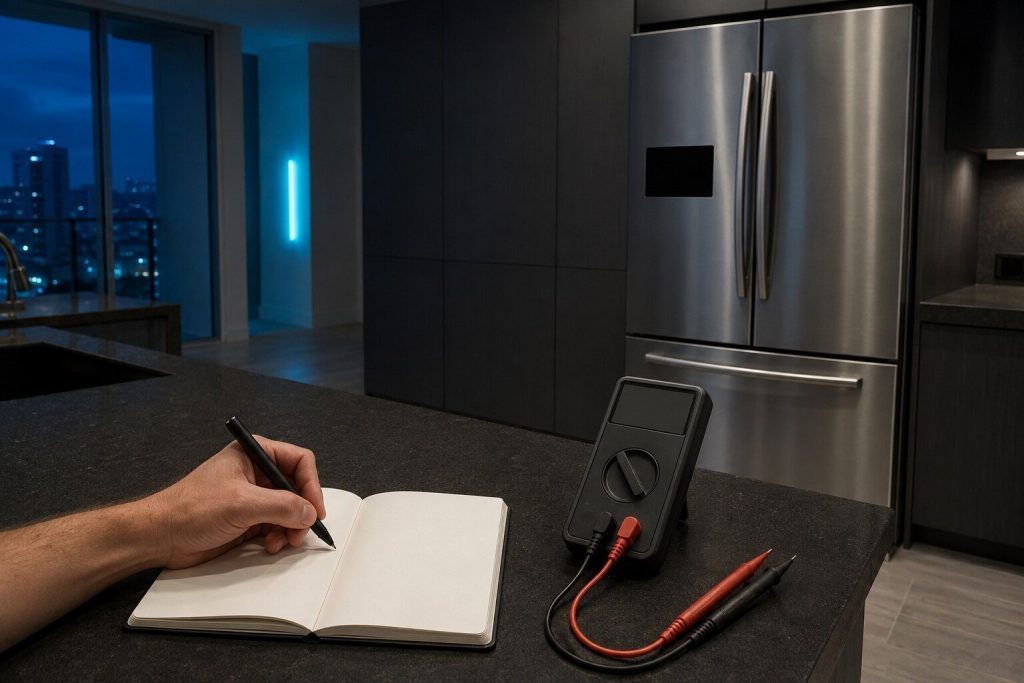
from $95 Diagnostic visit
Finding out what has actually gone wrong, before any part is named or priced. On this badge the opening question is usually about access rather than age: a counter-depth cabinet scribed into an opening, a column captured behind a trim kit, a wall oven sitting in a tall unit — each has to be brought far enough forward to be reached, and establishing that in advance is what separates one appointment from two. The charge is credited against the repair if you go ahead. Where our honest recommendation turns out to be that the machine is not worth mending, you still get that recommendation, and the charge does not change.
- Access comes first — built-in equipment is most of what this badge sells
- A written figure ahead of the work, credited against the repair
- If mending it is the wrong call we tell you, rather than selling a part
-
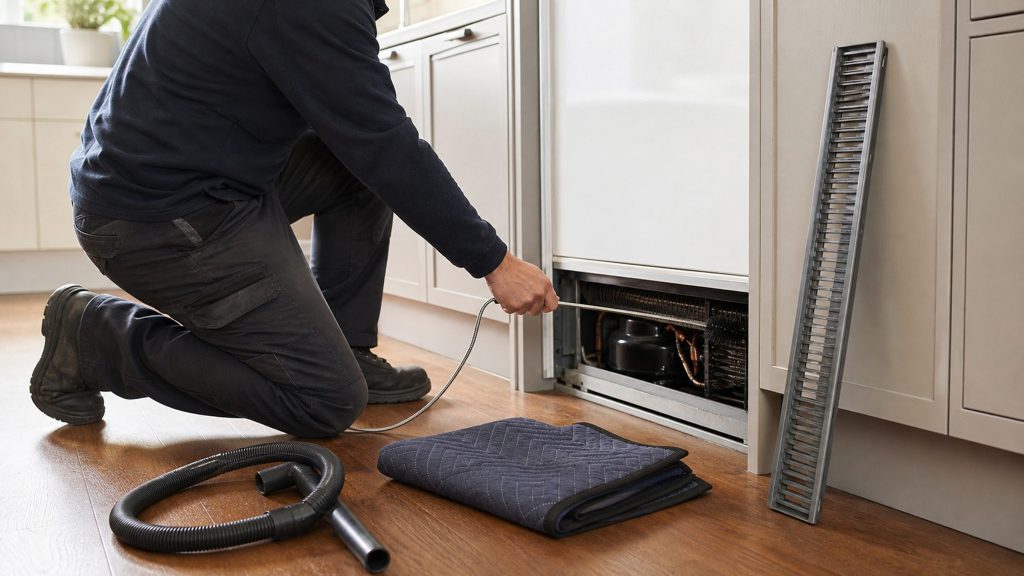
from $149 Appliance maintenance
Scheduled work on the parts that fail from accumulation rather than from age: condenser coils in salt air, a dryer duct that has been narrowing for four years, a dishwasher sump, the fold in a washer door seal that never dries out in this climate. On a kitchen where the appliances were specified together it is worth doing them together — the visit costs less than the sum of its parts and it catches the one that was about to fail.
- Coils, ducts, sumps and seals — the parts that fail from accumulation
- Worth doing as a suite when the kitchen was specified as one
- Finds the failure that was three months away, which is the actual value
-
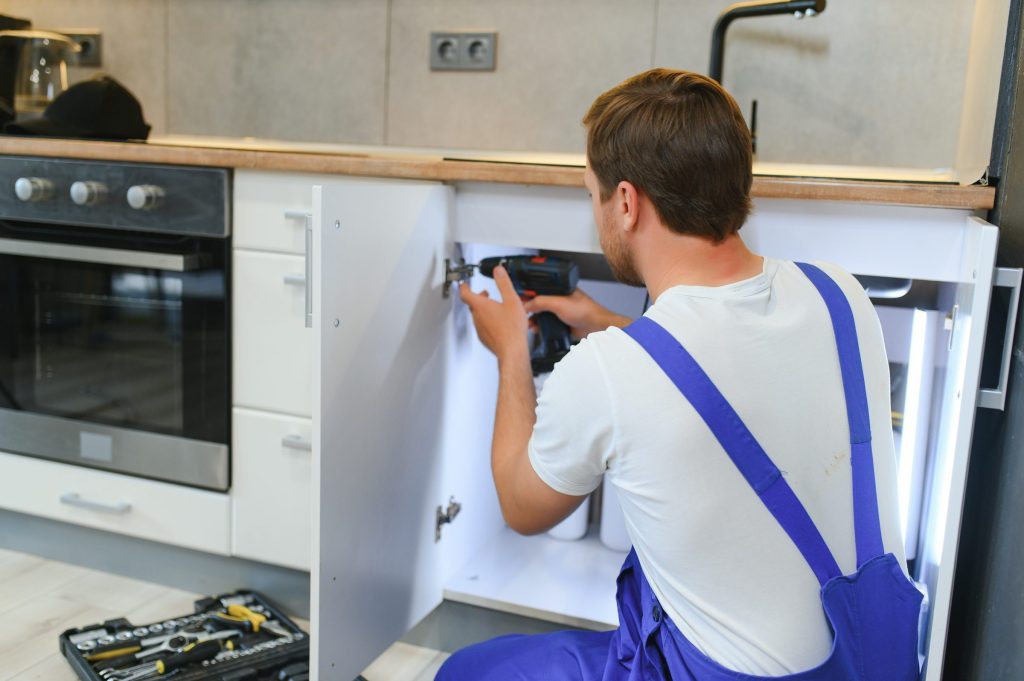
from $175 Appliance installation
Fitting an appliance properly, which on this badge usually means fitting it into something. Columns go behind trim kits, counter-depth cabinets go into openings that were drawn for them, wall ovens and built-in microwaves go into tall units, and every one of those has a clearance and an air path that the appliance depends on. This maker sends three of its own washer codes and two of its dryer codes back to whoever installed the machine — which is a fair measure of how much installation decides here.
- Built-in work: trim kits, openings, clearances and air paths
- Five of this maker's published codes are installation problems, not failures
- Supply, drain and vent checked and documented rather than assumed
-
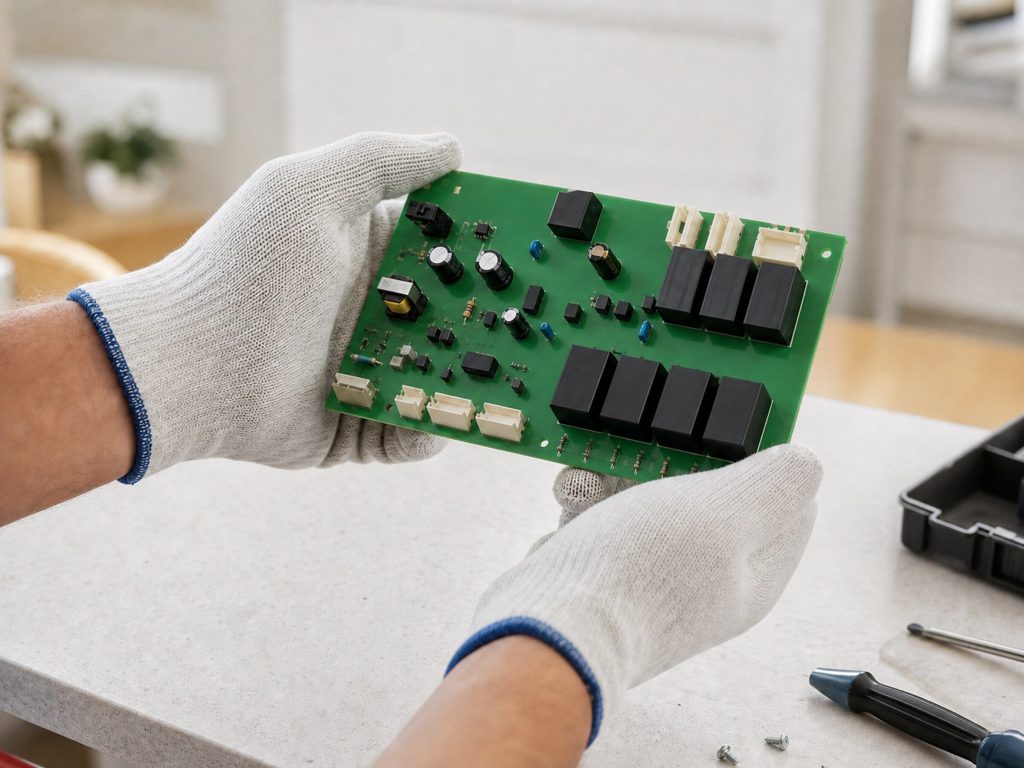
from $245 Control board repair
When the board is genuinely the answer — and it is worth saying that it often is not. A great many appliances condemned as "a board problem" have a sensor lying to a board that is working perfectly. This maker helps here more than most: F12, F13 and the F3/F20/F26 family are published as board-level conditions by name, so when one of them is on the display the diagnosis has a document behind it rather than an assumption.
- Named board conditions — F12, F13 and the communication family
- Most "board problems" are a sensor telling a healthy board something false
- Connectors and harnesses checked before anything is ordered
-
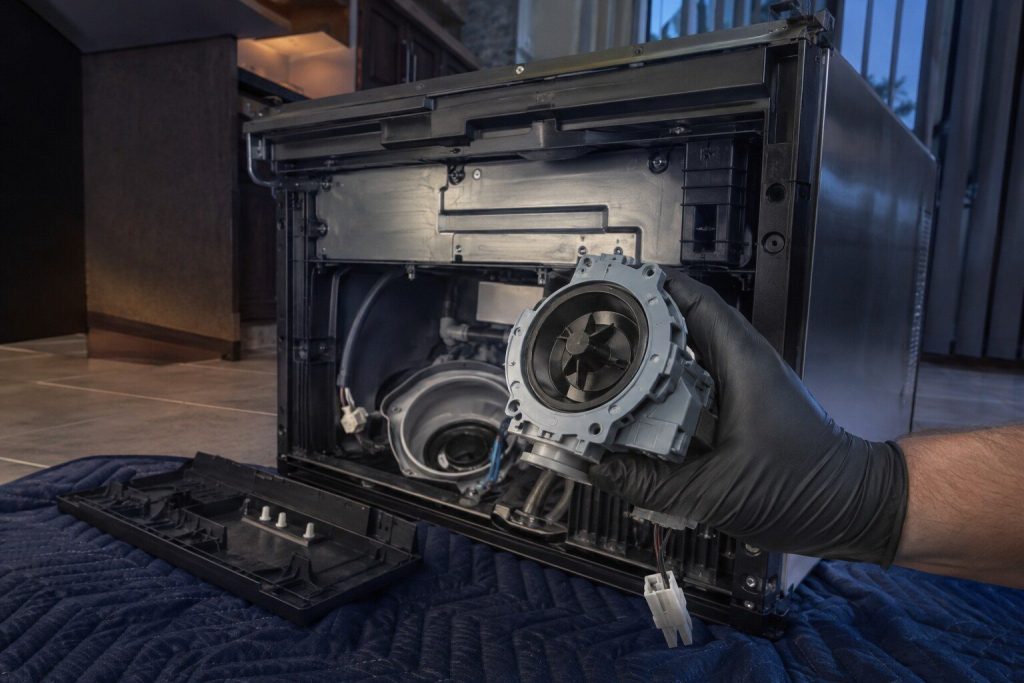
from $155 Dishwasher drain and pump repair
Standing water in the bottom, or a cycle that ends with the load still wet and dirty. This maker publishes one code for it — i40, a clogged filter or sump — and the honest thing to say is that a real share of these calls end at the filter and the glass trap, both of which lift out by hand. When water still stands with the filter removed, the problem is past the filter: the pump, the impeller, the drain hose or the air gap.
- i40 is the maker's own code and it points at the filter first
- Water standing with the filter out is what makes this a repair
- One platform behind both models, so the parts are predictable
-
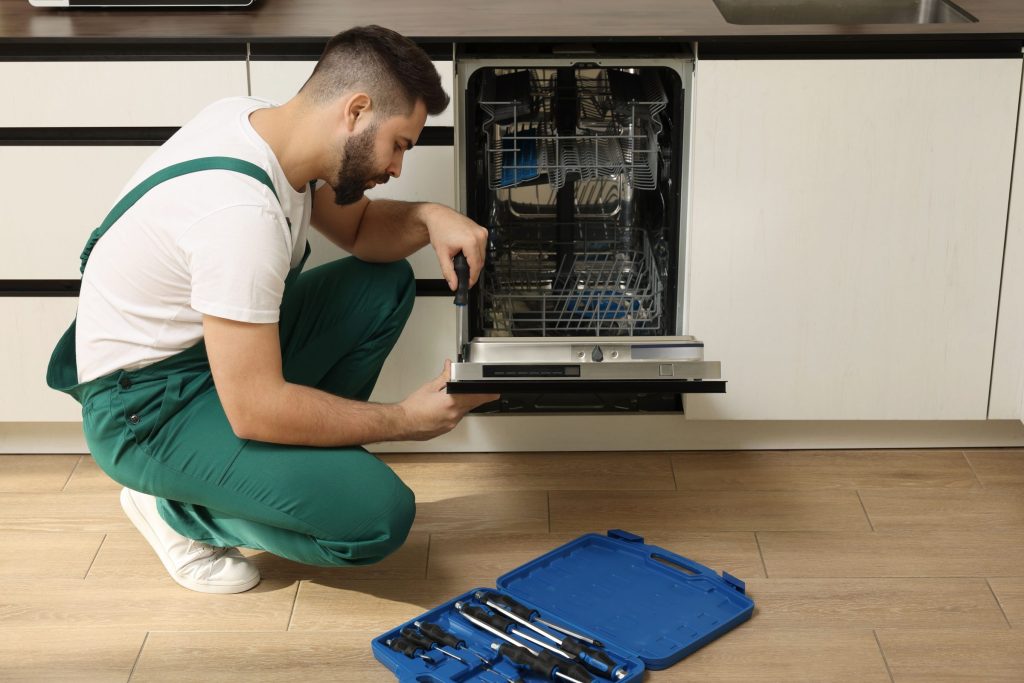
from $149 Dishwasher leak repair
Water at the front of the machine, under the cabinet, or showing up as a swollen kick board some weeks after it started. A dishwasher is built into a run and leaks travel where the floor slopes, so what you see is rarely where the water is coming from. The ordinary sources are the door gasket, the sump seal, a hose connection and — more often than people expect — detergent foaming over from the wrong product or an overloaded lower rack.
- What you see is rarely where the water starts in a fitted run
- Door seal, sump seal, hose connections, and foam over the door
- A swollen kick board means it has been running for a while
-
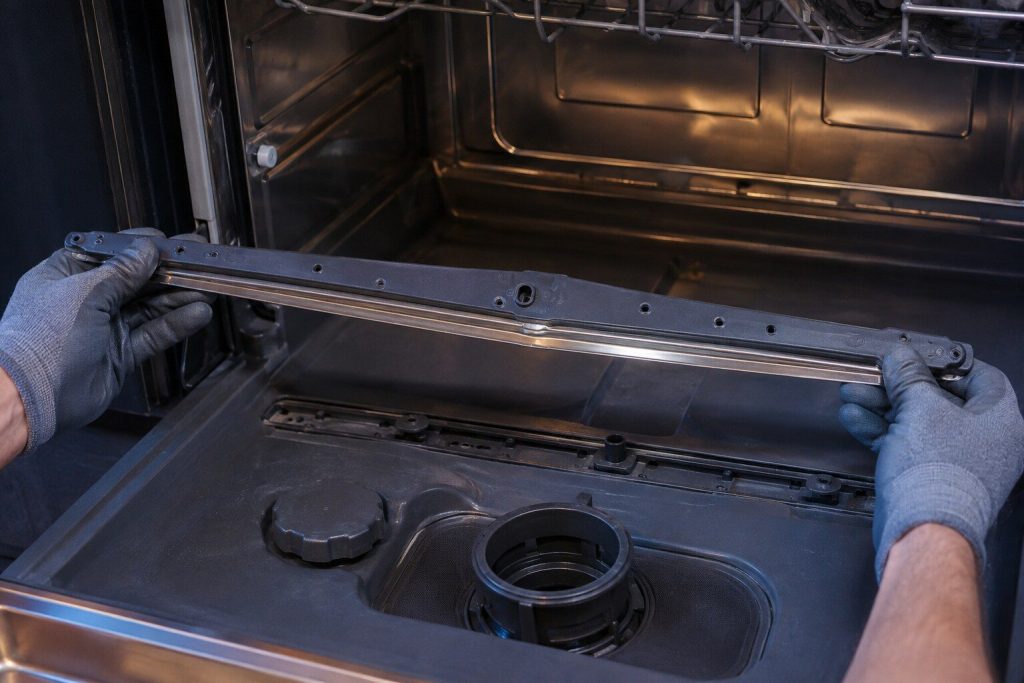
from $129 Dishwasher wash performance
Dishes coming out gritty, filmed or still wearing what went in. On these machines the feature that does most of the work is SmartBoost — it premixes detergent with water before the first spray — and when it stops, what people notice is not an error but poor results on the short cycles, which they blame on the detergent for months. Beyond that it is spray arms, the filter, water temperature and, in this county, scale.
- SmartBoost failing shows up as poor short cycles, not as an error
- Spray arms, filter, inlet temperature and hard-water scale
- Most of this is serviceable rather than a part
-
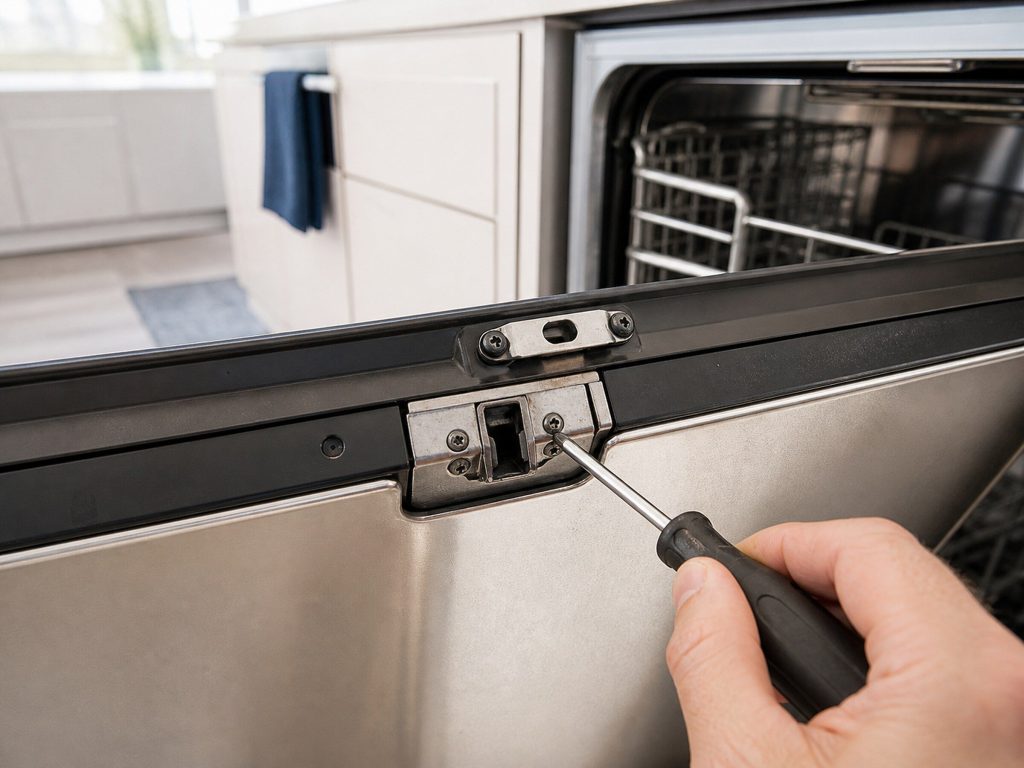
from $125 Dishwasher door and latch repair
A machine that will not start, or one that starts and stops part-way. The latch has to close a switch before the control will run anything, so a door that feels shut and is not is a no-start with no other symptom. The other half of this job is the springs and cables that carry the door — when one breaks the door drops open under its own weight, which is both a nuisance and, in a kitchen with a tiled floor, a way to break the door.
- The latch closes a switch, and no switch means no cycle
- Door springs and cables carry the weight and they break singly
- A dropping door is worth fixing before it damages itself
-
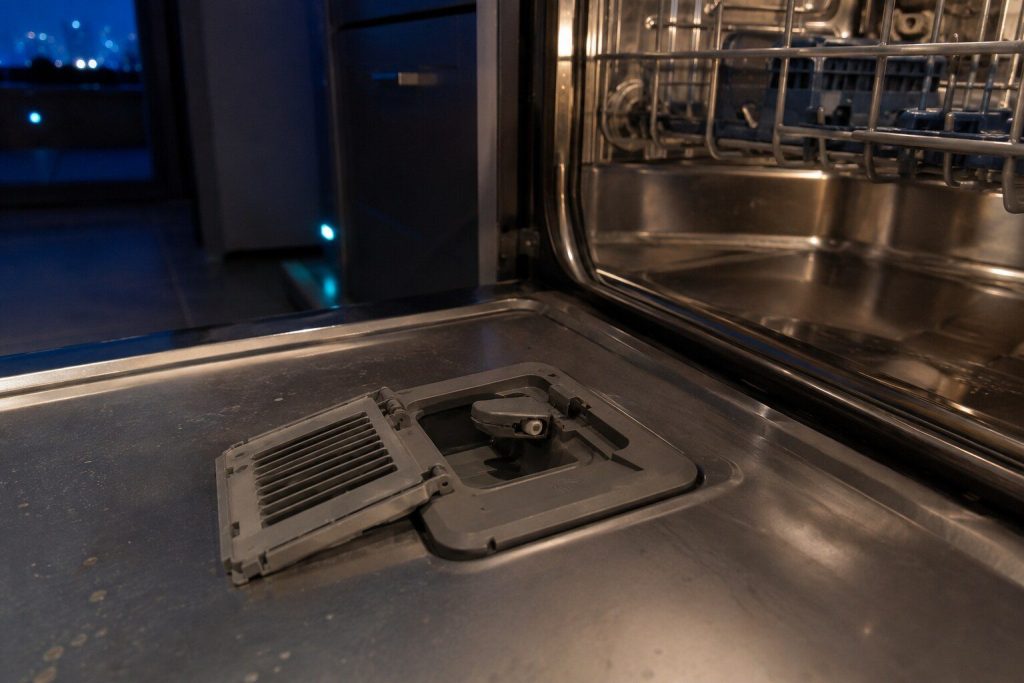
from $145 Dishwasher drying and heat repair
Plastics coming out wet is normal on these machines and worth saying plainly — they dry with residual heat rather than a blast of hot air, so glass and china dry and plastic does not. What is not normal is everything coming out wet, or the machine sitting on Hd for half an hour and then washing cold. The maker publishes the arithmetic for that delay: one to two minutes for each single degree the water has to rise.
- Wet plastics are the design, not a failure — we will say so
- Everything wet, or a permanent Hd, is the heater or its control
- Running the tap hot first removes most of the delay
-
from $165 Short-term rental turnaround
A different service from a repair, and worth booking as one. On a unit that changes guests on a Friday, a diagnosis on Wednesday with the part fitted on Thursday is worth more than a faster visit that ends in something being ordered. Tell us the turnover schedule when you book and we will plan around the calendar rather than against it. Managers with several units usually do better on an arrangement than on individual call-outs.
- Planned around the turnover calendar rather than around our own
- A diagnosis two days early beats a visit that ends in an order
- Several units are usually better handled on an arrangement
In more detail
About Electrolux dishwashers
A two-model line is good news for a repair
It means there is one platform behind the badge, not six. The pump, the sump, the filter assembly and the control are the same parts in both machines, and this group keeps one of the deepest spares networks anywhere in the trade. In practice that means a diagnosis that is right on the phone is very often a repair completed in one visit, which is not something we can say about every make on this fleet.
Two of the three codes are not problems
This maker publishes exactly three dishwasher codes. 01-24 is the delay start. Hd or HO is the heat delay. Only i40 reports something wrong, and even that is a filter rather than a part. We would rather you found that out on this page than paid for a visit to be told it.
This article is based on:
- Official manufacturer documentation
- Internal repair procedures
- Technician repair history
- Company quality standards
Before you book
Questions about Electrolux dishwashers
The display shows a number and nothing happens.
Read the number. Between 1 and 24 and counting down by the hour, it is the delay start and the machine is fine — one press of cancel drops it. That single check accounts for a real share of the "my dishwasher will not start" calls we take, and it costs nothing.
It sits on Hd for what feels like forever.
It is heating the water before it will wash, and the maker publishes the arithmetic: one to two minutes for each single degree of rise. On a machine plumbed a long way from the water heater that is genuinely half an hour. Running the kitchen tap hot before you start the cycle is the whole remedy.
Water is standing in the bottom and it says i40.
The filter and the glass trap have loaded up and the machine cannot move water fast enough. Both lift out by hand with no tools; rinse them under a hot tap and run an empty cycle. If water still stands with the filter removed, the problem is past the filter and that is when to call us.
Is SmartBoost worth keeping working, or can I ignore it?
It is worth keeping. It premixes the detergent with water before the first spray, which is what lets these machines do the short cycles well. When it stops, the usual complaint is not an error but poor results on the quick programs — which people attribute to the detergent for months before calling anybody.
Where we do it
Across Miami-Dade, Broward, and Palm Beach
Same terms everywhere we go: an on-site diagnostic first, the price agreed in writing, and the exact figure confirmed once we have seen the unit.
Neighborhoods people ask for by name