Maintenance & Prevention
Changing the Water Filter, and Why the Ice Changed Too
An Electrolux refrigerator water filter that is past its life produces two symptoms at once, and people usually report them as two problems: slow water at the dispenser and ice that arrives small or hollow. They share a supply. The ice mold is filled by a valve that opens for a fixed number of seconds and then harvests on schedule regardless of how much water actually arrived, so a restriction anywhere upstream gives a short fill and a thin shell around an empty middle. Change the filter, then run several quarts through the dispenser rather than a glass — air trapped in a new filter gives exactly the sputtering people describe as a broken dispenser. Throw away the first two batches of ice before judging whether it worked.
The full guide
An Electrolux refrigerator water filter is the one maintenance item these cabinets do remind you about, and the reminder is less useful than people assume.
Two complaints, one cause
People call about slow water. Separately, weeks later, they call about ice that has gone small or hollow.
They are the same restriction.
The ice mold is filled by a valve that opens for a fixed number of seconds, and the harvest runs on a schedule regardless of how much water actually arrived in that time. Restrict the supply anywhere upstream and the mold gets a short fill, freezes a shell around an empty middle, and drops something that looks like ice and is mostly air.
So a hollow cube is not a mystery. It is a measurement, and a rather precise one.
The ten-second test
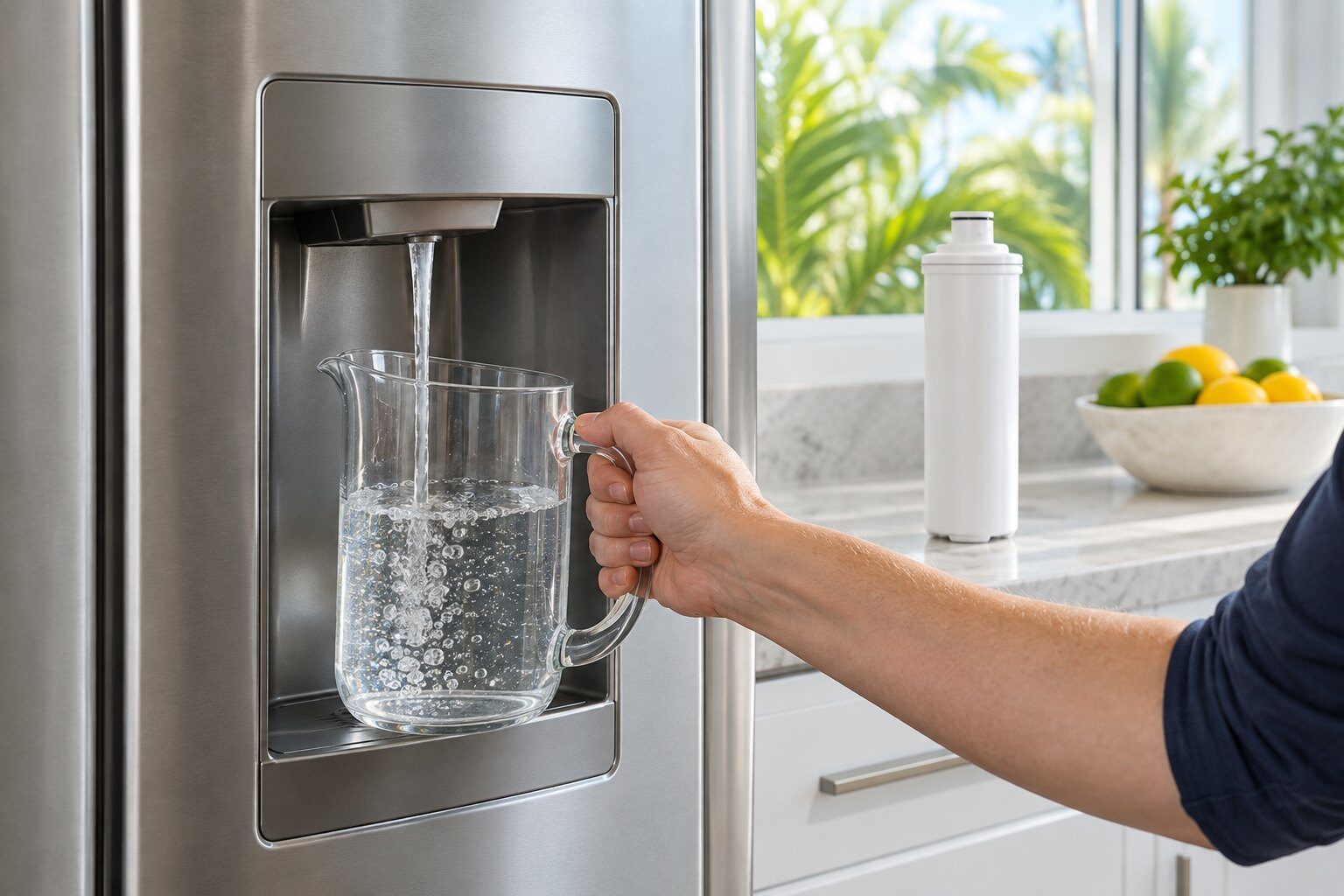
Put a measuring jug under the dispenser and run it for ten seconds.
That single number tells you almost everything before anybody opens anything. Noticeably less than you would expect, and the ice and the water are sharing one restriction — which is one visit rather than two, and very often no visit at all.
Changing it, and the part people get wrong
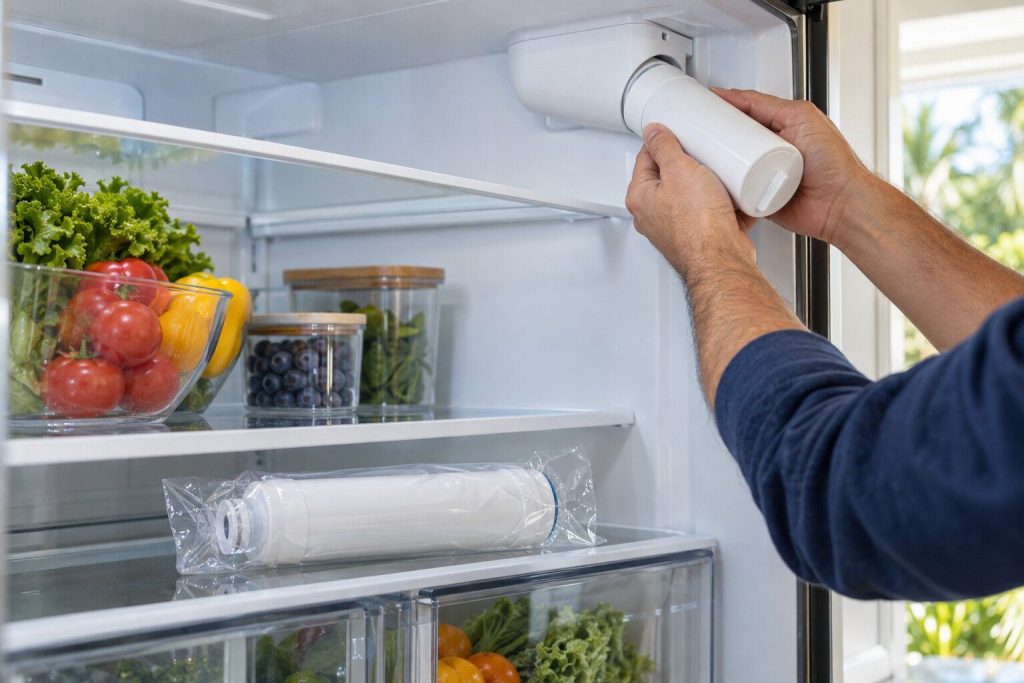
Filters on these cabinets are either inside the fresh-food compartment at the top, or in the base grille, depending on the model. Both are quarter-turn fittings designed to be changed by the owner.
Then: run several quarts through the dispenser, not a glass.
A new filter holds air, and air in the line produces exactly the spluttering, spitting, uneven flow that people describe as a broken dispenser. Nearly every "the new filter made it worse" report is this, and it clears with volume.
Throw the first two batches of ice away as well. Judging new ice on cubes made before the fix is how people conclude nothing changed.
What the reminder actually is
A timer. It counts elapsed time and it measures nothing at all — it does not know whether water has passed through the filter, how much, or how hard that water was.
On many models it also does not clear itself when a new filter goes in, which is where most of the confusion about it comes from. A reminder that is still lit after a change is not telling you the change failed.
Six months is the usual life. In a household that uses the dispenser heavily, or on water this hard, it is less.
When it is not the filter
If the water is slow with a fresh filter fitted, the restriction is upstream: a shutoff barely open, a self-piercing saddle valve silted up, or a line squeezed behind a cabinet that was pushed back into its opening.
On a built-in cabinet that half of the chain is behind joinery and not reachable from the kitchen, which is the point at which this becomes a service call rather than a Saturday morning.
If it turns out to be a repair
What this leads to, and what it costs
Every job on this site is priced the same way: an on-site diagnostic first, the figure agreed in writing before anybody starts.
-
from $129 Water dispenser and filter service
Slow water, no water, water that tastes of nothing good, or a filter that will not seat. Most of this is the filter and the line rather than the dispenser, and the tell is usually how the ice is behaving at the same time: hollow or undersized cubes alongside slow water means restriction upstream of both. On a built-in cabinet the shutoff is often behind the unit or under the floor, which is a reason to have somebody who can reach it do the work.
- Slow water and hollow ice together means restriction, not two problems
- The filter, its housing and the line before the dispenser itself
- On a built-in cabinet the shutoff is not where a homeowner can reach it
-

Ice arrives, but it is not right Ice cubes small or hollow
This is a water problem almost every time, and it is worth knowing because it is the cheap one. The mold is filled by a valve that opens for a fixed time and then harvests on schedule whatever arrived. Restrict the supply anywhere along the chain — filter, shutoff, a line squeezed behind a built-in cabinet — and you get a short fill, a thin shell and cubes that look hollow because they are.
- A timed fill plus a restricted supply gives exactly this
- Check the dispenser: slow water confirms it in seconds
- The filter is the first thing and often the only thing

Questions people ask about this
The new filter made it worse.
Air. A fresh filter holds it, and the sputtering that produces is the single most common reason people conclude a change did not work. Several quarts clears it.
The reminder came on early, or never came on.
It is a timer, not a test. It counts elapsed time, it does not measure anything, and on many models it does not clear itself when a new filter goes in — which is most of the confusion about it.
Can building water pressure cause this?
In a tower at peak hours, yes. If the kitchen tap is also weak at those times, that is worth establishing before the appliance is blamed.
Maintenance & Prevention
More guides like this one
-
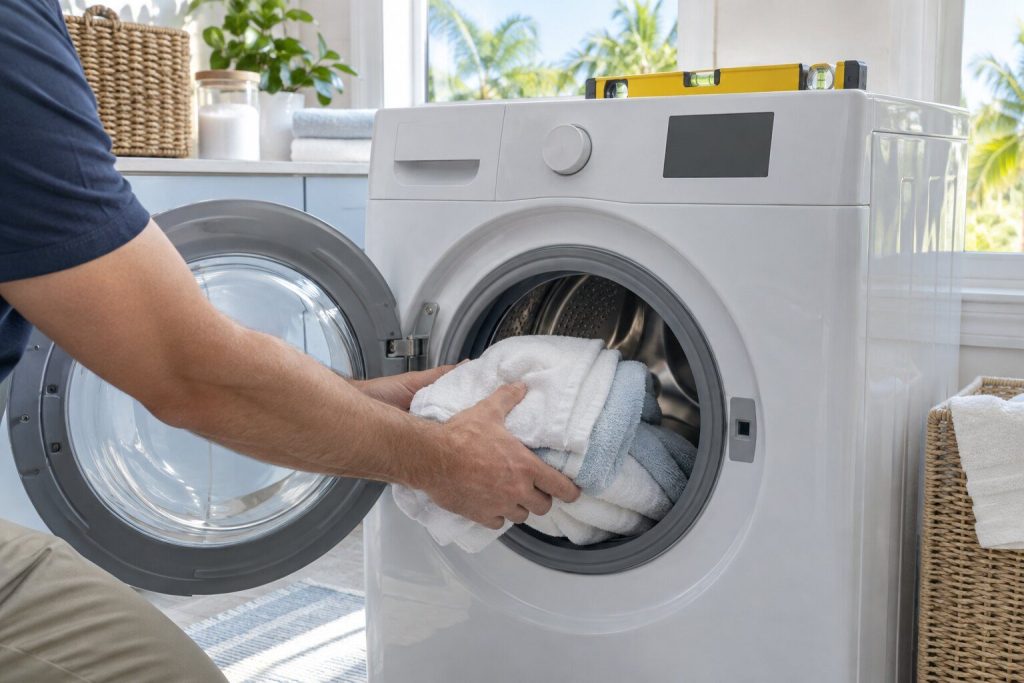
Before You Call About a Washer That Will Not Spin: Two Minutes
A front loader refuses to spin a load it cannot balance rather than walk across the floor. A machine that spins a quarter-load perfectly is telling you about its floor, not its motor.
Read more -
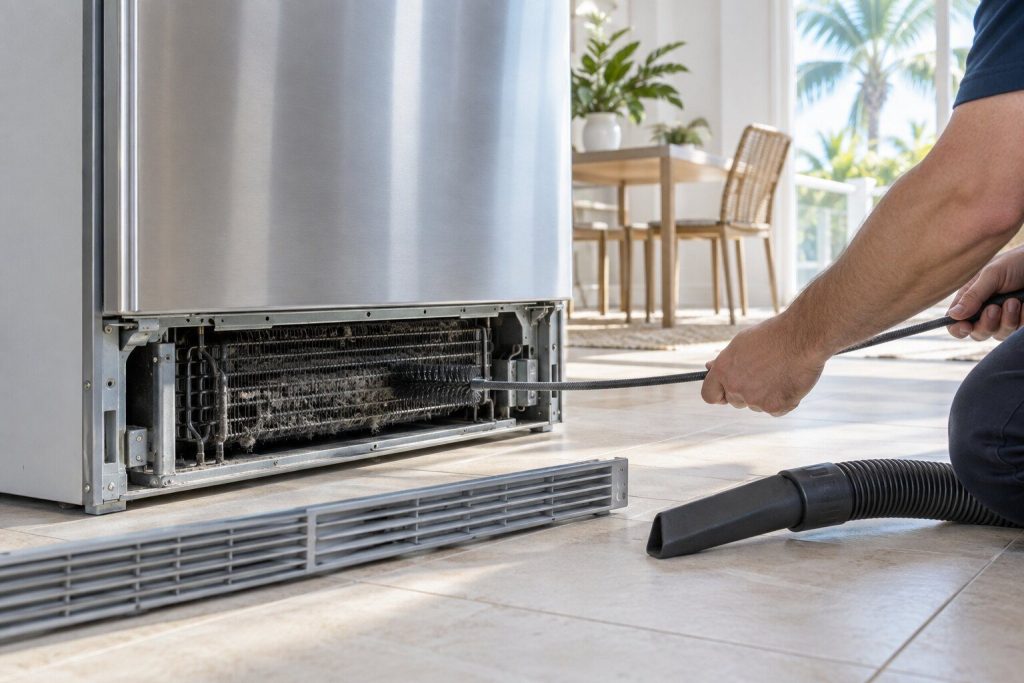
The One Job Your Refrigerator Will Never Ask You For
Behind a trim kit the coil breathes through a route a joiner decided years ago. In coastal air it closes up over about four years, and nothing on the cabinet reports it.
Read more -
A Sheet of Paper Tells You Whether the Seal Has Gone
On this badge the doors are heavy and often carry a trim panel, so the hinge goes out of square long before the rubber wears out. The same two-minute test gives four answers.
Read more
Tell us the model number and what it is doing.
This article is based on:
- Official manufacturer documentation
- Internal repair procedures
- Technician repair history
- Company quality standards