Maintenance & Prevention
A Sheet of Paper Tells You Whether the Seal Has Gone
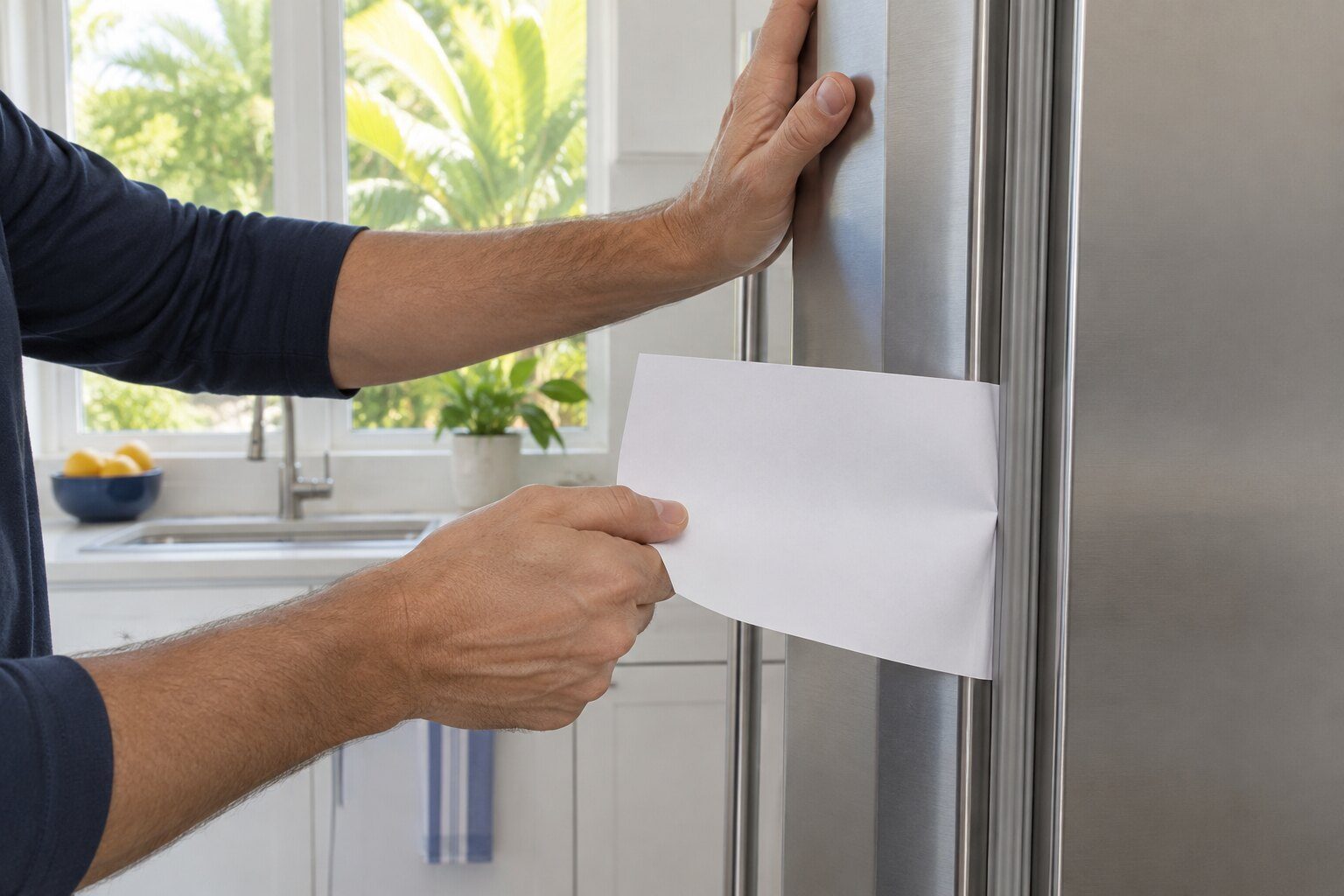
Test an Electrolux refrigerator door seal by closing a sheet of paper in the door and pulling it out. It should drag everywhere around the perimeter. Where it slides out freely is the diagnosis, and the pattern matters more than the fact: a single corner that releases points at a door hanging out of square, which on this badge is common because the column doors are heavy and frequently carry a trim panel. Years of that weight move the hinge before the rubber is worn out at all, and a hinge adjustment restores the seal often enough to be worth trying before a gasket is ordered. A seal that releases along a whole side, or a gasket that has hardened and lost its spring, is the part.
The full guide
An Electrolux refrigerator door seal is one of the few parts in a kitchen you can test properly in two minutes with something already in the room.
The test
Take an ordinary sheet of paper. Close the door on it so that half is inside and half is out. Pull.
It should drag — you should feel the gasket gripping it. Do that every few inches all the way round, both doors, including the bottom corners where nobody bothers.
Where the paper slides out with no resistance at all is where the cabinet is losing.
The pattern matters more than the failure
This is the part that decides whether you are buying a part or getting an adjustment.
One corner releases and the rest grips. The door is hanging fractionally out of square. On this badge that is the common case, because the column doors are heavy and very often carry a trim panel — and years of that weight on two hinges moves the door before the rubber is worn out at all.
A whole side releases. More likely the gasket itself: hardened, or pulled out of its channel, or torn on the underside where it folds.
It grips everywhere and the cabinet still struggles. Then the seal is not the problem and the diagnosis moves elsewhere — the air path, the condenser, or the defrost circuit.
Why the hinge is worth checking first
Because it is free.
Open the door fully and lift gently at the handle end. Play at the top means the hinge rather than the latch. On a trim-kitted column the hinges carry a door plus a panel plus whatever is loaded into the door bins, and they are adjustable on most of these cabinets.
Getting the door square again restores the seal often enough that we always try it before ordering rubber. A gasket for a 33-inch column door is not an inexpensive part.
Clean it before you condemn it
A gasket that is black, sticky and reluctant feels exactly like a gasket that has hardened, and they are entirely different outcomes.
Wash it with warm water and a little detergent, work into the fold, and dry it. Then test again. In this climate a seal that never fully dries grows things in the fold, and cleaning it is a maintenance habit rather than a repair.
If a new one goes on
Two things worth knowing.
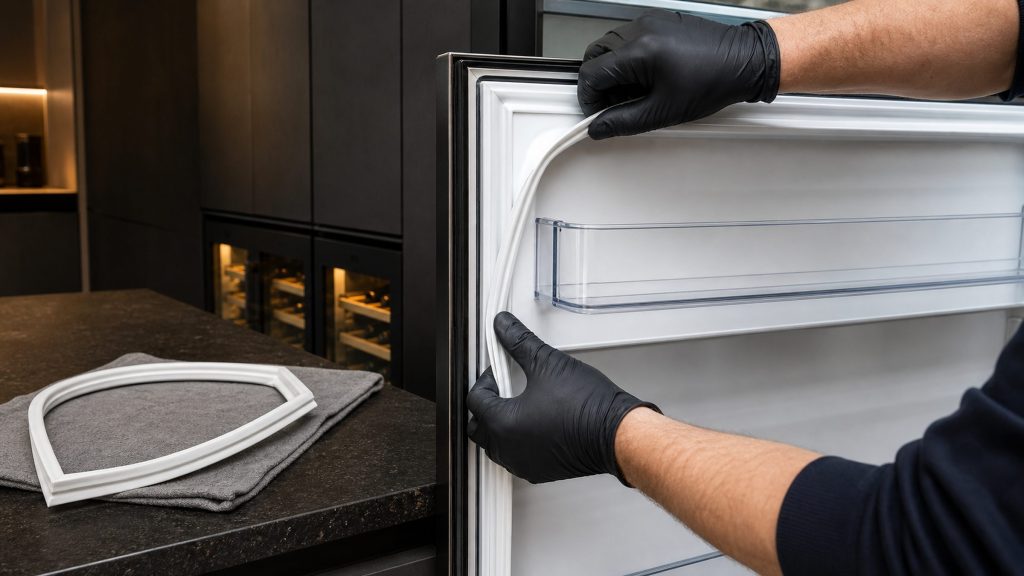
A gasket that has been folded in a box holds the fold. Warming it gently — a warm room, or a hairdryer on low at a distance — before fitting lets it relax into shape.
And give it a day before judging. A fresh gasket settles, and testing it in the ten minutes after it goes on tells you very little.
What the seal is actually costing you
More here than almost anywhere. Humid air entering a cold cabinet all day makes the machine run continuously, builds frost on the evaporator, blocks the air it needs, and still loses ground.
Which is why a good number of complaints that sound mechanical — a fresh-food side that will not hold, frost where there should be none, a compressor that never rests — turn out to start at a sheet of paper that slides out freely in one corner.
If it turns out to be a repair
What this leads to, and what it costs
Every job on this site is priced the same way: an on-site diagnostic first, the figure agreed in writing before anybody starts.
-
from $155 Door seal replacement
A seal that no longer pulls is a cabinet running continuously and losing anyway, and in this humidity it also means condensation, frost and eventually a door that is wet more often than it is dry. On this badge the doors are heavy — a 33-inch column door, often carrying a panel or a trim kit — and years of that weight take the door slightly out of square before the gasket itself is worn out. Which of the two it is decides whether this is a part or an adjustment.
- A heavy column door goes out of square before the gasket wears out
- Condensation and frost follow a seal that has lost its pull
- Hinge adjustment first — it is free and it is often the answer
-
33-inch all-freezer column Freezers
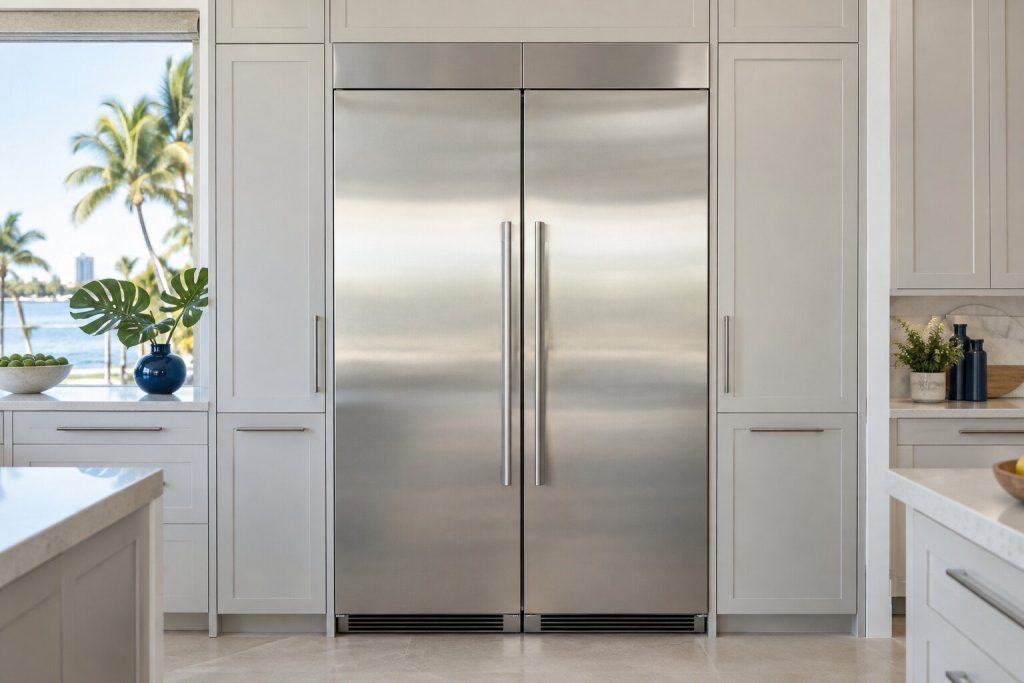
Two freezers in the line, and both of them are the same thing: a 33-inch, 19 cubic foot all-freezer column, built to stand beside the refrigerator column of the same size and be trimmed to match. There is no chest freezer here, no upright for a garage and no convertible box. A freezer on this badge is half of a wall of cabinetry, usually in a kitchen or a butler's pantry, and it is treated as joinery by everybody except the person who has to open it up. Practically, that means everything the refrigerator column needs — clearance, a clean air path, access — matters here twice over.
- Two models, and they are one design: a 19 cu. ft. 33-inch all-freezer column
- No chest freezer and no garage upright — this line does not build them
- Sold as a pair with the refrigerator column, behind matching trim

Questions people ask about this
The gasket is black and sticky in places.
Wash it with warm water and a little detergent before deciding anything. A gasket that is dirty and one that has hardened feel similar and are completely different outcomes.
A new gasket seals badly for the first few weeks.
It has been folded in a box. Warm it gently before fitting and let it take its shape for a day before judging it — otherwise it gets blamed for the original problem.
Does a failed seal cost much in running?
In this climate, a great deal. Humid air entering all day makes the cabinet run continuously, builds frost on the evaporator and still loses ground — so the seal is often the cause behind a complaint that sounds mechanical.
Maintenance & Prevention
More guides like this one
-
Before You Call About a Washer That Will Not Spin: Two Minutes
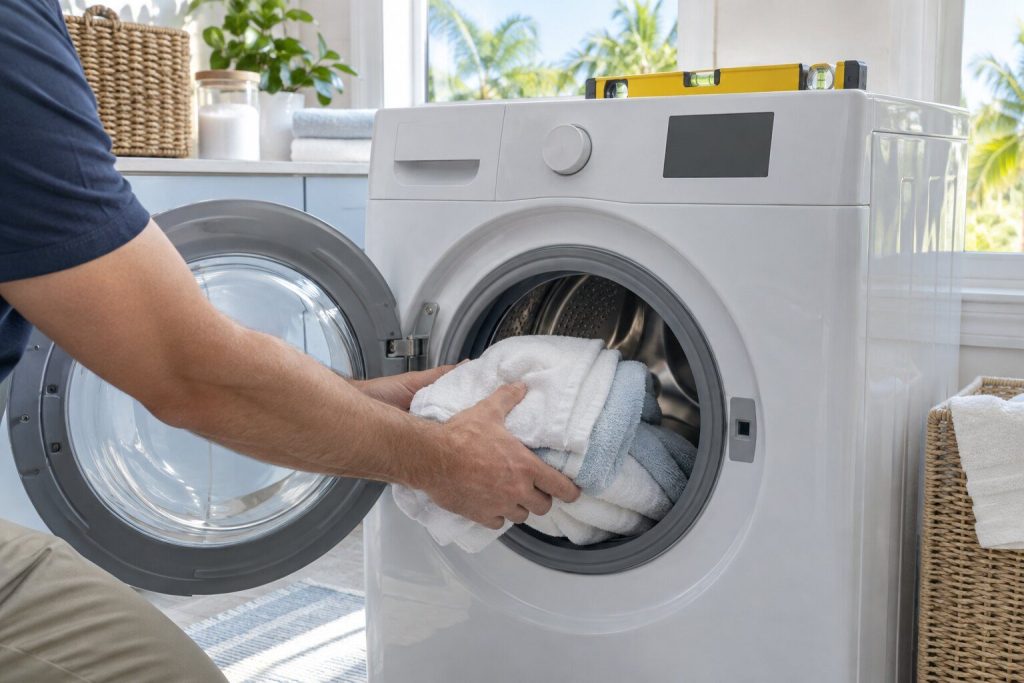
A front loader refuses to spin a load it cannot balance rather than walk across the floor. A machine that spins a quarter-load perfectly is telling you about its floor, not its motor.
Read more -
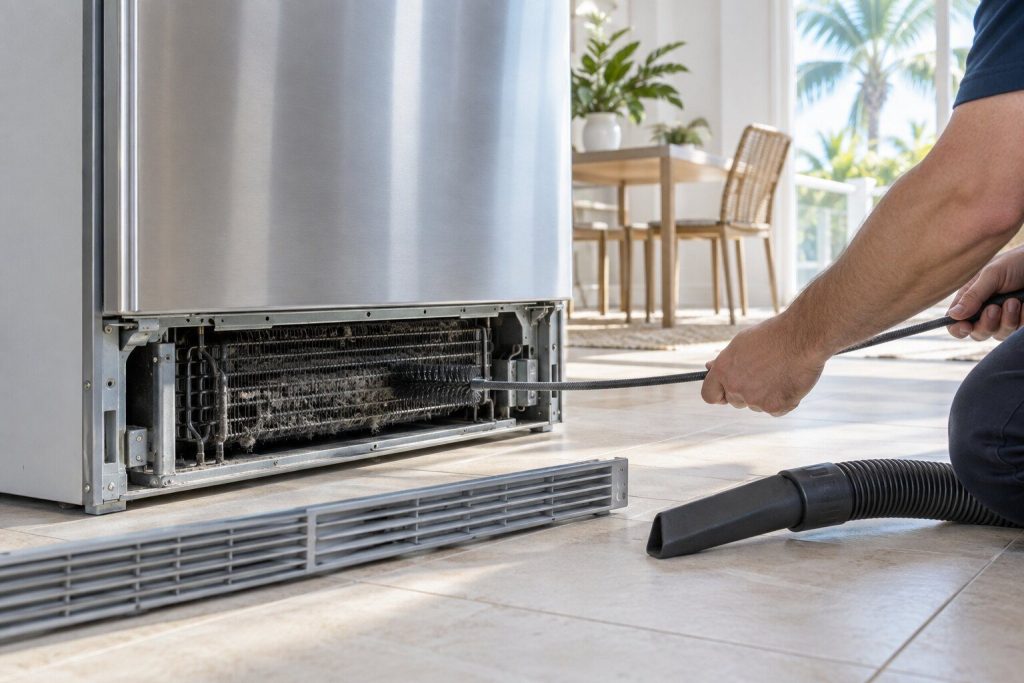
The One Job Your Refrigerator Will Never Ask You For
Behind a trim kit the coil breathes through a route a joiner decided years ago. In coastal air it closes up over about four years, and nothing on the cabinet reports it.
Read more -
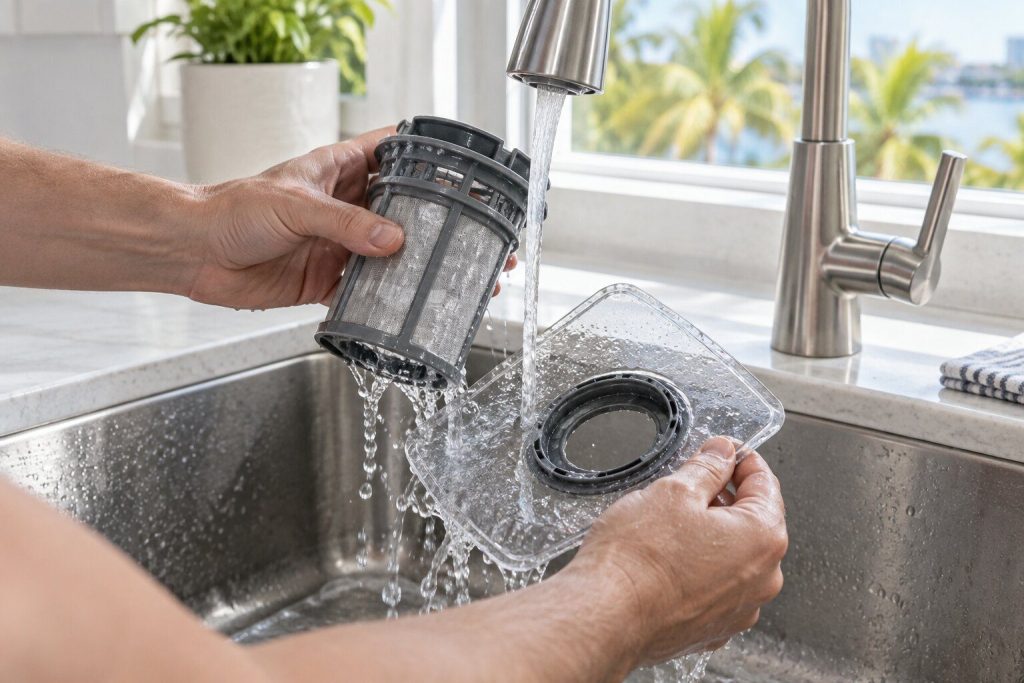
Clearing the Filter and Glass Trap on an Electrolux Dishwasher
It twists out by hand with no tools, this maker names the glass trap specifically, and doing it twice a year removes the most common reason anybody calls us about these machines.
Read more
Tell us the model number and what it is doing.
This article is based on:
- Official manufacturer documentation
- Internal repair procedures
- Technician repair history
- Company quality standards