
Maintenance & Prevention
Before You Call About a Washer That Will Not Spin: Two Minutes
An Electrolux washer not spinning is frequently the control protecting the machine rather than a failure. A front-load drum at full speed with an unbalanced load can move the whole appliance, so the control counts attempts, redistributes, and completes at a lower speed or not at all. The two-minute test is to run a deliberately small load — about a quarter full. If that spins perfectly, the mechanism is sound and what you are looking at is balance, leveling or a floor that flexes. Check level with weight in the drum rather than empty, because a machine set level on a soft upper floor is not level with four and a half cubic feet of wet laundry in it. Then listen for the door lock engaging a second or two after the cycle starts: no confirmed lock means no spin at all, and that is a different repair.
The full guide
An Electrolux washer not spinning is one of the few appliance problems where two minutes of testing at home genuinely changes the outcome.
Why it gives up instead of trying harder
A front-load drum at full spin speed with the weight piled to one side can move the entire machine. So the control does not simply try harder. It counts attempts, pauses, tumbles to redistribute, tries again — and if it still cannot balance the load, it completes the cycle at a lower speed or abandons the spin altogether.
That is a protection working. In a second-floor laundry closet it is also what stands between you and a conversation with the people downstairs.
Which means the clothes coming out soaked is sometimes the machine looking after itself rather than failing.
The test
Run a load about a quarter full. Towels are ideal because they are heavy and they distribute badly, but anything will do as long as there is not much of it.
It spins perfectly. The motor, the belt, the drive and the control are all fine. What you are dealing with is balance — which means the load, the leveling, or the floor.
It still will not spin. Now it is worth booking, and you have already ruled out the commonest cause.
Check level the way the machine experiences it
Almost everybody checks a washer with a spirit level on an empty machine. That is not the condition that matters.
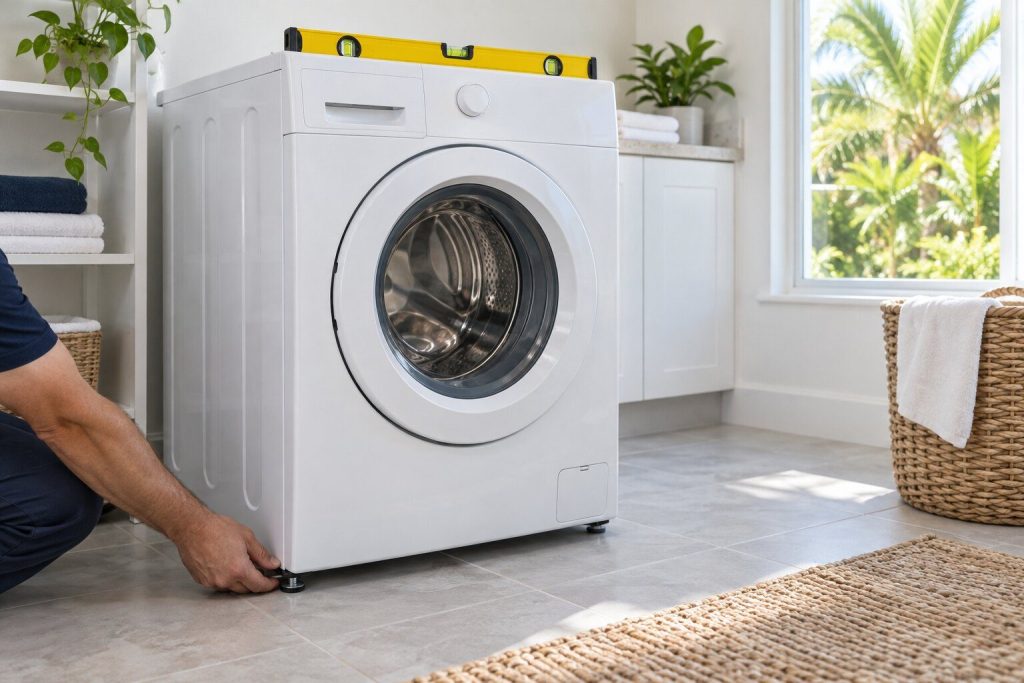
Put a load in, let it fill, and check again. A machine set dead level on a slightly soft upper floor is not level with four and a half cubic feet of wet laundry pressing down on it, and the feet need setting for the loaded case rather than the empty one.
While you are there, make sure all four feet are actually in contact and the locking nuts are tightened up against the cabinet. A foot that spins freely is a foot that will find a new height every wash.
Listen for the lock
A second or two after the cycle starts there should be an audible click as the door lock engages.
If there is silence there, this is not a spin problem at all. The control will not spin without a confirmed lock, and E41 and E42 both produce exactly the symptom you are looking at. From outside the machine they are indistinguishable from a dead motor; inside they are a completely different and much cheaper part.
When it is genuinely the suspension
If a quarter-load spins and a full one never does, and the drum moves more than it should when you push and pull it at the front, the suspension has worn.
That is worth catching early. It is also the point where the conversation can turn into bearings, which is the one repair on a front loader we most often advise against — and we would rather say that before the work than halfway through it.
If it turns out to be a repair
What this leads to, and what it costs
Every job on this site is priced the same way: an on-site diagnostic first, the figure agreed in writing before anybody starts.
-
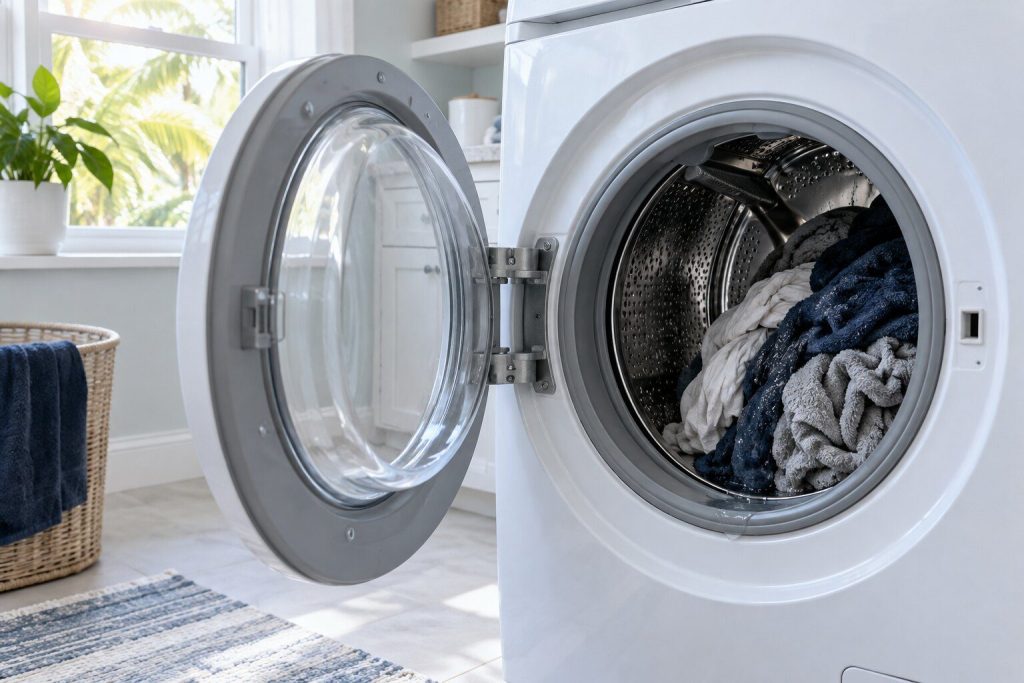
Clothes come out soaked Washer will not spin
A front loader will refuse to spin a load it cannot balance rather than damage itself, so a machine that spins small loads perfectly and large ones not at all is behaving correctly and telling you about its suspension. The other frequent cause is not the spin at all: no confirmed door lock means no spin, and that presents identically from outside.
- Refusing to spin an unbalanced load is correct behavior
- Spins small loads but not large is the suspension
- No confirmed door lock means no spin, and that is a different repair
-
from $165 Washer spin and balance repair
Clothes coming out soaked, a machine that walks across the floor, or a spin that starts and aborts. On a front loader the machine will refuse to spin an unbalanced load rather than wreck itself, so a machine that spins small loads and not large ones is behaving correctly and telling you something about its suspension. In a second-floor condominium this is also the complaint the neighbors make first.
- Refusing to spin an unbalanced load is correct behaviour, not a failure
- Spins small loads but not large ones points at the suspension
- On an upper floor the neighbors notice this before the owner does

Questions people ask about this
It spins if I rearrange the load by hand.
Then the mechanism is sound. If that is needed every single time, the suspension has worn and it is worth looking at before it becomes a bearing conversation.
Why does it matter which floor it is on?
An upper floor in a townhouse flexes under a spinning drum in a way a slab does not. It is a genuine and free cause, and it is also why the neighbors notice before the owner does.
Could it be the door lock rather than the spin?
Yes, and it presents identically from outside. The control will not spin without a confirmed lock, so a lock problem looks exactly like a spin problem. Listening for the click separates them in one cycle.
Maintenance & Prevention
More guides like this one
-

The One Job Your Refrigerator Will Never Ask You For
Behind a trim kit the coil breathes through a route a joiner decided years ago. In coastal air it closes up over about four years, and nothing on the cabinet reports it.
Read more -

A Sheet of Paper Tells You Whether the Seal Has Gone
On this badge the doors are heavy and often carry a trim panel, so the hinge goes out of square long before the rubber wears out. The same two-minute test gives four answers.
Read more -

Clearing the Filter and Glass Trap on an Electrolux Dishwasher
It twists out by hand with no tools, this maker names the glass trap specifically, and doing it twice a year removes the most common reason anybody calls us about these machines.
Read more
Tell us the model number and what it is doing.
This article is based on:
- Official manufacturer documentation
- Internal repair procedures
- Technician repair history
- Company quality standards