Troubleshooting
An Electrolux Dishwasher That Will Not Drain: One Test Settles It
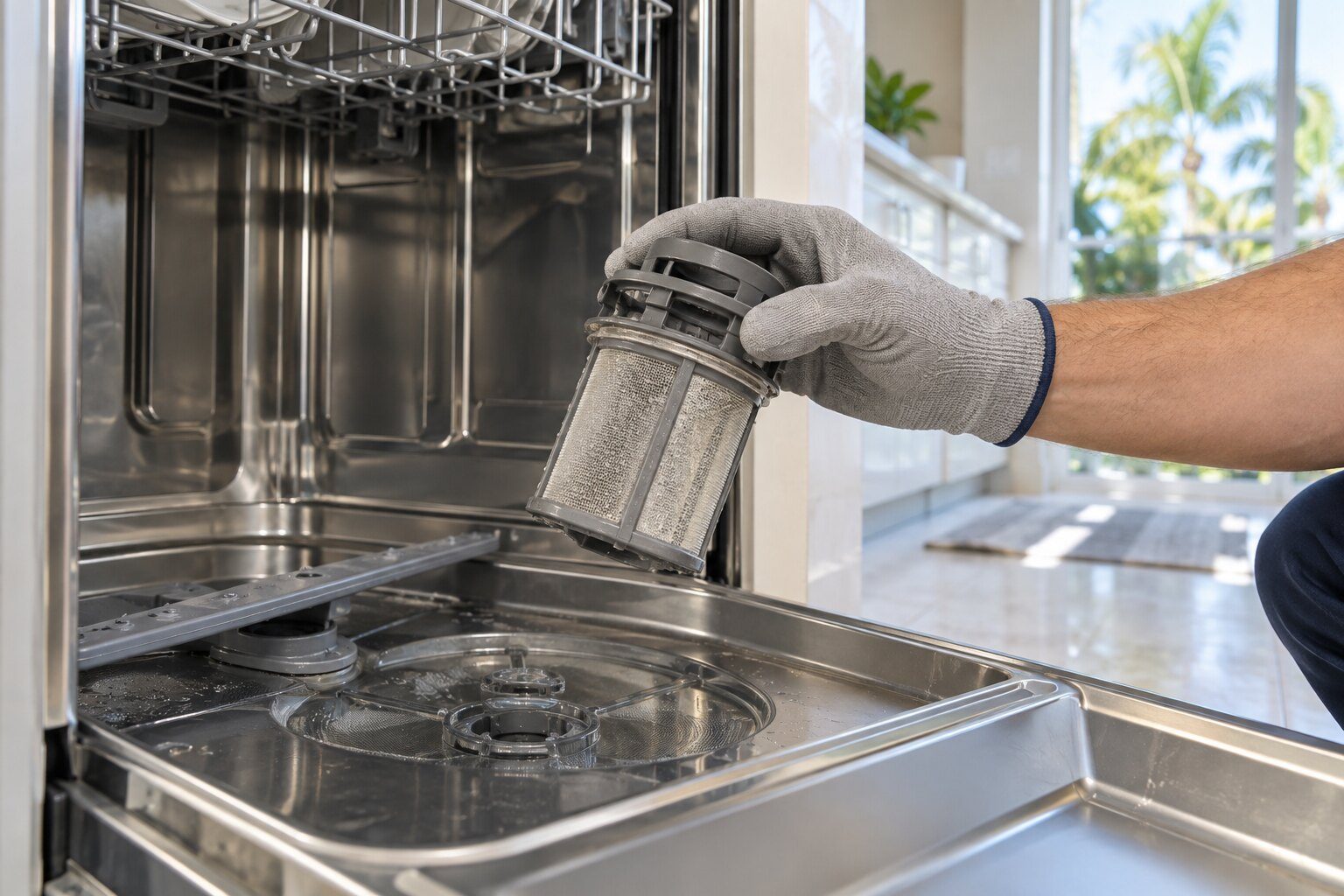
An Electrolux dishwasher not draining is reported by the machine as error code i40, and this maker names the cause as a clogged filter or sump — specifically the glass trap. Both parts lift out by hand with no tools: pull the lower rack, twist the filter cylinder a quarter turn, lift it out, and lift the flat glass trap beside it. Rinse both under a hot tap and run a cycle empty. If the water drains, the problem was maintenance rather than a failure. If water still stands with the filter removed, the blockage is past the filter — the pump, the impeller, the drain hose, a high loop that has slipped, or a garbage disposal whose knockout plug was never punched out.
The full guide
An Electrolux dishwasher not draining has one cheap answer and one expensive one, and a single cycle tells you which.
Bail it out first
Before anything else, get the standing water out with a cup and a sponge. It makes the rest of this possible and it stops the next step from tipping a quart onto the kitchen floor.
Clear the filter and the glass trap
Pull the lower rack all the way out. In the floor of the tub there is a cylindrical filter — twist it a quarter turn and lift it out. Beside it, or under it depending on the model, is a flat plate: that is the glass trap, and this maker names it specifically in its own article about this code.
No tools. Both are designed to be removed by the person who owns the machine, and almost nobody ever has.
Rinse both under a hot tap, using a soft brush on the mesh if there is a film on it. Look into the empty sump while you are there.
Then run one cycle with them out
This is the test that decides everything.
The water drains. The filter and the trap were the whole story. Refit them — properly, because a filter that is not fully seated lets solids straight past — and run a normal cycle. Do this twice a year and this call very rarely comes back.
The water still stands. Now it is a repair, and the useful thing is that you have already ruled out the cheapest cause. What remains is past the filter.
What "past the filter" means
Four things, roughly in order of how often they turn out to be it.
The disposal knockout. If a garbage disposal was fitted after the dishwasher, or replaced at any point, the plug inside its inlet has to be punched out. When it is not, the dishwasher has nowhere to send water and there is nothing wrong with the appliance at all. It is a classic, it is not our repair, and it is free to check.
The drain hose. A kink behind the machine, or a high loop that has slipped down. Water that cannot climb comes back.
The air gap, if the installation has one — the small chrome cylinder on the sink deck. They block, and they are opened by hand.
The pump or its impeller. The genuine repair, and the only one on this list that needs the machine drawn out from under the counter.
What the code is telling you
i40 is one of only three codes this maker publishes for its dishwashers, and it is the only one of the three that reports something actually wrong. The other two are modes: a number between 1 and 24 counting down is the delay start, and Hd or HO is the machine heating water before it will wash.
That is worth knowing before you call anybody, because two of the three most common "my dishwasher will not start" calls we take are neither a problem nor a repair.
If it turns out to be a repair
What this leads to, and what it costs
Every job on this site is priced the same way: an on-site diagnostic first, the figure agreed in writing before anybody starts.
-
Dishwasher drain and pump repair
Standing water in the bottom, or a cycle that ends with the load still wet and dirty. This maker publishes one code for it — i40, a clogged filter or sump — and the honest thing to say is that a real share of these calls end at the filter and the glass trap, both of which lift out by hand. When water still stands with the filter removed, the problem is past the filter: the pump, the impeller, the drain hose or the air gap.
- i40 is the maker's own code and it points at the filter first
- Water standing with the filter out is what makes this a repair
- One platform behind both models, so the parts are predictable
-
Dishwasher error code i40
Electrolux dishwasher error code i40: The only one of this make's three dishwasher codes that reports an actual failure, and the fix is maintenance rather than parts. Which machines can raise it, what the maker publishes about it, and what to do next.
What this one means

Questions people ask about this
Is a small amount of water in the bottom normal?
Yes, and it is by design — it keeps the seals from drying out. What is not normal is standing water above the filter at the end of a completed cycle.
It drains, just very slowly.
Same list, earlier stage, and worth dealing with now. A partly blocked drain path makes the pump run continuously against resistance, which is how a maintenance job becomes a pump.
Why does the filter load up so fast?
Two reasons and neither is the machine. Manufacturers now tell people not to pre-rinse, so more solid food reaches the sump than the design assumed, and this county's water leaves scale on the mesh that gives everything else something to cling to.
Troubleshooting
More guides like this one
-
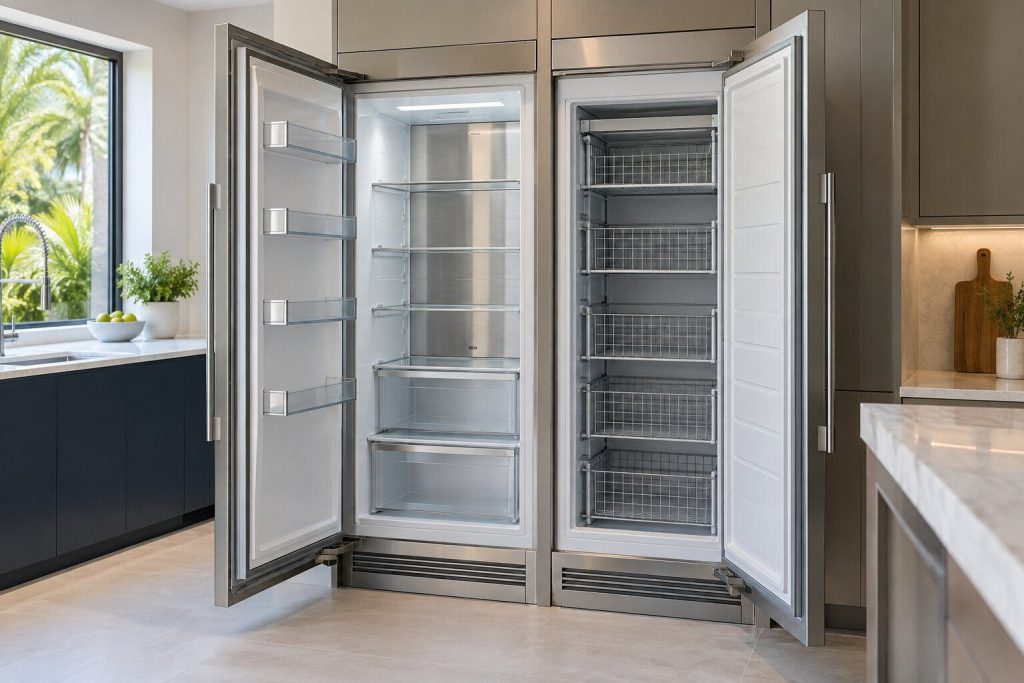
It Looks Like One Appliance. It Is Two
The 33-inch refrigerator and freezer columns share a trim kit and a grille and nothing else. Two sealed systems, two controls, and model numbers that differ by a single letter.
Read more -
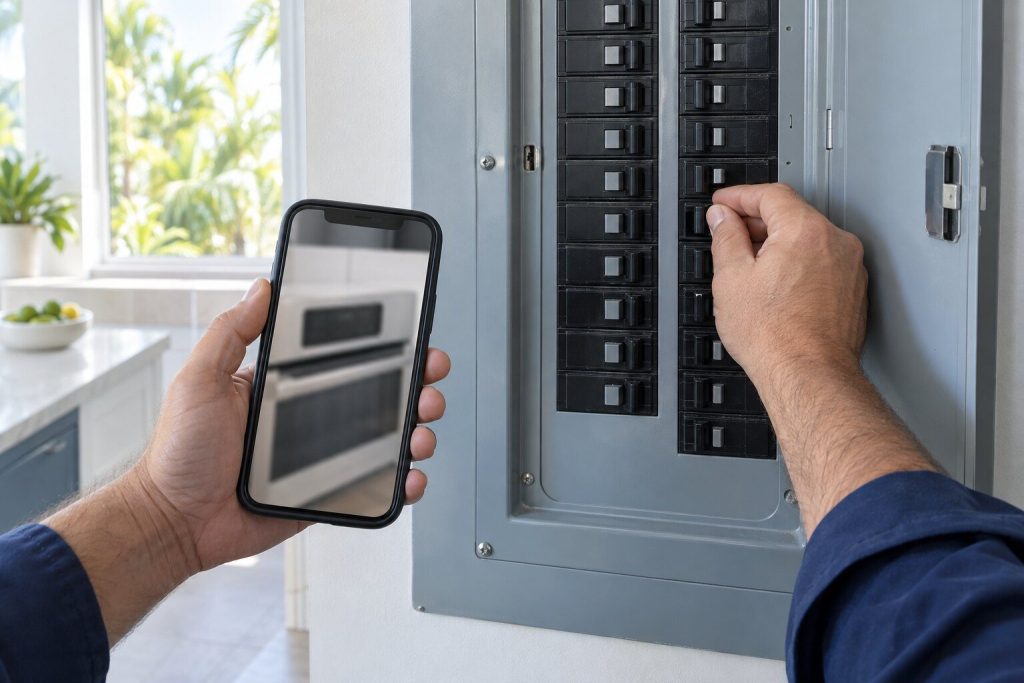
Resetting an Electrolux Range, and What the Reset Actually Proves
Most of this maker's range codes are published as a name and thirty seconds at the breaker. The reset is usually right. Doing it before you have written the code down is not.
Read more -
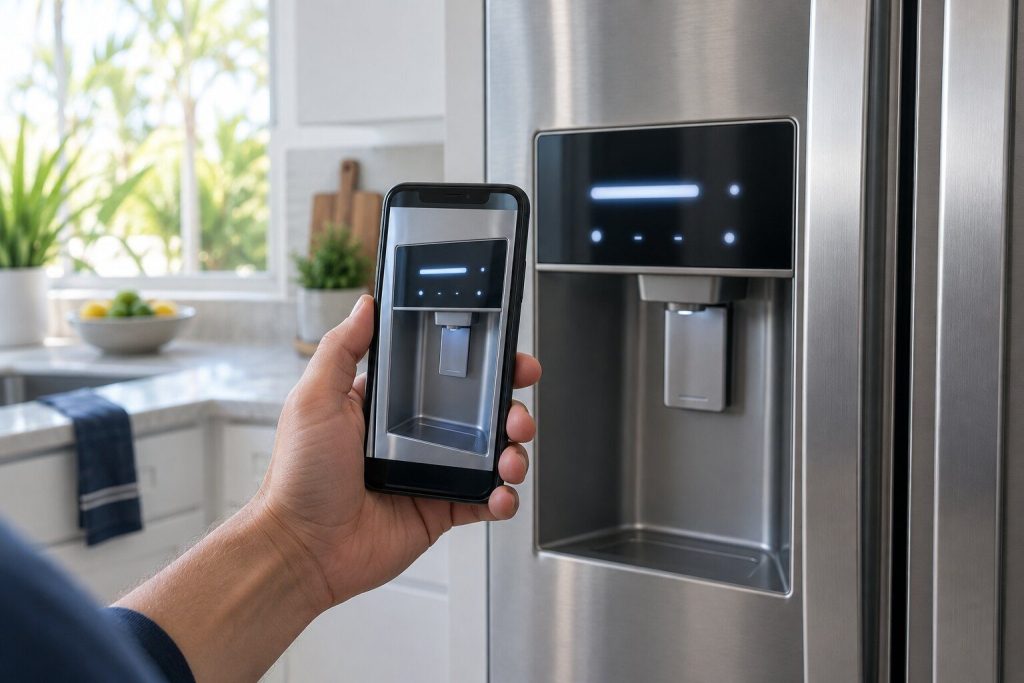
Your Refrigerator Kept a Number for You. Read It Before You Clear It
Clearing the alert once shows the highest temperature the cabinet reached. Clearing it a second time deletes that number, and it is the one that decides what happens to the food.
Read more
Tell us the model number and what it is doing.
This article is based on:
- Official manufacturer documentation
- Internal repair procedures
- Technician repair history
- Company quality standards