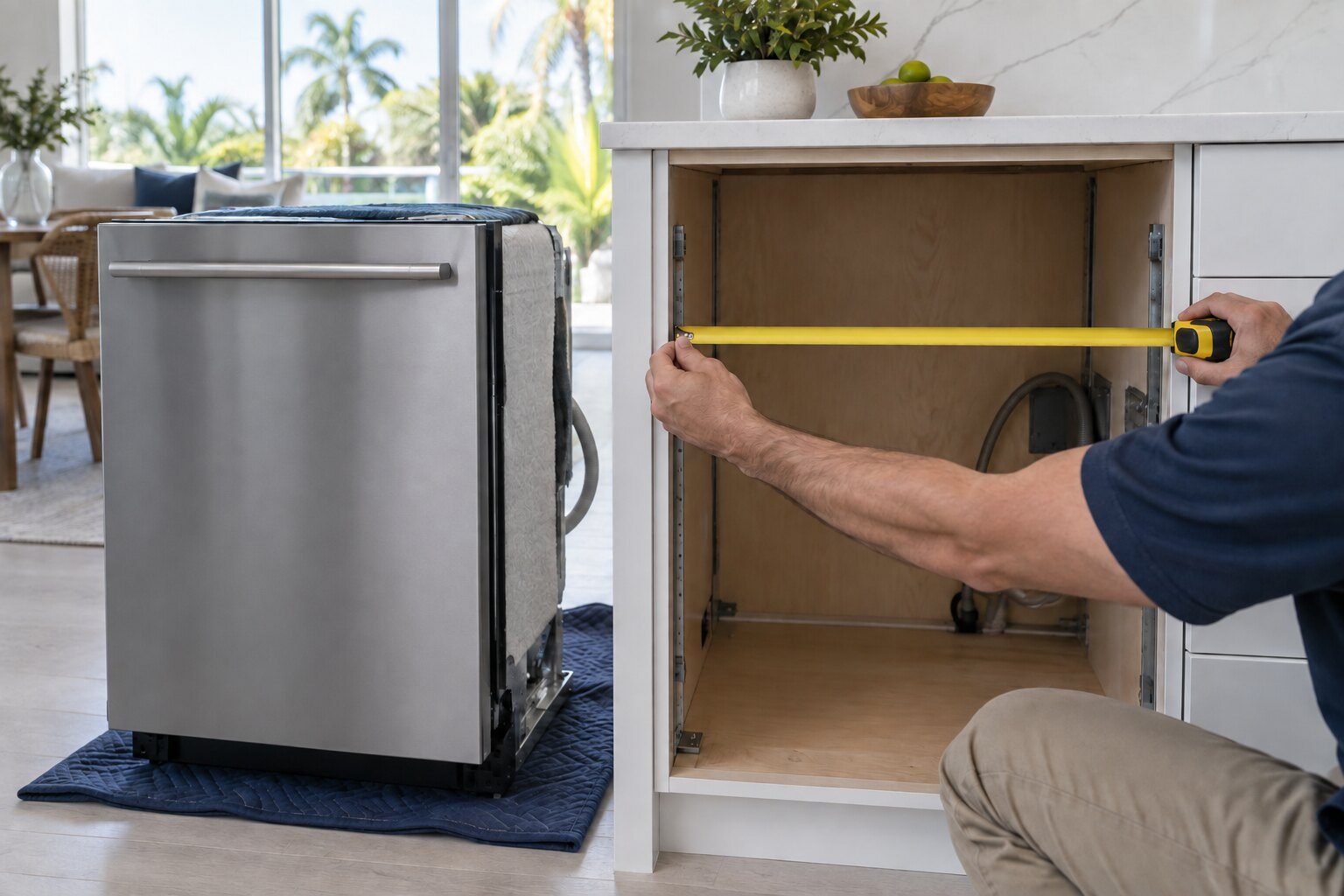
Cost Expectations
Is It Worth Repairing? The Arithmetic Is Different on a Built-In
Whether it is worth repairing an Electrolux depends far less on the year on the plate than on how the appliance is installed. The familiar rule — do not spend more than half the cost of replacing it — assumes replacement is a delivery. On this badge it frequently is not: the current line has three French-door refrigerators, one refrigerator column, one freezer column, three wall ovens, two dishwashers and three microwaves, and a built-in appliance has to match an opening and a trim kit from that short list. Where it does not match, the replacement includes joinery. So repairs that would be marginal on a freestanding machine are often clearly right here, and the honest exceptions are a sealed-system failure on refrigeration and bearings on an older washer.
The full guide
Is it worth repairing an Electrolux is a question with a very familiar answer that happens to be the wrong one for most of what this maker builds.
The rule everybody uses
Do not spend more than half the cost of replacing it. It is a good rule, it has served people well for decades, and it contains an assumption that does not hold here.
The assumption is that replacing is a delivery. A van arrives, the old machine goes out, the new one goes in, and the number you compared against is the price on the tag.
Why that breaks on this badge
Read the current line. Three French-door refrigerators, all counter-depth. One refrigerator column and one freezer column, both 33 inches, both sold behind trim kits. Three wall ovens. Two dishwashers. Three microwaves, none of them a countertop model.
A built-in appliance does not simply get replaced — it has to fit an opening that was drawn for it, behind trim that was fitted around it, in a run that was scribed to it. From a list that short, the chances of a like-for-like match fall away quickly once an appliance is a few years old.
Where there is no match, the replacement number stops being the appliance and starts including joinery. That is a completely different figure, and it changes the answer.
Which is why we quote access separately
Because the same logic runs through the repair side too. Drawing a column out from behind its trim is real work whether the part inside costs ten dollars or three hundred, and folding that into a part price makes the comparison impossible to make sensibly.
Separated out, you can see the two halves: what the component costs, and what reaching it costs. On a freestanding machine the second is small. On a fitted one it is frequently the larger half, and it is the same either way — which means an expensive part on a built-in appliance is often better value than a cheap one, because the access is already being paid for.
The two honest exceptions
A sealed-system failure on refrigeration. A compressor or a refrigerant leak costs a large fraction of a new cabinet and comes with no promise about everything else in the appliance. It is the failure that genuinely ends a refrigerator, and we say so.
Bearings on an older or compact washer. The job is the tub, the drum and the seal together. On a 700 Series machine in a building laundry it usually adds up; on an eight-year-old 24-inch compact it usually does not. That figure is published high on this site deliberately, because a comfortable-looking number would hide the conversation.
What actually decides it
Not the year. Which part has failed, what reaching it costs, and what replacing the appliance would genuinely involve in your kitchen.
Those three are knowable after a diagnostic and guessable before one, and guessing them is how people spend money on the wrong side of the decision.
If it turns out to be a repair
What this leads to, and what it costs
Every job on this site is priced the same way: an on-site diagnostic first, the figure agreed in writing before anybody starts.
-
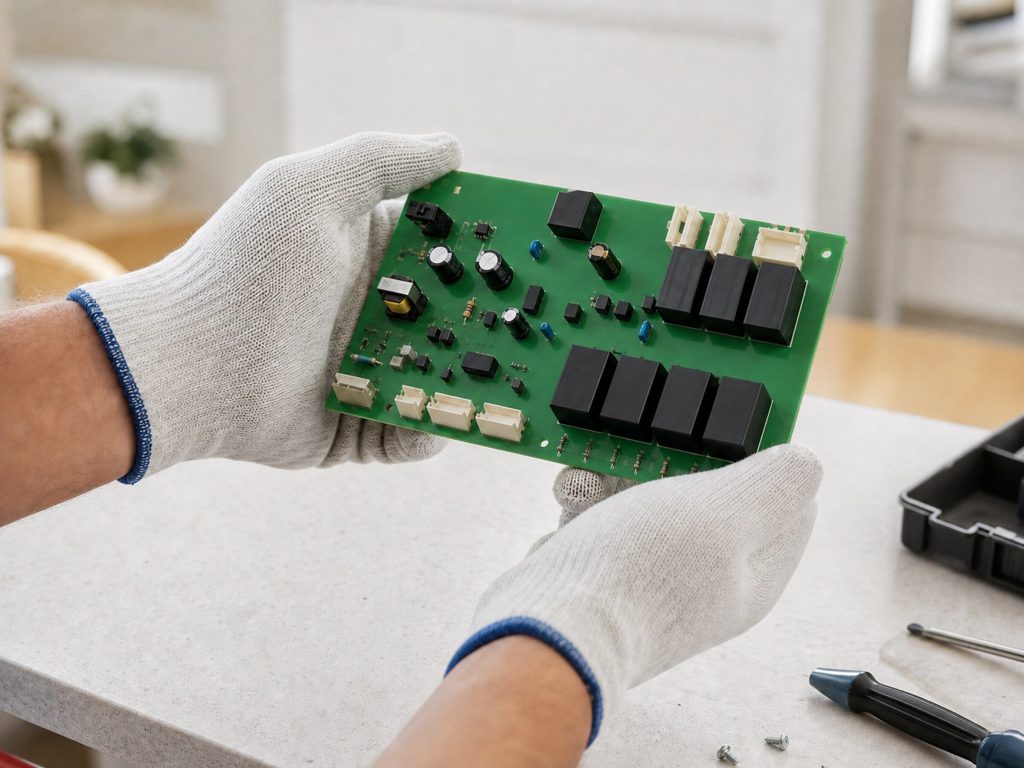
from $245 Control board repair
When the board is genuinely the answer — and it is worth saying that it often is not. A great many appliances condemned as "a board problem" have a sensor lying to a board that is working perfectly. This maker helps here more than most: F12, F13 and the F3/F20/F26 family are published as board-level conditions by name, so when one of them is on the display the diagnosis has a document behind it rather than an assumption.
- Named board conditions — F12, F13 and the communication family
- Most "board problems" are a sensor telling a healthy board something false
- Connectors and harnesses checked before anything is ordered
-
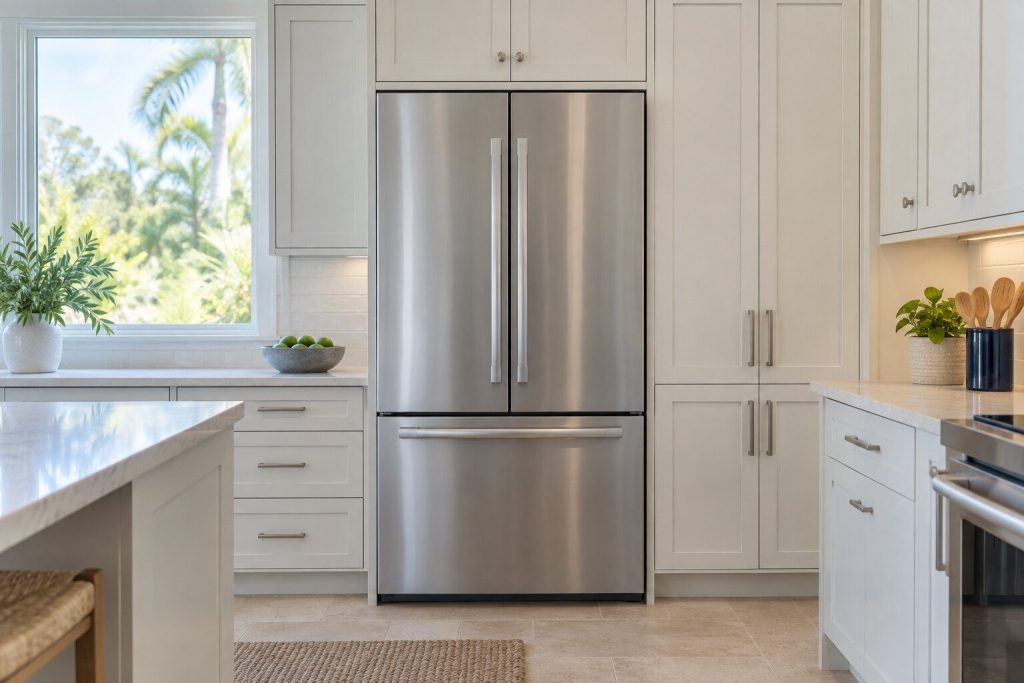
Counter-depth French door · 33-inch columns Refrigerators
Six cabinets in the whole current line, and every French door among them is counter-depth — three of them, at 21 and 23 cubic feet. There is no standard-depth box here, no side-by-side and no top-freezer; the deep end of this line is a pair of 33-inch columns, one refrigerator and one freezer, sold with trim kits so they read as cabinetry. That is a refrigerator somebody drew into a plan, and it changes the work: the cabinet is tight in its surround, the water line runs where the joiner left it, and getting the unit out is half the visit before anything is diagnosed.
- Six cabinets total — three counter-depth French doors and a 33-inch column pair
- Counter-depth means a tight surround: access is part of every job here
- TasteLock Plus crispers and the TempAdapt drawer are the parts people call about
Questions people ask about this
How old is too old?
There is no year that settles it, and anybody who gives you one is guessing. What decides it is which part has failed and what replacing the appliance would actually involve — and on a fitted unit the second half of that is the bigger number.
Do you ever tell people not to repair?
Regularly, and before the part is ordered rather than after. A diagnostic that ends in "do not spend this money" is still worth what it saves.
What about the older built-in range?
Often worth repairing precisely because the current catalog has no like-for-like replacement for it. The alternative is not a swap — it is a different appliance and frequently different joinery.
Cost Expectations
More guides like this one
-

A Cracked Induction Top: What It Costs and What Decides It
The glass is a part and it is replaceable. It is also among the costliest single parts on any appliance here, which is why the quote is published at its real level.
Read more -
What an Electrolux Service Call Costs in South Florida
The diagnostic here sits at the built-in band rather than the figure the volume badges of the same group carry, and the reason is countable: almost everything this maker sells has to be brought out of the kitchen first.
Read more -
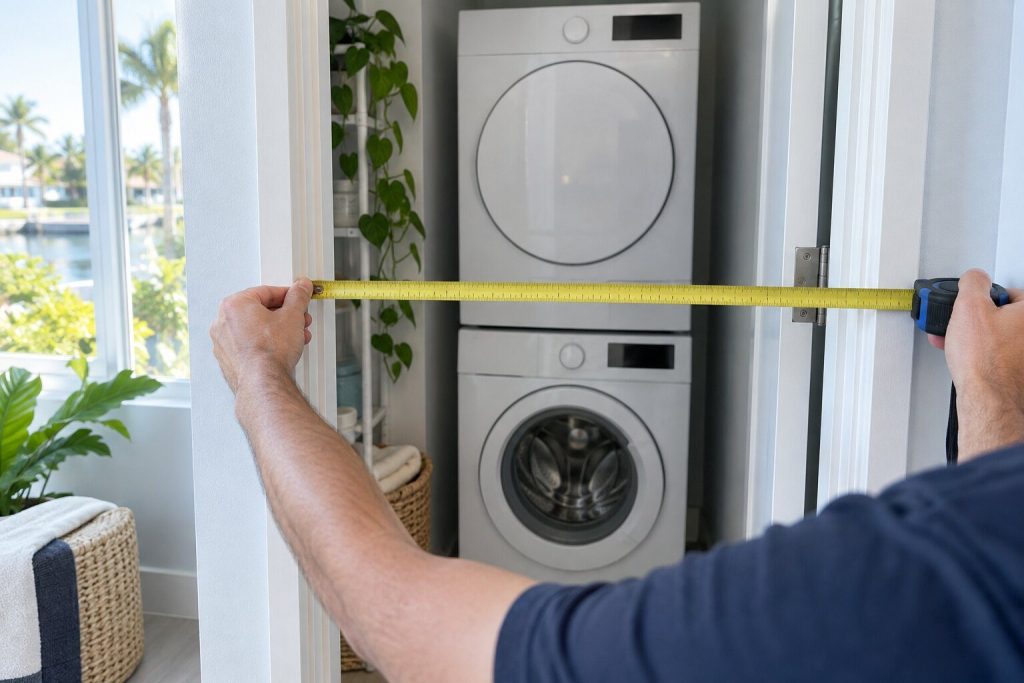
The 24-Inch Pair in a Closet: Why Replacing Is Not One Number
The compact pair is its own design and shares no parts with the full-size machines. In a closet built around it, replacement means the appliances, the stacking kit, the vent and sometimes the doorway.
Read more
Tell us the model number and what it is doing.
This article is based on:
- Official manufacturer documentation
- Internal repair procedures
- Technician repair history
- Company quality standards